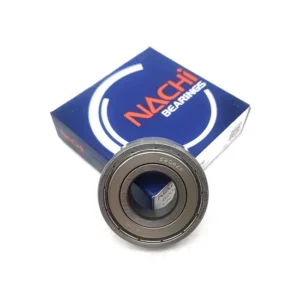
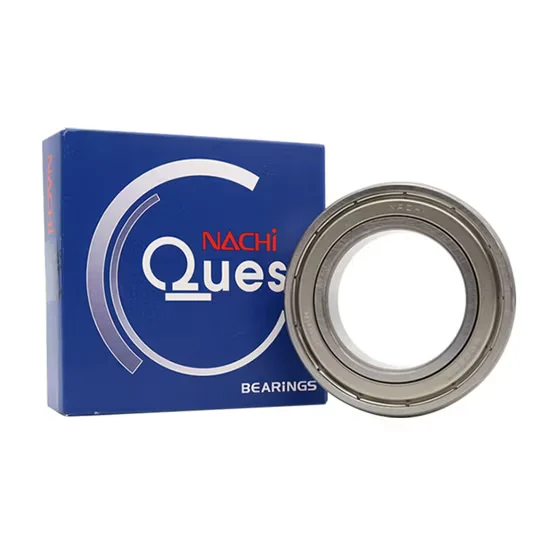
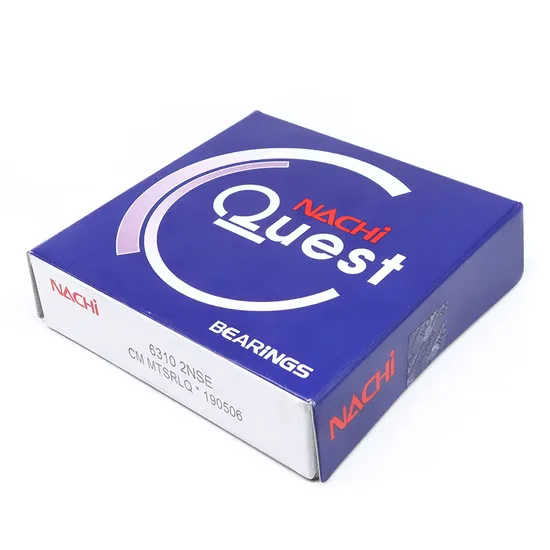
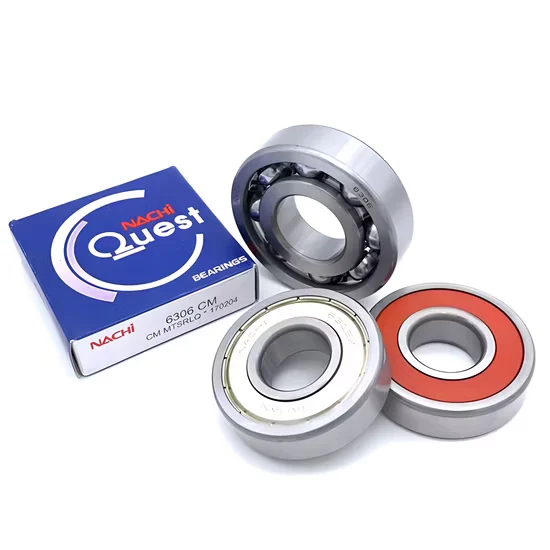
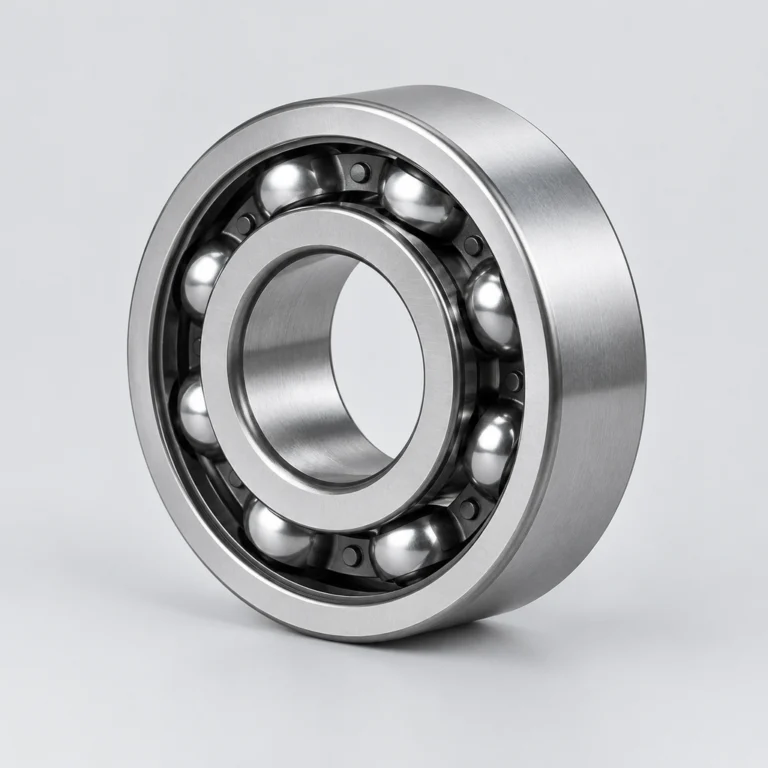
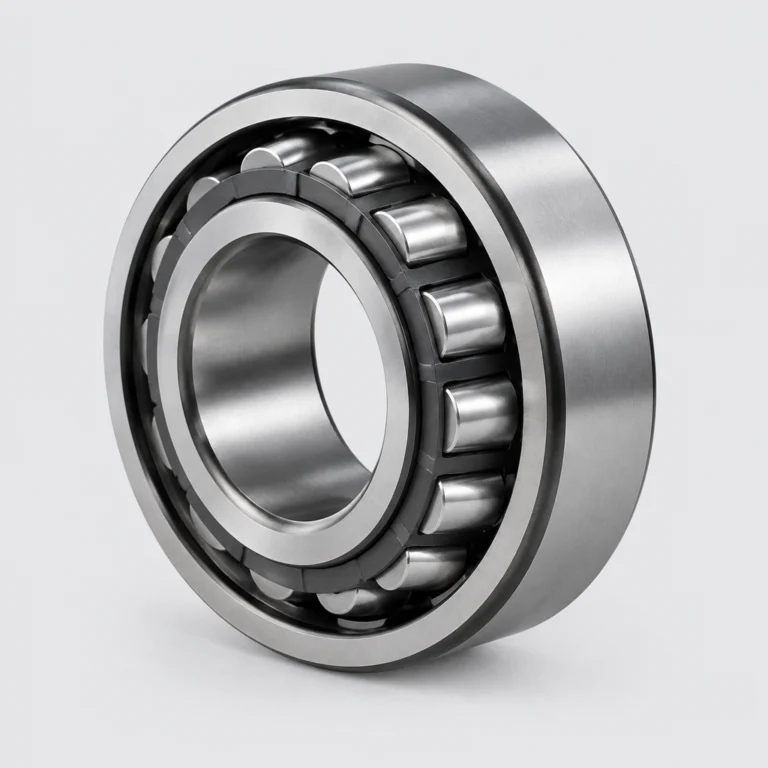
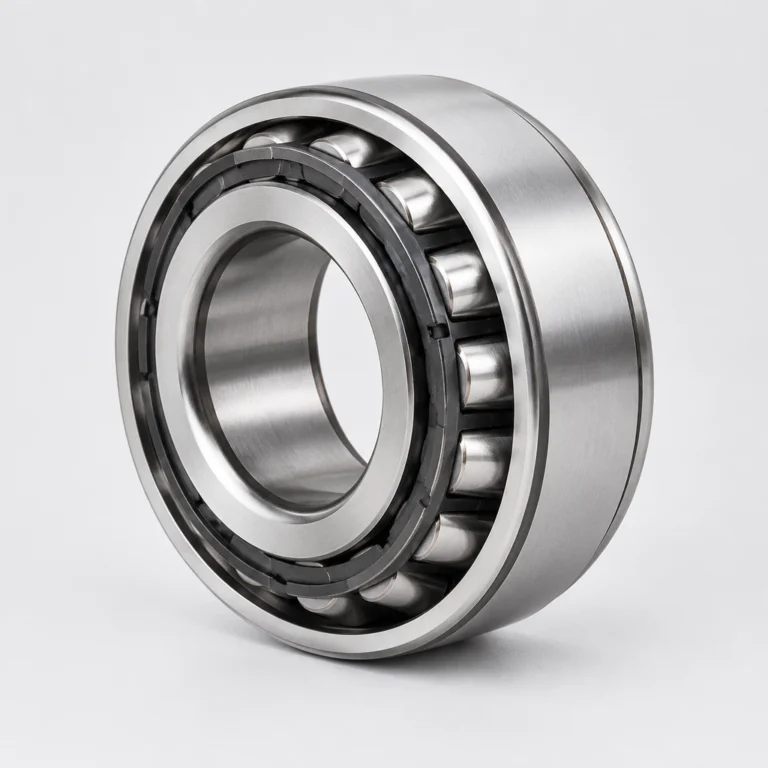
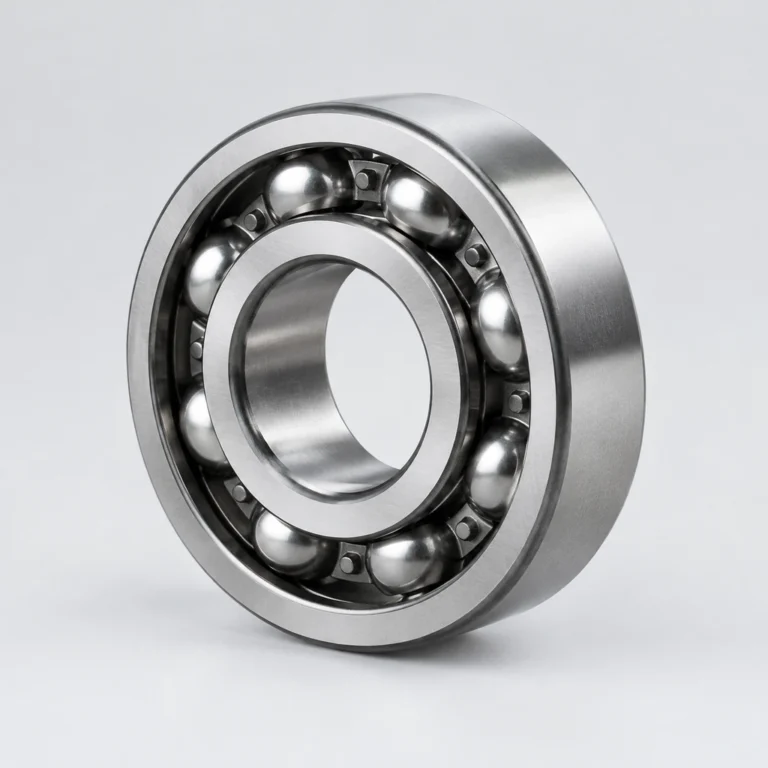
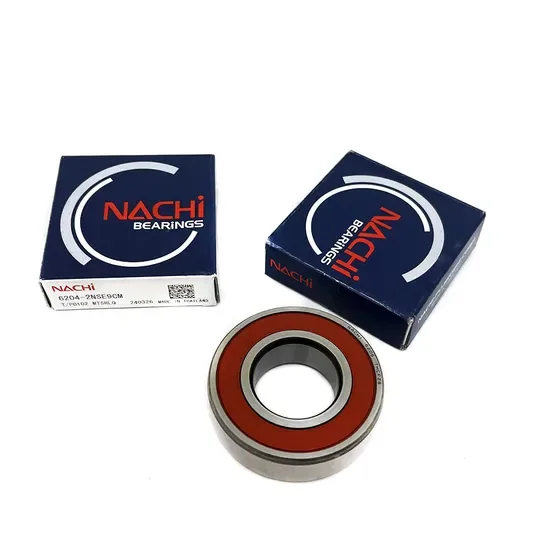
Unified Multi-Brand Sourcing — Consolidate your NACHI 6201 6206 6204 deep groove ball bearing requirements alongside other premium marques in one container, eliminating multi-vendor coordination headaches.
Technical Specifications
| Parameter | Value |
| Designation | NACHI 6201 6206 6204 |
| Bearing Type | Deep Groove Ball Bearing |
| Row Number | Single Row |
| Seal or Shield Type | ZZ, 2RS, Open |
| Precision Class | P0, P6, P5, P4 |
| Material | Bearing Steel |
| Lubrication | Grease or Oil |
| Vibration Grade | Z1V1, Z2V2, Z3V3, Z4V4 |
| Load Direction | Radial |
| Origin | Shandong, China |
Application Suitability
| Industry | Typical Applications |
| Textile Machinery | Spindle drives, yarn guide rollers, and carding cylinders |
| Electric Motors | High-speed rotor shafts and cooling fan assemblies |
| Gearboxes | Intermediate shaft supports and input pinion bearings |
Why Textile Spindles Destroy Standard Shields Before the Season Ends
Fiber intrusion inevitably jams non-contact shields, turning minor friction into catastrophic cage failure.
Walking the Hannover Messe floors, I always gravitate toward textile machinery booths to observe how supporting components handle extreme environments. Years ago in the failure analysis lab, I tore down a batch of seized 6206 bearings returned from a spinning mill. The client had mistakenly specified ZZ metal shields instead of 2RS rubber seals for a high-flock environment. The rigid iron shields could not block the fine textile dust, which infiltrated the raceway, choked the grease, and caused early cage fracture. When sourcing a NACHI 6201 6206 6204 deep groove ball bearing for similar applications, recognizing the exact sealing boundary is the difference between a full production run and an unplanned line stoppage.

Aligning Precision Grades with Spindle Dynamics
Textile spindles and high-speed electric motors demand exceptionally tight vibration tolerances to prevent yarn breakage and surface defects. Our engineering team cross-references your specific RPM and radial load profiles to recommend the optimal vibration grade, ensuring the selected NACHI 6201 6206 6204 deep groove ball bearing maintains acoustic stability. We routinely map these requirements against equivalent models from other premium brands to guarantee supply chain continuity without compromising dynamic performance.
Handling Flock, Heat, and Radial Loads
Textile environments subject components to a punishing combination of continuous radial loads, elevated ambient heat, and aggressive airborne particulates. While the radial load remains relatively steady, the high rotational speeds generate internal friction heat that degrades standard greases rapidly. Selecting the correct seal type becomes critical: non-contact shields offer lower friction but fail against fine dust, whereas contact seals provide superior exclusion at the cost of slightly higher operating temperatures. Furthermore, appropriate internal clearance must accommodate the thermal expansion of the shaft to prevent preload binding during continuous operation.
Decoding Seal Configurations and Vibration Classes
The available seal configurations dictate the operational lifespan in contaminated zones. Open variants allow for custom oil bath or circulating oil lubrication in heavily loaded gearboxes, while ZZ shields suit clean, high-speed motor applications where low friction is paramount. For the dusty reality of textile carding and spinning, 2RS contact seals are mandatory to physically wipe the inner ring and block micro-fibers. Beyond sealing, the Z1V1 through Z4V4 vibration classifications directly correlate to the geometric accuracy of the raceways and rolling elements. Specifying a Z3V3 or Z4V4 grade ensures the bearing operates below the acoustic threshold that typically triggers resonance in sensitive textile monitoring sensors. The P0 to P4 precision ratings further refine the dimensional tolerances, with P5 and P4 classes reserved for high-precision spindle noses where runout must be virtually eliminated.
The Hidden Toll of Misapplied Sealing and Clearance
Specifying an incorrect internal clearance or mismatched seal type rarely causes immediate failure; instead, it initiates a slow degradation that voids warranties and destroys downstream components. Running a standard clearance bearing in a high-heat textile oven leads to thermal expansion that eliminates the internal gap, causing the rolling elements to skid and severely damaging the raceway. Similarly, using metal shields in a flock-heavy environment results in abrasive wear that pits the contact surfaces, ultimately leading to sudden seizure and catastrophic damage to the spindle housing. These hidden costs manifest as chronic unplanned downtime and escalated maintenance budgets.
Why Procurement Engineers Trust Our Technical Vetting
We do not merely pick boxes from a shelf; we actively interrogate the application parameters to prevent the exact sealing mismatches that plague textile mills. When you order these models, our team verifies that the specified 2RS or ZZ suffix perfectly aligns with your environmental exposure, preventing the costly errors I witnessed in the lab. We provide complete factory batch traceability for every unit, ensuring you receive genuine products with verified metallurgical integrity. Our flexible consolidation allows you to mix these deep groove models with heavy-duty spherical roller bearings in a single shipment. Furthermore, our cross-brand equivalent consultation ensures that if a specific variant is delayed, we can immediately identify a dimensionally and performance-matched alternative from our massive spot inventory.
Documentation & Authenticity
- Original factory batch traceability documents verifying the production date and heat treatment lot.
- Official anti-counterfeit QR codes on each box for instant authenticity validation.
- Dimensional and running accuracy inspection reports confirming P4 or P6 tolerances.
- Material certificates detailing the specific bearing steel grade and hardness metrics.
- Certificate of Conformity aligned with international export and customs requirements.
Storage, Handling & Mounting
- Retain the original factory packaging until mounting to protect the Z4V4 polished raceways from ambient humidity.
- Store 2RS sealed variants away from direct UV exposure to prevent premature degradation of the nitrile rubber lips.
- Use induction heaters for inner ring mounting to avoid damaging the precision-ground bearing steel surfaces.
- Never wash ZZ shielded bearings with solvents, as this strips the factory-applied low-noise grease.
- Ensure cleanroom-grade gloves are worn when handling P4 precision variants to prevent skin acid corrosion.
Engineering Review and Inquiry Preparation
To ensure the selected configuration survives your specific operational reality, please share your exact radial loads, maximum RPM, and ambient temperature profiles. Providing the OEM equipment number or the dimensions of the existing housing allows our engineering team to execute a rigorous L10 life calculation and validate the clearance class. If your environment involves chemical exposure or extreme particulate ingress, detail these conditions so we can confirm the optimal seal material and lubrication interval.
Frequently Asked Questions
Q: How do I choose between P0, P6, P5, and P4 precision for textile machinery?
A: Standard P0 is sufficient for general conveyors and low-speed gearboxes. For high-speed electric motors, P6 ensures acceptable noise levels. Textile spindles and precision yarn guides typically require P5 or P4 to minimize radial runout, preventing yarn tension fluctuations and ensuring uniform fabric quality at extreme rotational speeds.
Q: What is the practical difference between ZZ shields and 2RS seals in high-flock environments?
A: ZZ metal shields provide non-contact protection, offering lower friction and higher speed limits, but they cannot block fine textile dust. 2RS rubber seals physically contact the inner ring, creating a tight barrier against micro-fibers and moisture. In spinning mills, 2RS is essential to prevent flock ingress and subsequent cage failure.
Q: How do Z1V1 to Z4V4 vibration grades affect motor noise levels?
A: The Z and V grades measure the acoustic and vibration output of the bearing. Z1V1 is standard for general industrial use. Z3V3 and Z4V4 undergo stringent sorting to eliminate geometric imperfections, drastically reducing high-frequency noise. This is critical for household appliances and precision motors where acoustic comfort and low vibration are mandatory.
Q: When should I specify grease versus oil lubrication for these deep groove models?
A: Pre-lubricated grease with 2RS seals is ideal for maintenance-free applications like electric motors and sealed gearboxes, offering long service intervals. Open bearings with oil lubrication are preferred for heavy-duty gearboxes or high-speed textile spindles where external cooling is required, and where the oil can be continuously filtered to remove wear particles.
Q: How can I verify the authenticity of the NACHI bearings upon delivery?
A: Every genuine unit features official anti-counterfeit labels with scannable QR codes that link directly to the manufacturer's verification database. Additionally, we provide original factory batch traceability documentation and material certificates, allowing you to cross-check the heat treatment lot and dimensional inspection reports against the physical product received.