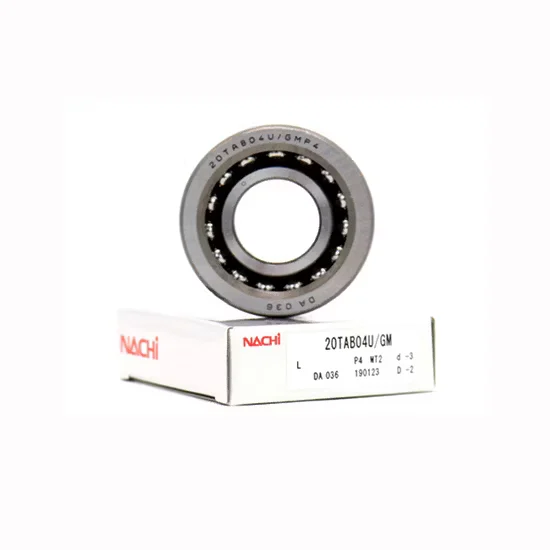
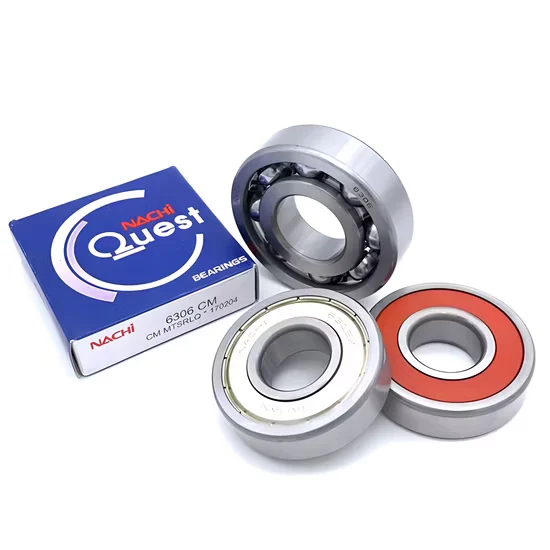
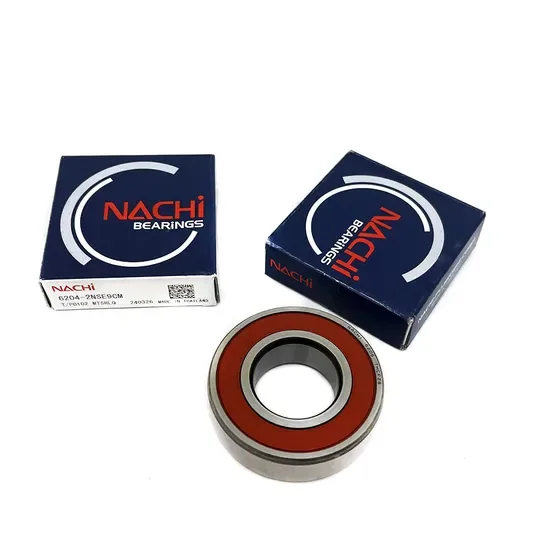
Official App QR Verification — Every NACHI 6304 shipment includes scannable packaging security features to confirm authentic Japanese manufacturing origin.
Technical Specifications
| Parameter | Value |
| Designation | NACHI 6304 |
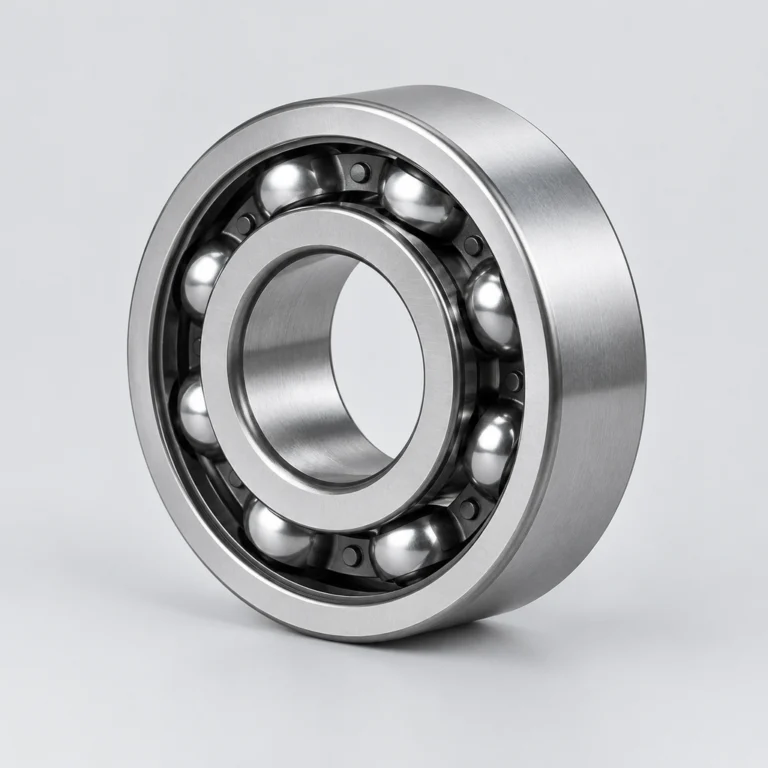
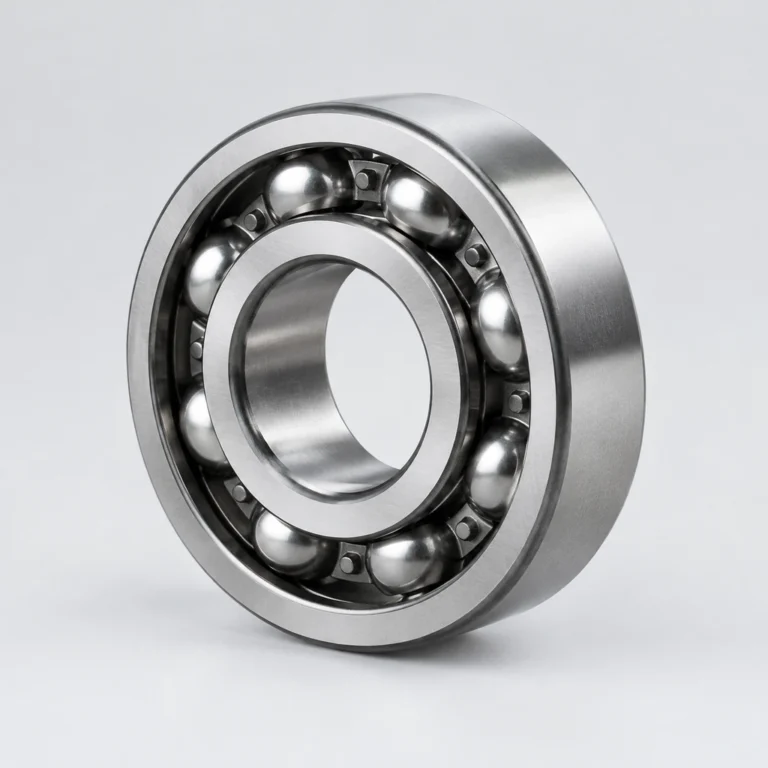
| Bearing Type | Deep Groove Ball Bearing |
| Bore Diameter (d) | 20 mm |
| Outside Diameter (D) | 52 mm |
| Width (B) | 15 mm |
| Seal or Shield Type | Open |
| Lubrication | Grease or Oil |
| Precision Class | P0, P6, P5, P4 |
| Vibration Level | Z1V1, Z2V2, Z3V3 |
| Load Direction | Radial |
| Material | Bearing Steel |
| Contact Angle | 0° |
| Origin | Japan |
Application Suitability
| Industry | Typical Applications |
| Bicycle Manufacturing | Bottom brackets, pedal assemblies, and freewheel mechanisms |
| Electric Motors | Small to medium-sized motor shafts and rotor supports |
| General Machinery | Conveyor pulleys, pump shafts, and gearbox input stages |
Why Open Bearings Fail in Wet Environments Before the Steel Yields
Contamination breaches the raceway long before fatigue limits are reached.
Sourcing components for bicycle assemblies in heavy monsoon regions exposes a critical vulnerability that purely mechanical specifications cannot solve. When mud and moisture bypass inadequate sealing, the internal cage corrodes and seizes, triggering massive field recalls and destroying brand reputation. Securing a genuine NACHI 6304 deep groove ball bearing is only the first step in the procurement process; matching the exact environmental exposure to the correct sealing configuration prevents catastrophic downstream failures. Many purchasing engineers focus exclusively on dynamic load ratings, overlooking the fact that microscopic particulate ingress acts as a lapping compound, rapidly accelerating wear and destroying the raceway finish long before the theoretical fatigue life is exhausted.

Aligning the NACHI 6304 Deep Groove Ball Bearing with Operational Demands
Selecting the right configuration requires looking far beyond basic dimensional parameters and catalog load ratings. Our engineering team cross-references your specific radial load profiles, rotational speeds, and housing constraints to ensure the chosen variant handles the operational stress without premature degradation. We supply verified inventory across multiple precision and vibration classes, ensuring your bicycle or motor assembly receives the exact performance tier required without over-specifying and inflating production costs. By analyzing the specific kinematic demands of your drivetrain or rotor assembly, we help you avoid the common pitfall of installing a standard commercial grade component in a high-speed application, thereby optimizing both performance and total cost of ownership.
Navigating Moisture, Load, and Lubrication Challenges
Bicycle drivetrains and outdoor electric motors face relentless radial loads combined with severe moisture ingress and unpredictable particulate exposure. An open bearing relies entirely on the housing design for contamination exclusion, demanding rigorous external sealing and precise labyrinth geometries from the equipment manufacturer. If the housing cannot guarantee a hermetic seal under dynamic deflection, upgrading to a contact seal variant becomes absolutely mandatory to retain grease and block abrasive particulate matter. Temperature fluctuations further dictate the initial clearance selection, as thermal expansion during continuous operation can eliminate internal play and cause premature binding. Furthermore, the choice between grease and oil lubrication must align with the maintenance schedule; sealed variants require high-quality synthetic grease packed for life, whereas open configurations allow for periodic relubrication to flush out accumulated contaminants.
Decoding Precision and Vibration Tolerances
The base NACHI 6304 designation implies an open configuration, but the available precision and vibration grades dictate its acoustic and rotational behavior in demanding applications. Standard P0 class suffices for general conveyor pulleys and low-speed agricultural implements, whereas P6 or P5 grades are strictly necessary for electric motors to minimize harmonic resonance and shaft runout. Vibration levels ranging from Z1V1 to Z3V3 directly correlate with the geometric accuracy of the raceways, the uniformity of the rolling elements, and the surface finish achieved during the final grinding stages. Selecting a Z3V3 variant ensures exceptionally quiet operation, which is critical for high-end bicycle hubs and precision appliance motors where acoustic comfort is a primary design metric. Ignoring these classifications often results in a component that meets dimensional specs but fails acoustic testing on the assembly line, leading to costly rework and production delays.
The Compounding Cost of Specification Mismatches
Installing a standard clearance bearing in an application with significant thermal gradients leads to internal preload, accelerating fatigue and generating excessive friction heat. Similarly, ignoring vibration classifications in electric motors results in unacceptable noise levels, accelerated shaft wear, and premature failure of adjacent seals. These specification mismatches rarely cause immediate breakdowns during initial commissioning; instead, they manifest as unplanned downtime, increased warranty claims, and a degraded end-user experience over the product lifecycle. Adhering to ISO 281 life calculation frameworks ensures the selected precision and clearance classes align with the actual operational envelope, preventing the hidden costs associated with field replacements and brand damage.
Securing Authenticity and Technical Alignment
Counterfeit bearings often exhibit correct outer dimensions but fail catastrophically due to substandard metallurgy, inaccurate raceway grinding, and improper heat treatment. We provide complete traceability documentation for every NACHI 6304 deep groove ball bearing, verifying the Japanese origin and manufacturing batch to eliminate supply chain risks. Our flexible consolidation allows you to mix this model with other drivetrain components in a single shipment, optimizing freight costs without compromising on minimum order quantities. Furthermore, our technical team reviews your housing tolerances to recommend the optimal fit, preventing the micro-movements that cause fretting corrosion in lightweight bicycle frames. This proactive engineering support ensures that the physical installation matches the theoretical design, safeguarding the performance of the genuine components you have procured.
Documentation & Authenticity
- Certificate of Conformity verifying genuine Japanese manufacturing origin for this specific batch.
- Scannable packaging security features linked to the official manufacturer verification database.
- Material inspection reports confirming bearing steel composition and heat treatment integrity.
- Dimensional and running accuracy inspection reports validating the selected P-class tolerances.
Storage, Handling & Mounting
- Retain the original vapor-phase inhibitor packaging until immediately before pressing into the bicycle hub.
- Use induction heaters for inner ring mounting to avoid damaging the precision-ground raceways.
- Apply clean lint-free gloves to prevent acidic skin oils from initiating micro-corrosion on the open raceways.
- Verify housing and shaft tolerances match the selected clearance class to prevent internal preload during assembly.
Engineering Review and Selection Support
To finalize the optimal configuration, provide your specific radial and axial load profiles, operational speeds, and housing design constraints. Our technical team will calculate the L10 life and recommend the appropriate precision and clearance classes for your unique application environment. If you are replacing an existing component or upgrading a legacy design, share the OEM equipment number for precise cross-reference verification. This collaborative approach ensures that the final selection perfectly bridges the gap between catalog specifications and real-world operational demands, eliminating guesswork from your procurement process.
Frequently Asked Questions
Q: How can I verify the authenticity of the received bearings?
A: Every shipment includes traceability documentation and packaging with scannable security features. You can verify the manufacturing batch and Japanese origin directly through the official manufacturer application. We also provide material and dimensional inspection reports upon request to confirm the metallurgical and geometric integrity of the components.
Q: What is the difference between P0 and P6 precision classes for this model?
A: The P0 class represents standard commercial precision suitable for general machinery and basic bicycle parts. The P6 class offers tighter dimensional and running accuracy tolerances, which significantly reduces vibration and noise. This higher precision is essential for electric motors and high-speed gearboxes where acoustic performance and smooth rotation are critical.
Q: How do vibration levels like Z3V3 affect motor performance?
A: Higher vibration classes indicate stricter control over the geometric accuracy of the inner and outer rings, as well as the rolling elements. A Z3V3 rating ensures minimal acoustic emission and reduced harmonic resonance during high-speed operation. This is particularly vital for household appliances and electric motors where excessive vibration can degrade the overall user experience and accelerate adjacent component wear.
Q: Why did my previous shielded bearings fail in wet conditions?
A: Non-contact shields provide excellent protection against large particulate matter but allow fine moisture and mud to penetrate under high-pressure washdown or heavy rain. If your application involves severe water exposure, transitioning to a contact seal configuration is necessary. The rubber sealing lip physically blocks moisture ingress, preventing the internal cage corrosion and seizing that commonly trigger field recalls.
Q: How should I determine the correct internal clearance for my application?
A: Standard clearance is appropriate for most general-purpose applications with moderate temperature gradients. However, if the inner ring runs significantly hotter than the outer ring due to motor heat or friction, a larger clearance class is required to compensate for thermal expansion. Share your operational temperature data with our engineering team to calculate the exact residual clearance needed.