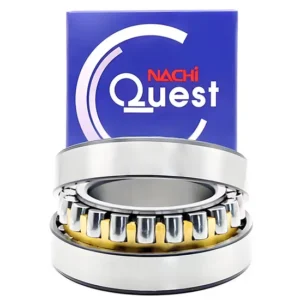
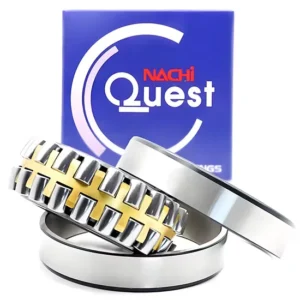
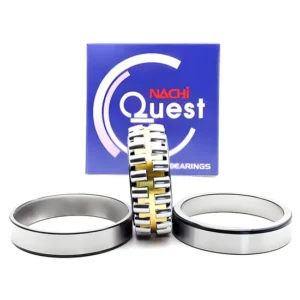
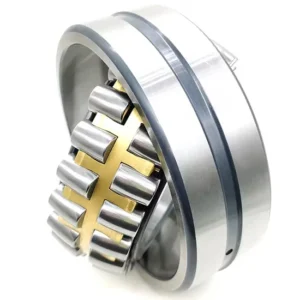
Cross-Reference Alignment — We verify dimensional, load, and clearance equivalency when substituting the NACHI 22311 with alternative global brands.
Technical Specifications
| Parameter | Value |
| Designation | NACHI 22311 |
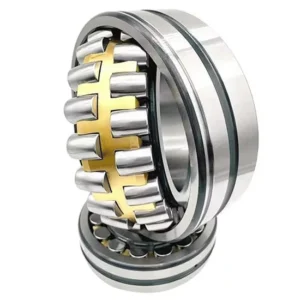
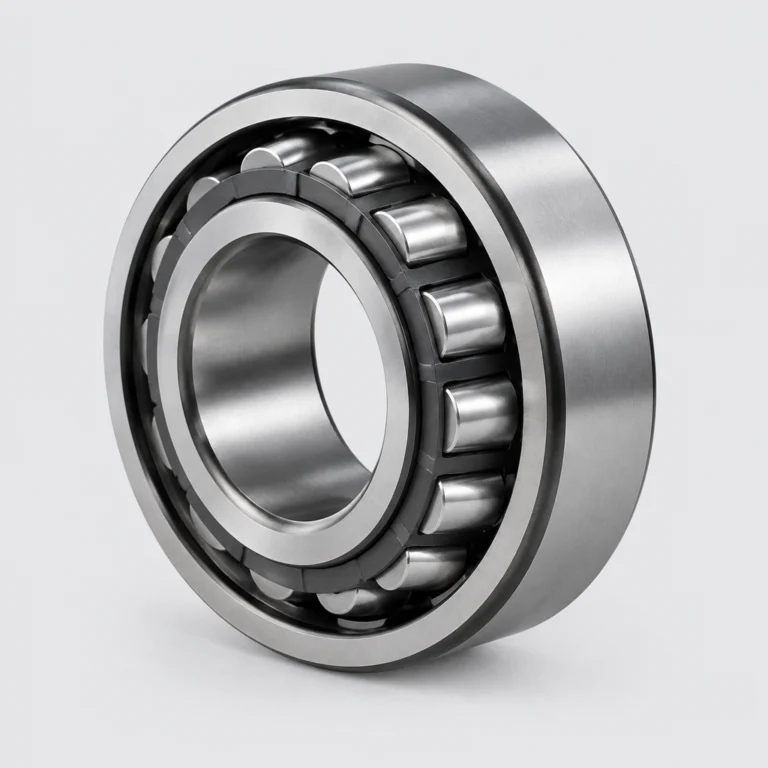
| Bearing Type | Spherical Roller Bearing |
| Bore Diameter (d) | 55 mm |
| Outside Diameter (D) | 120 mm |
| Width (B) | 43 mm |
| Precision Class | P0, P6, P5, P4, P2 |
| Clearance Class | C0, C3, C4 |
| Origin | Japan |
Application Suitability
| Industry | Typical Applications |
| Mining & Aggregates | Vibrating screen exciter mechanisms, jaw crusher eccentric shafts |
| Pulp & Paper | Paper machine press section felt rolls |
| Metallurgy | Steel mill continuous caster guide rolls |
Why Standard Clearance Destroys the NACHI 22311 spherical roller bearing in Exciters
Thermal expansion in dusty, high-vibration environments rapidly eliminates internal clearance, leading to catastrophic roller skewing and cage rupture.
When operating heavy vibrating equipment, the ambient heat combined with friction often pushes standard internal gaps beyond their operational limits. I once dismantled a failed exciter unit in Linyi where the internal components were completely shattered. The root cause was a standard clearance selection that ignored the thermal growth of the shaft and housing under continuous high-frequency oscillation. The stamped steel cage fractured, locking the rollers and scoring the raceways. Selecting the correct internal geometry prevents this premature seizure and protects the entire drive assembly from secondary damage. Understanding the thermal dynamics of your specific machinery is the first step toward reliable operation.

Matching the NACHI 22311 spherical roller bearing to Heavy-Duty Oscillating Loads
Oscillating machinery demands components that can self-align while enduring severe radial and axial shock loads. The NACHI 22311 spherical roller bearing accommodates shaft misalignment caused by structural deflection in heavy steel frames. By supplying verified Japanese-origin units with precise clearance configurations, we ensure your vibrating screens maintain continuous operation without unexpected structural binding. The spherical outer ring raceway allows the inner ring and roller assembly to pivot freely, compensating for housing bore misalignment during heavy aggregate processing. This self-aligning capability significantly reduces edge loading on the rollers, ensuring uniform stress distribution and maximizing fatigue life under extreme dynamic conditions.
Environmental Contamination and Thermal Management Challenges
Dust ingress and elevated operating temperatures severely degrade lubrication film thickness in mineral processing facilities. High-frequency vibration accelerates grease degradation, requiring effective sealing solutions or frequent re-lubrication schedules to prevent abrasive wear. Furthermore, frictional heat generated by heavy radial loads necessitates adequate internal clearance to compensate for differential thermal expansion between the inner ring and the shaft. In open-pit mining or quarrying operations, fine particulate matter easily penetrates inadequate seals, acting as a lapping compound that rapidly destroys the precision-machined raceway surfaces. Implementing strict contamination control protocols and selecting the appropriate sealing arrangements are critical for sustaining operational reliability in these harsh environments.
Decoding Clearance and Precision Tolerances for Exciter Units
Selecting the appropriate internal gap is critical for vibrating screens. While C0 represents standard clearance, C3 provides the necessary extra space to accommodate thermal expansion and tight interference fits on the shaft. For high-speed or high-precision applications, moving from standard P0 to P6 or P5 precision classes reduces vibration amplitudes and noise levels. Understanding these tolerance bands ensures the rolling elements maintain optimal load distribution without preloading the cage under thermal stress. The transition to tighter precision grades also minimizes the runout of the inner and outer rings, which is particularly beneficial for paper machine press sections where uniform pressure distribution is essential for product quality.
The Hidden Financial Impact of Incorrect Fit and Clearance
Specifying standard clearance in a high-heat vibrating application inevitably leads to unplanned downtime and catastrophic mechanical damage. When the internal gap closes completely, the rollers skid, generating excessive friction that fractures the cage and scores the raceways. According to failure analysis frameworks, this seizure mode often destroys adjacent shafts and housings, escalating a simple component replacement into a major structural rebuild. The resulting production losses far exceed the initial procurement cost of the correctly specified component. Procurement engineers must evaluate the total cost of ownership, recognizing that proper technical selection directly safeguards the profitability and continuity of the entire processing plant.
Securing Genuine Japanese-Origin Inventory for Critical Spares
Sourcing authentic components requires strict supply chain validation to avoid counterfeit parts that fail under heavy loads. We maintain massive spot inventory of genuine Japanese-manufactured units, ensuring immediate dispatch for urgent maintenance. Our technical team cross-references equivalent models and verifies exact clearance specifications, preventing the costly mismatch of standard-gap units in high-temperature applications. Every shipment includes full traceability documentation to guarantee metallurgical integrity. By consolidating mixed-brand orders, we eliminate the administrative burden of coordinating with multiple suppliers, providing a simplified procurement experience for global MRO teams managing diverse heavy equipment fleets across different operational sites.
Documentation & Authenticity
- Certificate of Conformity verifying Japanese manufacturing origin for the NACHI 22311
- Original batch number traceability linked to the manufacturer's production facilities
- Dimensional inspection reports confirming C3 or C4 clearance tolerances before dispatch
- Material certification validating the metallurgical composition of the inner and outer rings
Storage, Handling & Mounting
- Store the C3 clearance units in original packaging to prevent dust ingress before mounting
- Use induction heaters for inner ring mounting to preserve the precise interference fit
- Avoid using carbon steel tools on the outer ring to prevent surface scoring
- Verify shaft and housing tolerances match the selected P0 or P6 precision class
Engineering Review and Technical Inquiry
To ensure optimal service life, provide your equipment's radial and axial load profiles, operating temperatures, and shaft speeds for L10 life calculations. Sharing the original OEM equipment number allows our engineering team to perform accurate cross-reference verification. We will recommend the exact clearance class and precision grade required for your specific NACHI 22311 spherical roller bearing application. Our technical support extends beyond mere order fulfillment; we assist with failure analysis and application guidance to help your maintenance team identify the root causes of previous breakdowns and implement long-term reliability improvements across your critical rotating equipment assets.
Frequently Asked Questions
Q: How do I choose between C0, C3, and C4 clearance for vibrating screens?
A: Standard C0 clearance is suitable for normal temperatures. However, vibrating screens generate significant frictional heat and require tight shaft fits. We strongly recommend C3 or C4 clearance to accommodate thermal expansion and prevent the internal gap from closing, which avoids roller skewing and catastrophic cage failure in high-temperature, high-vibration environments.
Q: What are the precision class differences for heavy machinery applications?
A: Standard P0 precision is adequate for general heavy equipment like crushers. For high-speed vibrating screens where vibration amplitude must be minimized, upgrading to P6 or P5 precision ensures tighter dimensional tolerances. This reduces running vibration, promotes even load distribution across the rollers, and extends the overall operational lifespan of the exciter mechanism.
Q: How to verify the authenticity and origin of these components?
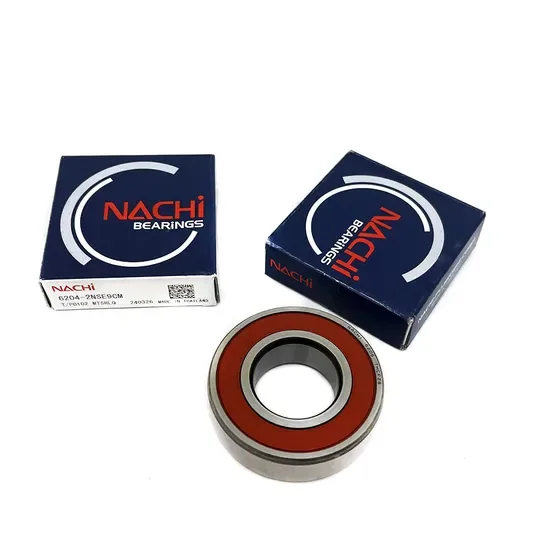
A: Authenticity is verified through complete supply chain traceability and original batch numbers matching the manufacturer's records. We provide a Certificate of Conformity and material inspection reports for every order. Buyers can also use the official manufacturer application to scan the packaging QR code, ensuring the metallurgical quality meets strict Japanese engineering standards.
Q: What are the recommended lubrication practices for spherical roller bearings?
A: In dusty mining environments, frequent re-lubrication with high-quality lithium-complex grease is essential to purge contaminants. For vibrating screens, ensure the grease has high mechanical stability to resist churning under high-frequency oscillation. Always follow the equipment manufacturer's re-lubrication intervals to maintain a protective film thickness between the rollers and raceways, preventing abrasive wear.