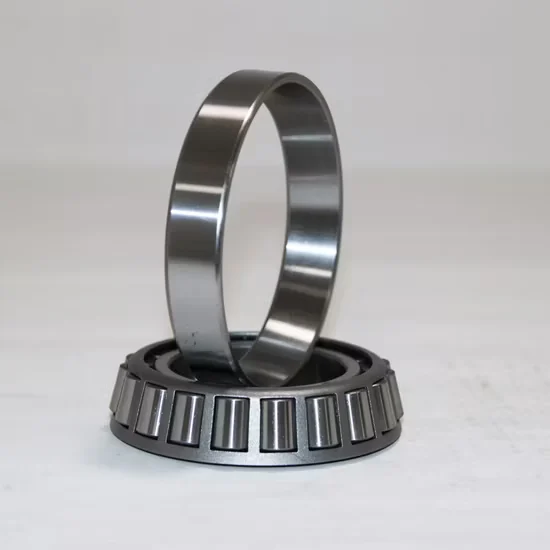
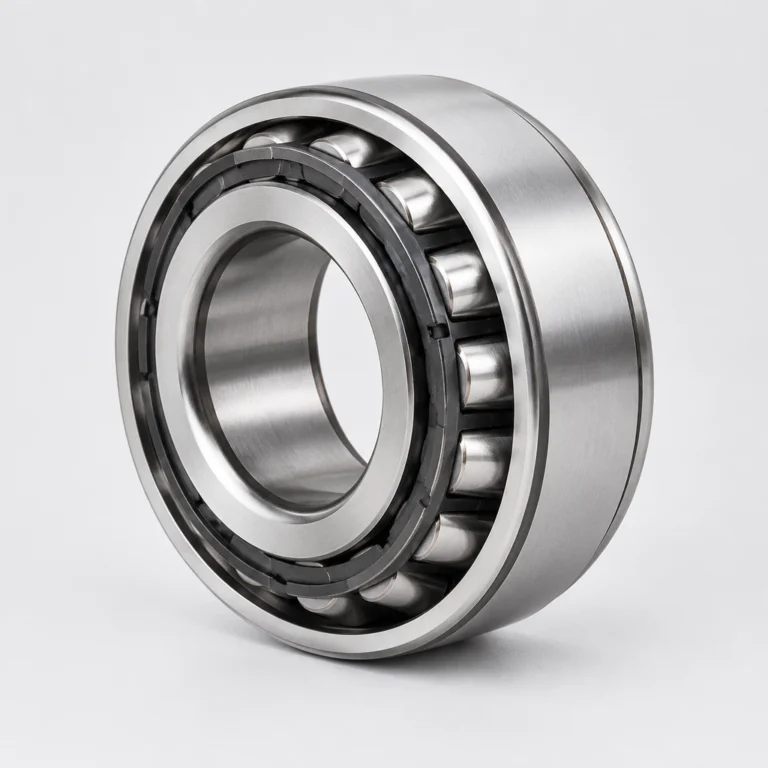
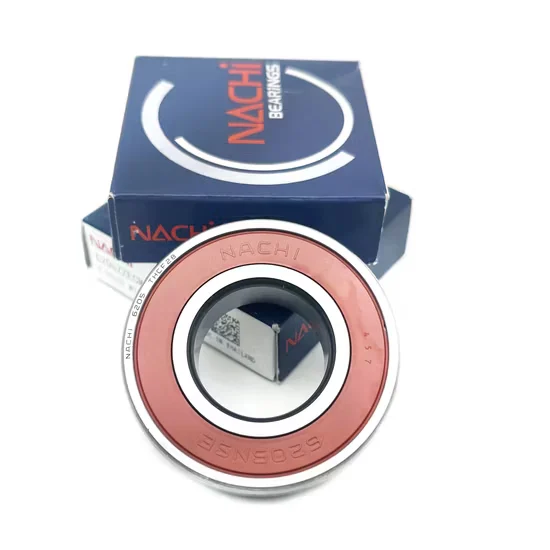
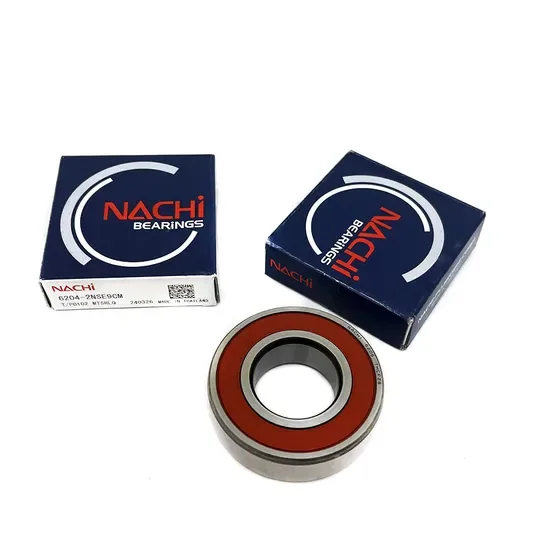
Cross-reference alignment verified — matching internal geometry, load ratings, and dimensional envelopes across equivalent global catalogs.
Technical Specifications
| Parameter | Value |
| Designation | NACHI 33020 |
| Product Type | Tapered Roller Bearing |
| Number of Rows | Single |
| Material | Available in bearing steel variants |
| Seal or Shield Type | Available in Zz, 2RS, or Open configurations |
| Lubrication | Grease or Oil compatible |
| Precision Class | P0, P6, P5, P4 options |
| Vibration | Z1V1, Z2V2, Z3V3 grades |
| Origin | Japan |
Application Suitability
| Industry | Typical Applications |
| Automotive | Wheel hub assemblies and steering knuckles |
| Commercial Transport | Heavy-duty truck axles and differential carriers |
| Industrial Manufacturing | Gearbox shaft supports and reduction units |
| Marine Engineering | Propulsion drive shafts and winch mechanisms |
Thermal Expansion Traps in the NACHI 33020 tapered roller bearing
Default clearances fail when ambient heat meets operational friction.
Early in my career sourcing for Indonesian mining sites, I specified a standard 33020 tapered roller bearing without checking the internal clearance suffix. The high-temperature environment caused thermal expansion, locking the assembly and halting the entire production line. When procuring a NACHI 33020 tapered roller bearing, assuming standard clearance fits all heavy-duty drivetrains is a costly mistake. Heavy equipment operating in tropical climates or near industrial furnaces experiences massive thermal gradients. If the internal clearance is insufficient to compensate for the differential expansion between the shaft and the housing, the rolling elements will skid rather than roll. This skidding action generates excessive localized heat,* to catastrophic seizure. Maintenance engineers must evaluate the entire thermal envelope of the drivetrain before finalizing the purchase order.

Matching Single-Row Geometry to Drivetrain Loads
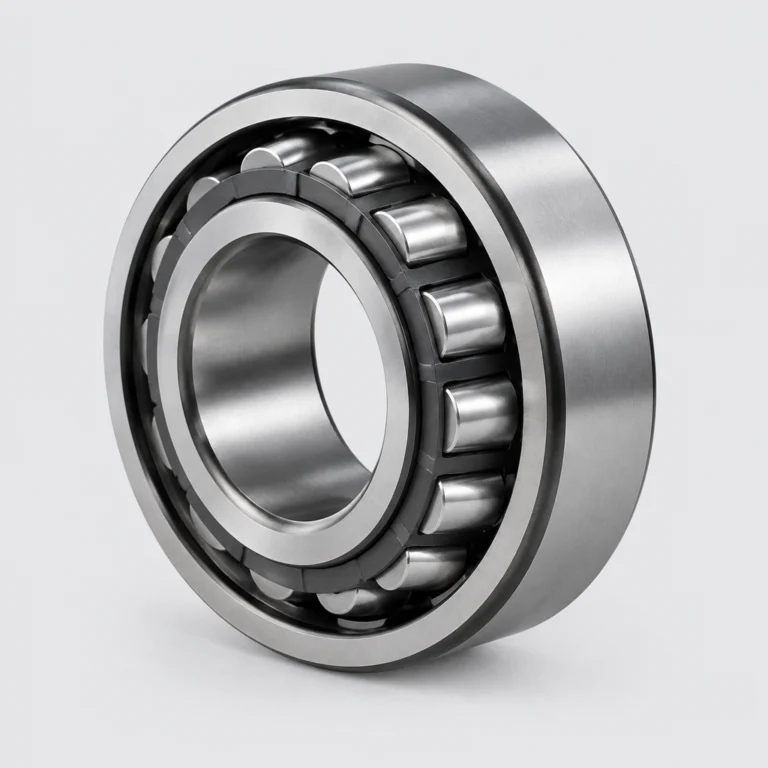
The single-row tapered roller design inherently manages combined radial and axial forces, making it ideal for wheel hubs and gearboxes. By sourcing a genuine NACHI 33020 tapered roller bearing, maintenance teams secure the exact load distribution required for continuous rotational equipment. Our cross-brand equivalent model consultation ensures this geometry aligns perfectly with your existing housing dimensions. Unlike spherical or cylindrical variants, the tapered raceway profile forces the rollers to converge at a single apex point. This kinematic design ensures pure rolling motion under complex load vectors, minimizing sliding friction. In automotive steering knuckles and differential carriers, this precise load management translates directly to extended service intervals and reduced energy consumption.
Managing Contamination and Lubrication in Heavy Axles
Truck axles and marine drives constantly battle moisture ingress and particulate contamination. Selecting between open, Zz, or 2RS seal configurations dictates whether the assembly relies on external grease circulation or sealed lifetime lubrication. Inadequate sealing leads to abrasive wear, while excessive contact seal friction generates unwanted heat. Proper lubrication intervals must match the chosen seal type to prevent premature raceway spalling. In marine propulsion drives, saltwater exposure demands reliable sealing solutions that prevent corrosive pitting on the bearing steel surfaces. Conversely, high-speed reduction units benefit from open designs that allow continuous oil flow to dissipate frictional heat. Understanding the specific environmental challenges of your application is crucial for selecting the right protective configuration.
Decoding Precision and Vibration Grades
While the base designation lacks specific suffixes, the available precision classes from P0 to P4 dictate the running accuracy for high-speed gearbox applications. Higher precision grades minimize vibration, which is further categorized by Z1V1 through Z3V3 standards. Selecting the appropriate vibration grade ensures smoother operation and reduces noise transmission in automotive wheel hubs. Furthermore, verifying the exact seal configuration prevents mismatched lubrication strategies that could starve the rolling elements. In precision machine tool spindles or high-RPM gearboxes, even microscopic deviations in raceway geometry can amplify harmonic vibrations. Upgrading to tighter tolerance classes ensures that the shaft rotation remains perfectly concentric, protecting adjacent seals and gears from uneven wear patterns.
The Downtime Penalty of Overlooked Tolerances
Installing a standard precision unit in a high-speed reduction gearbox often results in unacceptable noise levels and accelerated fatigue. Unplanned downtime caused by catastrophic bearing seizure disrupts entire fleets or production schedules. According to failure analysis frameworks, improper clearance selection accounts for a significant share of premature failures in heavy-duty axles. Warranty voidance frequently follows when non-genuine or misapplied components are discovered during teardown. The financial impact extends far beyond the cost of the replacement part, encompassing lost production revenue, emergency freight charges, and labor costs for secondary damage repair. Proactive specification review mitigates these hidden operational risks.
Securing Traceability for Japanese Drivetrain Components
Counterfeit bearings often mimic standard part numbers but lack the metallurgical integrity required for truck axles. We provide complete batch traceability documentation for every NACHI 33020 tapered roller bearing, ensuring authentic Japanese origin. Our flexible consolidation shipments allow you to mix this single-row unit with other maintenance spares without inflating freight costs. Additionally, our technical team verifies cross-reference dimensions to guarantee housing compatibility before dispatch. Sourcing from unauthorized channels exposes operations to substandard heat treatment processes that compromise the core hardness of the bearing steel. By maintaining strict supply chain controls, we ensure that every unit delivered to your facility meets the exact metallurgical specifications demanded by heavy-duty industrial applications.
Documentation & Authenticity
- Certificate of Conformity confirming genuine NACHI manufacturing origin.
- Original batch traceability reports linking the specific 33020 unit to the factory.
- Dimensional inspection records verifying P0 to P4 tolerance compliance.
- Material test certificates validating bearing steel metallurgical properties.
- Vibration grade test logs confirming Z1V1 to Z3V3 operational smoothness.
Storage, Handling & Mounting
- Store the open-type configurations in original packaging to prevent moisture ingress before gearbox assembly.
- Use clean lint-free gloves when handling P4 precision variants to avoid skin acid corrosion on raceways.
- Apply induction heating for inner ring mounting to preserve the exact interference fit required for wheel hubs.
- Maintain consistent ambient temperature during storage to prevent condensation inside 2RS sealed units.
- Verify shaft and housing shoulder dimensions against single-row tapered roller envelope limits prior to pressing.
Preparing Your Technical Parameters for Review
To ensure the selected configuration matches your drivetrain, please provide the exact radial and axial load profiles alongside operating speeds. Sharing the OEM equipment number allows our engineering team to perform precise cross-reference validation. Specify the ambient and operational temperature ranges so we can recommend the optimal internal clearance and lubrication strategy for your specific application.
Frequently Asked Questions
Q: How do I verify the authenticity of this specific Japanese tapered roller bearing?
A: Authenticity is confirmed through original batch traceability documentation and factory certificates of conformity. We supply verifiable production records that link the physical unit to the manufacturer's production facilities, ensuring it is not a counterfeit. This documentation is critical for heavy-duty truck axle applications where metallurgical failure causes catastrophic downtime.
Q: What cross-reference considerations apply when replacing existing drivetrain components?
A: When cross-referencing, it is essential to match not only the basic envelope dimensions but also the internal geometry and contact angles. Our technical team verifies these parameters against equivalent global catalogs to ensure direct interchangeability. This prevents housing misalignment and ensures the single-row design handles the combined loads of your specific industrial gearbox.
Q: How should I choose between Zz, 2RS, and Open seal configurations?
A: Open designs require external lubrication systems and are ideal for gearboxes with shared oil baths. The 2RS configuration provides maximum contamination protection for wheel hubs exposed to road debris, while Zz shields offer a balance of friction reduction and dust exclusion. Selecting the correct seal prevents lubricant starvation and extends service life in harsh environments.
Q: What is the practical difference between P0 and P4 precision ratings?
A: Standard P0 precision is sufficient for general truck axle applications where slight runout is acceptable. In contrast, P4 precision offers significantly tighter dimensional tolerances and running accuracy, which is mandatory for high-speed industrial gearboxes to minimize vibration and noise. Upgrading to higher precision grades ensures smoother operation and reduces the risk of premature fatigue.
Q: What are the recommended relubrication intervals for single-row tapered designs?
A: Relubrication intervals depend heavily on the operating temperature, load magnitude, and environmental contamination levels. Open bearings in heavy-duty axles require regular grease purging to expel worn particles, whereas sealed variants are typically lubricated for life. We provide application-specific maintenance guidelines based on your operational parameters to optimize the service interval and prevent raceway wear.