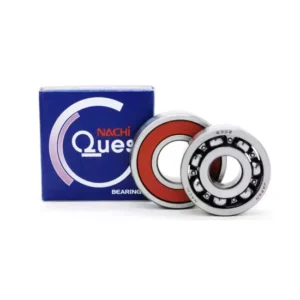
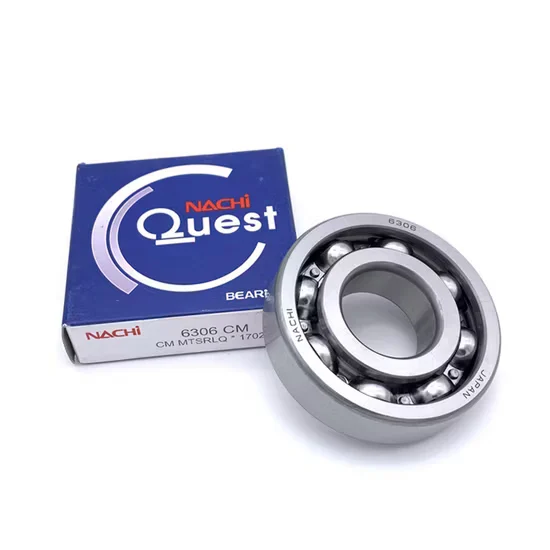
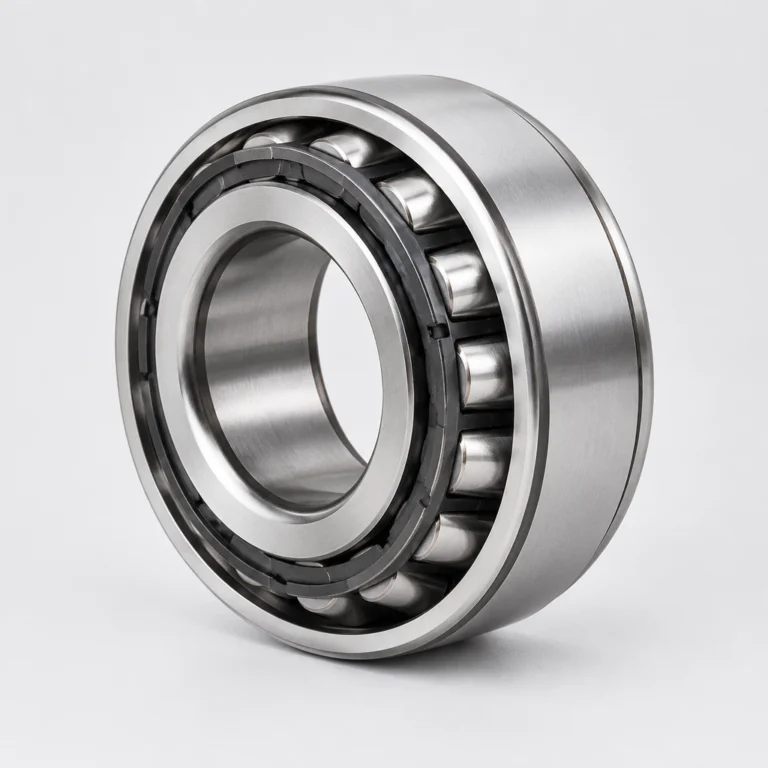
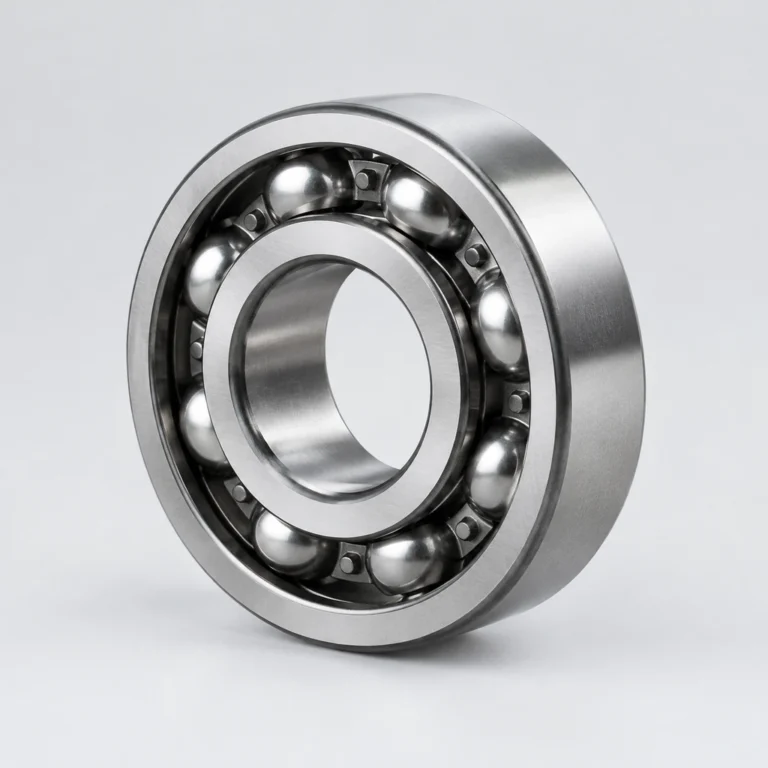
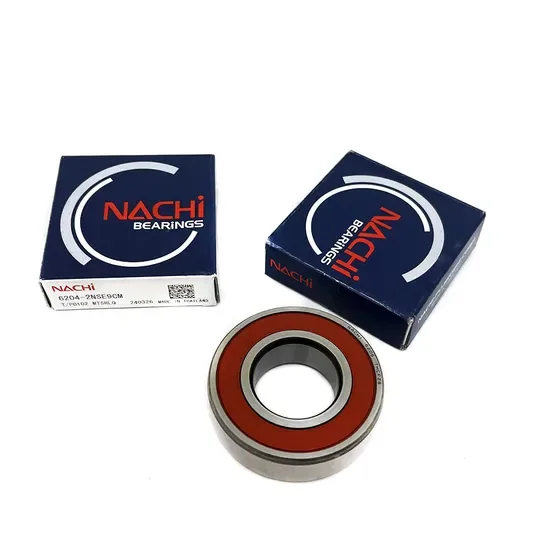
Mixed-Brand Consolidation — procure this specific NACHI unit alongside other OEM spares in a single shipment without juggling multiple vendors.
Technical Specifications
| Parameter | Value |
| Designation | NACHI 6305-2nse9 |
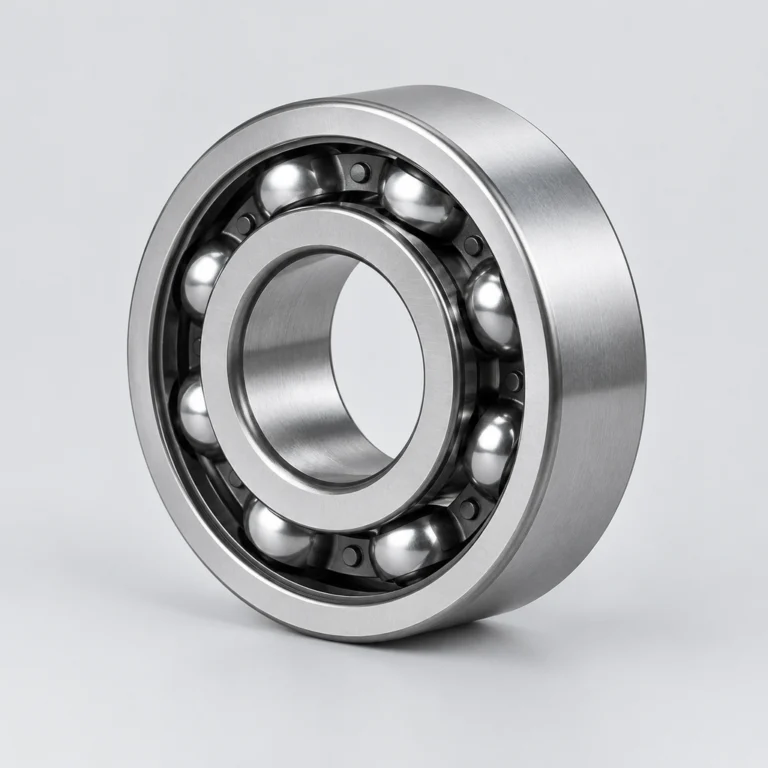
| Bearing Type | Deep Groove Ball Bearing |
| Bore Diameter (d) | 25 mm |
| Outside Diameter (D) | 62 mm |
| Width (B) | 17 mm |
| Material | Bearing Steel |
| Contact Angle | 0° |
| Arrangement | Non-Aligning |
| Separated | Unseparated |
| Number of Rows | Single |
| Load Direction | Radial |
| Origin | Japan |
Application Suitability
| Industry | Typical Applications |
| Heavy Machinery | Articulation joints and hydraulic pump drives |
| Industrial Gearboxes | Input and output shaft radial support |
| Pumps | Centrifugal impeller shaft stabilization |
Why Suffix Accuracy Dictates the Survival of Your NACHI 6305-2nse9 Deep Groove Ball Bearing
Overlooking seal suffixes turns a standard replacement into an immediate mechanical failure.
Early in my procurement career, I swapped a specified rubber-sealed deep groove ball bearing for a standard shielded variant to save time. Dust infiltrated the raceway, and the heavy equipment seized completely on site. That costly downtime taught me to scrutinize every suffix. When sourcing a NACHI 6305-2nse9 deep groove ball bearing, assuming generic equivalence without verifying the exact seal and lubrication code invites catastrophic contamination. Heavy machinery operates in unforgiving conditions where microscopic abrasive particles easily bypass inadequate shields. The resulting raceway scoring accelerates fatigue, turning a minor maintenance task into a major operational crisis. Maintenance teams often overlook the fact that different seal materials react differently to specific environmental contaminants, meaning a generic replacement simply cannot replicate the engineered defense of the original component.

Matching the Component to Heavy Equipment Demands
Heavy machinery operates under intense radial loads, constant vibration, and frequent shock impacts. Our engineering team cross-references your specific equipment manuals to ensure the NACHI 6305-2nse9 deep groove ball bearing matches the exact OEM clearance and seal requirements. We eliminate the guesswork that typically leads to premature wear in demanding construction and mining environments. By analyzing the specific load zones within articulation joints and hydraulic pump drives, we verify that the internal geometry can withstand the localized stress concentrations without spalling. This rigorous validation process ensures that the bearing integrates smoothly into your existing mechanical architecture, preserving the designed service life of the entire drive train.
Operational Challenges and Performance Requirements
Radial bearings in gearboxes and pumps face continuous rotational stress and potential misalignment from structural deflections. Elevated operating temperatures can degrade standard grease, making the correct factory-fill lubrication critical for longevity. Furthermore, exposure to abrasive particulates demands precise sealing solutions to prevent raceway scoring. Selecting the appropriate contact seal versus a non-contact shield directly dictates the friction heat generated during high-speed cycles. If the thermal limit of the lubricant is exceeded due to excessive seal friction, the grease will carbonize and fail. Additionally, heavy equipment often experiences fluctuating load profiles that demand a lubricant with exceptional extreme-pressure additives to maintain the protective film thickness between the rolling elements and raceways.
Decoding the Core Engineering Specifications
The 25x62x17 mm dimension profile provides a highly durable cross-section for handling substantial radial forces in a compact housing. Available in standard bearing steel or specialized stainless variants for corrosive environments, the single-row, non-aligning design ensures optimal load distribution across the rolling elements. The unseparated internal structure maintains structural rigidity under heavy shock loads typical in construction machinery. Regarding the specific identifier, the "2nse9" suffix requires manufacturer catalog confirmation, as it likely denotes a specialized contact seal and specific grease fill that must be verified against official documentation before installation. Misinterpreting this suffix could result in deploying a standard seal in an application requiring enhanced chemical resistance or higher temperature stability. Understanding the precise metallurgical composition and heat treatment protocols applied to the selected material is equally vital, as these factors dictate the material's resistance to subsurface fatigue and structural deformation under peak operational loads.
The Hidden Financial Drain of Incorrect Selections
Installing a mismatched seal type inevitably leads to lubricant starvation and rapid raceway degradation. Such unplanned downtime halts entire production lines and voids equipment warranties. According to industry frameworks, contamination remains a primary driver of early fatigue. Replacing a failed unit repeatedly costs exponentially more than sourcing the exact original specification initially. Beyond the direct replacement costs, the collateral damage to adjacent shafts, housings, and driven components can escalate the financial impact significantly, turning a simple bearing swap into a complete assembly rebuild. Consequently, prioritizing exact specification matching over superficial dimensional equivalence is the most effective strategy for protecting your capital equipment and maintaining predictable operational schedules.
Securing Exact Specifications Through Our Supply Chain
We maintain massive spot inventory covering thousands of standard and special part numbers, ensuring urgent MRO requirements are met without delay. Our technical selection support specifically targets suffix verification, preventing the exact seal mismatches that cause field failures. We provide complete traceability documentation for every genuine Japan-origin unit shipped. Furthermore, our flexible MOQ allows you to order a single emergency spare or consolidate a full container of mixed-brand project materials. Global shipping consolidation ensures your critical spares arrive precisely when maintenance windows open, backed by long-term after-sales technical support for failure analysis and application guidance. By utilizing our extensive cross-brand equivalent model consultation, we can also identify suitable alternatives if the exact original part number faces extended lead times, ensuring your operations never stall.
Documentation & Authenticity
- Certificate of Conformity verifying genuine Japan origin for this specific deep groove series.
- Original factory batch traceability linking the physical unit to production records.
- Official app QR verification to instantly confirm authenticity on the job site.
- Material inspection reports validating the bearing steel composition and hardness.
- Dimensional inspection confirming the strict 25x62x17 mm tolerances before dispatch.
Storage, Handling & Mounting
- Retain the original factory packaging to protect the specialized seal lips from UV degradation and humidity.
- Store in a temperature-controlled environment to prevent condensation inside the unseparated bearing structure.
- Use clean lint-free gloves during installation to avoid transferring skin oils to the bearing steel raceways.
- Apply induction heating for the inner ring mounting to preserve the precise 25 mm bore tolerance.
- Verify the exact grease fill requirements if the "2nse9" suffix indicates a sealed, non-relubricable design.
Technical Inquiry and Selection Guidance
To ensure precise compatibility, please provide your equipment's radial and axial load profiles, operating speeds, and ambient temperature ranges. Sharing the exact OEM part number allows our engineering team to perform a thorough cross-reference and L10 life calculation. We will verify the specific seal and lubrication codes to guarantee the selected unit withstands your exact operating environment.
Frequently Asked Questions
Q: How can we verify the authenticity of this NACHI deep groove ball bearing?
A: Every genuine unit we supply features a scannable QR code compatible with the official manufacturer application. This digital verification confirms the production batch, origin, and authenticity instantly. We also provide physical certificates of conformity and factory traceability documents, ensuring complete transparency for your quality assurance and MRO compliance records.
Q: What does the unverified "2nse9" suffix indicate for this specific model?
A: This specific suffix combination typically designates specialized rubber contact seals and a particular factory grease fill, but it requires direct confirmation against the current manufacturer catalog. We strongly advise consulting our technical team to decode this exact suffix before installation, ensuring the seal friction and lubrication match your heavy machinery's operational parameters perfectly.
Q: How do we select the correct seal type for dusty heavy machinery environments?
A: Dusty environments demand heavy-duty contact seals to block abrasive particulates from infiltrating the raceway. However, contact seals generate higher friction heat at elevated speeds. Our engineering team evaluates your specific rotational speed and contamination levels to recommend the optimal balance between sealing efficiency and thermal limits, preventing both dust ingress and grease degradation.
Q: What cross-reference precautions are necessary when replacing OEM bearings?
A: When cross-referencing to equivalent models from other premium brands, you must verify that the internal clearance, precision class, and seal friction characteristics match exactly. A dimensionally identical bearing with incorrect internal clearance will fail prematurely under heavy radial loads. We provide comprehensive technical selection support to align these critical parameters across different manufacturer catalogs.
Q: What is the recommended maintenance cycle for sealed deep groove ball bearings?
A: Sealed variants are generally designed as maintenance-free components for their operational lifespan, relying on the initial factory grease fill. Attempting to relubricate a sealed unit often damages the seal lips, introducing contaminants. For open or shielded variants in heavy machinery, we recommend establishing a strict relubrication schedule based on operating hours and environmental contamination levels.