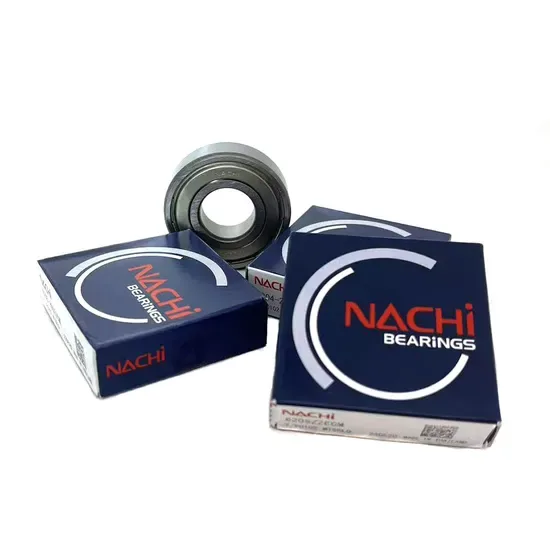
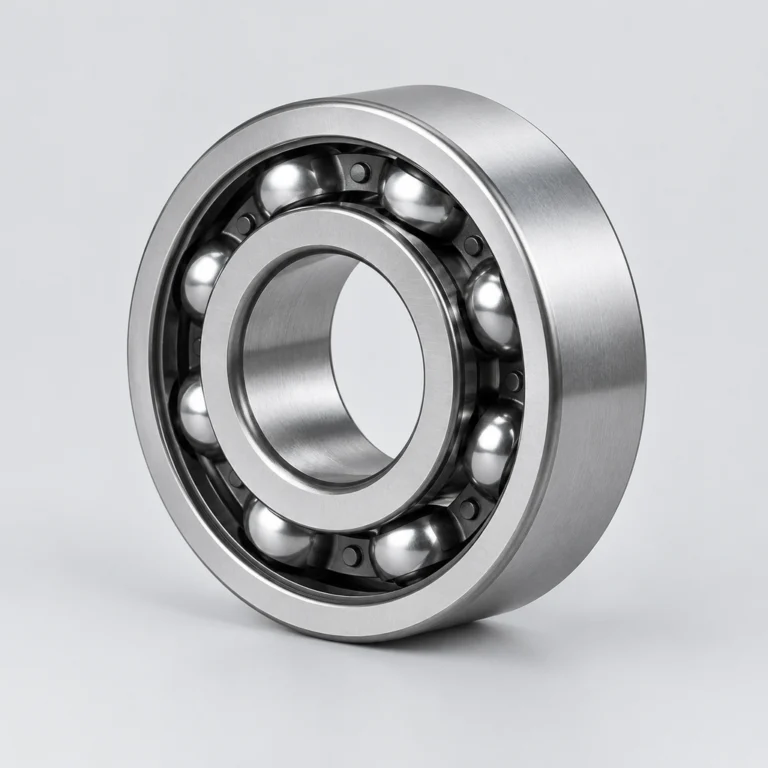
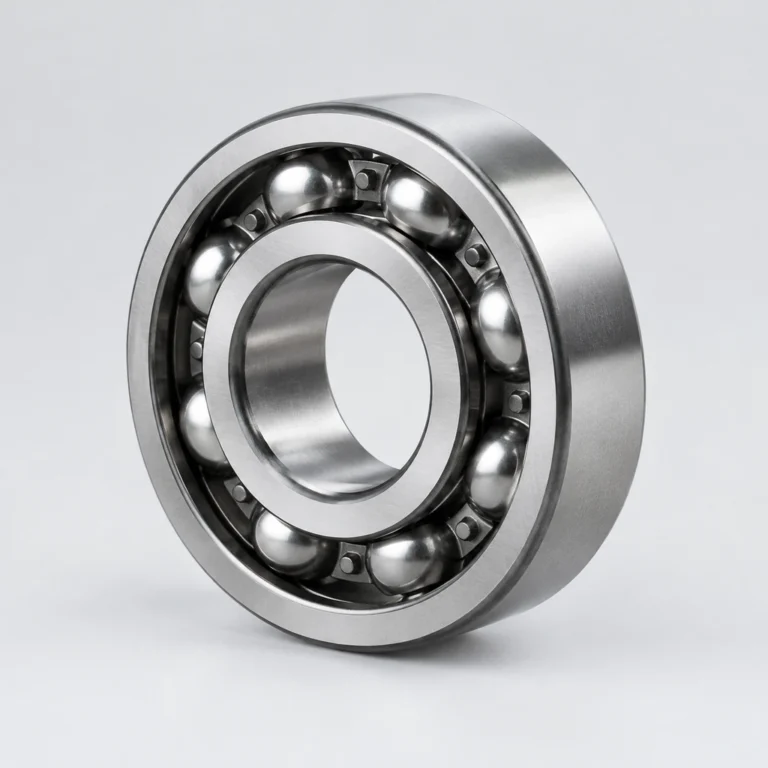
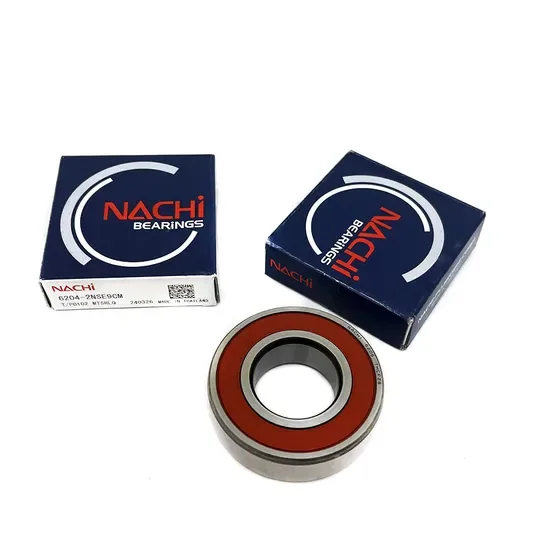
Original Batch Traceability — Every X&S 698 deep groove ball bearing ships with verifiable factory lot codes to ensure authentic material provenance.
Technical Specifications
| Parameter | Value |
| Designation | 698 633 634 635 636 637 638 639 623 624 625 626 6 |
| Product Type | Deep Groove Ball Bearing |
| Rows Number | Single |
| Load Direction | Radial Bearing |
| Lubrication | Grease or Oil |
| Feature | High Speed |
| Origin | Shandong, China |
| HS Code | 8482102000 |
Application Suitability
| Industry | Typical Applications |
| Electric Motors | Rotor shaft support in high-speed micro motors |
| Pumps | Impeller shaft alignment in centrifugal water pumps |
| Conveyors | Roller end-cap rotation in material handling systems |
| Gearboxes | Low-torque shaft support in precision reduction gears |
| Household Appliances | Spindle rotation in washing machine and fan motors |
Why Open Miniature Bearings Fail in Dusty Motor Environments
Sealed variants prevent abrasive particle ingress that instantly destroys open designs.
Back in Nigeria, I watched countless water pump motors burn out because standard open bearings ingested fine silica sand, seizing the rotor shaft entirely and destroying the copper windings. When sourcing an X&S 698 deep groove ball bearing for similar harsh environments, ignoring the seal configuration leads to catastrophic motor failure rather than gradual wear. Procurement teams often prioritize basic dimensional fits over environmental sealing, resulting in massive warranty claims. Dust particles act as lapping compound inside the raceway, accelerating fatigue spalling and generating excessive heat that degrades the lubricant. Without proper rubber-contact seals, the microscopic clearances in these miniature units are quickly compromised, turning a simple replacement task into a complete motor rebuild. Understanding the exact environmental threat is the first step in specifying the correct protective configuration.

Matching Micro Bearing Clearance to High-Speed Motor Shafts
Selecting the correct internal clearance for an X&S 698 deep groove ball bearing dictates whether the motor runs quietly or vibrates excessively at high RPMs. Our engineering team cross-checks your specific rotor thermal expansion data against standard clearance classes to prevent premature binding. This proactive matching ensures the deep groove ball bearing maintains optimal radial load distribution throughout its operational lifespan. If the interference fit on the shaft is too tight and the clearance is too small, the rolling elements will skid rather than roll, generating localized friction heat. Conversely, excessive clearance causes the rotor to rattle, creating unacceptable noise levels in household appliances and precision gearboxes. We analyze the exact operating temperature gradient to recommend the precise clearance class that guarantees smooth, vibration-free rotation under continuous duty cycles.
Navigating Dust, Heat, and Lubrication Breakdown
High-speed electric motors generate localized heat that degrades standard grease, while external dust penetrates unsealed raceways and acts as an abrasive grinding paste. Choosing between grease or oil lubrication depends entirely on the motor's thermal profile, rotational speed, and maintenance accessibility. Rubber-contact seals introduce slight friction but effectively block abrasive contaminants, whereas open designs require pristine, filtered environments to survive. Misjudging these operational variables accelerates lubricant starvation and raceway spalling. In agricultural machinery and outdoor conveyors, moisture and particulate matter constantly threaten the bearing internals. Specifying the correct seal material and lip design ensures that the lubricant remains clean and functional, extending the maintenance intervals and preventing unexpected shaft lockups during critical production runs.
Decoding Single-Row Radial Load Characteristics
The single-row arrangement inherently optimizes the bearing for pure radial load direction, making it exceptionally suitable for lightweight motor shafts and small pump impellers. High-speed feature capabilities rely on precise raceway honing, ultra-smooth surface finishes, and low-friction cage designs to minimize centrifugal forces and heat generation. Depending on the exact operating environment, the bearing is available in variants accommodating either grease or oil lubrication, allowing engineers to tailor the friction profile to the specific application. Understanding these fundamental design traits ensures the selected unit aligns perfectly with the gearbox or pump shaft dynamics. The deep groove raceway geometry also allows the bearing to accommodate minor axial loads, providing versatility in applications where shaft thrust occurs during startup or transient operational shifts.
The Financial Impact of Incorrect Seal and Lubrication Choices
Specifying an open bearing for a dusty conveyor application guarantees unplanned downtime and catastrophic damage to the surrounding motor windings. Premature failure triggered by abrasive ingress voids equipment warranties and forces emergency maintenance shutdowns that halt entire production lines. Following ISO 281 guidelines for life calculation requires accurate environmental contamination factors, which are entirely compromised when the wrong seal type is deployed. The hidden costs encompass labor hours, lost production revenue, and secondary damage to adjacent components. Procurement decisions based solely on initial unit price often result in exponentially higher total cost of ownership. Recognizing these financial risks compels engineering teams to prioritize robust sealing solutions and verified lubrication specifications over marginal upfront savings.
Securing Authentic Micro Bearings with Full Traceability
We verify the exact seal suffix and clearance class for every miniature series order, preventing the common mismatch where open units are accidentally shipped instead of sealed variants. Our massive spot inventory covers thousands of standard part numbers, ensuring urgent MRO replacements ship immediately without waiting for extended factory production runs. We provide complete traceability documentation and cross-brand equivalent model consultation, allowing you to seamlessly substitute unavailable OEM parts with verified, dimensionally identical alternatives. Sourcing genuine components eliminates the risk of substandard steel that prematurely fatigues under cyclic loading. Our technical support team assists with complex failure analysis, helping you identify the root cause of previous bearing failures and implementing corrective selection strategies for future orders.
Documentation & Authenticity
- Factory lot traceability codes linking each X&S or NACHI unit to its original production batch.
- Dimensional inspection reports verifying micro-bore tolerances before international dispatch.
- Material certification confirming the exact steel grade used for high-speed raceways.
- Authenticity verification documents supporting official brand app QR validation.
Storage, Handling & Mounting
- Keep micro-bore units in original anti-corrosion packaging until mounting to prevent humidity-induced raceway pitting.
- Use lint-free cleanroom gloves when handling open high-speed variants to avoid skin oil contamination on the cages.
- Verify the exact grease fill volume on sealed units, as overfilling causes dangerous churning heat in micro motors.
- Align the shaft shoulder perfectly during press-fitting to avoid brinelling the delicate single-row raceways.
Providing Technical Parameters for Exact Model Selection
To ensure precise dimensional alignment, share your motor shaft diameter, housing bore, and maximum operational RPM with our engineering team. Specify the exact environmental exposure, such as silica dust, moisture, or chemical vapors, so we can recommend the optimal seal configuration and cage material. Providing the original equipment manufacturer part number allows us to perform a rigorous cross-reference check against our global brand database, ensuring complete interchangeability. Detailing the expected radial and axial load profiles enables us to calculate the theoretical L10 life and verify that the selected miniature bearing will meet your durability requirements. This collaborative technical review process eliminates guesswork and guarantees that the procured components are perfectly engineered for your specific mechanical assembly.
Frequently Asked Questions
Q: How do I choose between grease and oil lubrication for these high-speed deep groove ball bearings?
A: Standard grease remains ideal for sealed, maintenance-free micro motors operating at moderate temperatures, providing excellent contamination resistance. Conversely, oil lubrication better suits ultra-high-speed applications where rapid heat dissipation is absolutely critical, provided that external filtration systems are already installed to prevent dangerous particle ingress.
Q: What are the cross-reference equivalents for miniature series like 681, 682, and 698?
A: These miniature designations strictly follow standardized ISO dimensional series, allowing direct cross-referencing across major global brands. We provide exact equivalent model mappings from SKF, NSK, and NTN catalogs, ensuring complete dimensional interchangeability while carefully verifying that the specific seal and clearance suffixes perfectly match your original equipment requirements.
Q: How can I verify the authenticity and origin of X&S or NACHI bearings?
A: Every single shipment includes verifiable factory lot codes and material certificates that trace directly back to the manufacturer's production facilities. Buyers can also utilize official brand authentication apps and QR codes to independently validate the exact origin and confirm the units are genuine, completely uncounterfeited products.
Q: How do I select the correct clearance class for electric motor applications?
A: Standard internal clearance suits general-purpose motors, but high-speed or high-temperature applications frequently require C3 or C4 clearance to safely accommodate thermal expansion. Share your exact rotor operating temperature and interference fit dimensions with our engineering team to calculate the precise residual clearance needed to prevent dangerous binding.