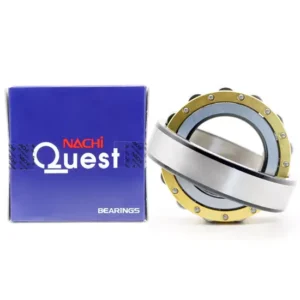
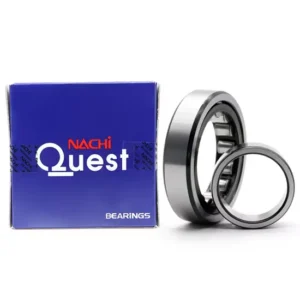
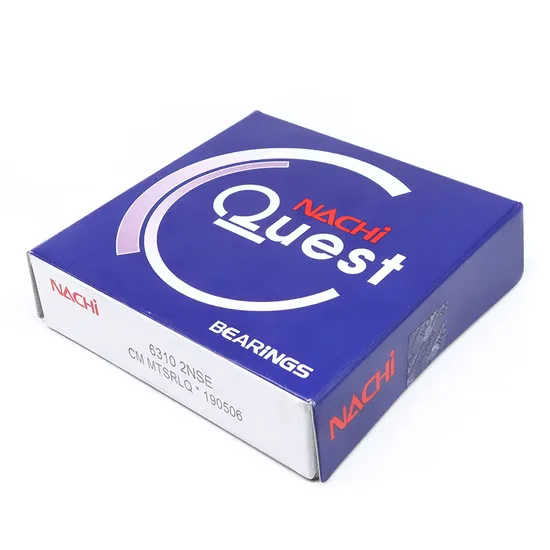
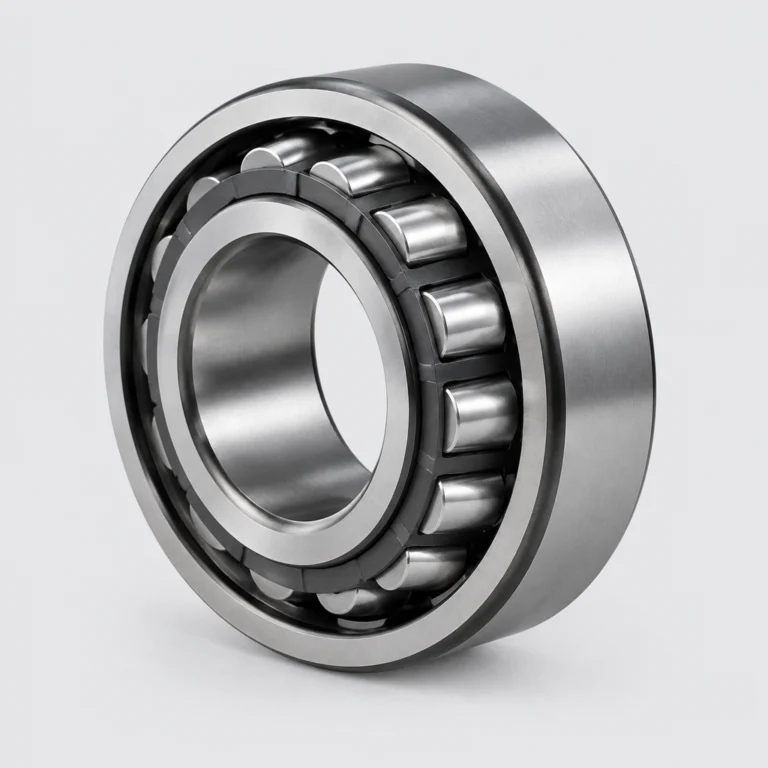
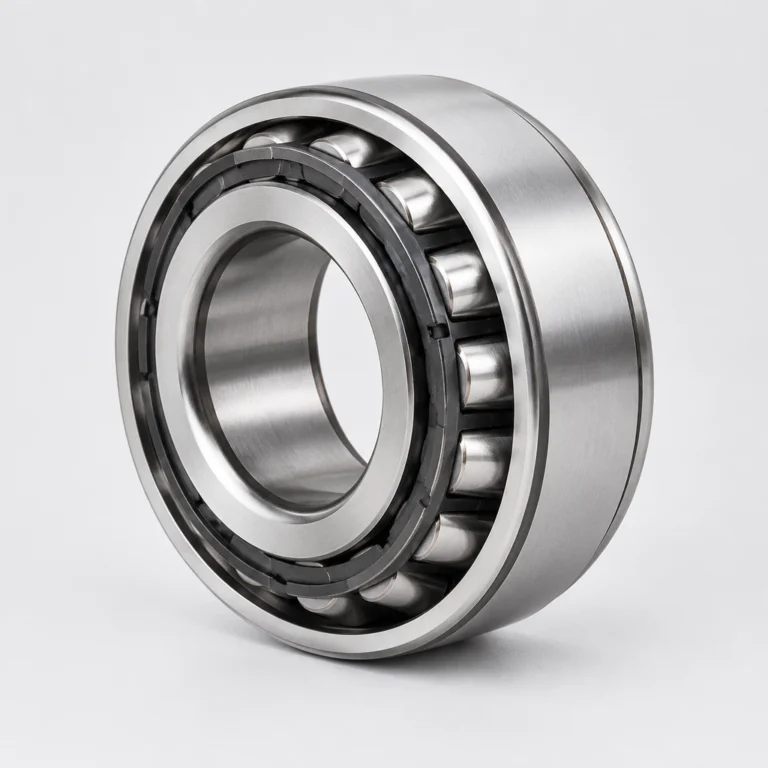
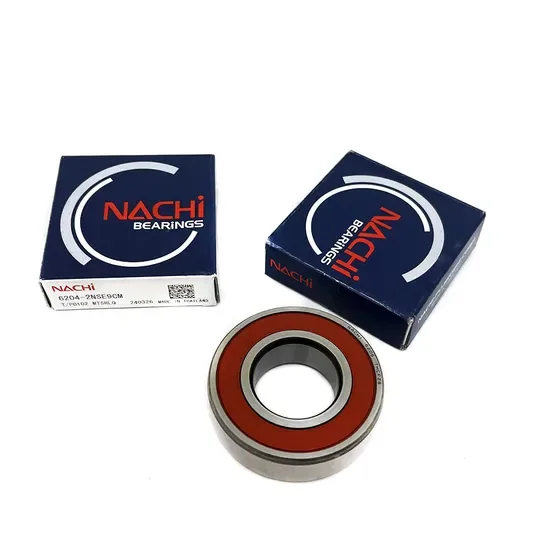
Original Batch Traceability — Every NACHI NU205ETN1 cylindrical roller bearing ships with unbroken factory lot documentation to verify its Japanese origin.
Technical Specifications
| Parameter | Value |
| Designation | NU205ETN1 |
| Bearing Type | Single Row Cylindrical Roller Bearing |
| Bore Diameter (d) | 25 mm |
| Outside Diameter (D) | 52 mm |
| Width (B) | 15 mm |
| Material | Bearing Steel |
| Seal or Shield Type | Open |
| Lubrication | Oil / Grease |
| Separated | Yes |
| Origin | Japan |
Note: The specific meaning of the TN1 suffix requires manufacturer catalog confirmation.
Application Suitability
| Industry | Typical Applications |
| Mining & Aggregates | Vibrating screen exciter mechanisms and deck support joints |
| Heavy Manufacturing | Heavy-duty gearbox shaft supports and rolling mill guide rolls |
Why Vibrating Screens Destroy Standard Cylindrical Roller Bearings
High-frequency oscillation combined with severe radial shock loads rapidly fractures inadequate cage designs.
In a Riyadh quarry, I watched an entire crushing line halt because a standard cage snapped under relentless vibration and heat. Procuring a genuine NACHI NU205ETN1 cylindrical roller bearing with the correct internal clearance prevents these catastrophic structural fatigue failures. When maintenance teams ignore the dynamic load characteristics of oscillating machinery, they inevitably face cascading mechanical breakdowns that halt production.

Matching Cage Geometry to Oscillating Loads
The separable inner and outer rings of the NACHI NU205ETN1 cylindrical roller bearing simplify alignment in heavily loaded screen shafts. By accommodating axial displacement while managing extreme radial forces, this configuration prevents edge loading on the rollers during continuous oscillation. This structural flexibility is crucial when shaft deflection occurs under the immense weight of processed aggregates.
Navigating Heat and Contamination in Aggregate Processing
Vibrating screens generate substantial friction heat, demanding open-type bearings that allow continuous oil circulation to flush out particulate contamination. When grease is preferred, frequent relubrication intervals are mandatory to prevent abrasive dust from scoring the raceways. The absence of integrated seals eliminates contact friction, which is critical when operating at elevated temperatures where thermal expansion alters internal clearance. Furthermore, the harsh acoustic environment necessitates components that can withstand continuous high-frequency shock waves without structural degradation.
Decoding the Enhanced Capacity and Material Selection
The "E" suffix designates an enhanced capacity internal geometry, maximizing the roller count and contact area to handle the punishing radial loads typical in mineral processing. While the specific cage material indicated by the trailing suffix requires manufacturer catalog confirmation, selecting the right polymer or machined brass variant dictates survival under high-frequency vibration. Open configurations leave lubrication strategy entirely to the plant maintenance team, requiring strict adherence to viscosity grades. Furthermore, achieving the correct radial internal clearance compensates for the interference fits required on vibrating shafts, preventing premature seizure during thermal expansion. The separable design also allows the inner ring to be mounted independently, ensuring a secure fit without forcing the roller assembly through tight housing tolerances.
The Financial Impact of Premature Cage Fracture
Installing an under-specified component in a high-vibration environment inevitably leads to cage fragmentation and roller skewing. This catastrophic damage not only destroys the unit but often scores the shaft and housing, leading to weeks of unplanned downtime and expensive machining repairs. According to failure analysis frameworks, improper clearance selection and inadequate cage design are primary drivers of such operational disruptions in heavy aggregate processing.
Securing Authentic Components for Critical Machinery
Sourcing genuine NACHI products requires navigating a market flooded with counterfeit parts that fail rapidly under dynamic stress. We maintain massive spot inventory covering thousands of standard part numbers, ensuring urgent maintenance requirements for vibrating screens are met without delay. Our technical team provides cross-brand equivalent model consultation if a specific variant is unavailable, ensuring dimensional and load compatibility. Every shipment includes complete traceability documentation, protecting your operation from the hidden risks of unauthorized supply chains and guaranteeing the metallurgical integrity of the bearing steel.
Documentation & Authenticity
- Certificate of Conformity validating the Japanese origin of the bearing steel.
- Original batch traceability records linking the specific unit to its manufacturing date.
- Official app QR verification support to confirm authenticity before installation.
- Dimensional inspection reports confirming the 25 mm bore and 52 mm outside diameter tolerances.
Storage, Handling & Mounting
- Keep the original packaging sealed until mounting to protect the open raceways from ambient moisture and dust.
- Use induction heating for the inner ring installation to preserve the precise interference fit on the vibrating screen shaft.
- Apply clean gloves during handling to prevent acidic sweat from initiating corrosion on the exposed bearing steel surfaces.
- Verify the shaft and housing tolerances match the separable design requirements to avoid misalignment during assembly.
Preparing Your Technical Data for Selection Review
To ensure the selected clearance class and cage material match your specific vibrating screen, share your operational parameters including radial loads, oscillation frequency, and ambient temperatures. Providing the original equipment manufacturer part numbers allows our engineering team to perform accurate cross-reference verification. This technical review guarantees the proposed configuration aligns with your maintenance intervals and load expectations.
Frequently Asked Questions
Q: How can I verify the authenticity of the NACHI NU205ETN1 before installation?
A: You can authenticate the component by scanning the official QR code on the packaging using the manufacturer's designated mobile application. Additionally, we provide complete batch traceability documentation and a Certificate of Conformity, ensuring the bearing steel and manufacturing origin meet strict quality assurance standards before it reaches your facility.
Q: What does the "E" suffix indicate in this specific designation?
A: The "E" suffix denotes an enhanced capacity internal design. This engineering modification optimizes the roller profile and increases the number of rolling elements within the assembly, significantly improving the radial load-carrying capability required for heavy-duty applications like vibrating screens and mineral processing equipment.
Q: How should I determine the correct internal clearance for my vibrating screen?
A: Vibrating screens typically require greater internal clearance to accommodate shaft interference fits and thermal expansion during operation. By sharing your specific operating temperatures and mounting tolerances, our technical team can recommend the appropriate clearance class to prevent internal preload and ensure reliable performance under continuous oscillation.
Q: What lubrication strategy is recommended for this open-type configuration?
A: Since this is an open configuration without integrated seals, continuous oil circulation is often preferred in vibrating screens to flush out abrasive contaminants and manage friction heat. If grease is used, establishing strict relubrication intervals with a high-quality, vibration-resistant grease is essential to protect the exposed raceways.