
NACHI Bearing Technical Guide Buying Guide
Buy Genuine NACHI Bearings: Wholesale Supplier for Bulk Orders
Secure genuine NACHI bearings by mastering neutral checks and traceability verification to avoid catastrophic equipment failures. Learn to identify counterfeit units through hardness testing, cage material analysis, and batch code validation. Ensure wholesale orders meet ISO standards with full documentation for reliable industrial performance.
- Published
- By author
- nachioem · Specialized NACHI bearing supplier
Neutral packaging does not mean generic quality; it often signals factory-direct traceability.
Securing genuine NACHI bearings requires strict neutral checks and full traceability verification to prevent catastrophic equipment failures caused by counterfeits. Authentic units come with verifiable batch codes, consistent metallurgical properties, and documentation that aligns with ISO standards, ensuring that wholesale orders meet the rigorous demands of heavy industry and MRO operations.
I still remember the silence in the workshop after a Mexican client called. He had sourced fifty sets of deep-groove ball bearings through an unofficial channel to cut costs. The machines ran for less than half a month before the spindles burned out. When we dismantled the failed units, the cause was obvious to anyone who has handled bearing steel: the cage material was brittle, snapping under minimal stress, and the internal clearance was completely wrong for the application. That failure was not bad luck. It was the result of sourcing from channels that lack basic metallurgical quality control. Since then, I have focused entirely on verifying the origin of every unit, learning that the only way to secure genuine NACHI bearings is to look beyond the price tag and inspect the physical and documentary evidence of authenticity.
Understanding how to distinguish authentic stock from refined fakes is critical for distributors and OEMs. The market is flooded with relabeled goods that look identical at a glance but fail under load. This guide breaks down the neutral checks, traceability verification, and specification details that define a reliable supply chain for industrial projects.
Why Do Counterfeit NACHI Bearings Fail So Quickly?
Substandard materials and incorrect clearances cause rapid spindle burnout and premature fatigue.
The primary reason counterfeit bearings fail is not just poor manufacturing, but a fundamental mismatch in material science. Genuine NACHI bearings use high-purity steel with controlled inclusion density, which is essential for resisting fatigue cracks under heavy loads. Counterfeiters often use lower-grade steel that may pass a visual inspection but lacks the necessary hardness and toughness.
In my experience, the most common failure mode in fake units is cage fracture. Authentic cages are made from specific polymers or pressed steel designed to withstand high temperatures and centrifugal forces. Fakes often use recycled or inferior materials that become brittle over time. When a machine operates at high speeds, these cages disintegrate, leading to immediate seizure.
Another critical factor is internal clearance. Genuine bearings are manufactured to precise tolerance classes, such as C3 or C4, depending on the application. Counterfeiters rarely maintain these tight tolerances. If the clearance is too tight, the bearing overheats due to friction. If it is too loose, vibration increases, causing damage to the housing and shaft. This inconsistency is why a batch of fake bearings might work for a few days before failing catastrophically.
For buyers, this means that a low price is often a indicator of hidden risks. Unofficial channels do not invest in the heat treatment and precision grinding required for long-term reliability. The cost of downtime and replacement far exceeds the initial savings from buying counterfeit goods.
What Are the Key Neutral Checks for NACHI Bearings?
Visual, dimensional, and material tests reveal hidden fakes that packaging alone cannot detect.
Neutral packaging is often misunderstood. Some buyers assume it means the product is generic or of lower quality. In reality, neutral packaging is a standard practice for factory-direct exports, ensuring that the focus remains on the product’s traceability rather than marketing materials. However, it also means the buyer must perform their own checks upon receipt.
The first step is a visual inspection of the marking. Genuine NACHI bearings have laser-etched or stamped markings that are sharp, evenly spaced, and difficult to remove. Counterfeits often have markings that are painted on, uneven, or easily rubbed off. The font style and spacing should match the official brand guidelines.
Next, check the surface finish. Authentic bearings have a smooth, uniform finish on the raceways and rolling elements. Any signs of roughness, discoloration, or machining marks indicate poor quality control. The chamfers on the ring edges should be consistent and smooth, not jagged or uneven.
Dimensional verification is also crucial. Use precision micrometers to check the outer diameter, inner diameter, and width. These measurements must fall within the specified tolerance class. For heavy-duty applications, verifying the radial internal clearance is essential. This requires specialized tools, but it is the only way to ensure the bearing will perform as expected under load.
| Inspection Point | Genuine NACHI Bearings | Counterfeit/Refurbished Units |
|---|---|---|
| Marking Quality | Sharp, laser-etched, permanent | Painted, uneven, easily removed |
| Surface Finish | Smooth, uniform, no machining marks | Rough, discolored, visible tool marks |
| Cage Material | Consistent, high-quality polymer/steel | Brittle, recycled, inconsistent texture |
| Packaging | Neutral but secure, with batch labels | Generic, often damaged or reused boxes |
Hardness testing is another reliable method. Genuine bearing steel typically falls within a specific HRC range, usually between HRC 60 and HRC 65. While this requires destructive testing or specialized portable testers, it provides definitive proof of material quality.
These checks do not require a full laboratory. A well-equipped warehouse can perform most of them with basic tools. The key is consistency. If one bearing in a batch fails the visual check, the entire lot should be suspect.
How to Verify Traceability in Wholesale Orders?
Authentic certificates and batch codes guarantee original factory sourcing and customs compliance.
Traceability is the backbone of a secure supply chain. For wholesale buyers, especially those dealing with large volumes, knowing the origin of each bearing is non-negotiable. Genuine NACHI bearings come with documentation that links the physical product to its production batch. This includes mill certificates, quality inspection reports, and packing lists that match the batch codes on the bearings themselves.
A Middle East distributor once shared his experience with a mixed-brand container. By demanding 100% traceability documents for every item, he avoided customs rejection and ensured that all parts were authentic. This level of documentation is not just for customs; it is for peace of mind. If a bearing fails, you can trace it back to the production date and facility, allowing for a proper root cause analysis.
Our approach to supplying genuine NACHI bearings involves maintaining full traceability documentation for every order. We provide ISO-compliant quality assurance papers that verify the origin of the stock. This is not just a piece of paper; it is a legal and technical guarantee that the bearings are not refurbished or counterfeit.
Batch consistency is another aspect of traceability. In large projects, such as mining operations, using bearings from different batches can lead to performance variations. Genuine suppliers ensure that all bearings in a single order come from the same production run, minimizing these risks. This is particularly important for OEMs who require precise dimensional tolerance across thousands of units.
When evaluating a supplier, ask for sample documentation before placing a large order. Check if the batch codes on the papers match the codes on the product. If a supplier cannot provide this link, they are likely sourcing from unofficial channels. The risk of receiving mixed or fake stock is too high to ignore.
Which Specifications Matter for Heavy-Duty Applications?
Precise tolerances and correct cage materials ensure long-term stability in harsh environments.
Heavy-duty applications, such as mining crushers and construction machinery, place extreme stress on bearings. In these scenarios, standard specifications are not enough. Buyers must focus on specific features that enhance durability and reliability.
Precision tolerance is critical. Bearings used in high-load applications often require P5 or P4 precision classes. These tighter tolerances ensure better load distribution and reduced vibration. Genuine NACHI bearings are manufactured to meet these strict standards, whereas counterfeits often claim higher precision than they actually deliver.
Cage material selection is equally important. For high-speed or high-temperature applications, polymer cages may not be suitable. Pressed steel or machined brass cages offer better strength and heat resistance. The choice depends on the operating conditions, and genuine suppliers provide technical support to help buyers make the right selection.
Clearance class is another key specification. C3 and C4 clearances are common in heavy industry because they allow for thermal expansion without causing excessive preload. Using a bearing with the wrong clearance can lead to premature failure. Authentic bearings are clearly marked with their clearance class, allowing for easy verification.
| Specification | Heavy-Duty Requirement | Risk of Counterfeit |
|---|---|---|
| Precision Class | P5 or P4 for stability | Often claimed but not achieved |
| Cage Material | Steel or brass for strength | Brittle polymer or weak steel |
| Clearance Class | C3 or C4 for thermal expansion | Incorrect or inconsistent |
| Sealing Type | Robust seals for contamination protection | Poor fit, allowing debris entry |
Sealing is also vital in dirty environments. Genuine bearings use high-quality seals that fit precisely to keep contaminants out. Fake bearings often have poorly fitted seals that allow dust and moisture to enter, leading to rapid wear.
By focusing on these specifications, buyers can ensure that their equipment runs smoothly and efficiently. It is not just about buying a bearing; it is about buying reliability.
Conclusion
Authenticity is verified through traceability, not just price.
Securing genuine NACHI bearings requires a disciplined approach to inspection and documentation. By performing neutral checks, verifying traceability, and selecting the right specifications, buyers can avoid the costly pitfalls of counterfeit products. Reliable suppliers provide the transparency and technical support needed to keep industrial operations running smoothly. Trust the process, verify the source, and prioritize long-term performance over short-term savings.
Applications covered in this article
Products in this article
NACHI bearings mentioned above
These are the NACHI bearing types discussed in this guide. Open a product page to check its designation and send the exact suffix with your quantity.
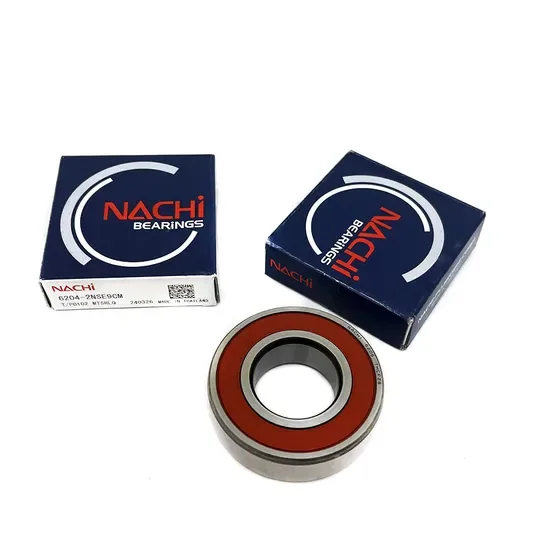
Deep Groove Ball Bearings
Genuine NACHI 608zz 6202 6201 Deep Groove Ball Bearing for Marine Equipment
View product Deep Groove Ball Bearings
Genuine NACHI P6 Deep Groove Ball Bearings 62208 62210 63002 63004 63006
View product
Deep Groove Ball Bearings
Genuine NACHI Deep Groove Ball Bearings 6215 6216 6217 6218 6219 for Juicer
View product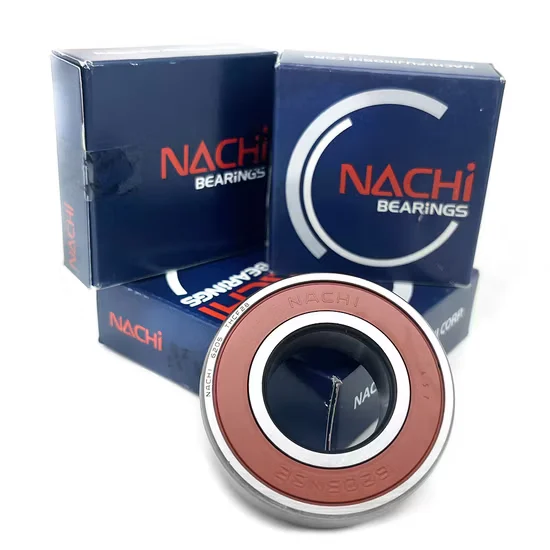
Deep Groove Ball Bearings
Genuine NACHI Deep Groove Ball Bearing 6408 6409 6410 6411 6412 for Conveyor
View productModel check
Not sure which NACHI designation fits? We help with substitution, cross-reference and selection.
Send the old bearing number, the worn marking you can still read, or the application and shaft size. nachioem matches it to the correct NACHI model, including clearance, cage and seal options, before you order.
- Substitution for discontinued models
- Cross-reference to NACHI numbers
- Selection for spindles, pumps and reducers
Keep reading
Related NACHI bearing technical articles
More practical guides on NACHI suffixes, replacement and selection for machine tools, automotive, construction machinery, pumps and gear reducers.
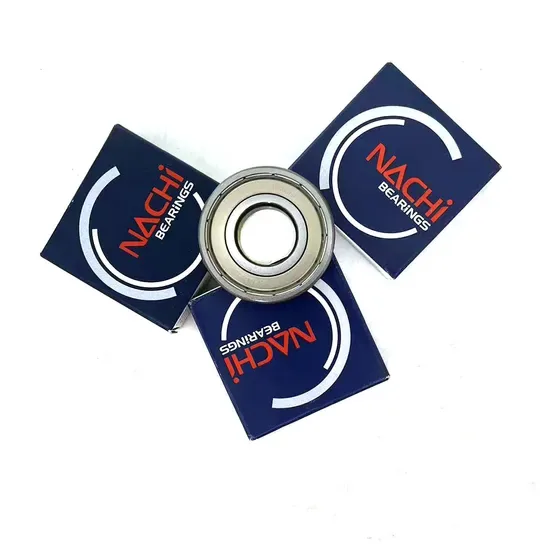
Oct 7, 2026 · Buying Guide · 7 min read
NACHI Bearings Quote: Genuine Wholesale Supplier for Bulk & MRO Orders
Request a NACHI bearings quote with full suffix accuracy to prevent costly customs delays and ensure genuine product traceability. Secure competitive wholesale pricing through…
Read the article Oct 7, 2026 · Buying Guide · 7 min read
Discontinued NACHI Numbers: Replacements from Wholesale Supplier
Replacing discontinued NACHI bearings requires more than matching dimensions to prevent premature field failures. Recalculate internal clearance and verify cage material compatibility to ensure…
Read the article Oct 7, 2026 · Buying Guide · 7 min read
Buy Genuine NACHI Bearings: Wholesale Supplier for Bulk & MRO
Discover the best channels to buy genuine NACHI bearings by evaluating authenticity, pricing tiers, and supply stability. Avoid costly counterfeits with verified traceability and…
Read the article
Request a quote
Send your NACHI model list. We quote fast.
List the NACHI model numbers with full suffixes and the quantity for each. nachioem replies online as quickly as possible with pricing for distributors, repair shops and end users worldwide.
- info@nachioem.com
- WhatsApp +1 (702) 981-5880
- Online replies as quickly as possible
- Global delivery by DHL, FedEx, UPS, air or sea