
NACHI Bearing Technical Guide Buying Guide
NACHI 2NSE vs ZZE vs 2NKE Seals: Wholesale Supplier
Choosing the right NACHI bearing seal options 2NSE ZZE 2NKE prevents premature failure from friction heat or dust ingress. ZZE shields suit high-speed motors by minimizing friction, while 2NSE contact seals protect low-speed equipment in dusty environments. Match seal type to RPM and contamination levels for optimal performance.
- Published
- By author
- nachioem · Specialized NACHI bearing supplier
Contact seals are not always the best choice for protection. In high-speed or high-temperature environments, they can be the primary cause of catastrophic bearing failure due to friction-induced heat.
The correct selection between NACHI 2NSE (rubber contact), ZZE (metal non-contact), and 2NKE (rubber non-contact) depends entirely on the operating speed, ambient temperature, and type of contamination. Mismatching these seals leads to either premature seizure from overheating or rapid wear from dust ingress.
I learned this the hard way during a procurement project in Dubai. I was sourcing bearings for a HVAC system in Riyadh, where summer temperatures regularly exceed forty-five degrees Celsius. Assuming that “more sealing equals better protection,” I specified NACHI deep groove ball bearings with 2NSE rubber contact seals for all high-speed fan motors. The logic seemed sound: the desert is dusty, so maximum sealing is required. However, I failed to account for the rotational speed. The 2NSE seals create physical contact with the inner ring, generating significant friction torque. In the extreme heat, this friction caused the grease to break down and the bearing temperature to spike uncontrollably. Within weeks, multiple motors seized. The entire batch had to be returned. That loss was not just financial; it damaged trust with the client. Since then, I have shifted my approach from selling parts to analyzing工况 (operating conditions). When distributors or OEMs ask about the difference between these suffixes, I do not start with a price list. I start by asking about RPM and pollutants. Choosing the wrong seal means even a genuine, premium-brand bearing will fail prematurely.
Understanding these structural differences is critical for any NACHI bearing seal options 2NSE ZZE 2NKE sourcing decision. The suffix is not just a label; it defines the mechanical limits of the unit.
What are the structural differences between 2NSE, ZZE, and 2NKE?
The core difference lies in the material composition and the contact mechanics between the seal and the bearing rings. These physical attributes dictate whether the seal acts as a barrier against fine particles or a generator of heat.
The 2NSE designation refers to a bearing equipped with two rubber contact seals. The term “contact” means the lip of the rubber seal physically touches the inner ring of the bearing. This creates a tight barrier that is highly effective at preventing the entry of fine dust, water, and other contaminants. It also helps retain grease within the bearing cavity for extended periods. However, this physical contact generates friction. This friction is negligible at low speeds but becomes a significant heat source as rotational speed increases.
In contrast, the ZZE suffix indicates a bearing with two metal shields. These are typically made of steel and are pressed into the outer ring with a small clearance between the shield and the inner ring. This is a non-contact design. Because there is no physical rubbing, the ZZE shield generates almost no additional friction torque. This makes it ideal for high-speed applications where heat generation must be minimized. However, the gap means it offers limited protection against fine dust or liquids. It is primarily designed to keep large particles out and grease in, rather than providing a hermetic seal.
The 2NKE option features two rubber non-contact seals. Like the 2NSE, it uses rubber, which offers better flexibility and resistance to certain chemicals compared to metal. However, like the ZZE, it does not touch the inner ring. This design attempts to bridge the gap, offering better protection against moisture and finer particles than the metal ZZE shield, while avoiding the high friction heat of the 2NSE contact seal. It is a compromise solution, often selected for moderate-speed applications where some moisture protection is needed but friction heat must be controlled.
| Seal Type | Material | Contact Mechanism | Friction Torque | Contamination Protection |
|---|---|---|---|---|
| 2NSE | Rubber | Contact (touches inner ring) | High | Excellent (fine dust, water) |
| ZZE | Metal | Non-contact (clearance) | Very Low | Moderate (large particles only) |
| 2NKE | Rubber | Non-contact (clearance) | Low | Good (moisture, fine dust) |
When evaluating NACHI 2NSE vs ZZE vs 2NKE comparison data, it is essential to recognize that no single type is superior in all categories. The 2NSE wins on protection but loses on speed. The ZZE wins on speed but loses on protection. The 2NKE sits in the middle. For a wholesale supplier, understanding this matrix allows for more accurate technical consultation with clients who may not realize the thermal implications of their seal choice.
How do 2NSE, ZZE, and 2NKE compare in speed and temperature limits?
ZZE shields are the clear winner for high-RPM thermal management, while 2NSE seals are restricted to lower speeds due to friction heat buildup. Ignoring these limits is a common cause of premature bearing failure in industrial applications.
The limiting speed of a bearing is not solely determined by its geometry or cage type; the seal plays a major role. For the 2NSE contact seal, the friction generated at the sealing lip increases exponentially with speed. This friction converts kinetic energy into heat. In a hot climate, such as the Middle East or parts of Southeast Asia, the ambient temperature already stresses the grease. Adding friction heat from a 2NSE seal can push the internal temperature beyond the grease’s dropping point, leading to lubrication failure and seizure. Therefore, 2NSE bearings are generally recommended for low to moderate speeds where contamination is the primary threat.
Conversely, the ZZE metal shield has virtually no impact on the bearing’s limiting speed. Since there is no contact, there is no friction heat generated by the seal itself. This makes ZZE bearings the standard choice for electric motors, spindles, and other high-speed rotating equipment. In my experience with a European wind farm operator, we replaced several gearbox bearings that had failed due to overheating. The original specification called for contact seals to keep out moisture. However, the rotational speeds were high enough that the friction heat degraded the lubricant. Switching to ZZE shields reduced the operating temperature significantly, extending the service life meaningfully.
The 2NKE non-contact rubber seal offers a middle ground. It allows for higher speeds than the 2NSE because there is no rubbing, but it still provides better protection against moisture and fine dust than the ZZE metal shield. This makes it suitable for general pump applications or agricultural machinery where speeds are moderate, and the environment is damp but not excessively dirty.
| Application Scenario | Recommended Seal | Reason |
|---|---|---|
| High-speed electric motor | ZZE | Minimal friction, prevents overheating |
| Dusty mining conveyor (low speed) | 2NSE | Maximum protection against fine dust |
| General water pump (moderate speed) | 2NKE | Balance of moisture protection and low friction |
| High-temp environment | ZZE | Avoids friction-induced heat buildup |
When sourcing NACHI bearing seal options 2NSE ZZE 2NKE, buyers must align the seal type with the actual RPM of the application. A common mistake is to assume that a “higher quality” seal like the 2NSE is always better. In reality, using a 2NSE in a high-speed application is a design error that guarantees premature failure.
Which seal prevents premature failure in your specific operating condition?
Matching the seal type to the specific pollutant and speed profile is the only way to prevent premature failure. A seal that works perfectly in a clean warehouse will fail rapidly in a dusty mine, and vice versa.
Consider the case of a dusty mining conveyor. The environment is filled with fine silica dust, which is abrasive and destructive to bearing surfaces. A ZZE metal shield has a small gap that allows this fine dust to enter over time. Once inside, the dust mixes with the grease, forming an abrasive paste that accelerates wear on the rolling elements and raceways. In one instance, a mining operator in Africa experienced frequent bearing failures on their conveyor rollers. They were using ZZE shields to minimize friction. After switching to 2NSE contact seals, the downtime hours dropped noticeably. The contact seal effectively blocked the fine dust, despite the lower speed capability being acceptable for the slow-moving conveyor.
On the other hand, consider a high-speed spindle in a machine tool. The environment is relatively clean, but the speed is extremely high. Using a 2NSE seal here would generate excessive heat, causing the spindle to expand and lose precision. The ZZE shield is the correct choice here, as it allows the bearing to run cool and maintain precision. The risk of dust ingress is minimal in a controlled workshop environment, so the lower protection level of the ZZE is an acceptable trade-off for thermal stability.
For general industrial pumps, which often operate at moderate speeds and may be exposed to water spray or humidity, the 2NKE seal is often the optimal choice. It provides better moisture resistance than the ZZE shield because rubber is less permeable than metal gaps, yet it does not generate the high friction of the 2NSE. This balance helps extend grease life and prevents corrosion without compromising the bearing’s speed capability.
| Failure Mode | Likely Cause | Solution |
|---|---|---|
| Overheating/Seizure | Friction from 2NSE at high speed | Switch to ZZE or 2NKE |
| Abrasive Wear | Dust ingress through ZZE gap | Switch to 2NSE |
| Corrosion/Rust | Moisture ingress through ZZE | Switch to 2NKE or 2NSE |
| Grease Leakage | Seal damage or incorrect fit | Verify installation and seal type |
When discussing deep groove ball bearing seal selection with clients, it is crucial to ask about the specific type of contaminant. Is it fine dust, coarse grit, water, or chemical spray? Each requires a different sealing strategy. A wholesale supplier who can guide this selection adds significant value beyond just providing the part number.
Common misconceptions about bearing seals and how to avoid them
Two persistent myths lead to costly mistakes: that contact seals are always superior for protection, and that metal shields are only for basic dust protection. Understanding the nuance is key to proper application.
The first misconception is that “contact seals (2NSE) are always best for protection.” While they offer the highest level of sealing against fine particles, they are not universally “best.” In high-speed or high-temperature applications, the friction they generate can be fatal to the bearing. I have seen numerous cases where engineers specified 2NSE seals for high-RPM motors, assuming they were getting the “premium” option. Instead, they introduced a heat source that led to premature grease breakdown and bearing seizure. The “best” seal is the one that matches the operating conditions, not the one with the tightest fit.
The second misconception is that “metal shields (ZZE) are only for dust.” While it is true that they offer limited protection against fine contaminants, their primary value lies in thermal management. They are critical for high-RPM applications where minimizing friction heat is paramount. Dismissing ZZE shields as “basic” ignores their essential role in maintaining bearing integrity at high speeds. In clean or moderately clean environments, the ZZE shield is often the most reliable option because it eliminates the variable of seal friction.
Another overlooked factor is grease compatibility. Rubber seals (2NSE and 2NKE) can interact with certain types of grease or chemicals. If the grease contains additives that are incompatible with the rubber compound, the seal can swell, harden, or degrade, leading to failure. Metal shields (ZZE) do not have this issue. Therefore, in applications where chemical exposure is a concern, verifying the compatibility of the rubber compound with the lubricant is essential.
When sourcing NACHI 2NSE vs ZZE vs 2NKE comparison data, buyers should look beyond the basic protection ratings. Consider the thermal limits, speed requirements, and chemical environment. A holistic view prevents the common pitfalls of over-sealing or under-sealing.
Conclusion
Selecting the right seal is a balance of protection, speed, and temperature. There is no universal best option; the correct choice depends on the specific demands of the application.
For high-speed, low-contamination environments, ZZE shields provide the necessary thermal management. For low-speed, high-contamination settings, 2NSE contact seals offer superior protection. For moderate conditions requiring a balance of moisture resistance and low friction, 2NKE seals are the ideal compromise. Understanding these distinctions allows for more informed purchasing decisions and reduces the risk of premature bearing failure. As a global supplier, we emphasize the importance of matching the NACHI bearing seal options 2NSE ZZE 2NKE to the actual operating conditions to ensure reliability and longevity.
Applications covered in this article
Products in this article
NACHI bearings mentioned above
These are the NACHI bearing types discussed in this guide. Open a product page to check its designation and send the exact suffix with your quantity.

Deep Groove Ball Bearings
NACHI Deep Groove Ball Bearing 6306 6312 6204 6206-2nse9cm 6205-2nse9cm for Treadmill
View product
Deep Groove Ball Bearings
NACHI 6200 6202 6210 6218 6219 Ball Bearing 6206-2nse9cm Deep Groove
View product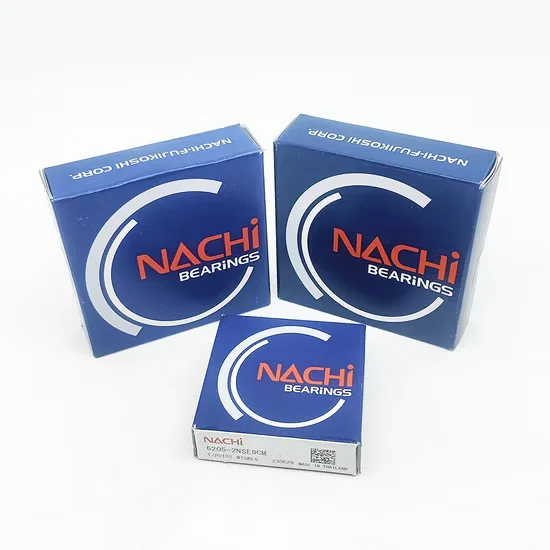
Deep Groove Ball Bearings
NACHI Deep Groove Ball Bearing 6000 6002 6009 6215 6204 6206-2nse9cm for Printer
View product
Deep Groove Ball Bearings
NACHI 6206-2nse9cm 6205-2nse9cm 6206zzecm 6204 Deep Groove Ball Bearing for Golf Cart
View productModel check
Not sure which NACHI designation fits? We help with substitution, cross-reference and selection.
Send the old bearing number, the worn marking you can still read, or the application and shaft size. nachioem matches it to the correct NACHI model, including clearance, cage and seal options, before you order.
- Substitution for discontinued models
- Cross-reference to NACHI numbers
- Selection for spindles, pumps and reducers
Keep reading
Related NACHI bearing technical articles
More practical guides on NACHI suffixes, replacement and selection for machine tools, automotive, construction machinery, pumps and gear reducers.
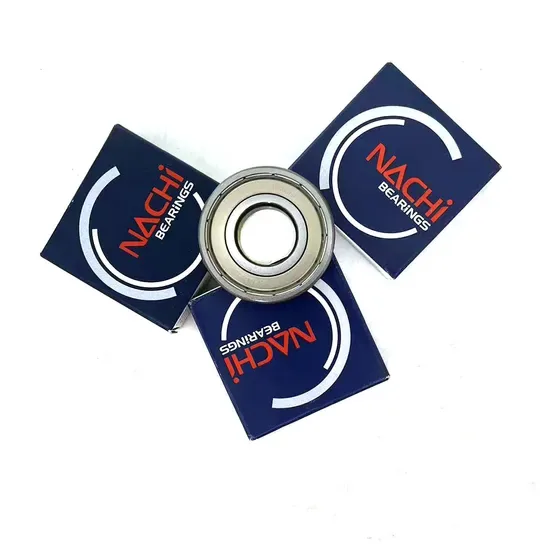
Oct 7, 2026 · Buying Guide · 7 min read
NACHI Bearings Quote: Genuine Wholesale Supplier for Bulk & MRO Orders
Request a NACHI bearings quote with full suffix accuracy to prevent costly customs delays and ensure genuine product traceability. Secure competitive wholesale pricing through…
Read the article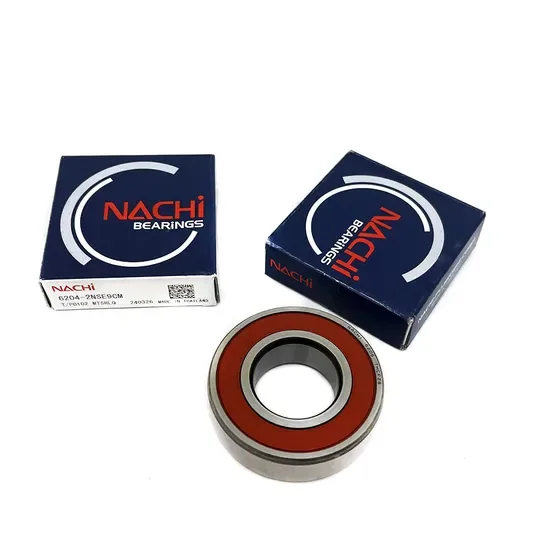
Oct 7, 2026 · Buying Guide · 7 min read
Discontinued NACHI Numbers: Replacements from Wholesale Supplier
Replacing discontinued NACHI bearings requires more than matching dimensions to prevent premature field failures. Recalculate internal clearance and verify cage material compatibility to ensure…
Read the article Oct 7, 2026 · Buying Guide · 8 min read
Buy Genuine NACHI Bearings: Wholesale Supplier for Bulk Orders
Secure genuine NACHI bearings by mastering neutral checks and traceability verification to avoid catastrophic equipment failures. Learn to identify counterfeit units through hardness testing,…
Read the article
Request a quote
Send your NACHI model list. We quote fast.
List the NACHI model numbers with full suffixes and the quantity for each. nachioem replies online as quickly as possible with pricing for distributors, repair shops and end users worldwide.
- info@nachioem.com
- WhatsApp +1 (702) 981-5880
- Online replies as quickly as possible
- Global delivery by DHL, FedEx, UPS, air or sea