
NACHI Bearing Technical Guide Product & Series Guides
NACHI 6206ZZE Bearing Wholesale Supplier for Bulk Orders
Verify NACHI 6206ZZE specs beyond basic dimensions to prevent field failures in bulk orders. This guide details load ratings, speed limits, and critical VCI packaging strategies for tropical climates. Ensure authentic sourcing and rust-free delivery with our technical verification methods.
- Published
- By author
- nachioem · Specialized NACHI bearing supplier
Matching the outer dimensions is only half the battle; ignoring internal clearance and packaging climate compatibility guarantees field failure.
The NACHI 6206ZZE is a deep groove ball bearing with iron shields on both sides, designed for moderate speed applications where dust exclusion is prioritized over high-pressure water resistance. Its core specifications include a 30mm bore, 60mm outer diameter, and 16mm width, conforming to ISO 492 dimensional standards. For wholesale buyers, verifying these physical metrics is insufficient without confirming the grease temperature range and ensuring the anti-rust packaging aligns with the destination’s humidity levels to prevent corrosion during transit.
Sourcing this component requires more than matching part numbers. It demands a rigorous verification of load ratings and an understanding of how environmental factors impact the integrity of the zinc-plated iron shields. Many distributors assume that standard export packing is universal, but tropical climates react differently to trapped moisture inside sealed units. This guide breaks down the technical realities of sourcing NACHI 6206ZZE bearings in bulk, focusing on the hidden risks that cause inventory write-offs after arrival.
What Are the Core Dimensions of NACHI 6206ZZE?
Physical fitment is governed by strict ISO tolerances, not just nominal millimeter measurements.
When replacing existing stock or fulfilling OEM requirements, the first step is confirming the boundary dimensions. The NACHI 6206ZZE follows the standard 6206 series geometry. However, minor deviations in manufacturing tolerances can lead to premature wear if the housing or shaft does not match the specified precision class. Most industrial applications require P0 (Normal) class tolerance, but high-speed machinery may demand tighter controls.
| Parameter | Specification | Tolerance Class (Standard) | Verification Method |
|---|---|---|---|
| Bore Diameter (d) | 30 mm | ISO 492 P0 | Micrometer measurement |
| Outer Diameter (D) | 60 mm | ISO 492 P0 | Caliper/Micrometer check |
| Width (B) | 16 mm | ISO 492 P0 | Depth gauge verification |
| Shield Type | ZZ (Iron) | N/A | Visual inspection |
| Weight | Approx. 0.19 kg | N/A | Scale verification |
A common issue arises when buyers substitute brands without checking the internal radial clearance. While the outer dimensions match, a C3 clearance bearing will behave differently than a C0 unit under thermal expansion. In one instance, a distributor in Southeast Asia replaced a local brand with NACHI 6206ZZE units assuming direct interchangeability. The machines operated at elevated temperatures, causing the inner race to expand more than anticipated. Because the original specification required a specific clearance to accommodate this heat, the standard clearance units seized within weeks.
Verifying these specs during wholesale sourcing involves checking the traceability documents provided by the supplier. Physical stamping on the bearing ring should match the catalog data. If the stamping is faint or missing, it is a red flag for counterfeit products. Authentic NACHI bearings feature precise laser or dot-peen marking that remains legible even after light cleaning. Buyers should request sample units for dimensional verification before committing to container-load orders.
How Do Load Ratings and Speed Limits Dictate Application?
Dynamic load capacity determines service life, but static load limits define safety margins during installation.
The NACHI 6206ZZE is rated for a dynamic load capacity that suits light to medium machinery, such as electric motors, gearboxes, and agricultural equipment. It is not designed for heavy shock loads typical in mining crushers or heavy-duty construction machinery. Understanding the difference between dynamic and static load ratings is crucial for selecting the right bearing for the application.
The dynamic load rating indicates the constant radial load a bearing can endure for a basic rating life of one million revolutions. Exceeding this limit accelerates fatigue failure. The static load rating represents the maximum load the bearing can withstand without permanent deformation when stationary. During installation, excessive force from hydraulic presses or improper hammering can exceed this static limit, damaging the raceways before the machine even starts.
Speed limits are another critical factor. The ZZ shields create friction at high rotational speeds due to air turbulence and contact with the rolling elements. While the NACHI 6206ZZE performs well at moderate speeds, pushing it beyond its recommended limit generates excessive heat. This heat degrades the grease, leading to lubrication failure and eventual seizure. For high-speed applications, open bearings or those with non-contact seals might be more appropriate.
A European wind farm operator once faced repeated failures in auxiliary generator bearings. They had selected the 6206ZZE for its dust protection, ignoring the fact that the auxiliary units operated at higher speeds than the main rotor bearings. The heat buildup degraded the standard grease, causing the shields to warp and rub against the balls. Switching to a high-temperature grease variant and verifying the speed rating resolved the issue, but not after significant downtime and replacement costs.
When sourcing for diverse applications, buyers must consult technical datasheets to match the bearing’s capabilities with the operational environment. Suppliers who offer cross-brand equivalent model consultation can help identify suitable alternatives if the exact NACHI model is out of stock, ensuring that load and speed requirements are still met.
Why Do ZZ Shields Fail in Tropical Environments?
Iron shields block dust effectively but trap humidity, creating a micro-climate for internal corrosion.
The “ZZ” designation refers to iron shields pressed into the outer ring. These shields provide excellent protection against large particles and dust, making them ideal for clean or moderately dirty environments. However, they are not waterproof. In tropical climates with high humidity, such as ports in West Africa or Southeast Asia, moisture can penetrate the microscopic gaps between the shield and the inner ring. Once inside, the moisture gets trapped.
This trapped humidity accelerates internal corrosion, especially if the bearing is stored for extended periods before installation. The standard rust-preventive oil applied at the factory may degrade over time, particularly if the packaging is compromised. In a notable case, a shipment of NACHI 6206ZZE bearings arrived in Lagos, Nigeria. The containers were sealed, but the high ambient temperature and humidity during the voyage caused condensation inside the packaging. The iron shields trapped this moisture, leading to rust-induced seizure in a significant portion of the stock upon unpacking.
Proper VCI (Vapor Corrosion Inhibitor) packaging is critical for cross-border transit to humid regions. Standard paper or plastic wrapping is often insufficient. High-quality exporters use multi-layer VCI bags that release corrosion-inhibiting vapors, protecting the metal surfaces even if some moisture enters the package. Additionally, desiccants should be placed inside the master cartons to absorb ambient humidity.
Buyers should verify the packaging standards of their suppliers. Ask for details on the type of rust preventive used and the packaging materials. For mixed-container consolidation, ensure that bearings are not stored next to items that release corrosive fumes or generate excessive heat. Proper stowage and securing of pallets prevent physical damage that could compromise the packaging integrity during ocean freight. Our approach involves strict export packaging standards and careful mixed-container consolidation to ensure that every NACHI 6206ZZE arrives rust-free and ready for immediate installation, regardless of the destination climate.
How to Verify Authentic Specs During Wholesale Sourcing?
Traceability documentation and physical inspection are the only reliable defenses against dimensional deviations.
Counterfeit bearings often mimic the appearance of genuine products but fail in material quality and dimensional precision. They may use lower-grade steel or improper heat treatment, leading to early failure. Verifying authenticity requires a multi-step process that goes beyond checking the box label.
First, request the certificate of origin and material test reports from the supplier. Genuine NACHI bearings come with traceable documentation that links the batch number to the production facility. Cross-reference these numbers with the manufacturer’s records if possible. Second, inspect the physical bearing. Look for consistent stamping quality, smooth rotation without grittiness, and uniform shield alignment. Counterfeit units often have rough edges, uneven stamping, or visible tool marks.
Third, perform random sampling for dimensional checks. Use calibrated micrometers to measure the bore, outer diameter, and width of several units from different boxes. Compare these measurements against the ISO 492 tolerance tables. Significant deviations indicate poor manufacturing control or fake products. Finally, check the grease quality. Authentic bearings use high-quality grease that is consistent in color and texture. Fake units may contain low-grade lubricants that smell rancid or separate easily.
A Middle East steel mill once sourced a large batch of bearings from a new trader offering prices significantly below market rate. The bearings looked identical to the genuine NACHI units they usually bought. However, within months, multiple failures occurred in critical conveyor systems. Investigation revealed that the bearings were made from inferior steel with poor hardness consistency. The lack of proper traceability documentation should have been a warning sign. By sticking to suppliers who provide full transparency and verifiable docs, such risks can be mitigated.
When dealing with wholesale orders, especially for mixed-brand packages, insist on pre-shipment inspections. This adds a layer of security, ensuring that the goods loaded into the container match the ordered specifications. It also verifies that the packaging is robust enough to withstand the journey. Building a long-term relationship with a supplier who prioritizes authenticity and quality assurance is more valuable than saving a few percent on the initial purchase price.
Conclusion
Specs are static, but supply chain conditions are dynamic; protect your inventory by validating both.
Mastering NACHI 6206ZZE specs involves more than memorizing dimensions. It requires a holistic view of load limits, environmental risks, and supply chain integrity. By verifying internal clearances, demanding robust VCI packaging for humid destinations, and insisting on traceable documentation, buyers can prevent costly field failures. Reliable sourcing partners act as an extension of your quality control team, ensuring that every bearing delivered meets the rigorous demands of industrial applications.
Applications covered in this article
Products in this article
NACHI bearings mentioned above
These are the NACHI bearing types discussed in this guide. Open a product page to check its designation and send the exact suffix with your quantity.

Deep Groove Ball Bearings
NACHI 6020 6010 6008 6204 6205 6206ZZECM Deep Groove Ball Bearing
View product
Deep Groove Ball Bearings
NACHI 6206-2nse9cm 6205-2nse9cm 6206zzecm 6204 Deep Groove Ball Bearing for Golf Cart
View product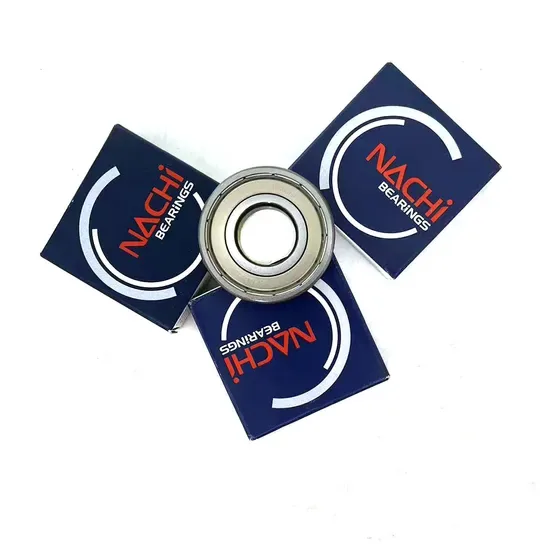
Deep Groove Ball Bearings
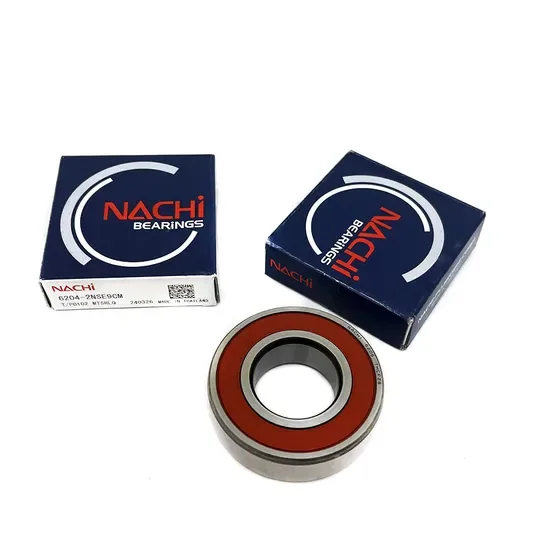
NACHI Non-Magnetic Deep Groove Ball Bearing 608 6204 6205 6206 6207 6208 6317 6318 6319 6320
View product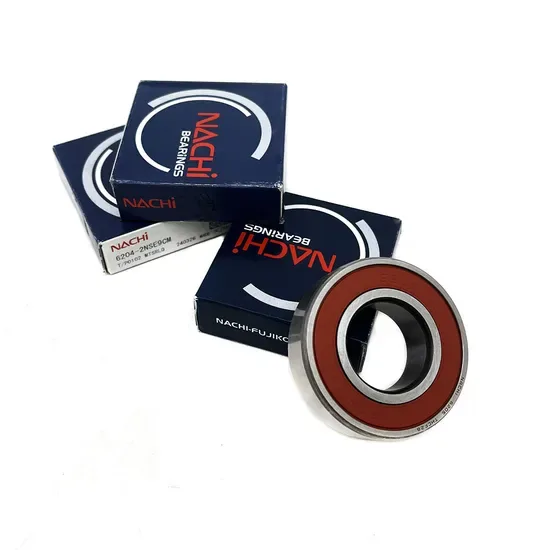
Deep Groove Ball Bearings
Original NACHI 608 6206 6301 Deep Groove Ball Bearing for Motorcycle
View productModel check
Not sure which NACHI designation fits? We help with substitution, cross-reference and selection.
Send the old bearing number, the worn marking you can still read, or the application and shaft size. nachioem matches it to the correct NACHI model, including clearance, cage and seal options, before you order.
- Substitution for discontinued models
- Cross-reference to NACHI numbers
- Selection for spindles, pumps and reducers
Keep reading
Related NACHI bearing technical articles
More practical guides on NACHI suffixes, replacement and selection for machine tools, automotive, construction machinery, pumps and gear reducers.
Oct 8, 2026 · Product & Series Guides · 6 min read
NACHI 25TAB06 Dimensions Preload Wholesale Supplier
Master NACHI 25TAB06 dimensions preload specifications to prevent spindle seizure caused by mismatched shaft tolerances. Learn how DB and DF pairing configurations impact axial…
Read the article Oct 8, 2026 · Product & Series Guides · 8 min read
NACHI 7008CYDU/GLP4 Angular Contact Ball Bearing Wholesale Supplier
Master NACHI 7008CYDU/GLP4 specs to prevent spindle thermal seizure and ensure P4 precision. Learn how correct DU pairing configurations and preload selection directly impact…
Read the article Oct 8, 2026 · Product & Series Guides · 7 min read
NACHI 6007ZZE Bearing Wholesale Supplier for Bulk Orders
Master NACHI 6007ZZE specs to prevent installation damage and premature failure in dusty environments. Verify genuine 35x62x14mm dimensions, load ratings, and grease speed limits…
Read the article
Request a quote
Send your NACHI model list. We quote fast.
List the NACHI model numbers with full suffixes and the quantity for each. nachioem replies online as quickly as possible with pricing for distributors, repair shops and end users worldwide.
- info@nachioem.com
- WhatsApp +1 (702) 981-5880
- Online replies as quickly as possible
- Global delivery by DHL, FedEx, UPS, air or sea