
NACHI Bearing Technical Guide Product & Series Guides
NACHI 25TAB06 Dimensions Preload Wholesale Supplier
Master NACHI 25TAB06 dimensions preload specifications to prevent spindle seizure caused by mismatched shaft tolerances. Learn how DB and DF pairing configurations impact axial rigidity and why verifying starting torque is essential for avoiding premature bearing failure in precision machine tools.
- Published
- By author
- nachioem · Specialized NACHI bearing supplier
Most spindle failures stem not from bearing quality, but from mismatched shaft tolerances and incorrect preload selection.
The critical factor for NACHI 25TAB06 performance is the precise alignment of its dimensional tolerances with the designated preload grade and pairing configuration. Ignoring the specific fit requirements for DB or DF arrangements leads to excessive heat generation and premature seizure, regardless of the bearing’s inherent precision.
I still recall the silence in a Foshan machine tool workshop after a batch of spindles seized during initial testing. The bearings were genuine, the assembly was clean, yet the shafts ran hot within minutes. The issue was not the NACHI 25TAB06 dimensions themselves, but the assumption that standard ISO fits applied universally. We had machined the shafts to typical commercial bearing tolerances, ignoring the tighter constraints required for high-preload angular contact pairs. The resulting interference created an axial load far beyond the design limit, crushing the rolling elements. That incident shifted my focus from mere part supply to rigorous dimensional verification.
Understanding these nuances is essential for any procurement team managing precision machinery. The following sections detail how to navigate these technical pitfalls.
What are the critical dimensions of NACHI 25TAB06?
Standard outer diameter and width measurements are insufficient without verifying the specific tolerance class for the inner ring.
The NACHI 25TAB06 is a double-direction angular contact ball bearing designed for ball screw support. Its nominal dimensions are fixed, but the functional reality lies in the tolerance bands. For precision applications, the inner diameter tolerance is typically held to P4 or P5 classes, which are significantly tighter than standard P0 grades. A deviation of even a few microns in the shaft diameter can alter the internal clearance, effectively changing the preload from a light “L” grade to a heavy “H” grade unintentionally.
When sourcing from a NACHI 25TAB06 dimensions preload wholesale supplier, it is vital to request the actual inspection report for the batch. Do not rely solely on the catalog values. The width tolerance of the bearing is also critical, especially when paired. If one bearing in a set is slightly wider due to manufacturing variance, the preload distribution becomes uneven, leading to localized stress concentrations.
| Dimension Parameter | Standard Tolerance (P0) | Precision Tolerance (P4/P5) | Impact on Assembly |
|---|---|---|---|
| Inner Diameter | Wide band | Narrow band | Directly affects fit and preload |
| Outer Diameter | Standard | Controlled | Influences housing fit stability |
| Width | General | Tight | Critical for paired bearing spacing |
| Runout | Higher allowance | Minimal | Affects rotational accuracy |
A European automation integrator once reported inconsistent spindle rigidity across a production line. Upon investigation, we found that while all bearings were labeled as the same model, the shafts were machined to a general tolerance rather than the specific fit required for the P4 class bearings. Correcting the shaft machining process resolved the rigidity issues without changing the bearing brand. This highlights that the NACHI 25TAB06 dimensions must be viewed in the context of the entire assembly system.
How do DB and DF pairings affect axial rigidity?
The choice between DB (Back-to-Back) and DF (Face-to-Face) configurations dictates the bearing’s response to thermal expansion and moment loads.
Many engineers treat DB and DF as interchangeable options, but they serve distinct mechanical functions. In a DB arrangement, the contact angles diverge outward. This setup provides high resistance to moment loads and is less sensitive to misalignment. It is the preferred choice for most ball screw supports where rigid positioning is key. Conversely, a DF arrangement has contact angles converging inward. While it offers good rigidity, it is more susceptible to misalignment and allows for slight axial displacement due to thermal expansion.
Selecting the wrong pairing can lead to catastrophic failure. If a design calls for DB to handle high overturning moments but DF is installed, the bearing may experience uneven load distribution. This results in reduced axial rigidity and increased vibration, manifesting as chatter marks on machined parts.
I once assisted a client in Southeast Asia who mixed up the pairing codes on a retrofit project. They installed DF pairs where DB was specified. The spindle exhibited excessive axial play under load, ruining the surface finish of precision components. The fix required complete disassembly and re-pairing, costing significant downtime. When working with a NACHI 25TAB06 dimensions preload wholesale supplier, ensure that the pairing code (AB or BA) matches your engineering drawings exactly.
Why does incorrect preload cause spindle overheating?
Over-tightening due to improper shaft fit generates excessive friction heat, leading to rapid lubricant breakdown and seizure.
Preload is the internal load applied to the bearing before external forces act on it. It eliminates play and increases stiffness. However, if the shaft diameter is too large relative to the bearing’s inner ring, the expansion of the inner ring reduces the internal clearance. This effectively increases the preload beyond the intended grade. For a NACHI 25TAB06, moving from a light preload to a medium or heavy preload inadvertently can double the friction torque.
The heat generated by this excess friction cannot dissipate quickly enough in a confined spindle housing. The lubricant oxidizes, loses viscosity, and eventually fails. This creates a feedback loop: more heat leads to further expansion, which increases preload further, until the bearing seizes.
A mining equipment manufacturer faced repeated failures in their drill head spindles. The bearings were failing after only a few hundred hours. Analysis revealed that the shafts were machined to the upper limit of the tolerance range, while the bearings were at the lower limit. This worst-case combination created a heavy preload effect despite specifying a light preload grade. Adjusting the shaft tolerance to the middle of the range extended the bearing life substantially. This case underscores the importance of verifying the NACHI 25TAB06 dimensions against the actual shaft measurements before assembly.
How to verify preload and dimensions before installation?
Systematic verification of drawing fits, pairing codes, and starting torque prevents assembly errors and ensures optimal performance.
Before installing any NACHI 25TAB06 units, a rigorous check protocol is necessary. First, measure the actual shaft diameter and housing bore at multiple points. Compare these measurements against the bearing’s certificate of conformity. Ensure the fit falls within the recommended range for the specified preload grade. Second, verify the pairing code on the bearing rings. DB pairs are often marked with specific identifiers to prevent mixing with DF sets. Third, measure the starting torque of the paired bearings. A significant deviation from the expected torque range indicates incorrect preload or contamination.
| Verification Step | Tool Required | Acceptance Criteria | Action if Failed |
|---|---|---|---|
| Shaft Diameter | Micrometer | Within specified tolerance band | Re-machine or select matching bearing |
| Pairing Code | Visual Inspection | Matches drawing specification | Replace with correct pair |
| Starting Torque | Torque Gauge | Within manufacturer’s range | Check for contamination or damage |
| Surface Finish | Profilometer | Smooth, no scratches | Polish or replace component |
We maintain a stock of genuine NACHI 25TAB06 bearings with full traceability. Each batch comes with detailed inspection reports, allowing our clients to perform these checks confidently. By supporting cross-brand selection and providing technical data for parameter verification, we help ensure that the preload force is delivered accurately. This proactive approach minimizes the risk of field failures and supports the long-term reliability of precision machinery.
Conclusion
Precision in assembly outweighs the inherent quality of the component alone.
Success with NACHI 25TAB06 bearings depends on respecting the interplay between dimensional tolerances, preload grades, and pairing configurations. Rigorous verification before installation prevents costly failures and ensures optimal spindle performance.
Applications covered in this article
Products in this article
NACHI bearings mentioned above
These are the NACHI bearing types discussed in this guide. Open a product page to check its designation and send the exact suffix with your quantity.
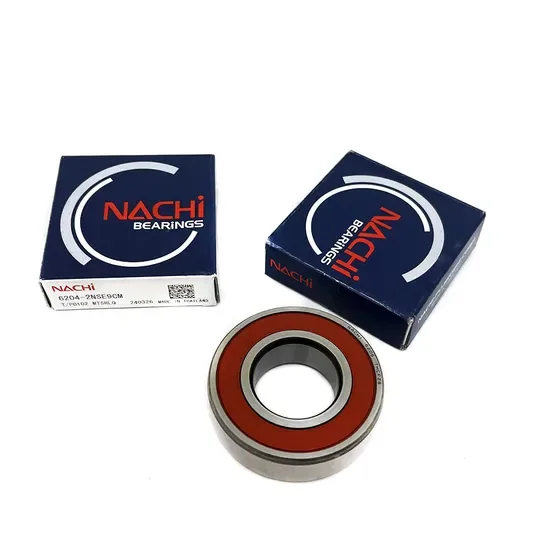
Deep Groove Ball Bearings
X&S 6211 6213 6215 Deep Groove Ball Bearing Wholesale Supplier
View product
Angular Contact Ball Bearings
7320AC 7321AC 7322AC Angular Contact Ball Bearing Wholesale Supplier
View product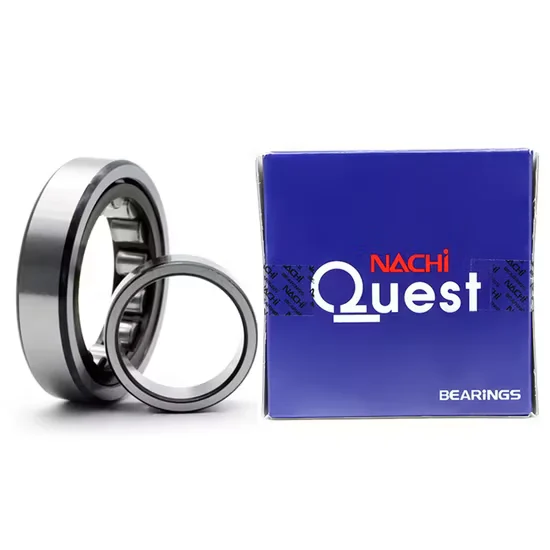
Cylindrical Roller Bearings
NACHI N410e Cylindrical Roller Bearing Genuine Wholesale Supplier
View product
Deep Groove Ball Bearings
BDL/MACHI 6204 Deep Groove Ball Bearing Wholesale Supplier
View productModel check
Not sure which NACHI designation fits? We help with substitution, cross-reference and selection.
Send the old bearing number, the worn marking you can still read, or the application and shaft size. nachioem matches it to the correct NACHI model, including clearance, cage and seal options, before you order.
- Substitution for discontinued models
- Cross-reference to NACHI numbers
- Selection for spindles, pumps and reducers
Keep reading
Related NACHI bearing technical articles
More practical guides on NACHI suffixes, replacement and selection for machine tools, automotive, construction machinery, pumps and gear reducers.
Oct 8, 2026 · Product & Series Guides · 8 min read
NACHI 7008CYDU/GLP4 Angular Contact Ball Bearing Wholesale Supplier
Master NACHI 7008CYDU/GLP4 specs to prevent spindle thermal seizure and ensure P4 precision. Learn how correct DU pairing configurations and preload selection directly impact…
Read the article
Oct 8, 2026 · Product & Series Guides · 7 min read
NACHI 6007ZZE Bearing Wholesale Supplier for Bulk Orders
Master NACHI 6007ZZE specs to prevent installation damage and premature failure in dusty environments. Verify genuine 35x62x14mm dimensions, load ratings, and grease speed limits…
Read the article Oct 8, 2026 · Product & Series Guides · 7 min read
NACHI 6309-2NSE Bearing Wholesale Supplier for Bulk Orders
Mastering NACHI 6309-2NSE specs prevents costly failures by clarifying the critical difference between non-contact 2NSE and contact 2NS seals. Verify dimensions, load ratings, and…
Read the article
Request a quote
Send your NACHI model list. We quote fast.
List the NACHI model numbers with full suffixes and the quantity for each. nachioem replies online as quickly as possible with pricing for distributors, repair shops and end users worldwide.
- info@nachioem.com
- WhatsApp +1 (702) 981-5880
- Online replies as quickly as possible
- Global delivery by DHL, FedEx, UPS, air or sea