
NACHI Bearing Technical Guide Installation & Maintenance
NACHI Bearing Shaft & Housing Fits: Wholesale Supplier for Sale
Prevent premature NACHI bearing failures caused by improper shaft and housing fits. Learn to select ISO tolerance grades, measure housing ovality, and calculate residual internal clearance for reliable performance. Ensure precise installation with expert technical guidance to minimize downtime and extend bearing lifespan in heavy industrial applications.
- Published
- By author
- nachioem · Specialized NACHI bearing supplier
Most premature bearing failures are not caused by defective components, but by improper installation fits.
Proper shaft and housing fits for NACHI bearings require strict adherence to ISO tolerance grades, precise measurement of housing ovality, and calculation of residual internal clearance to prevent inner ring creep or overheating. Incorrect tolerances are the primary driver of early failure in industrial applications.
I still remember the heat coming off the drive end of a kiln in a Nigerian cement plant. The maintenance team had just replaced a failed spherical roller bearing with a brand new unit, convinced the previous one was a manufacturing defect. Within days, it seized again. I pulled out my dial indicator and micrometers, not to check the bearing, but to measure the housing bore. The ovality was well beyond acceptable limits, and the shaft fit was loose enough to allow rotation under load. The bearing wasn’t failing because of poor quality; it was failing because the installation base was flawed. This experience reinforced a critical truth in heavy industry: the lifespan of a NACHI bearing is determined less by its metallurgy and more by the precision of its shaft and housing fits.
Understanding these mechanical relationships is essential for distributors and MRO operators who need to minimize downtime. When you source from a reliable NACHI bearing shaft and housing fits wholesale supplier for sale, you are not just buying a component; you are investing in a system that demands precise engineering support.
Why Do NACHI Bearings Fail Prematurely?
The majority of early bearing failures stem from fit issues rather than material defects or manufacturing errors.
It is counter-intuitive for many procurement managers to hear that a high-quality bearing can fail quickly due to external factors. However, field data consistently shows that improper fits account for a significant portion of premature failures. When the fit between the bearing inner ring and the shaft is too loose, the ring creeps under rotational load. This micro-movement generates friction, leading to fretting corrosion and eventual seizure. Conversely, if the fit is too tight, the internal clearance of the bearing is reduced, causing excessive heat generation and lubricant breakdown.
In a heavy equipment OEM scenario, we observed inner ring creep on a crusher application. The shaft tolerance was machined to a general purpose grade rather than the required interference fit specification. The resulting slippage damaged the shaft surface, requiring expensive rework. This was not a bearing quality issue; it was a design and machining oversight.
Another common issue is housing ovality. If the housing bore is not perfectly circular, the outer ring becomes distorted when mounted. This distortion reduces the internal clearance unevenly, creating high-stress points on the rolling elements. In the Nigerian cement plant case, the housing bore had become oval due to previous overheating and improper repair welding. Installing a new NACHI bearing into this distorted housing guaranteed another failure. Proper verification of the housing condition before installation is non-negotiable.
For distributors supplying these components, understanding these failure modes allows for better technical consultation with clients. A knowledgeable NACHI bearing shaft and housing fits wholesale supplier for sale can help identify whether a recurring failure is due to the product or the application environment, saving clients from unnecessary replacements.
How to Select Shaft and Housing Tolerances?
Selecting the correct tolerance grade depends on load conditions, rotation type, and operating temperature, following ISO standards.
There is no one-size-fits-all tolerance for all applications. The selection must be based on the specific operational requirements of the machinery. For rotating inner rings with heavy loads, an interference fit is typically required on the shaft to prevent creep. For stationary outer rings in split housings, a slight clearance or transition fit is often preferred to allow for thermal expansion and ease of assembly.
ISO tolerance grades provide the framework for these selections. Common shaft tolerances include k5, m5, m6, n6, and p6, while housing tolerances often range from H7 to G7 depending on the need for clearance or interference. Choosing the wrong grade can lead to catastrophic failure. For instance, using a loose fit on a high-vibration mining crusher shaft will almost certainly result in inner ring rotation and shaft damage.
| Application Condition | Recommended Shaft Fit | Recommended Housing Fit | Reason |
|---|---|---|---|
| Rotating Inner Ring, Heavy Load | Interference (e.g., m6, n6) | Clearance/Transition (e.g., H7, G7) | Prevents inner ring creep; allows outer ring adjustment |
| Stationary Inner Ring, Light Load | Clearance (e.g., g6, h6) | Interference (e.g., K7, M7) | Secures outer ring; allows easy inner ring removal |
| High Temperature Operation | Tighter Interference | Looser Clearance | Compensates for thermal expansion differences |
When sourcing from a NACHI bearing shaft and housing fits wholesale supplier for sale, request detailed tolerance datasheets. These documents provide the exact dimensional limits for each bearing size, ensuring that your machining teams have the correct targets. Misinterpretation of these tables is a frequent source of error, so clarity is key.
What Are the Steps to Measure Housing Ovality?
Accurate measurement of housing ovality using dial indicators is essential before installing any new bearing.
Machining errors, welding repairs, or previous overheating can distort housing bores. Visual inspection is insufficient; quantitative measurement is required. The process involves checking the bore at multiple points to ensure it remains within circularity tolerances.
- Clean the Housing: Remove all debris, old grease, and burrs from the bore surface. Any contamination will skew measurements.
- Mount the Dial Indicator: Secure a dial indicator with a magnetic base or fixture inside the housing. Ensure the plunger is perpendicular to the bore surface.
- Measure at Multiple Angles: Take readings at least four positions around the circumference (0°, 90°, 180°, 270°) and at two axial depths (near the face and deep in the bore).
- Calculate Ovality: Subtract the minimum reading from the maximum reading at each axial depth. The difference represents the ovality deviation.
- Compare to Standards: Verify that the measured ovality is within the acceptable limit specified by the bearing manufacturer or ISO standards. Typically, this value should be a fraction of the bearing’s internal clearance.
In a recent case with a steel mill client, routine maintenance revealed significant ovality in a fan motor housing. The maintenance team had assumed the housing was fine because the previous bearing had been pressed in easily. However, the dial indicator showed a deviation that would have compromised the new bearing’s performance. By correcting the housing before installation, they avoided a potential unplanned shutdown.
A professional NACHI bearing shaft and housing fits wholesale supplier for sale often provides technical guidance on these measurement protocols, helping maintenance teams avoid costly mistakes.
How to Calculate Residual Internal Clearance?
Residual internal clearance must be calculated by adjusting initial clearance for interference fit and thermal expansion effects.
Bearings are manufactured with specific internal clearances (C2, CN, C3, etc.). However, once installed, the interference fit on the shaft expands the inner ring, and the interference or fit on the housing affects the outer ring. This changes the internal clearance. If the residual clearance becomes negative, the bearing will overheat and fail.
The calculation involves:
- Identifying Initial Clearance: Determine the original internal clearance of the bearing before mounting.
- Estimating Fit Reduction: Calculate the reduction in clearance due to the interference fit on the shaft and housing. This depends on the magnitude of the interference and the geometry of the bearing rings.
- Accounting for Thermal Expansion: Adjust for the difference in thermal expansion between the bearing steel, shaft, and housing during operation. Higher operating temperatures generally reduce clearance further.
- Determining Residual Clearance: Subtract the fit reduction and thermal effects from the initial clearance. The result must remain positive and within the recommended operating range for the specific application.
In a mining crusher application, thermal expansion during operation significantly reduced the internal clearance. The initial selection of a CN clearance bearing was insufficient. By recalculating the residual clearance and switching to a C3 clearance bearing, the operator ensured adequate space for thermal expansion, preventing overheating.
Access to accurate technical data is crucial for these calculations. A reputable NACHI bearing shaft and housing fits wholesale supplier for sale can provide the necessary dimensional and thermal data to support these engineering decisions.
Conclusion
Precision in shaft and housing fits is the foundation of reliable bearing performance.
Premature failures are often misdiagnosed as quality issues when they are actually installation errors. By adhering to ISO tolerance standards, verifying housing ovality, and calculating residual internal clearance, operators can significantly extend bearing life. Technical diligence during installation is as important as the quality of the bearing itself.
Products in this article
NACHI bearings mentioned above
These are the NACHI bearing types discussed in this guide. Open a product page to check its designation and send the exact suffix with your quantity.
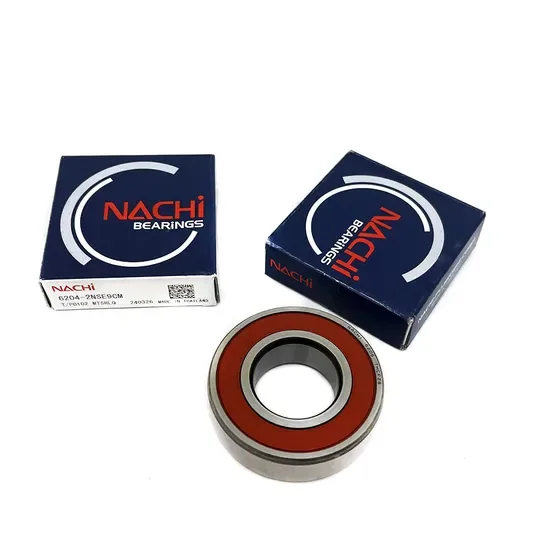
Deep Groove Ball Bearings
Genuine NACHI 608zz 6202 6201 Deep Groove Ball Bearing for Marine Equipment
View product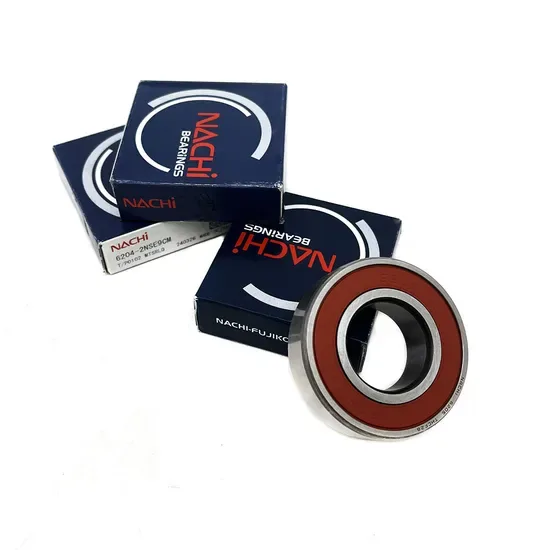
Deep Groove Ball Bearings
NACHI 608zz 16004 6201 Deep Groove Ball Bearing P6 P5 C3
View product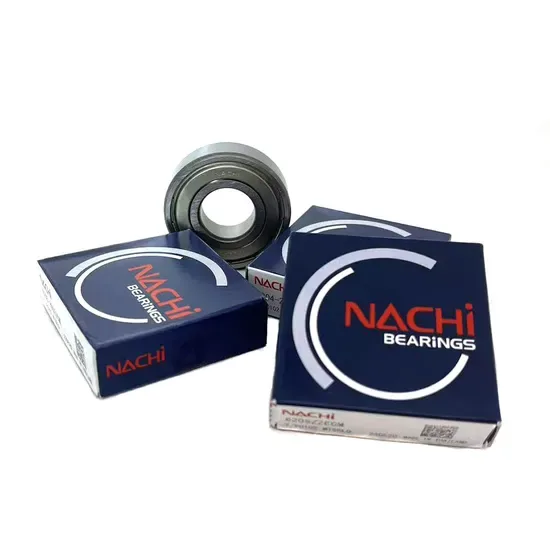
Deep Groove Ball Bearings
NACHI Deep Groove Ball Bearing 62301 608 6202 63008 63007 63006 6204 6301
View product Deep Groove Ball Bearings
Genuine NACHI P6 Deep Groove Ball Bearings 62208 62210 63002 63004 63006
View productModel check
Not sure which NACHI designation fits? We help with substitution, cross-reference and selection.
Send the old bearing number, the worn marking you can still read, or the application and shaft size. nachioem matches it to the correct NACHI model, including clearance, cage and seal options, before you order.
- Substitution for discontinued models
- Cross-reference to NACHI numbers
- Selection for spindles, pumps and reducers
Keep reading
Related NACHI bearing technical articles
More practical guides on NACHI suffixes, replacement and selection for machine tools, automotive, construction machinery, pumps and gear reducers.
Oct 8, 2026 · Installation & Maintenance · 8 min read
NACHI Bearings Maintenance Checklist: Wholesale Supplier for Bulk MRO Orders
Implement this NACHI bearing maintenance checklist to prevent premature failures caused by incorrect lubrication and contamination in heavy industry. Learn daily inspection steps, precise…
Read the article Oct 8, 2026 · Installation & Maintenance · 6 min read
NACHI Precision Bearing Handling: Wholesale Supplier for Bulk Orders
Master NACHI precision bearing handling to prevent installation-induced failures and costly downtime. Learn controlled induction heating limits, humidity-regulated storage protocols, and post-mounting verification steps…
Read the article Oct 8, 2026 · Installation & Maintenance · 8 min read
NACHI Bearing Vibration Checks: Wholesale Supplier for Bulk Orders
Master NACHI bearing vibration checks to detect early cage wear in harsh environments like cement plants. Combine velocity measurements with envelope analysis for accurate…
Read the article
Request a quote
Send your NACHI model list. We quote fast.
List the NACHI model numbers with full suffixes and the quantity for each. nachioem replies online as quickly as possible with pricing for distributors, repair shops and end users worldwide.
- info@nachioem.com
- WhatsApp +1 (702) 981-5880
- Online replies as quickly as possible
- Global delivery by DHL, FedEx, UPS, air or sea