
NACHI Bearing Technical Guide News & Cases
NACHI-Fujikoshi News 2026: Buyer Guide for Wholesale Bearings
NACHI-Fujikoshi News 2026 reveals that strict suffix verification prevents costly downtime from incorrect clearance codes. Recent factory upgrades have altered lead times, making proactive supply chain planning essential for global buyers. Prioritize technical validation over initial price to ensure operational resilience and avoid catastrophic field failures.
- Published
- By author
- nachioem · Specialized NACHI bearing supplier
Price is rarely the primary driver of total cost in industrial bearing procurement.
Navigating NACHI-Fujikoshi’s 2026 market shifts requires strict suffix verification and proactive supply chain planning to avoid costly downtime. Recent factory upgrades and material sourcing adjustments have altered lead times and availability for specific clearance codes, making technical validation more critical than ever for global buyers.
The smell of burnt grease is distinct. It clings to the air in a maintenance bay long after the machine has stopped. I recall standing in a copper mine in northern Chile, watching a conveyor belt stand still while technicians argued over a batch of spherical roller bearings. The parts looked correct. The packaging was pristine. But the internal clearance was wrong. We had shipped standard clearance units instead of the specified C3 variant required for the high-temperature environment. The result was not just a failed component but two days of lost production. That incident reshaped how I approach every order. It is not enough to match the part number. One must decode the suffixes that define the bearing’s behavior under load and heat.
Understanding these nuances is essential for anyone managing inventory or procurement. The landscape for NACHI-Fujikoshi products is evolving, and buyers who rely solely on historical pricing data without checking current technical specifications risk significant operational disruptions. This guide explores how to align your sourcing strategy with the realities of the 2026 market.
What Do the Latest NACHI-Fujikoshi 2026 Updates Mean for Your Supply Chain?
Recent manufacturing adjustments have directly impacted lead times and the availability of specific suffix configurations.
Global supply chains have stabilized from the volatility of previous years, but new constraints have emerged. Manufacturers are prioritizing certain product lines based on raw material availability and energy efficiency mandates at production facilities. For buyers, this means that the lead time for standard deep groove ball bearings may remain short, while specialized spherical roller bearings with specific cage materials or heat treatments face extended delays.
I have observed this shift firsthand when coordinating shipments for agricultural clients in Brazil. A routine order for deep groove ball bearings arrived with mixed batch dates. While the dimensions were within tolerance, the inconsistency in packaging and minor variations in seal color indicated different production runs. This did not affect performance, but it caused delays in our quality control process as we verified each batch. For a distributor, this means holding slightly higher safety stock for critical items rather than relying on just-in-time delivery for every SKU.
The key insight is that brand news often signals allocation changes rather than simple price hikes. When a manufacturer announces capacity expansion, it often targets high-volume automotive sectors first. Industrial MRO buyers may find their preferred SKUs deprioritized unless they place forecasts well in advance. Understanding this flow allows distributors to secure inventory before shortages become acute.
Buyers should monitor these shifts by maintaining open lines of communication with suppliers who have visibility into factory allocation. Relying on public-facing stock lists can be misleading if the data is not updated in real-time. A proactive approach involves identifying alternative suffixes that meet technical requirements but are more readily available, provided they are validated by engineering teams.
Why Is Suffix Verification the Most Critical Step in 2026 Procurement?
A single letter difference in clearance or seal suffix can cause catastrophic field failures.
The part number is only the beginning. The suffixes define the bearing’s internal geometry, sealing type, lubrication, and heat treatment. In the case of the Chilean mine, the difference between a standard clearance and a C3 clearance was minimal in terms of physical dimension but massive in terms of thermal expansion capability. Without the extra space, the rolling elements bound up as the housing expanded, leading to rapid failure.
Consider a scenario in the Middle East where an MRO operator needed urgent replacements for a pump application. The original specification called for a bearing with a specific rubber seal capable of withstanding moderate chemical exposure. A substitute with a metal shield was offered due to availability. While the metal shield protected against large debris, it did not prevent fine dust ingress in the desert environment. The bearing failed prematurely, requiring another shutdown. This error was not due to a lack of stock but a lack of attention to the suffix defining the seal type.
To mitigate this risk, buyers must implement a strict verification protocol. This involves cross-referencing the full part number, including all suffixes, against the original equipment manufacturer’s documentation. It is not sufficient to assume that a bearing with the same base number is interchangeable. The suffix matrix is complex, and errors are common when orders are processed manually or through automated systems that do not validate technical compatibility.
Professional suppliers offer cross-reference equivalence tables that help identify valid alternatives. However, these tools must be used with caution. An equivalent bearing from another brand may have different suffix conventions. Therefore, the final check must always be against the technical parameters required by the application, not just the part number string. This level of diligence prevents the costly trial-and-error that often plagues emergency maintenance scenarios.
How Can Buyers Mitigate Risks Amidst Global Supply Fluctuations?
Mixed-brand consolidation and strict traceability documentation are essential for stable MRO operations.
Relying on a single source for all bearing needs creates vulnerability. When one brand faces production delays, the entire maintenance schedule can be disrupted. A more resilient strategy involves diversifying the supplier base and consolidating orders across multiple brands. This approach allows buyers to maintain inventory levels even when specific SKUs are unavailable from one manufacturer.
I have seen this work effectively for a steel plant operator in Southeast Asia. By sourcing standard bearings from multiple premium brands and keeping a buffer stock of critical sizes, they reduced their dependency on any single supply channel. When one brand experienced a delay due to raw material shortages, they switched to an equivalent product from another brand that was in stock. The key was having pre-approved equivalents that had been technically verified for their specific applications.
Traceability is another critical component. Every bearing should come with documentation that traces its origin from the factory to the end user. This includes certificates of conformity, material test reports, and batch numbers. In the event of a failure, this documentation allows for root cause analysis and helps determine whether the issue was due to manufacturing defects, improper installation, or operational conditions. Without this paper trail, it is difficult to hold suppliers accountable or learn from failures.
Consolidation services also offer cost savings. By combining orders for different brands and sizes into a single shipment, buyers can reduce freight costs and simplify customs clearance. This is particularly beneficial for smaller orders that would otherwise be expensive to ship individually. A professional supplier can manage this complexity, ensuring that each item is correctly labeled and documented for easy identification upon arrival.
What Technical Support Should You Expect from Your Supplier?
Professional cross-brand consultation and failure analysis prevent costly trial-and-error on-site.
A supplier’s role extends beyond transactional order fulfillment. They should act as a technical partner, offering guidance on selection, installation, and maintenance. This is especially important when dealing with complex applications or when substituting brands. A knowledgeable supplier can provide insights into the performance characteristics of different bearings and help buyers make informed decisions.
For example, when a wind farm operator faced repeated failures in gearbox bearings, they turned to their supplier for assistance. Instead of simply replacing the failed units, the supplier conducted a failure analysis. They examined the damaged bearings and identified that the issue was related to improper lubrication intervals rather than a defect in the bearing itself. By adjusting the maintenance schedule and recommending a different lubricant, they resolved the problem and extended the service life of the components.
This level of support requires expertise and access to technical resources. Suppliers should have engineers who understand the nuances of bearing design and application. They should be able to interpret failure modes and recommend corrective actions. This service is invaluable for buyers who may not have in-house expertise in tribology or mechanical engineering.
Moreover, suppliers should offer training and educational resources. This can include workshops on proper installation techniques, lubrication best practices, and condition monitoring. By empowering customers with knowledge, suppliers help reduce the likelihood of premature failures and improve overall equipment reliability. This collaborative approach builds long-term partnerships and ensures that buyers get the most value from their investments.
Conclusion
Technical precision outweighs initial price in long-term bearing procurement.
Success in sourcing NACHI-Fujikoshi products in 2026 depends on rigorous suffix verification and adaptive supply chain strategies. Buyers who prioritize technical accuracy and maintain flexible inventory plans will minimize downtime and optimize costs. Engaging with suppliers who offer robust technical support and traceability ensures resilience against market fluctuations.
Applications covered in this article
Products in this article
NACHI bearings mentioned above
These are the NACHI bearing types discussed in this guide. Open a product page to check its designation and send the exact suffix with your quantity.
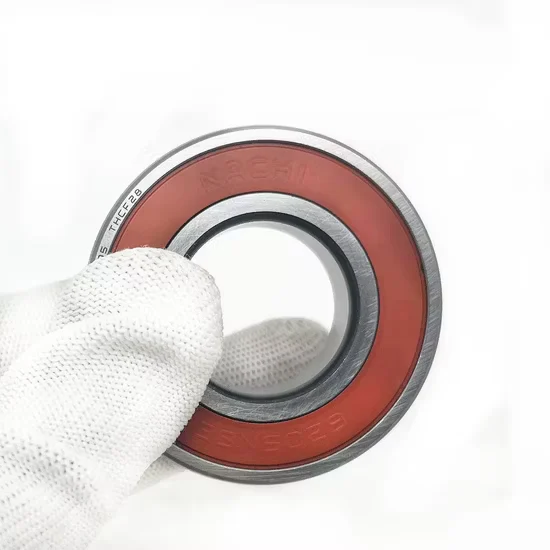
Deep Groove Ball Bearings
Wholesale NACHI Deep Groove Ball Bearing 6403 6404 6405 6406 6407 for Motor
View product
Deep Groove Ball Bearings
NACHI Deep Groove Ball Bearing 6210-6215 for Blender Genuine Wholesale
View product
Deep Groove Ball Bearings
Wholesale NACHI 6006 6007 6008 6009 6010 Deep Groove Ball Bearing for Fan
View product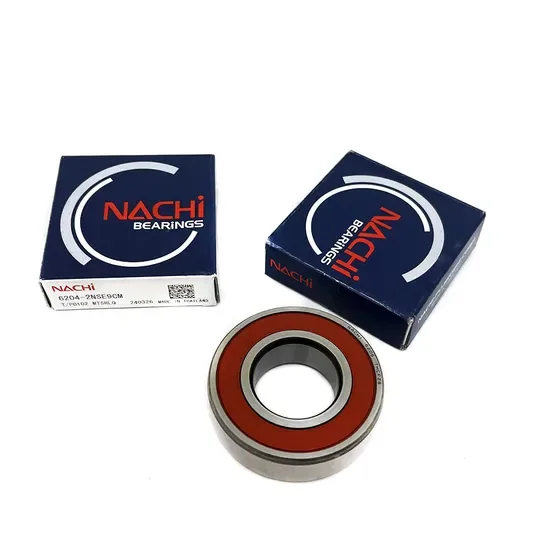
Deep Groove Ball Bearings
X&S 6211 6213 6215 Deep Groove Ball Bearing Wholesale Supplier
View productModel check
Not sure which NACHI designation fits? We help with substitution, cross-reference and selection.
Send the old bearing number, the worn marking you can still read, or the application and shaft size. nachioem matches it to the correct NACHI model, including clearance, cage and seal options, before you order.
- Substitution for discontinued models
- Cross-reference to NACHI numbers
- Selection for spindles, pumps and reducers
Keep reading
Related NACHI bearing technical articles
More practical guides on NACHI suffixes, replacement and selection for machine tools, automotive, construction machinery, pumps and gear reducers.
Oct 8, 2026 · News & Cases · 6 min read
Genuine Bearings Wholesale Supplier: SKF, FAG, NSK, TIMKEN Bulk Orders
Navigate the Motor Industry Outlook 2026 by securing genuine SKF, FAG, NSK, and TIMKEN bearings with strict traceability documentation. Avoid costly customs seizures and…
Read the article Oct 8, 2026 · News & Cases · 7 min read
Genuine SKF FAG NSK Bearings Wholesale Supplier for Robotics Industry Growth 2026
Secure your Robotics Industry Growth 2026 strategy with genuine precision bearings that prevent catastrophic joint failures and overheating. Avoid the hidden costs of counterfeits…
Read the article
Oct 8, 2026 · News & Cases · 7 min read
NACHI Precision Bearings for Spindle Shop: Wholesale Supplier
Prevent catastrophic spindle overheating and precision loss by sourcing genuine NACHI precision bearings spindle shop solutions with exact clearance. Counterfeit units cause rapid runout…
Read the article
Request a quote
Send your NACHI model list. We quote fast.
List the NACHI model numbers with full suffixes and the quantity for each. nachioem replies online as quickly as possible with pricing for distributors, repair shops and end users worldwide.
- info@nachioem.com
- WhatsApp +1 (702) 981-5880
- Online replies as quickly as possible
- Global delivery by DHL, FedEx, UPS, air or sea