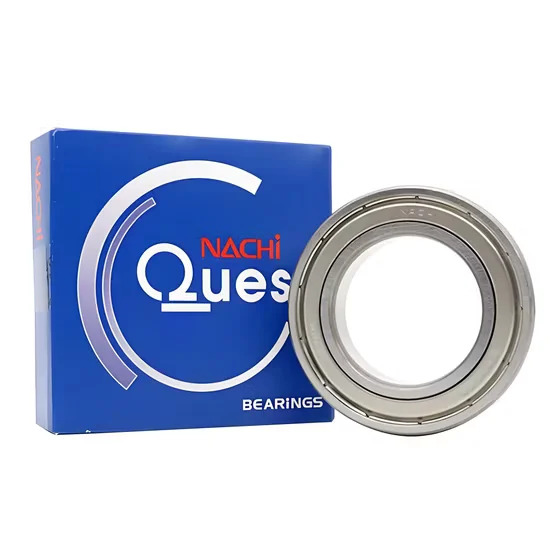
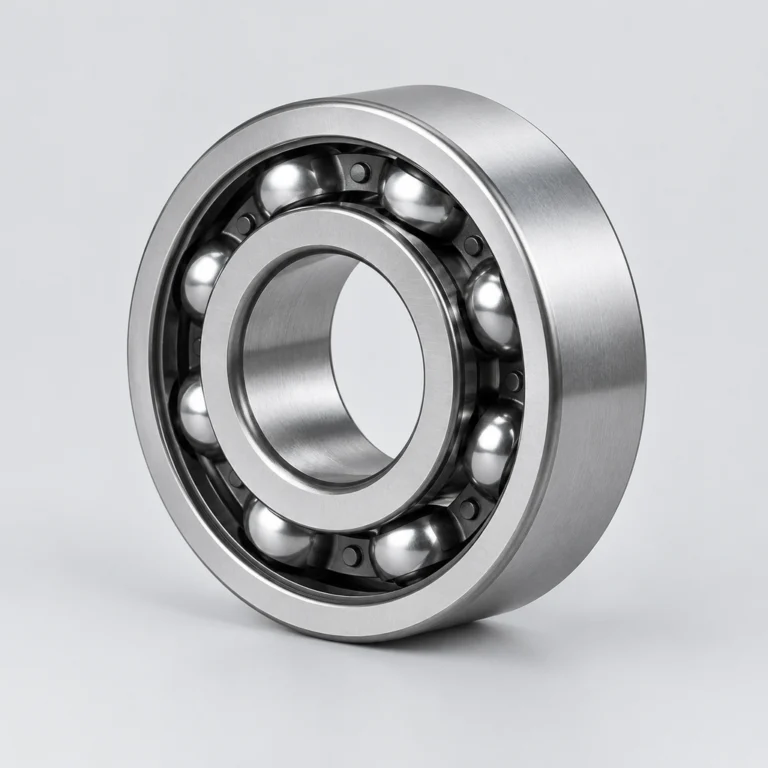
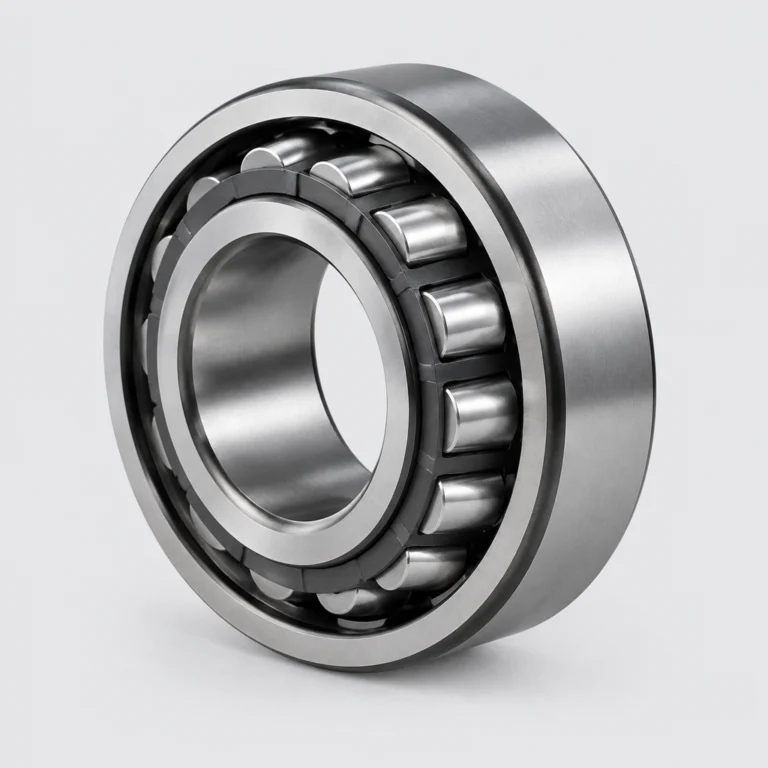
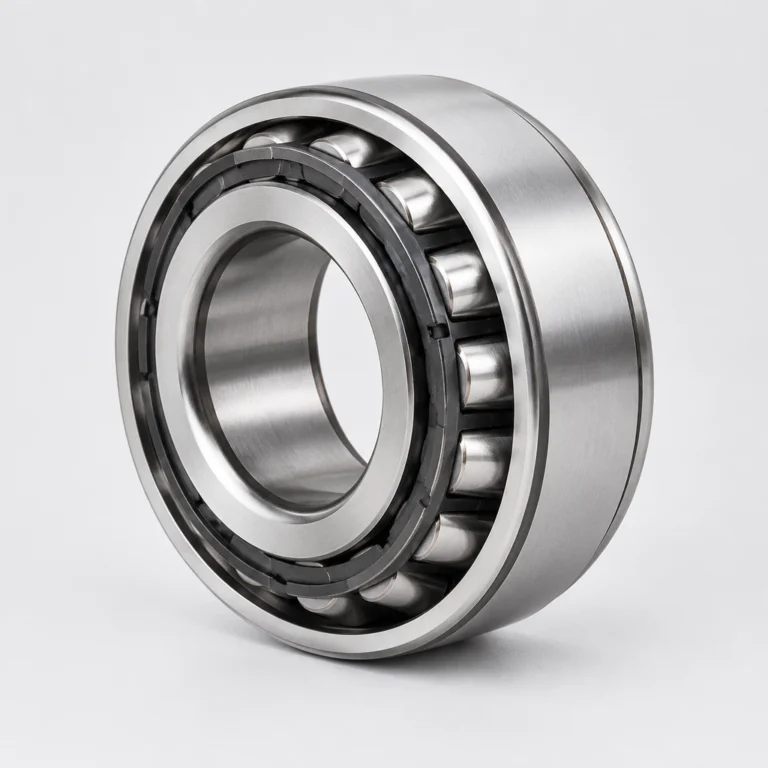
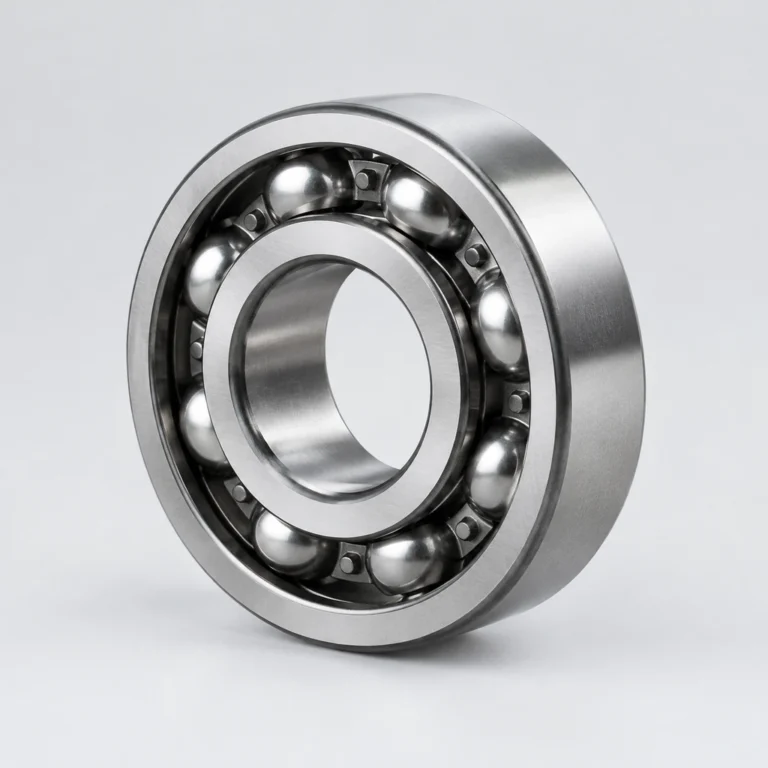
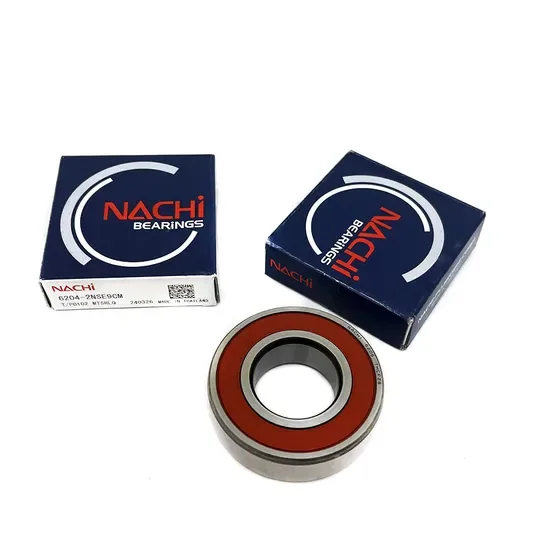
Mixed-Brand Sourcing Coverage — Consolidate NACHI deep groove ball bearings with SKF or FAG equivalents in a single shipment without coordinating multiple vendors.
Technical Specifications
| Parameter | Value |
| Designation | NACHI 6210ZZ |
| Bearing Type | Deep Groove Ball Bearing |
| Bore Diameter (d) | 50 mm |
| Outside Diameter (D) | 90 mm |
| Width (B) | 20 mm |
| Seal or Shield Type | ZZ (Double Steel Shields) |
| Clearance Class | C0 / C2 / C3 |
| Precision Class | P0 / P6 / P5 / P4 |
| Material | Bearing Steel |
| Origin | Japan |
The ZZ suffix denotes double steel shields; verify exact seal configuration with the manufacturer catalog for specific batch variations.
Application Suitability
| Industry | Typical Applications |
| Electric Motors | Rotor shaft support requiring low noise and reliable radial load capacity for continuous operation |
| Pumps & Compressors | Impeller shaft alignment and continuous rotational stability under moderate radial forces |
| General Manufacturing | Conveyor drive rollers and gearbox intermediate shafts handling steady radial loads |
| Machine Tools | Spindle auxiliary drives and feed mechanism guide shafts demanding precise movement |
Why Standard Shields Fail in Dusty Motor Environments for the NACHI 6210ZZ deep groove ball bearing
Fine particulate ingress destroys internal clearances long before the steel fatigues.
Early in my procurement career, a batch of shielded bearings sent to Dubai seized rapidly in heavy machinery. The standard steel shields could not block fine desert sand, and thermal expansion eliminated the internal clearance, causing the drive motors to burn out completely. Selecting the correct shield and clearance combination prevents these catastrophic field failures and protects your critical assets from unexpected breakdowns.

Matching the NACHI 6210ZZ deep groove ball bearing to Industrial Drive Systems
Industrial drive systems demand consistent rotational accuracy and effective contamination resistance to maintain operational efficiency. This NACHI 6210ZZ deep groove ball bearing provides reliable radial load support while the double shields retain factory grease and exclude coarse dust from the raceway. Our engineering team cross-references your specific motor or pump operating conditions to ensure the selected clearance and precision class align perfectly with your assembly tolerances, delivering optimal performance across diverse industrial applications.
Managing Thermal Expansion and Particulate Ingress in Continuous Operation
Electric motors and gearboxes generate significant heat during continuous operation, directly impacting internal bearing clearances and lubricant viscosity. If the initial clearance is too tight, thermal expansion will cause the rolling elements to bind, leading to premature seizure and motor failure. Furthermore, environments with airborne particulates require effective shielding to prevent abrasive wear inside the raceway. Proper lubrication retention is equally critical, as the shields must keep the grease in place without generating excessive friction heat during high-speed rotation.
Decoding Shield Configuration and Internal Clearance Selection
The ZZ shield configuration utilizes non-contact steel plates that effectively retain lubricant and block large debris without adding friction to the rotating assembly. For applications experiencing elevated temperatures or tight shaft fits, selecting a C3 clearance class compensates for thermal expansion and prevents internal preloading during continuous operation. Conversely, standard C0 clearance suits general-purpose electric motors operating at stable ambient temperatures. The bearing steel construction ensures high fatigue strength under continuous radial loads, while the available P6 or P5 precision classes reduce vibration and noise in high-speed motor applications.
The Operational Impact of Incorrect Clearance and Shield Selection
Specifying a standard clearance bearing for a high-temperature motor often results in catastrophic seizure, causing unplanned downtime and severe damage to the surrounding stator windings and housing. Similarly, using open bearings in dusty environments leads to rapid abrasive wear, drastically shortening the service life and voiding equipment warranties. These hidden operational costs far exceed the initial price difference of specifying the correct shielded and clearance-adjusted components from the start. Proper selection based on actual field conditions ensures long-term reliability.
Securing Traceable Deep Groove Ball Bearings for Critical Machinery
Sourcing genuine components eliminates the risk of counterfeit bearings that often fail under minimal load and cause secondary equipment damage. We verify the exact ZZ shield configuration and clearance class against the manufacturer's production records to prevent mismatched suffixes on your commercial invoice. Our consolidated shipping allows you to mix this specific model with other premium brands in a single container, optimizing your international freight costs significantly. Every shipment includes complete batch traceability, ensuring your maintenance team receives authentic parts with verified dimensional accuracy and reliable performance.
Documentation & Authenticity
- Original certificate of conformity confirming the exact P0 to P4 precision class for your specific batch.
- Batch traceability documents linking the production run to the manufacturer's quality records.
- Dimensional inspection reports verifying the 50x90x20 mm tolerances before international dispatch.
- Anti-counterfeiting verification guidance using official manufacturer QR codes or packaging holograms.
Storage, Handling & Mounting
- Keep the ZZ shields intact during storage; removing them prematurely exposes the factory grease to moisture and dust.
- Store the C3 clearance variants in a climate-controlled environment to prevent condensation from compromising the bearing steel.
- Use induction heaters for inner ring mounting to avoid damaging the non-contact steel shields with mechanical force.
- Inspect the anti-counterfeiting holograms on the original packaging before breaking the seal for installation.
Technical Data Required for Precise Model Verification
To ensure the selected shield type and clearance class match your exact application, please provide your motor or pump operating parameters in detail. Sharing the specific radial loads, rotational speeds, and ambient temperatures allows our engineering team to calculate the optimal internal clearance and verify the L10 life. Additionally, providing the OEM equipment part numbers enables us to perform a thorough cross-reference check against equivalent models from other premium brands, ensuring smooth integration into your existing maintenance inventory.
Frequently Asked Questions
Q: How can I verify the authenticity of the NACHI 6210ZZ upon delivery?
A: You can authenticate the components by scanning the official manufacturer QR codes or checking the packaging holograms. We also provide original certificates of conformity and batch traceability documents. Our team cross-checks the physical weight and dimensional accuracy against the official catalog to ensure you receive genuine products.
Q: What is the functional difference between ZZ shields and 2RS seals for this model?
A: The ZZ steel shields provide non-contact protection, effectively retaining grease and excluding coarse dust without generating friction heat. In contrast, 2RS rubber seals offer superior moisture and fine particle exclusion but create higher friction. We recommend ZZ shields for high-speed electric motors where thermal management is critical.
Q: How do I select the correct clearance class for high-temperature motor applications?
A: For motors operating at elevated temperatures or with tight shaft fits, a C3 clearance class is essential to compensate for thermal expansion. Standard C0 clearance is suitable for ambient temperature applications. Providing your specific operating temperature and fit tolerances allows us to recommend the exact clearance needed to prevent internal binding.
Q: Can P4 precision bearings be safely substituted for P0 in standard gearbox applications?
A: Yes, substituting a higher precision class like P4 for a standard P0 bearing is generally safe and will result in smoother operation and lower noise. However, it is usually unnecessary for standard gearboxes and increases procurement costs. We recommend matching the precision class to the specific rotational accuracy requirements of your equipment.