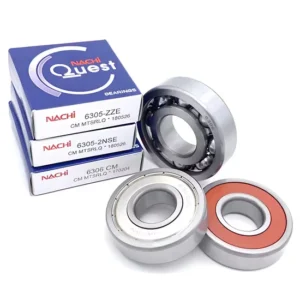
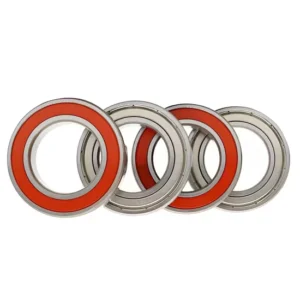
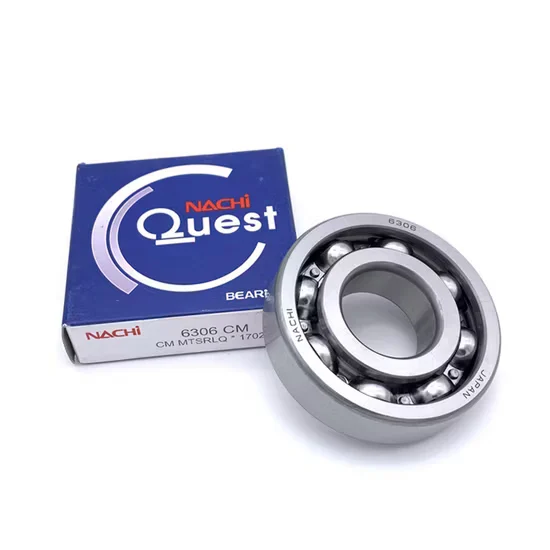
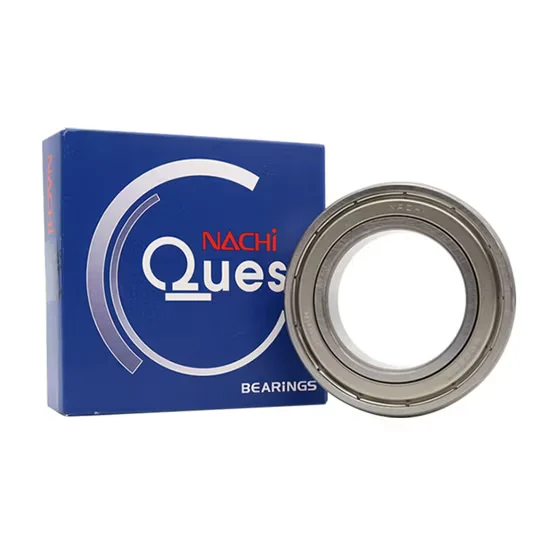
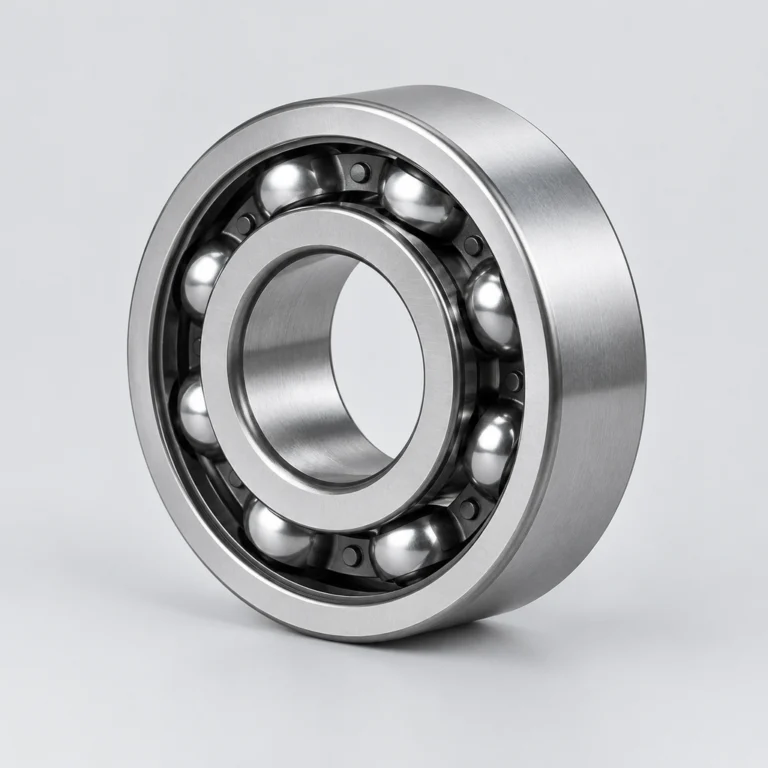
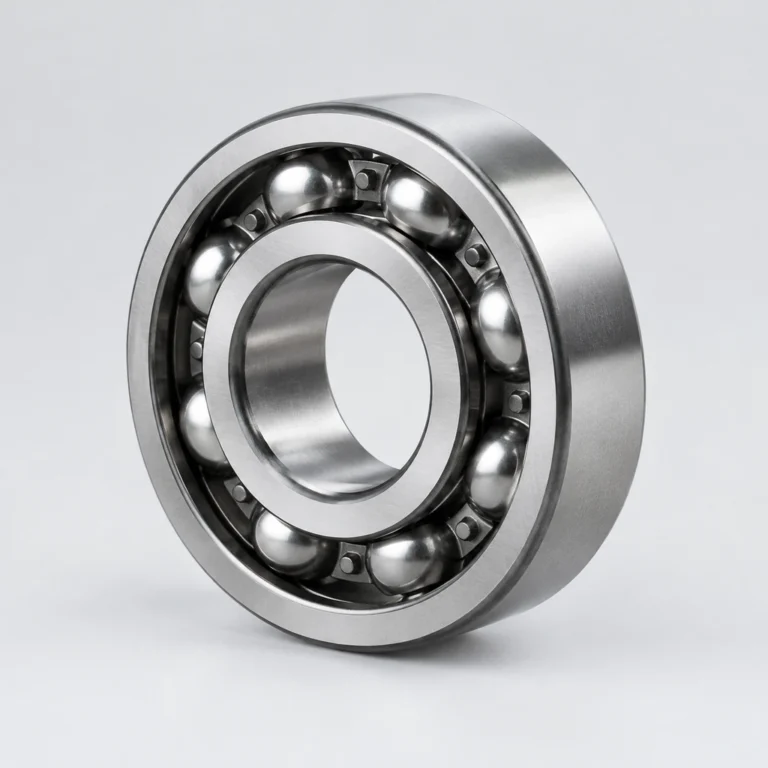
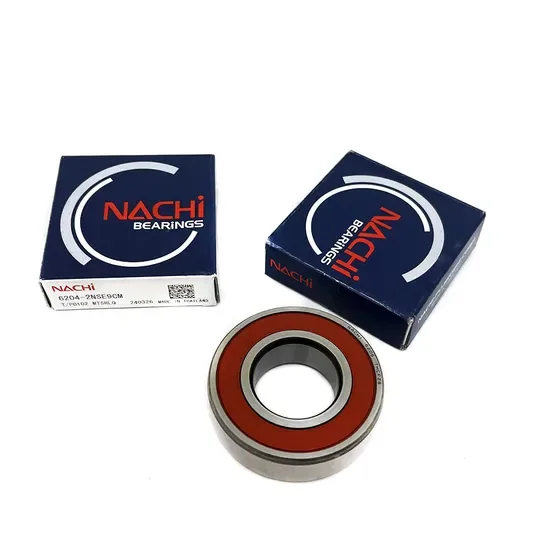
Authentic Japan Origin — Verify every NACHI 6314 deep groove ball bearing via the official manufacturer QR code to guarantee traceability.
Technical Specifications
| Parameter | Value |
| Designation | NACHI 6314 |
| Bearing Type | Deep Groove Ball Bearing |
| Bore Diameter (d) | 70 mm |
| Outside Diameter (D) | 150 mm |
| Width (B) | 35 mm |
| Seal or Shield Type | ZZ, 2RS, Open |
| Precision Class | P0, P6, P5, P4 |
| Vibration Level | Z1V1, Z2V2, Z3V3 |
| Number of Rows | Single |
| Load Direction | Radial |
| Material | Bearing Steel |
| Origin | Japan |
Application Suitability
| Industry | Typical Applications |
| Cement & Heavy Industry | Induced draft fans and exhaust blowers in kiln systems |
| Water Treatment | Centrifugal pumps and aeration blowers |
| Material Handling | Belt conveyor drive pulleys and idler rollers |
| General Manufacturing | AC/DC electric motors and reduction gearboxes |
Why Dust Ingress Destroys the NACHI 6314 deep groove ball bearing in Heavy Industry
Seal selection dictates survival when fine particulates breach the internal raceway.
During a cement plant installation in Nigeria, an induced draft fan motor equipped with steel-shielded bearings suffered rapid seizure. The extreme dust and high ambient temperatures compromised the non-contact shields, allowing abrasive clinker powder to infiltrate the grease cavity. The fine particles mixed with the lubricant, creating a grinding paste that scored the raceways and ultimately caused the rotor to lock up completely. Switching to rubber contact seals resolved the issue entirely by physically wiping the shaft and blocking particulate entry. This field reality proves that ignoring the seal suffix during procurement leads to catastrophic motor failures, extensive downtime, and severe financial losses for the plant operators.

Aligning Seal Configurations with Motor Operating Environments
Selecting the correct variant of the NACHI 6314 deep groove ball bearing requires matching the seal type to the specific contamination level of the motor housing. An open configuration might suffice for enclosed, climate-controlled gearboxes where external lubrication is regularly maintained by automated systems. However, for exposed pump drives or conveyor pulleys, sealed variants are absolutely mandatory to retain grease and exclude debris. Our engineering team provides cross-brand equivalent model consultation to ensure the chosen configuration aligns with your exact operational environment, preventing premature degradation and ensuring reliable continuous duty under heavy industrial loads.
Managing Thermal Expansion and Contamination in Exhaust Fans
Exhaust fan applications subject rotating elements to combined radial loads and fluctuating thermal cycles that challenge standard lubrication. Elevated temperatures alter internal clearance, demanding careful consideration of the initial fit and grease thermal limits to avoid excessive preload on the rolling elements. Furthermore, high-speed rotation generates friction heat, which must be balanced against the sealing friction of contact seals to avoid grease breakdown and subsequent dry running. The choice of lubricant viscosity and the physical barrier provided by the seal type must work in tandem to withstand these harsh thermal gradients and prevent catastrophic structural collapse.
Decoding Suffix Variations for Precision and Vibration Control
The distinction between ZZ and 2RS suffixes fundamentally alters the friction and contamination resistance of the assembly. Steel shields provide low-friction protection suitable for clean, high-speed electric motors, while double contact seals offer superior exclusion of fine dust and moisture at the cost of slightly higher torque. Additionally, selecting higher precision classes and stricter vibration levels ensures smoother rotation and reduced acoustic noise in sensitive drive systems. The internal geometry and cage design also play a vital role in maintaining stability under load, ensuring that the radial forces are distributed evenly across the single row of rolling elements for maximum fatigue resistance.
The Financial Toll of Premature Motor Seizure
Specifying an open or improperly shielded variant in a dusty environment inevitably results in abrasive wear and raceway spalling. Such unplanned downtime halts entire production lines and necessitates complete motor rewinding rather than a simple component swap, drastically increasing maintenance budgets. According to failure analysis frameworks, contamination remains a primary driver of premature fatigue, making correct initial specification highly cost-effective over the entire lifecycle of the equipment. Ignoring the environmental challenges when selecting the suffix turns a minor scheduled replacement into a major emergency overhaul, draining resources and delaying critical shipments.
Securing Genuine Components for Critical Rotating Equipment
Procuring authentic Japanese bearings requires strict channel verification to avoid counterfeit units that lack proper heat treatment and dimensional accuracy. We maintain massive spot inventory covering all standard seal and precision variants, eliminating typical multi-week lead times for urgent maintenance requirements across global facilities. Our team cross-checks physical dimensions and suffix markings against official catalogs to ensure the exact configuration reaches your site without any discrepancy. This rigorous validation prevents the costly mistake of installing steel-shielded units where rubber-sealed ones are mandatory, safeguarding your critical rotating equipment from avoidable mechanical failures and ensuring consistent operational uptime.
Documentation & Authenticity
- Official manufacturer QR code verification confirming Japan origin for each unit.
- Original factory batch traceability documents linking the specific production lot.
- Dimensional and running accuracy inspection reports validating P4 tolerance limits.
- Material certification verifying the chemical composition of the bearing steel rings.
Storage, Handling & Mounting
- Keep 2RS sealed units in original packaging until installation to protect rubber lips from ozone degradation.
- Store open and ZZ variants in climate-controlled environments to prevent condensation inside the steel shields.
- Use induction heaters for mounting the 70 mm bore onto motor shafts to avoid damaging the raceway.
- Ensure clean gloves are worn when handling P5 or P4 precision variants to prevent skin acid corrosion.
Engineering Data Required for Technical Validation
To confirm the optimal suffix and clearance class, please share the radial and axial load profiles alongside operating speeds and ambient temperatures. Providing the specific OEM motor nameplate data allows our engineers to perform accurate cross-reference checks and L10 life calculations based on actual site conditions. This comprehensive technical review ensures the selected configuration withstands your exact operational parameters without premature failure, giving you absolute confidence in the long-term reliability of the replacement parts.
Frequently Asked Questions
Q: What is the difference between ZZ and 2RS seals for motor applications?
A: The ZZ designation indicates double steel shields that offer low friction and are ideal for clean, high-speed environments. Conversely, the 2RS suffix denotes double rubber contact seals, which provide superior protection against dust and moisture ingress. For cement plants or dusty outdoor applications, the 2RS variant is strongly recommended to prevent abrasive contamination and subsequent motor seizure.
Q: How to verify the authenticity of NACHI bearings upon delivery?
A: Upon receiving the shipment, inspect the packaging for intact anti-counterfeit labels and scan the official QR code using the manufacturer's mobile application. You should also cross-check the physical weight, dimensional markings, and laser-etched suffix designations against the official catalog specifications. Requesting the original factory batch traceability documentation from the supplier further confirms the genuine Japan origin of the components.
Q: How do precision classes affect high-speed motor performance?
A: Higher precision classes, such as P5 or P4, feature tighter dimensional tolerances and improved running accuracy compared to standard P0 grades. This reduction in geometric deviation minimizes vibration and acoustic noise during high-speed rotation, which is critical for sensitive electric motors. Selecting the appropriate precision level ensures smoother operation and extends the operational lifespan of the rotating assembly.
Q: How to select the correct clearance class for elevated temperature operations?
A: When operating in high-temperature environments, the inner ring expands more than the outer ring due to the heat generated by the motor or the surrounding process. Specifying a bearing with a larger internal clearance compensates for this thermal expansion, preventing the rolling elements from binding. Always provide the exact operating temperature range so the engineering team can recommend the optimal clearance class.