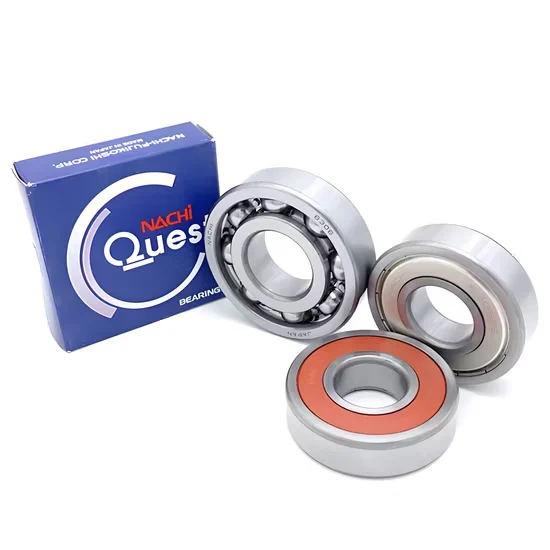
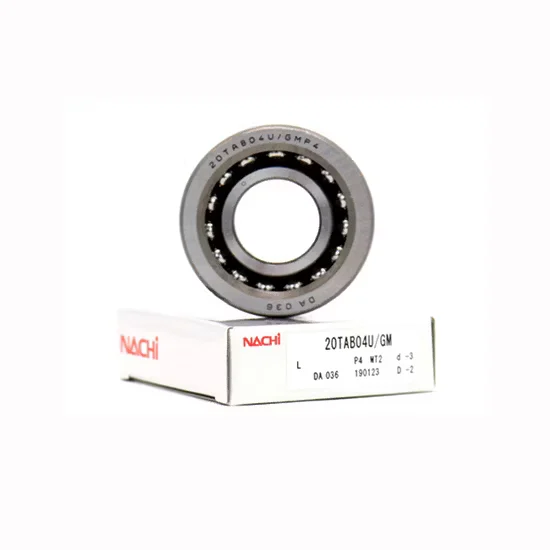
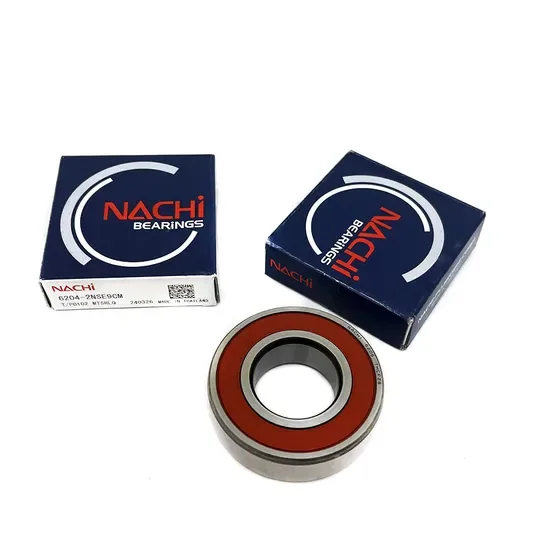
Authentic Japan Origin — Verify every NACHI batch instantly using the official manufacturer app and QR traceability codes.
Technical Specifications
| Parameter | Value |
| Designation | NACHI 6912 6913 6914 |
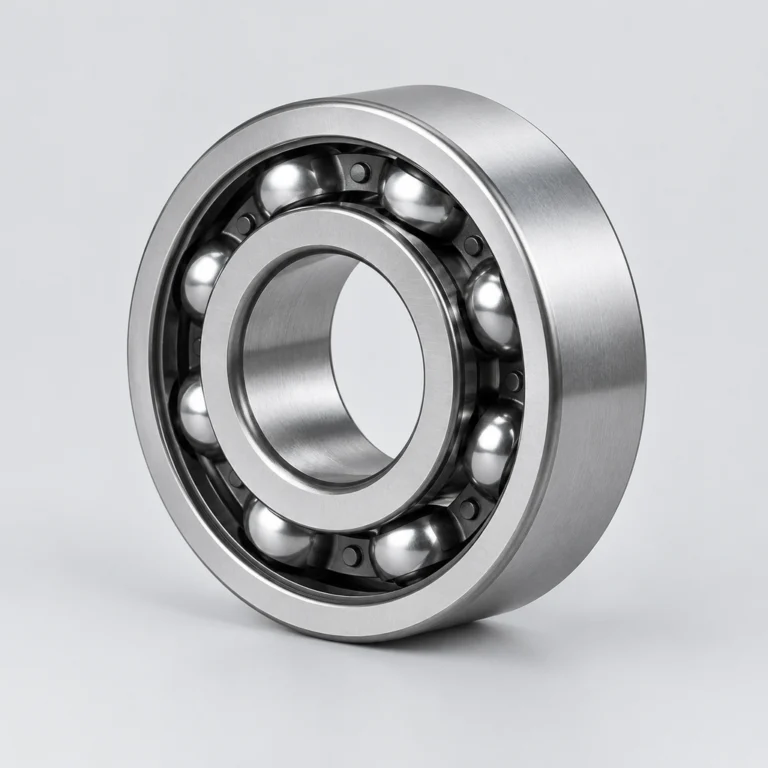
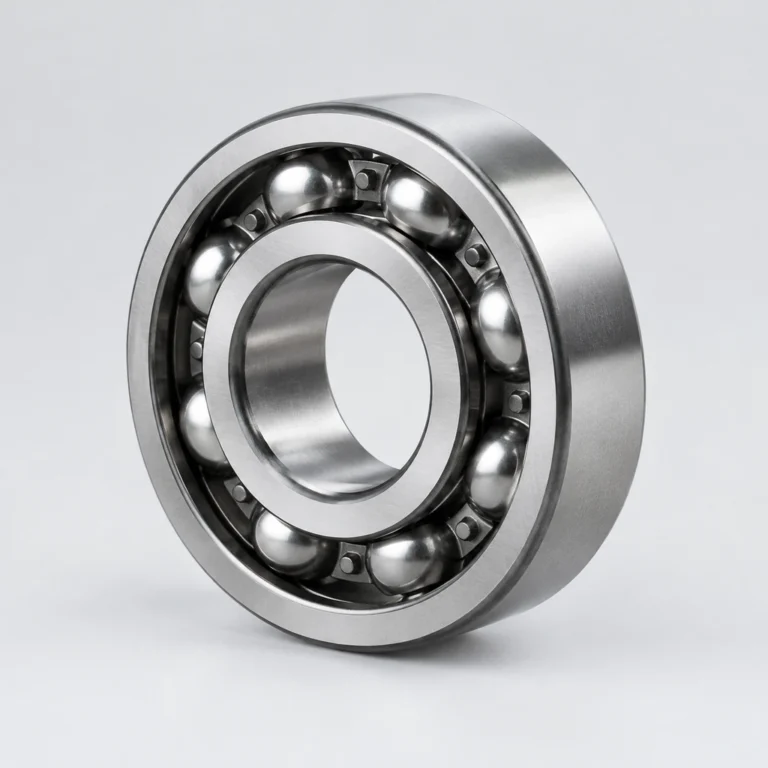
| Bearing Type | Deep Groove Ball Bearing |
| Seal or Shield Type | Open, Zz, 2RS |
| Precision Class | P0, P6, P5, P4 |
| Clearance Class | C0, C2, C3 |
| Material | Bearing Steel |
| Contact Angle | 0° |
| Arrangement | Single Row, Non-Aligning, Unseparated |
| Lubrication | Grease or Oil |
| Origin | Japan |
Note: Zz and 2RS suffixes require manufacturer catalog confirmation for exact seal design specifications.
Application Suitability
| Industry | Typical Applications |
| Electric Motors | High-speed rotor shafts, cooling fan assemblies |
| Pumps | Centrifugal pump impeller shafts, circulation drives |
| Gearboxes | High-speed input shafts, low-noise reduction stages |
| Conveyors | Motorized pulley drives, lightweight material handling systems |
Suffix Errors Destroy NACHI 6912 6913 6914 Deep Groove Ball Bearing Lifespans
Seal selection dictates survival in humid environments.
Years ago in Vietnam, a client sourced open-type bearings for high-moisture electric motors to cut initial procurement costs. Without the proper rubber seal suffix, ambient moisture infiltrated the raceways, causing severe rust and complete mechanical seizure within just a few months. That costly field lesson proved that ignoring seal designations leads to catastrophic equipment failures and massive secondary repair expenses. Procurement engineers must recognize that the suffix is just as critical as the basic dimensional code.

Matching Configurations to Operational Realities
Matching the exact internal configuration to your operational environment prevents premature wear and unexpected downtime. When sourcing a NACHI 6912 6913 6914 deep groove ball bearing, our engineering team cross-references your specific motor or pump specifications to ensure the selected seal and clearance class align perfectly with the thermal and contamination challenges of your facility. We do not just ship part numbers; we validate that the chosen variant will actually survive the physical realities of your production floor.
Navigating Thermal and Contamination Challenges
Electric motors and centrifugal pumps subject these components to continuous radial loads and sustained high rotational speeds. Elevated operating temperatures can rapidly degrade standard grease, making proper clearance selection absolutely critical to accommodate thermal expansion of the shaft and housing. Furthermore, exposure to airborne moisture or chemical vapors demands robust contact seals to block microscopic contaminants, whereas clean, high-speed environments benefit significantly from non-contact shields to minimize friction heat and preserve lubricant integrity.
Decoding the Engineering Specifications
Understanding the engineering behind these specifications ensures optimal long-term performance. The P4 precision class guarantees exceptionally tight dimensional tolerances, significantly reducing vibration and acoustic noise in high-speed motor applications where smooth operation is paramount. Selecting C3 clearance provides the necessary internal gap to prevent binding when the inner ring expands under heavy thermal load. Additionally, the choice between steel shields and rubber seals directly impacts the friction coefficient and the level of ingress protection required for the specific machinery housing design.
The Hidden Costs of Incorrect Selection
Overlooking the correct suffix or clearance class results in severe operational disruptions that extend far beyond the cost of a replacement part. An improperly sealed unit in a humid pump room will inevitably suffer from raceway corrosion, leading to unplanned downtime and catastrophic damage to the surrounding motor windings. According to ISO 15243, contamination and improper clearance are primary drivers of premature fatigue and smearing failures, ultimately voiding equipment warranties and drastically inflating annual maintenance budgets.
Securing Authentic Components for Critical Machinery
Sourcing authentic components requires rigorous supply chain validation and deep technical oversight. We maintain complete batch traceability for every Japan-origin unit, ensuring you receive genuine products rather than rebranded counterfeits that plague the industrial market. Our inventory covers the full spectrum of seal and precision variants, eliminating the need to coordinate multiple vendors for mixed-requirement projects. Furthermore, our technical team actively audits suffix alignments to prevent the exact moisture-ingress mistakes I witnessed in Southeast Asia, safeguarding your equipment's operational continuity and protecting your capital investments.
Documentation & Authenticity
- Original factory batch traceability documents verifying Japan origin for every shipment.
- Official manufacturer QR codes for instant digital authentication of the bearing packaging.
- Dimensional and running accuracy inspection reports confirming P4 tolerance compliance.
- Material certification validating the use of premium bearing steel for the rings.
Storage, Handling & Mounting
- Keep open-type variants in original humidity-controlled packaging until immediately before mounting.
- Use clean lint-free gloves when handling P4 precision units to prevent raceway corrosion.
- Apply induction heating for inner ring mounting to preserve the precise clearance class.
- Ensure rubber-sealed models are not washed with solvents that degrade contact lips.
Precision Inquiry Guidelines
To ensure precise technical alignment for your NACHI 6912 6913 6914 deep groove ball bearing requirements, please provide your equipment's radial and axial load profiles, operating speeds, and ambient temperature ranges. Sharing the OEM motor or pump model numbers allows our engineers to perform a comprehensive L10 life calculation and verify the optimal seal and clearance configuration for your specific application.
Frequently Asked Questions
Q: How can I verify the authenticity of these Japanese bearings?
A: Every unit we supply includes original factory batch documentation and packaging equipped with official manufacturer QR codes. You can scan these codes using the brand's official mobile application to instantly verify the production origin, ensuring complete traceability and protecting your facility from counterfeit risks.
Q: What is the difference between Zz and 2RS seals?
A: Steel shields provide excellent protection against large dust particles while maintaining low friction for high-speed motor shafts. Rubber contact seals offer superior defense against moisture and fine contaminants, making them essential for humid pump environments, though they generate slightly more frictional heat.
Q: How do I choose between C0 and C3 clearance?
A: Standard C0 clearance suits typical ambient temperature applications with standard fits. C3 clearance provides extra internal space, which is critical for high-speed electric motors or environments with significant thermal expansion, preventing the bearing from binding and seizing under operating temperatures.
Q: Can these bearings handle combined axial and radial loads?
A: While primarily designed for radial loads, the deep groove raceway geometry allows them to support moderate axial loads in both directions. However, for applications with heavy axial thrust, we recommend consulting our engineering team to evaluate if an angular contact alternative is more appropriate.
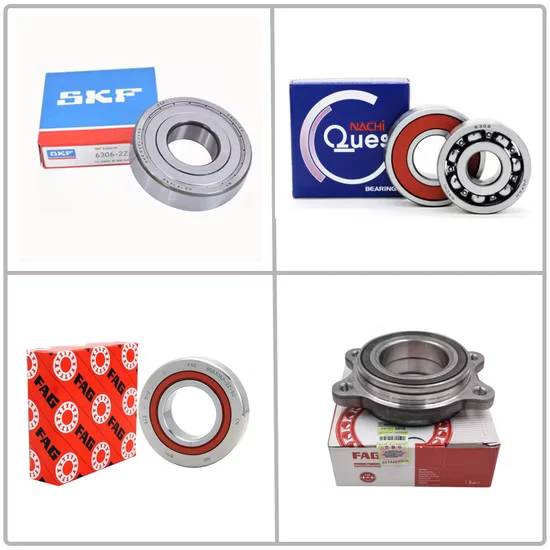
Q: How do I cross-reference these models with other brands?
A: Our technical team can provide equivalent model cross-references to other premium global brands based on your exact dimensional and performance requirements. Please share your operating parameters so we can identify the most suitable alternative if the specific Japanese part number is unavailable.