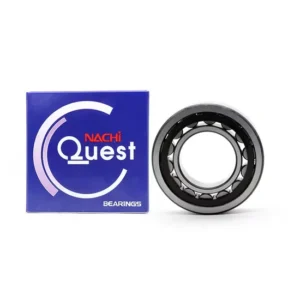
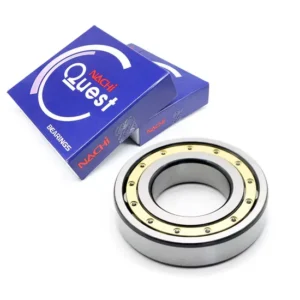
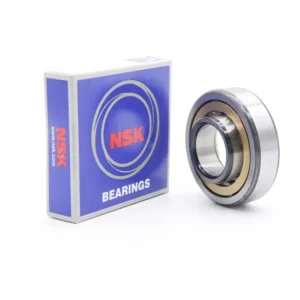
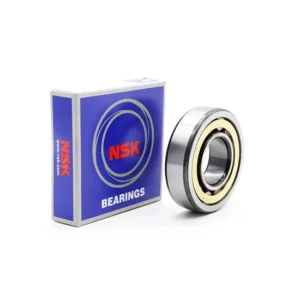
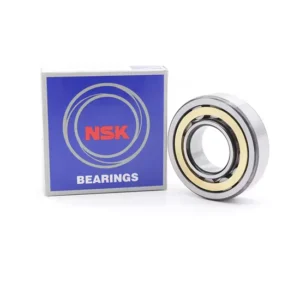
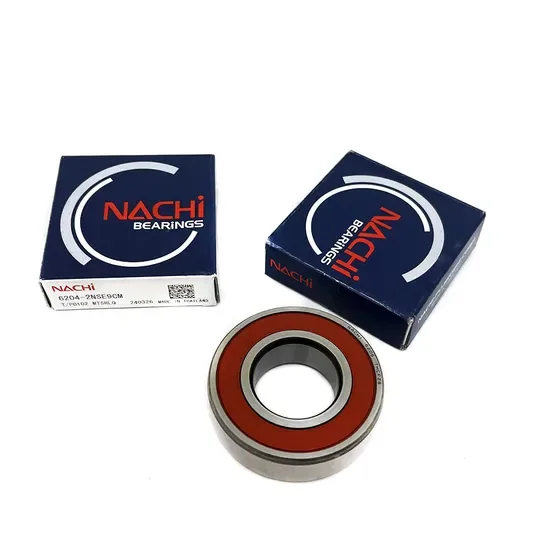
Multi-Brand Sourcing Unified — Consolidate NACHI, NSK, and domestic equivalents for your NUP312EM requirements in a single shipment without juggling multiple vendors.
Technical Specifications
| Parameter | Value |
| Designation | NUP312EM |
| Bearing Type | Cylindrical Roller Bearing |
| Bore Diameter (d) | 60 mm |
| Outside Diameter (D) | 130 mm |
| Width (B) | 31 mm |
| Cage Material | Machined brass cage (M suffix) |
| Internal Design | Enhanced capacity (E suffix) |
| Seal or Shield Type | Open |
| Precision Class | P0, P6, P5, P4, P2 |
| Material | Bearing Steel |
| Origin | China |
Application Suitability
| Industry | Typical Applications |
| Heavy Machinery | Main drive shafts in heavy-duty gearboxes |
| Metal Processing | Work roll and backup roll necks in rolling mills |
| Power Generation | Rotor support in large traction motors |
| Precision Manufacturing | Spindle positioning in heavy machine tools |
Why Thermal Expansion Destroys NACHI NSK NUP312EM cylindrical roller bearing Assemblies
Selecting standard clearance instead of C3 in high-temperature gearboxes guarantees inner ring expansion and catastrophic seizure.
During my failure analysis years in Qingdao, I tore down countless scuffed cylindrical roller bearings where procurement teams prioritized upfront savings over thermal dynamics. When heavy equipment operates under continuous radial loads, friction heat expands the shaft significantly. If the internal clearance is not properly specified for these elevated temperatures, the rolling elements bind against the raceways, causing immediate seizure.

Matching the NUP312EM Design to Heavy Radial Loads
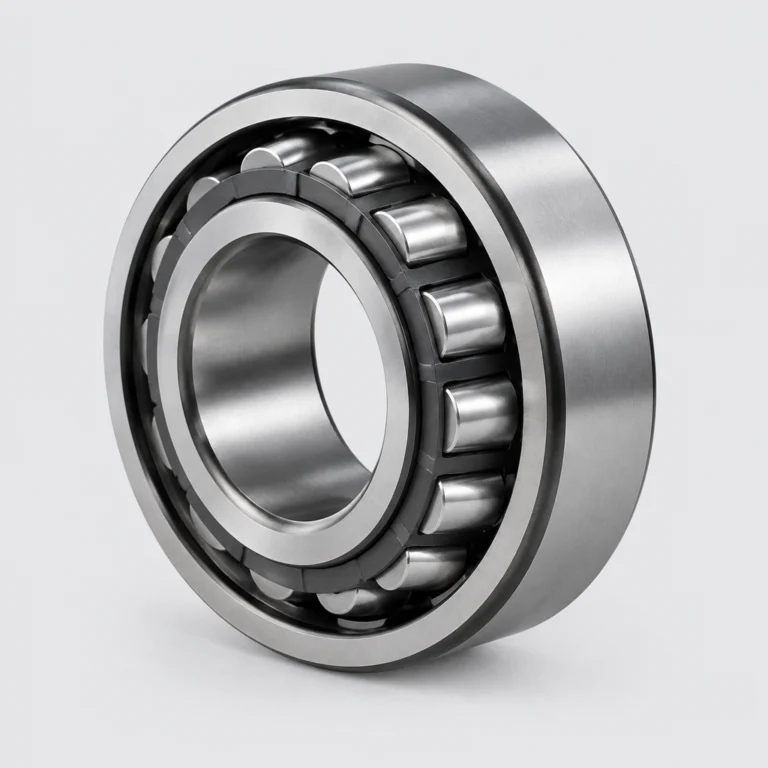
The NACHI NSK NUP312EM cylindrical roller bearing handles extreme radial forces while allowing axial displacement in both directions due to its double-ribbed inner ring and flat outer ring. Sourcing this specific configuration requires verifying the exact cage material and internal geometry to prevent premature fatigue. We cross-reference OEM specifications to ensure the enhanced capacity design aligns perfectly with your equipment's actual load profile and operational constraints.
Managing Vibration and Lubrication Starvation
In rolling mills and heavy gearboxes, shock loads and persistent vibration relentlessly test the structural integrity of the cage. An open seal configuration demands rigorous external lubrication protocols, as contaminated oil or degraded grease rapidly accelerates wear on the precision-ground surfaces. Without adequate flow reaching the machined brass cage, friction spikes and localized overheating compromise the raceway. Maintaining the correct viscosity and filtration level is critical to prevent microscopic debris from indenting the rolling elements.
Decoding the E and M Suffixes for Operational Longevity
The 'E' suffix indicates an optimized internal design with enhanced capacity, maximizing the radial load rating without altering the external envelope dimensions. Meanwhile, the 'M' suffix specifies a machined brass cage, which provides superior durability under heavy loads and high vibration compared to pressed steel alternatives. This cage type maintains precise roller guidance, reducing skewing and edge stress during operation. The separable design allows the inner ring with the roller and cage assembly to be mounted independently from the outer ring, simplifying maintenance inspections and reducing assembly time in complex gearbox housings.
The Downtime Penalty of Ignoring Clearance and Cage Specifications
Substituting a machined brass cage with a stamped steel variant in high-vibration environments leads to rapid cage fragmentation and secondary raceway damage. Similarly, ignoring thermal expansion when selecting clearance classes results in unplanned downtime and catastrophic seizure. These failures void equipment warranties and trigger extensive collateral damage to adjacent gearbox components, turning a minor procurement saving into a massive repair bill.
Securing Traceability and Technical Accuracy
Procuring authentic multi-brand bearings requires strict verification, especially when cross-referencing NACHI and NSK part numbers. We provide complete batch traceability documentation for every NUP312EM unit shipped. Our engineering team reviews your clearance and cage requirements to prevent the exact misconfigurations that cause field failures. We consolidate mixed-brand orders into single shipments, optimizing your freight costs while maintaining full anti-counterfeit verification and ensuring every component meets the required precision class.
Documentation & Authenticity
- Original manufacturer batch tracing confirming the production date and facility for your NUP312EM order.
- Material inspection reports verifying the bearing steel grade and machined brass cage composition.
- Dimensional and running accuracy inspection confirming P-class tolerances before dispatch.
- Certificate of Conformity detailing the specific clearance class and internal geometry codes.
Storage, Handling & Mounting
- Keep the open-type NUP312EM in its original anti-corrosion wrapping until immediately before mounting to prevent raceway oxidation.
- Use induction heating for the inner ring installation, monitoring temperature to preserve the machined brass cage integrity.
- Apply clean gloves when handling the separable components to avoid transferring moisture to the precision-ground surfaces.
- Ensure the external lubrication system is flushed and primed before startup, as the open design relies entirely on continuous oil or grease flow.
Preparing Your Technical Parameters for Review
To ensure optimal selection, share your specific radial and axial load calculations, operating speeds, and ambient temperature ranges. Providing the OEM equipment model number allows our team to perform accurate cross-reference alignment and L10 life verification. Detail your current lubrication method and sealing environment so we can confirm the suitability of the open-type configuration.
Frequently Asked Questions
Q: How do I verify the authenticity of the NACHI NSK NUP312EM cylindrical roller bearing?
A: Authenticity is confirmed through original manufacturer batch tracing and anti-counterfeit verification protocols. We provide complete traceability documentation, including material and dimensional inspection reports. Every unit is cross-referenced against official brand databases to ensure the internal geometry and cage materials match the exact factory specifications.
Q: What are the cross-reference considerations for clearance and cage materials?
A: When cross-referencing equivalents like the Nup313em or Nup314em, you must align the internal clearance class and cage type. Substituting a machined brass cage with a pressed steel variant, or ignoring thermal expansion requirements for clearance, leads to rapid failure. Always verify these specific suffix codes rather than relying solely on basic dimensional interchangeability.
Q: How to choose between oil and grease lubrication for open-type cylindrical roller bearings?
A: Open bearings require external lubrication systems. Oil circulation is preferred for high-speed gearboxes needing continuous cooling and debris flushing. Grease is suitable for moderate speeds where sealing out contaminants is prioritized, provided re-lubrication intervals are strictly maintained. The choice depends on your specific thermal and contamination challenges.
Q: When should a machined brass cage be selected over a pressed steel cage?
A: Machined brass cages are essential for applications involving heavy radial loads, persistent vibration, or high shock impacts. They provide superior roller guidance and resist fragmentation under extreme stress. Pressed steel cages are lighter and suitable for standard duties, but they lack the structural resilience required for demanding heavy machinery environments.