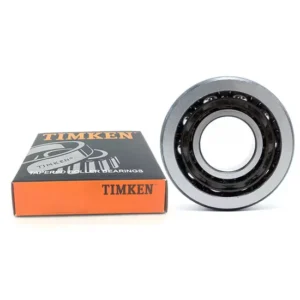
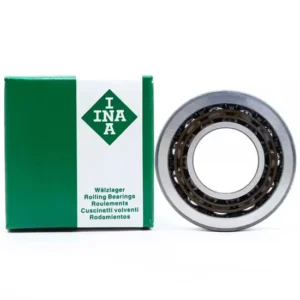
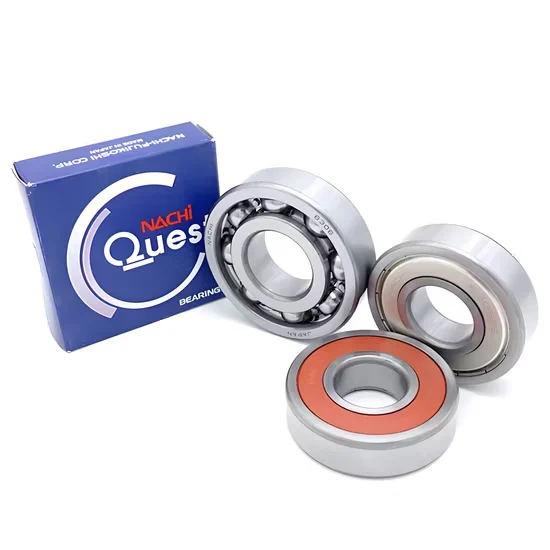
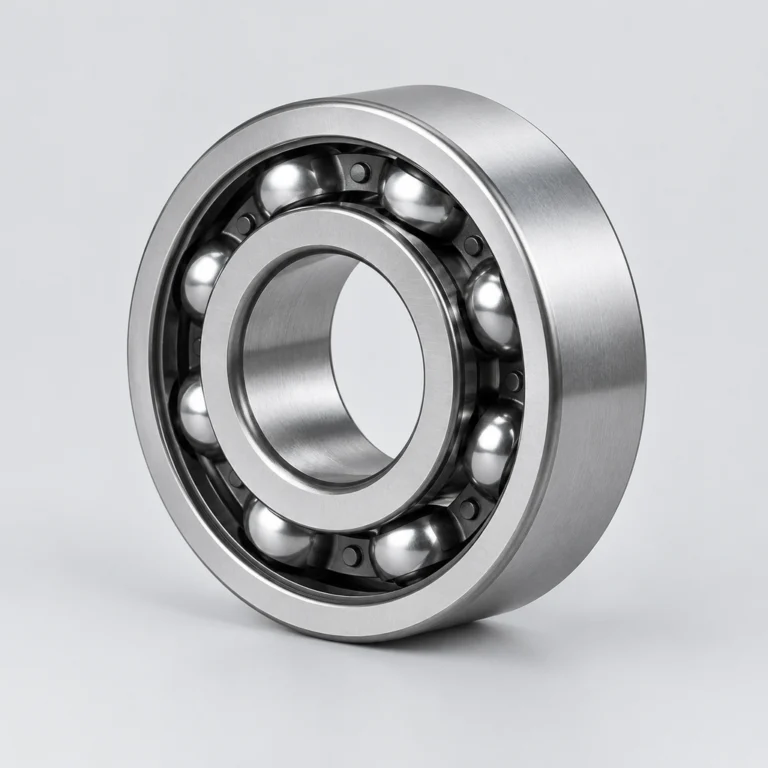
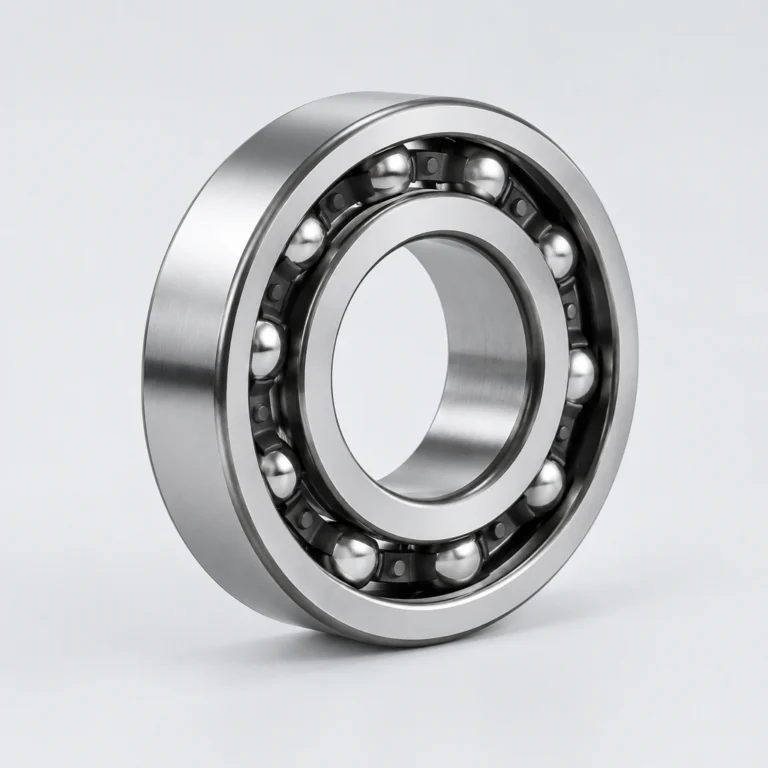
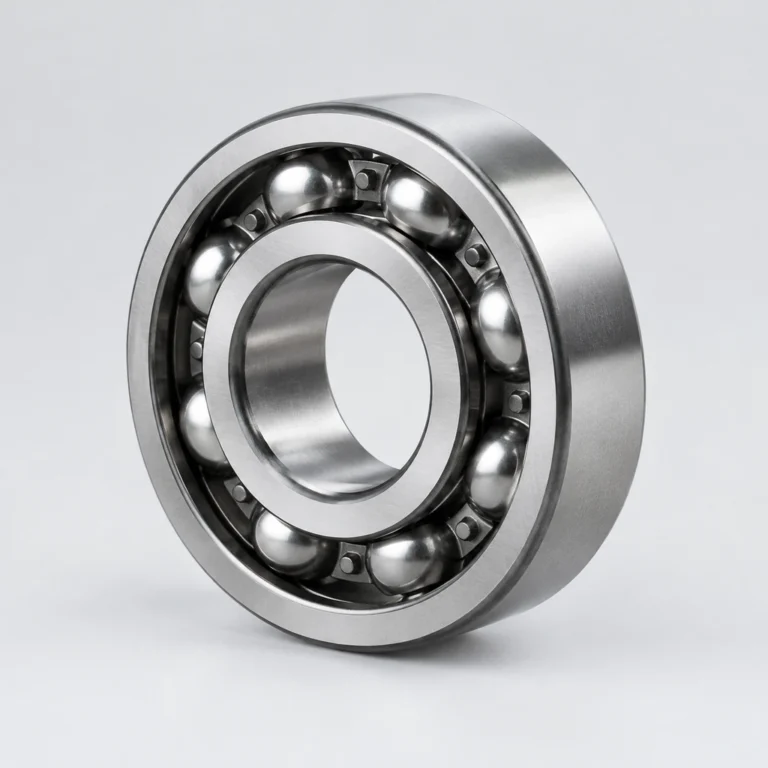
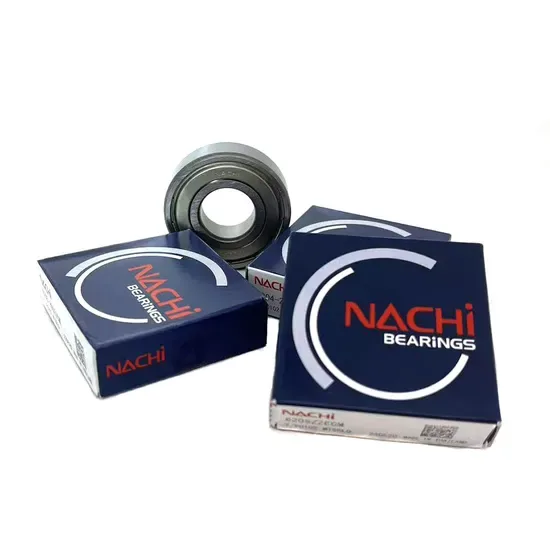
Official App QR Verification — Every QJ240M shipment includes scannable manufacturer tags to confirm authenticity before installation.
Technical Specifications
| Parameter | Value |
| Designation | QJ240M |
| Bearing Type | Four-Point Contact Ball Bearing |
| Bore Diameter (d) | 200 mm |
| Outside Diameter (D) | 360 mm |
| Width (B) | 58 mm |
| Cage Material | Machined brass cage |
| Material | Bearing Steel |
| Lubrication | Grease or Oil |
| Rows Number | Single |
Application Suitability
| Industry | Typical Applications |
| Rolling Mill | Work roll necks and backup roll chocks requiring combined load capacity |
| Mine | Heavy-duty conveyor drive gearboxes subjected to shock loading |
| Metallurgy | Continuous casting machine guide rolls operating under high thermal stress |
| Automobile | Heavy commercial vehicle transmission shafts handling bidirectional axial thrust |
Why Brass Cages Prevent Catastrophic Failures in the NACHI Timken QJ240M four-point contact ball bearing
Stamped steel cages shatter under high-speed combined loads, while machined brass absorbs vibration and dissipates heat.
Early in my career transitioning from customs documentation to key accounts, I supplied a gearbox plant with bearings that looked identical on the paperwork. I missed a single suffix difference, sending stamped steel cages instead of brass. Within days of high-speed operation, the cages fractured, halting the entire production line. The financial impact of that single oversight was staggering, covering not just the replacement parts but the massive idle time costs for the facility. That incident permanently changed how I verify every suffix for heavy-duty applications, ensuring that the internal components match the exact operational demands of the machinery. When dealing with combined radial and axial forces, the cage material is the first line of defense against sudden mechanical failure.

Matching the NACHI Timken QJ240M four-point contact ball bearing to Heavy-Duty Drives
When gearboxes in rolling mills face reversing axial thrusts, standard deep-groove designs simply cannot cope with the complex stress vectors. The four-point contact geometry allows this single row to handle bidirectional axial loads alongside radial forces, effectively eliminating the need for paired angular contact setups. This architectural advantage significantly reduces the axial footprint inside the gearbox housing, allowing engineers to design more compact and efficient drive trains. Sourcing this specific configuration ensures your drive trains maintain precise alignment without the complexity of managing multiple bearing sets or calculating intricate preload shims. The reliable single-row design simplifies maintenance routines while delivering the necessary load-carrying capacity for continuous industrial operations.
Managing Thermal Expansion and Shock Loads in Metallurgy
Continuous casting environments expose components to extreme temperature gradients that drastically alter internal clearances and lubricant viscosity. If the cage material cannot withstand these intense thermal cycles, it deforms, loses its geometric stability, and eventually seizes within the raceway. Machined brass maintains dimensional stability far better than polymers when exposed to elevated temperatures, while its substantial mass effectively dampens the severe shock loads typical in mining conveyors and crushing equipment. Proper oil lubrication is absolutely critical in these scenarios, as standard grease would quickly degrade, oxidize, and fail to carry away the friction heat generated by the combined loading. Ensuring the correct oil flow rate prevents localized hot spots that could otherwise compromise the bearing steel integrity.
Decoding the M Suffix and Four-Point Geometry
The "QJ" prefix designates the specialized four-point contact inner ring raceway, engineered specifically to sustain heavy axial loads in both directions without requiring a mating counterpart. The critical "M" suffix confirms a machined brass cage, which is indispensable for high-speed or high-vibration environments where stamped steel would rapidly fatigue and fracture. Unlike polymer cages that have strict thermal limits and degrade under heavy loads, brass offers superior heat dissipation, structural integrity, and resistance to cage pocket wear. The single-row arrangement keeps the axial footprint remarkably compact, making it an ideal solution for gearboxes where space is heavily constrained but load demands remain severe. Understanding these specific design markers ensures that procurement teams do not accidentally substitute a visually similar but functionally inadequate alternative.
The Financial Impact of Ignoring Cage Material Specifications
Substituting a machined brass cage with a stamped steel alternative might seem like a minor cost-saving measure on the initial purchase order. In reality, this compromise inevitably leads to premature cage fracture, resulting in catastrophic damage to the shaft, gears, and the entire gearbox housing. Unplanned downtime in a rolling mill or mining operation costs significantly more than the bearing itself, often multiplying the initial savings by a massive factor. Following the established failure classification frameworks, cage wear, deformation, and breakage are primary indicators of improper material selection for the given operating speed and load profile. Protecting your machinery requires strict adherence to the original equipment manufacturer's internal component specifications.
Securing Traceable Four-Point Contact Bearings for Critical Machinery
We maintain massive spot inventory covering thousands of standard part numbers, ensuring you receive the exact QJ240M with the correct brass cage without waiting months for factory production. Our cross-brand equivalent model consultation helps you verify dimensional interchangeability when upgrading legacy equipment or dealing with obsolete original part numbers. Every unit ships with complete traceability documentation, entirely eliminating the risk of counterfeit parts entering your critical maintenance stream and causing unexpected failures. Furthermore, our flexible consolidation shipping allows you to mix this heavy-duty bearing with smaller MRO spares in a single container, significantly optimizing your international freight costs. Our technical team also provides post-installation failure analysis support to help your maintenance crew optimize relubrication intervals.
Documentation & Authenticity
- Certificate of Conformity confirming the machined brass cage specification matches the original equipment requirement.
- Original manufacturer batch traceability records linking the specific QJ240M to its production date and facility.
- Official brand QR verification tags attached to the packaging for immediate authenticity checks upon arrival.
- Material inspection reports validating the bearing steel composition and heat treatment hardness.
- Dimensional and running accuracy inspection reports confirming the single-row geometry meets tolerance standards.
Storage, Handling & Mounting
- Keep the original moisture-barrier packaging intact until installation to prevent corrosion on the 200 mm bore surface.
- Use induction heating for the inner ring mounting, ensuring the temperature does not exceed the thermal limit of the brass cage.
- Apply clean lint-free gloves when handling the open bearing to prevent sweat-induced micro-corrosion on the raceways.
- Fill the gearbox with the specified oil level to ensure the machined brass cage receives adequate splash lubrication during startup.
- Support the 360 mm outer ring evenly during press-fitting to avoid brinelling the four-point contact raceway.
Preparing Your Technical Data for Selection Review
To ensure this four-point contact design perfectly matches your specific application, please share your detailed radial and axial load profiles along with the maximum operating speeds. Providing the original equipment manufacturer's part number allows our engineering team to perform a precise cross-reference check and verify dimensional compatibility. If your gearbox operates under extreme thermal conditions or heavy contamination, detailing the ambient and internal temperatures helps us verify the appropriate clearance class and lubrication requirements. Supplying this operational context enables us to validate the L10 life calculation and recommend the most reliable configuration for your machinery.
Frequently Asked Questions
Q: How can I verify the authenticity of the NACHI Timken QJ240M four-point contact ball bearing before installation?
A: Every genuine unit we supply features scannable manufacturer QR codes on the packaging. You can use the official brand application to verify the batch number and production origin instantly. Additionally, we provide original traceability documents that match the physical markings on the bearing rings, ensuring complete peace of mind for critical machinery applications.
Q: What does the "M" suffix mean for the QJ series, and why is it critical for my gearbox?
A: The "M" suffix indicates a machined brass cage, which provides superior structural strength and heat dissipation compared to stamped steel or polymer alternatives. In high-speed gearboxes subjected to combined loads, this brass cage prevents catastrophic fractures and ensures stable operation. Missing this suffix and installing a steel cage instead is a common cause of premature line stoppages.
Q: How do I select the correct cross-reference equivalents for larger bore sizes in this series?
A: When scaling up your drive train, you may need larger bore equivalents like Qj244m or Qj248m to handle increased loads. Our engineering team cross-references dimensional specifications and dynamic load ratings across premium global brands to find the exact match. We verify that the four-point contact geometry and brass cage design remain consistent across the substituted part numbers.
Q: What are the recommended lubrication practices for this bearing in heavy-duty mining equipment?
A: For mining conveyors facing heavy shock loads and contamination, oil lubrication is generally preferred to carry away friction heat from the brass cage. You must maintain the correct oil level to ensure adequate splash lubrication reaches the single-row elements. Regular oil analysis helps monitor wear particles, allowing you to adjust filtration and relubrication intervals before severe damage occurs.
Q: How does the four-point contact design handle combined loads compared to standard angular contact bearings?
A: Unlike standard angular contact bearings that require pairing to handle bidirectional axial thrust, the four-point contact inner ring raceway manages axial loads in both directions within a single row. This compact design saves axial space in gearboxes while still supporting significant radial forces. It simplifies mounting and eliminates the need to calculate complex preload settings for matched pairs.