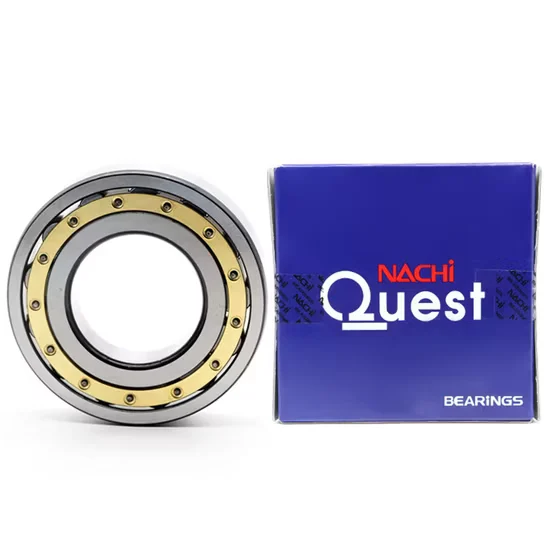
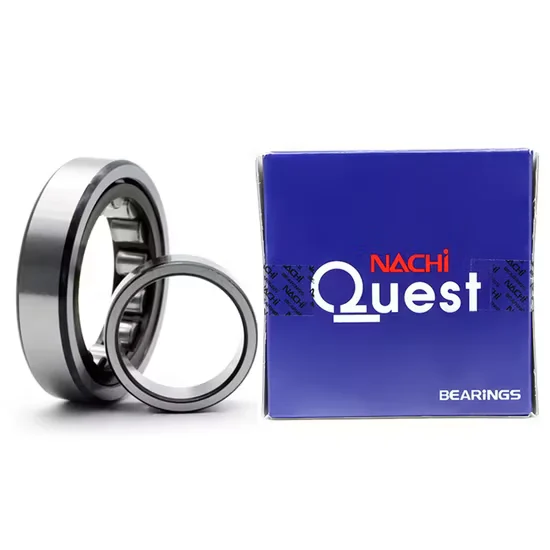
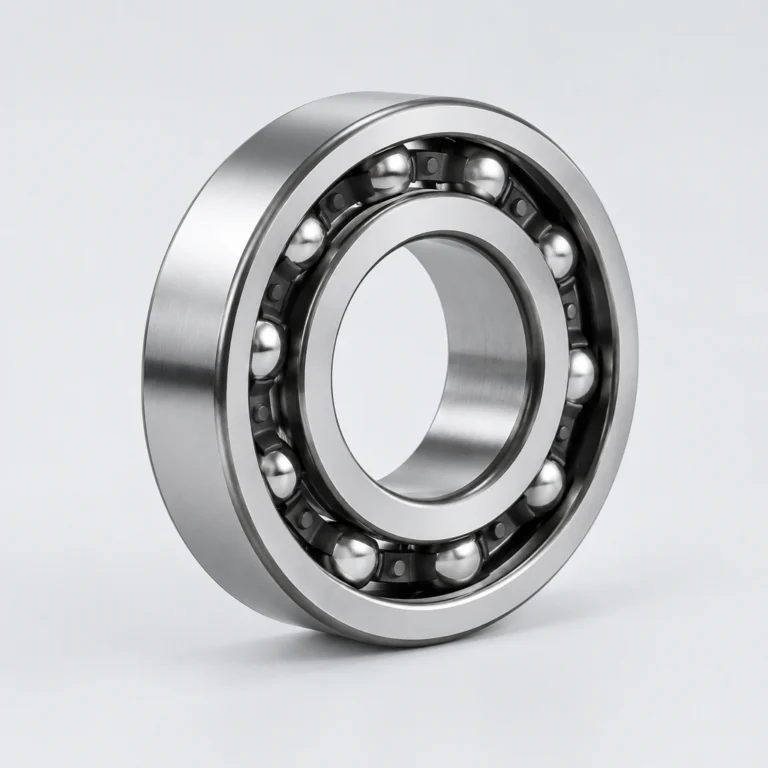
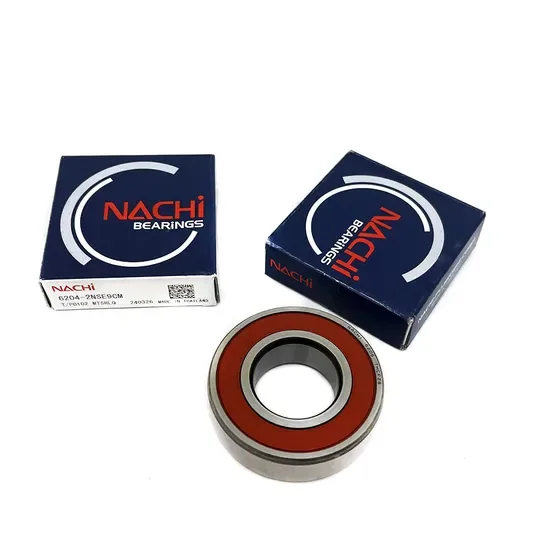
Cross-Reference Alignment Verified — Every NACHI NU312EM cylindrical roller bearing shipment includes dimensional, material, and suffix cross-checks against OEM specifications.
Technical Specifications
| Parameter | Value |
| Designation | NU312EM |
| Bearing Type | Cylindrical Roller Bearing |
| Bore Diameter (d) | 60 mm |
| Outside Diameter (D) | 130 mm |
| Width (B) | 31 mm |
| Cage Material | Machined brass cage (M suffix) |
| Internal Design | Enhanced capacity (E suffix) |
| Seal or Shield Type | Open |
| Number of Rows | Single Row |
| Load Direction | Radial |
| Separable | Yes |
| Origin | Japan |
Application Suitability
| Industry | Typical Applications |
| Heavy Machinery | Heavy-duty gearboxes transmitting high torque |
| Metallurgy | Rolling mill work rolls and backup rolls |
| Transportation | Traction motors requiring high radial load capacity |
Why Generic Cages Fail in the NACHI NU312EM cylindrical roller bearing
Brass cages outperform stamped steel when thermal expansion and vibration collide.
I once stood on a rolling mill floor in the Yangtze River Delta watching a production line halt because a standard clearance bearing seized under extreme heat. When heavy-duty gearboxes operate continuously, the internal temperature rises significantly, causing standard components to expand and bind. Relying on generic replacements without verifying the exact internal geometry often leads to catastrophic friction. The absence of a machined brass cage means the rollers lose precise guidance during high-vibration cycles, leading to skewed loading and rapid raceway degradation. Procurement teams often overlook these subtle suffix differences, assuming all cylindrical rollers are interchangeable, which directly compromises the reliability of critical drive systems.

Matching the Configuration to Your Drive System
Matching the NACHI NU312EM cylindrical roller bearing to your specific operating environment requires more than just checking the bore and outside diameter. The enhanced internal design optimizes load distribution across the rolling elements, which is critical for traction motors experiencing constant radial stress. Our engineering team evaluates your exact load profiles to ensure the selected configuration handles the operational demands without premature fatigue. We analyze the specific vibration frequencies and shock load magnitudes inherent to your machinery, ensuring the brass cage can withstand the dynamic forces. This proactive approach prevents the subtle misalignments that typically cause early spalling in heavy-duty gearboxes, securing long-term operational stability for your most demanding applications.
Managing Thermal Gradients and Contamination Risks
Rolling mills and heavy-duty gearboxes subject components to immense radial forces and continuous shock loads. The open seal configuration allows for flexible lubrication strategies, enabling maintenance teams to flush out metallic debris with oil circulation systems. However, this demands strict contamination control, as particulate ingress rapidly degrades the raceway surface. Furthermore, operating temperatures dictate the necessary internal clearance to prevent the rolling elements from skidding or seizing when the inner ring expands. If the thermal gradient across the housing is not properly accounted for, the resulting internal preload will generate excessive friction, accelerating wear and potentially causing catastrophic cage failure. Maintenance protocols must therefore integrate precise temperature monitoring alongside rigorous oil filtration to protect the unprotected raceways.
Decoding the Enhanced Geometry and Cage Construction
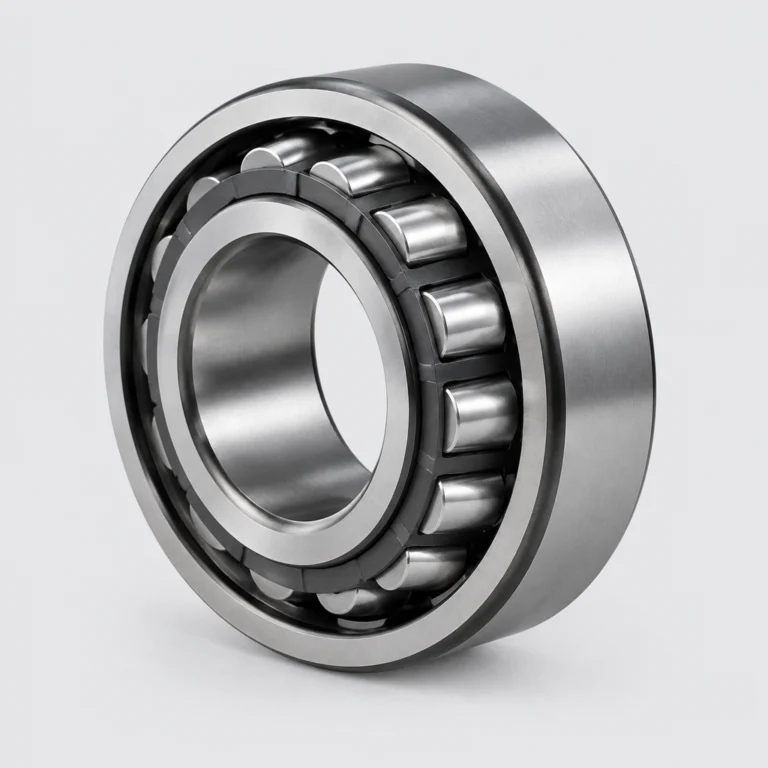
The 'E' suffix indicates an enhanced internal design that maximizes the number and size of the rolling elements, directly increasing the radial load capacity. Paired with this, the 'M' suffix confirms a machined brass cage, which provides superior structural integrity and vibration damping compared to pressed steel alternatives. This solid brass construction maintains precise roller guidance even under heavy shock loads and high-speed rotations, preventing the rollers from skewing inside the pocket. The separable design allows the inner ring with the roller and cage assembly to be mounted independently from the outer ring, significantly simplifying installation in tight gearbox housings. This modularity not only reduces assembly time but also minimizes the risk of damaging the delicate rolling elements during the pressing operation, ensuring the enhanced geometry remains perfectly intact.
The Hidden Financial Impact of Incorrect Suffix Selection
Installing a component with an incorrect internal clearance or a weaker cage material inevitably results in unplanned downtime. When thermal expansion exceeds the designed clearance limits, the bearing experiences excessive preload, generating extreme friction and rapid temperature spikes. This cascade of failures often causes catastrophic damage to the shaft and housing, voiding equipment warranties and halting entire production shifts. The financial impact extends far beyond the replacement part cost, encompassing lost production revenue, emergency freight charges, and extensive labor hours required to machine damaged shaft journals. Ignoring the specific suffix requirements for heavy-duty applications turns a minor procurement saving into a massive operational liability that compromises the entire drive train.
Securing Genuine Components for Critical Infrastructure
We refuse to substitute machined brass cages with stamped steel variants just to lower the unit price, ensuring your heavy-duty gearboxes receive the exact 'M' suffix configuration required. Every NACHI NU312EM cylindrical roller bearing we dispatch undergoes strict cross-reference validation to guarantee the 'E' suffix enhanced capacity matches your OEM drawings. Our inventory strategy prioritizes genuine traceability over gray-market shortcuts, providing complete batch documentation for critical metallurgy applications. We also offer technical selection support to verify that your chosen clearance class aligns with the actual operating temperatures of your rolling mills. By focusing on precise suffix alignment and authentic sourcing, we eliminate the guesswork from your maintenance planning, ensuring every replacement part performs exactly as the original equipment manufacturer intended.
Documentation & Authenticity
- Original factory batch tracing confirming the exact production date and facility for this specific batch.
- Material inspection reports verifying the bearing steel composition matches NACHI specifications.
- Dimensional inspection records confirming the 60 mm bore and 130 mm outside diameter tolerances.
- Certificate of Conformity validating the genuine 'EM' suffix configuration and Japanese origin.
- Running accuracy inspection data ensuring the internal geometry meets the required precision standards.
Storage, Handling & Mounting
- Keep the original packaging sealed until installation to prevent moisture from corroding the open-type raceways.
- Use induction heating for the inner ring mounting, monitoring the temperature to preserve the base material's metallurgical properties.
- Apply clean gloves when handling the machined brass cage to avoid acidic sweat causing localized corrosion.
- Flush the open bearing with clean oil immediately before assembly to establish a protective lubrication film.
- Support the outer ring evenly during pressing to prevent brinelling the enhanced capacity raceway.
Preparing Your Technical Inquiry
To ensure precise technical alignment, please share your specific radial and axial load calculations, operating speeds, and expected thermal profiles. Providing the exact OEM equipment model numbers allows our engineering team to perform a thorough cross-reference check and L10 life recalculation. Detailing the housing dimensions and installation space constraints will help us verify the separable mounting sequence for your application. We also require information regarding your current lubrication setup and environmental exposure levels to confirm that the open configuration is suitable for your specific contamination control protocols, ensuring a flawless integration into your existing maintenance framework.
Frequently Asked Questions
Q: How to verify the authenticity of NACHI bearings through official traceability channels?
A: Authenticity is confirmed by cross-checking the laser-marked designation on the outer ring against the original factory batch documentation. We provide complete traceability records that link the specific production batch to the manufacturer's official quality database, ensuring every component is genuine and fully documented before shipment.
Q: What are the critical cross-reference checks for ensuring cage material and internal design match exactly?
A: The most critical checks involve verifying the 'E' and 'M' suffixes to guarantee the enhanced internal geometry and machined brass cage are present. We physically inspect the cage material and roller count, then cross-reference these physical attributes with the official OEM drawings to prevent any unauthorized substitutions.
Q: How does a machined brass cage outperform pressed steel cages in heavy-duty rolling mill applications?
A: Machined brass cages offer superior structural rigidity and vibration damping, which is essential when rolling mills generate intense shock loads. Unlike pressed steel, the solid brass construction maintains precise roller alignment under heavy radial stress, preventing cage deformation and ensuring stable operation at elevated temperatures.
Q: What are the recommended lubrication practices for open-type cylindrical roller bearings?
A: Open configurations require a dedicated external lubrication system, typically oil circulation, to continuously flush away metallic debris and dissipate heat. Maintenance teams must establish strict filtration protocols and regular oil analysis schedules to prevent particulate contamination from scoring the unprotected raceway surfaces.