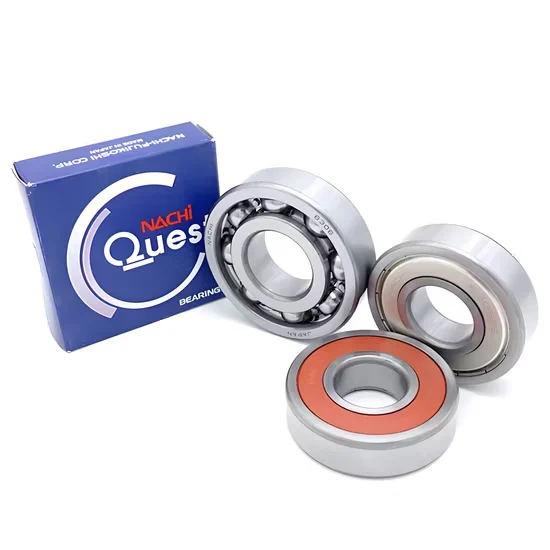
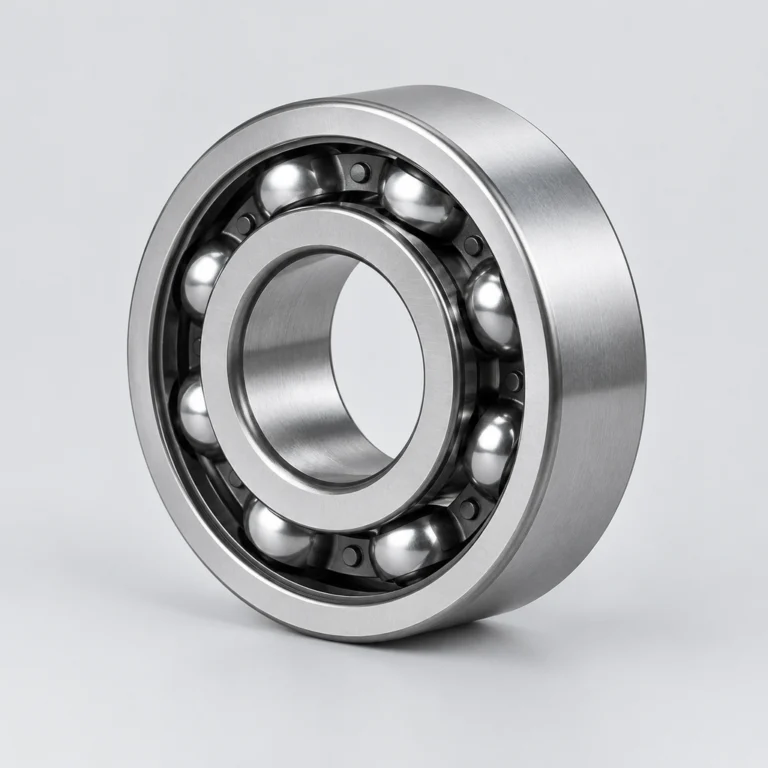
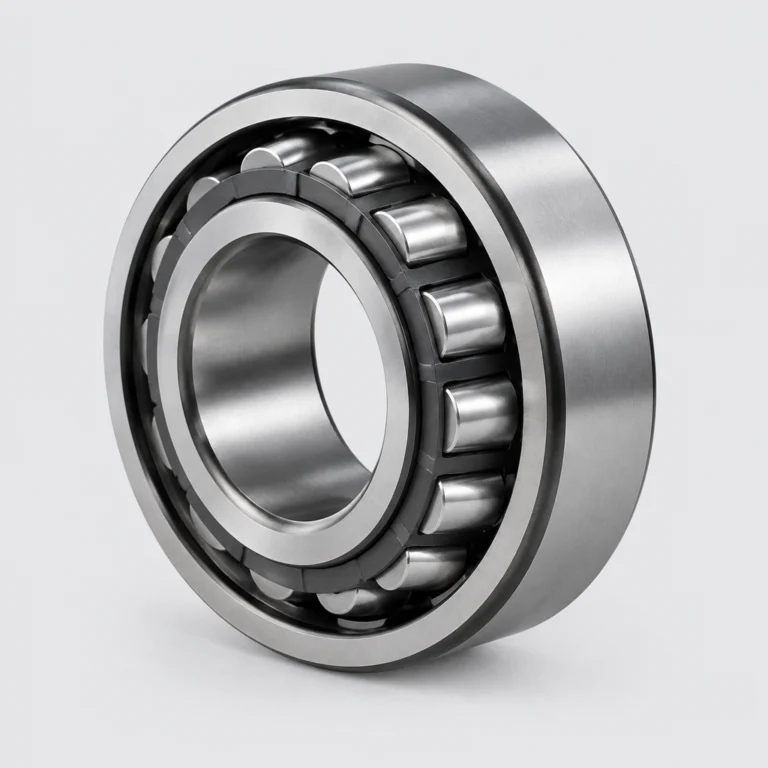
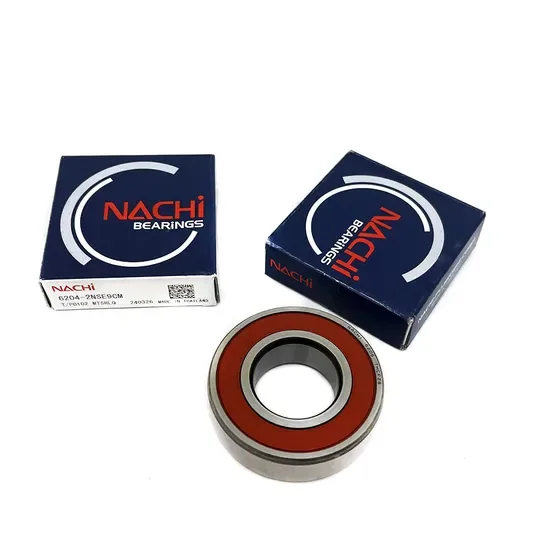
Cross-Reference Alignment Verified — Matching bore, outside diameter, and clearance class ensures direct interchangeability without modifying housing dimensions.
Technical Specifications
| Parameter | Value |
| Designation | NACHI 22210 |
| Bearing Type | Spherical Roller Bearing |
| Bore Diameter (d) | 50 mm |
| Outside Diameter (D) | 90 mm |
| Width (B) | 23 mm |
| Precision Class | P0 P6 P5 P4 P2 |
| Clearance Class | C0 C3 C4 |
| Origin | Japan |
Application Suitability
| Industry | Typical Applications |
| Metallurgical Plants | Continuous casting machine guide rolls |
| Steel Mill Operations | Rolling mill work roll necks |
| Heavy Machinery | Vibrating screen exciter mechanisms |
Thermal Expansion Traps in the NACHI 22210 spherical roller bearing
Mismatched internal clearance turns heat into a mechanical lock.
Sending standard clearance units to a high-heat steel mill often ends in catastrophic seizure. I learned this the hard way when a Nigerian metallurgical plant halted production because thermal growth eliminated the internal gap entirely. The massive radiant heat from the continuous caster transferred directly into the shaft, causing the inner ring to expand rapidly. Selecting the right NACHI 22210 spherical roller bearing requires anticipating operational heat, not just matching basic dimensions on a purchase order. Overlooking this thermal dynamic guarantees premature failure and extensive unplanned downtime.

Aligning Self-Compensating Geometry with Mill Deflection
Heavy rolling mills subject shafts to severe deflection under extreme radial loads during the metal forming process. The self-aligning raceway design of the NACHI 22210 spherical roller bearing compensates for these misalignments dynamically as the roll gap adjusts. This geometric flexibility prevents destructive edge loading on the rollers, distributing stress evenly across the entire contact zone. By accommodating shaft bending, the bearing maintains operational stability and protects the adjacent gearbox components from secondary vibration damage, ultimately extending the service life of the entire mechanical assembly.
Managing Heat, Shock, and Contamination in Steel Production
Metallurgical environments combine intense radiant heat with heavy shock loads generated by continuous casting and rolling processes. Elevated temperatures drastically reduce the effective internal clearance, demanding specific options to accommodate thermal expansion before the mill even starts. Furthermore, airborne scale and aggressive cooling water require durable external sealing solutions or frequent relubrication cycles to flush out abrasive particles from the raceway. Maintaining the correct lubricant viscosity at high operating temperatures is absolutely critical to prevent metal-to-metal contact. Ignoring these environmental factors leads to rapid wear and compromised structural integrity.
Decoding Clearance and Precision for High-Heat Operations
The available C0, C3, and C4 clearance classes dictate exactly how the bearing behaves once the mill reaches its peak operating temperature. While C0 suits ambient conditions, C3 provides the necessary extra internal space to prevent seizure when the inner ring expands from intense heat transfer. Precision classes ranging from P0 to P2 dictate the running accuracy, though metallurgical guide rolls typically rely on standard P0 or P6 tolerances unless high-speed vibration is present in the specific machine design. The absence of specific cage or seal suffixes in the base designation means these critical components must be verified against the exact OEM requirements before installation. Selecting the appropriate clearance prevents the rolling elements from skidding during thermal growth phases, ensuring smooth rotation under heavy loads.
The Cascading Impact of Incorrect Clearance Selection
Installing a standard clearance bearing in a high-temperature zone inevitably leads to premature failure through thermal seizure and severe raceway scoring. This unplanned downtime cascades through the entire production line, causing severe financial losses that far exceed the initial component replacement cost. According to established failure analysis frameworks, improper internal clearance is a primary driver of catastrophic raceway spalling and sudden cage fracture under heavy loads. When the internal gap closes completely, the friction generates immense localized heat, ultimately welding the rolling elements to the rings and destroying the housing.
Sourcing Expertise Rooted in Field Failures
We do not just ship boxes; we actively verify the exact suffix requirements for high-heat metallurgical applications before dispatch. My early logistics mistakes in Africa taught me that sending a standard clearance unit instead of a C3 variant can shut down an entire steel plant for days. Our procurement team cross-checks every NACHI 22210 spherical roller bearing order against your specific thermal profiles and load conditions. We maintain flexible consolidation options, allowing you to mix emergency spare parts with full project shipments efficiently. Every single unit ships with complete batch traceability to guarantee authentic Japanese manufacturing origin and reliable material quality.
Documentation & Authenticity
- Certificate of Conformity confirming Japanese origin and authentic NACHI manufacturing.
- Original factory batch traceability linking the specific bearing to its production run.
- Official app QR code verification to instantly validate anti-counterfeiting security features.
- Dimensional inspection reports confirming the exact 50x90x23 mm specifications before dispatch.
Storage, Handling & Mounting
- Keep the original packaging sealed until mounting to protect the precision-machined raceways from humid mill environments.
- Use induction heating for the 50 mm bore installation, strictly monitoring temperature to preserve the selected C3 or C4 clearance.
- Store units horizontally in a climate-controlled area to prevent Brinelling on the spherical rollers from external vibrations.
- Apply clean gloves when handling to avoid transferring acidic sweat that could compromise the anti-corrosion coating.
Engineering Validation Before Dispatch
To ensure the selected clearance and precision class match your exact metallurgical setup, please share the operating temperature range and radial load profiles. Providing the OEM equipment model number allows our technical team to perform a thorough cross-reference verification against equivalent international standards. This proactive data sharing guarantees the bearing integrates flawlessly into your continuous casting or rolling mill machinery. Our engineering support extends to advising on optimal relubrication intervals based on your specific environmental contamination levels.
Frequently Asked Questions
Q: How do I verify the authenticity of the NACHI 22210 spherical roller bearing upon delivery?
A: Authenticity is confirmed by scanning the QR code on the packaging using the official manufacturer application. Additionally, we provide original factory batch traceability documents that link the physical unit to its specific production run in Japan, ensuring complete supply chain transparency and protecting your mill from counterfeit risks.
Q: What is the difference between C0, C3, and C4 clearance for steel mill applications?
A: Standard C0 clearance suits ambient temperatures, but high-heat metallurgical environments require C3 or C4. As the inner ring expands from thermal transfer, extra internal space prevents the rolling elements from binding. Selecting the correct clearance class is critical to avoid thermal seizure and catastrophic line stoppages in continuous casting operations.
Q: Can I cross-reference this bearing with other international brands?
A: Yes, the 50x90x23 mm dimensions align with standard international sizing, allowing cross-reference to equivalent models from other premium global brands. However, you must verify that the internal clearance, cage design, and precision class match exactly, as subtle suffix differences can cause immediate failure in demanding metallurgical equipment applications.
Q: What installation method is recommended for the 50 mm bore?
A: Induction heating is the preferred method for mounting this cylindrical bore bearing onto the shaft. It is vital to strictly control the heating temperature to prevent altering the metallurgical structure of the rings or destroying the selected internal clearance. Always use appropriate lifting equipment to avoid damaging the spherical rollers during alignment.