Cross-Reference Alignment — We verify dimensional, load, and clearance equivalency when substituting this specific Japan-origin model with alternative premium brands.
Technical Specifications
| Parameter | Value |
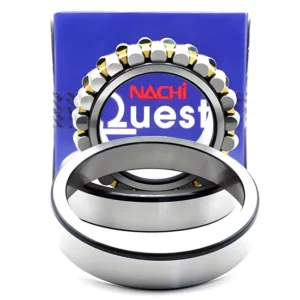
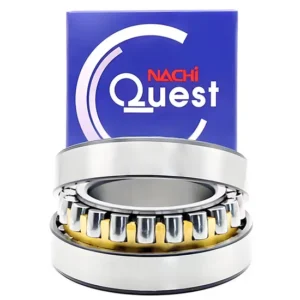
| Designation | NACHI 22222 |
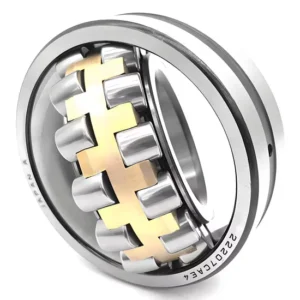
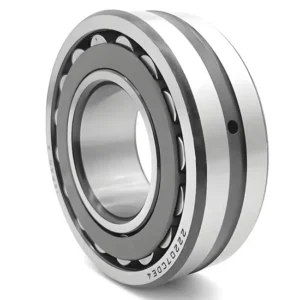
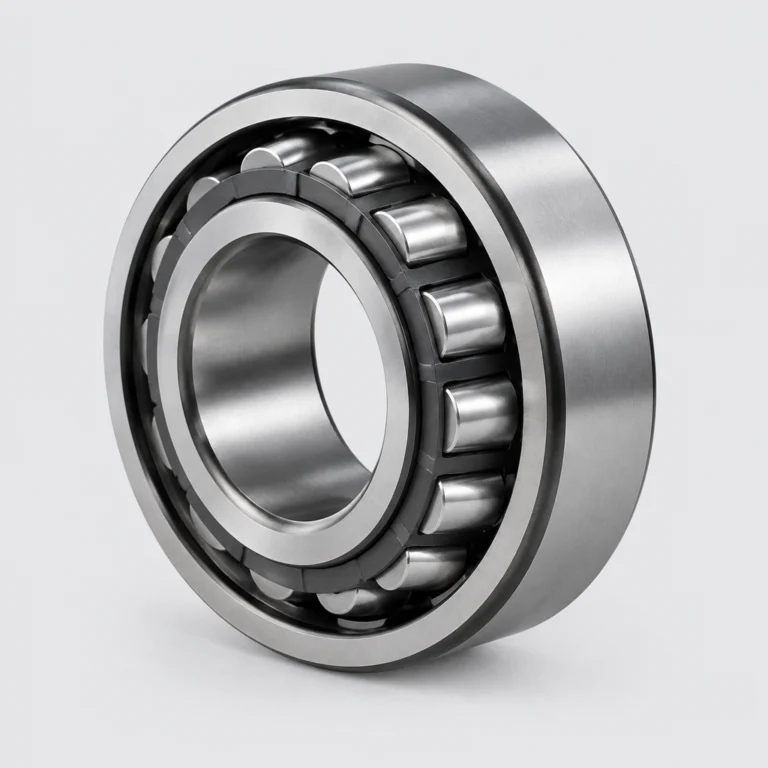
| Bearing Type | Spherical Roller Bearing |
| Bore Diameter (d) | 110 mm |
| Outside Diameter (D) | 200 mm |
| Width (B) | 53 mm |
| Precision Class | P0, P6, P5, P4, P2 |
| Clearance Class | C0, C3, C4 |
| Origin | Japan |
| HS Code | 8482300000 |
Application Suitability
| Industry | Typical Applications |
| Mining & Quarrying | Jaw crusher eccentric shafts / Vibrating screen exciter mechanisms |
| Metallurgy & Steel | Continuous caster guide rolls / Rolling mill work rolls |
| Pulp & Paper | Paper machine dryer cylinder journals / Press section rolls |
| Construction | Heavy-duty excavator slew drives / Mobile crushing plant conveyors |
Why Standard Clearance Fails in High-Friction Crusher Environments
Thermal expansion rapidly eliminates internal clearance, causing roller seizure under heavy radial loads.
I have seen this exact scenario unfold at a copper processing plant in Chile. The maintenance team installed standard clearance bearings into a primary jaw crusher operating under intense friction and ambient heat. Within months, the internal clearance vanished, leading to catastrophic roller burnout and unplanned downtime. Upgrading to a C3 clearance configuration with a machined brass cage completely resolved the thermal binding issue. Selecting the correct NACHI 22222 spherical roller bearing variant is non-negotiable for such punishing duty cycles.

Matching the NACHI 22222 Spherical Roller Bearing to Heavy-Duty Shock Loads
This specific model excels in environments where shaft deflection and heavy radial forces coexist. The self-aligning geometry automatically compensates for housing misalignment, protecting the raceway from edge loading. Our engineering team frequently specifies this Japan-origin design for vibrating screens where continuous shock loads would quickly fatigue rigid bearing types.
Navigating Contamination and Thermal Extremes in Mining Operations
Open-type spherical designs require meticulous external sealing arrangements to prevent abrasive dust ingress. In high-temperature zones like steel mill cooling beds, the lubricant selection must match the thermal profile to prevent base oil degradation. Proper relubrication intervals are critical; purging old grease effectively removes wear particles that accelerate surface fatigue. Furthermore, induction heating during installation must be strictly controlled to avoid altering the metallurgical structure of the rings.
Decoding Clearance and Cage Selection for Vibratory Machinery
The availability of C0, C3, and C4 clearance classes dictates how the bearing handles thermal gradients. A C3 or C4 internal clearance provides the necessary operational gap when the inner ring expands faster than the outer ring due to shaft heat transfer. While standard pressed steel cages suffice for general purposes, heavy vibrating equipment demands the superior strength and heat dissipation of a machined brass cage. The 110x200x53mm footprint offers a substantial dynamic load capacity, making it a reliable workhorse for continuous operation. Precision classes ranging from P0 up to P2 allow buyers to align the manufacturing tolerance with their specific rotational speed requirements.
The Cascading Financial Impact of Incorrect Internal Clearance
Specifying a standard clearance bearing for a high-heat application inevitably leads to preload-induced skidding. This skidding generates excessive friction, rapidly degrading the lubricant and causing localized spalling on the raceways. The resulting catastrophic failure not only destroys the bearing but often scores the shaft and damages the housing bore. Such secondary damage transforms a simple component replacement into a major mechanical overhaul, voiding equipment warranties and causing severe production losses.
Securing Authentic Japan-Origin Inventory with Full Traceability
Counterfeit bearings are a persistent threat in the mining sector, often failing within weeks of installation. We source our NACHI 22222 spherical roller bearing inventory directly from authorized channels, ensuring every unit possesses verifiable origin documentation. When your project requires mixing brands to complete a maintenance kit, our cross-referencing protocol guarantees dimensional and load equivalency. We maintain massive spot inventory for these 110mm bore units, eliminating the typical multi-week lead times associated with direct factory orders. Furthermore, our technical team provides post-installation failure analysis to help your plant optimize future relubrication schedules.
Documentation & Authenticity
- Certificate of Conformity verifying Japan origin and authorized distribution channels.
- Original batch traceability documents linking the specific 22222 unit to the factory heat number.
- Official manufacturer QR code verification for immediate anti-counterfeit validation on site.
- Material inspection reports confirming the metallurgical grade of the inner and outer rings.
- Dimensional and running accuracy inspection reports validating the selected P-class tolerances.
Storage, Handling & Mounting Protocols
- Keep the 110x200x53mm bearing in its original VCI packaging until mounting to prevent humidity-induced corrosion.
- Use induction heaters with automatic demagnetization to mount the inner ring without altering its hardness.
- Apply clean lint-free gloves when handling the exposed rollers of this open-type design to prevent sweat contamination.
- Verify the shaft and housing tolerances match the selected C3 or C4 clearance before pressing the outer ring.
- Ensure the brass cage variant is adequately packed with the specified high-temperature grease during initial assembly.
Engineering Review and Selection Guidance
To ensure optimal lifecycle performance, please share your specific radial and axial load profiles alongside operating temperatures. Providing the OEM equipment serial number allows our team to perform a precise cross-reference check against alternative premium brands. We will calculate the theoretical L10 life based on your exact duty cycle to confirm whether a C3 or C4 clearance is required.
Frequently Asked Questions
Q: How can I verify the authenticity of the NACHI 22222 spherical roller bearing upon delivery?
A: Authenticity is confirmed by scanning the official QR code on the packaging using the manufacturer's mobile application. Additionally, we provide original batch traceability documentation that links the physical bearing to its specific factory production run. This dual-verification process eliminates the risk of installing counterfeit components in critical mining machinery.
Q: What is the practical difference between C0, C3, and C4 clearance for this specific model?
A: C0 represents standard internal clearance for normal temperature operations. C3 provides extra clearance to accommodate thermal expansion when the inner ring runs hotter than the housing, which is typical in crushers. C4 offers even greater clearance for extreme heat or heavy interference fits, preventing the rollers from binding and seizing under load.
Q: How do I select the right precision class for heavy-duty vibrating screens?
A: Vibrating screens primarily demand high load capacity and durability rather than ultra-high rotational precision. Standard P0 or P6 precision classes are generally sufficient for these applications. Higher precision classes like P5 or P4 are typically reserved for high-speed machine tool spindles where minimizing vibration and running accuracy are the absolute primary concerns.
Q: What are the recommended relubrication intervals for the NACHI 22222 in dusty environments?
A: Relubrication frequency depends heavily on the operating temperature, rotational speed, and contamination level. In highly abrasive mining environments, shorter intervals are necessary to purge old grease and embedded dust particles from the raceway. We recommend consulting the manufacturer's technical catalog and adjusting the schedule based on regular oil condition monitoring.
Q: How should I properly install this spherical roller bearing using an induction heater?
A: Heat the inner ring evenly to the recommended temperature threshold to allow smooth sliding over the shaft journal. Never heat the bearing beyond the manufacturer's specified limit, as this will permanently alter the steel's metallurgical structure and reduce its hardness. Always use an induction heater equipped with automatic demagnetization to prevent metal particle attraction during operation.