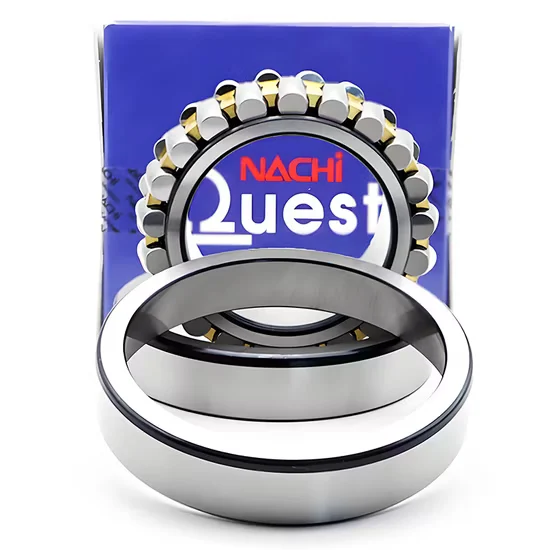
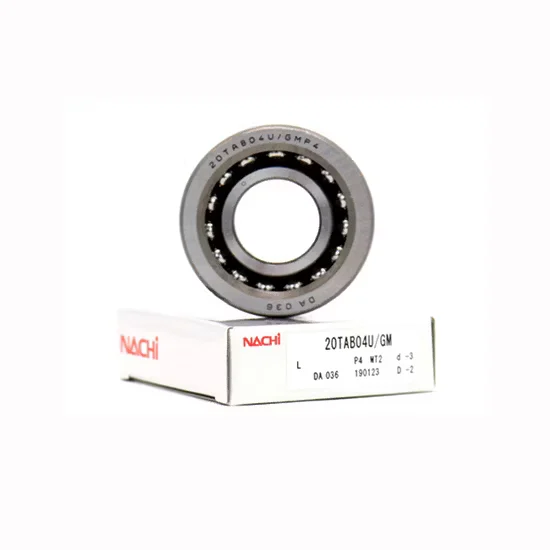
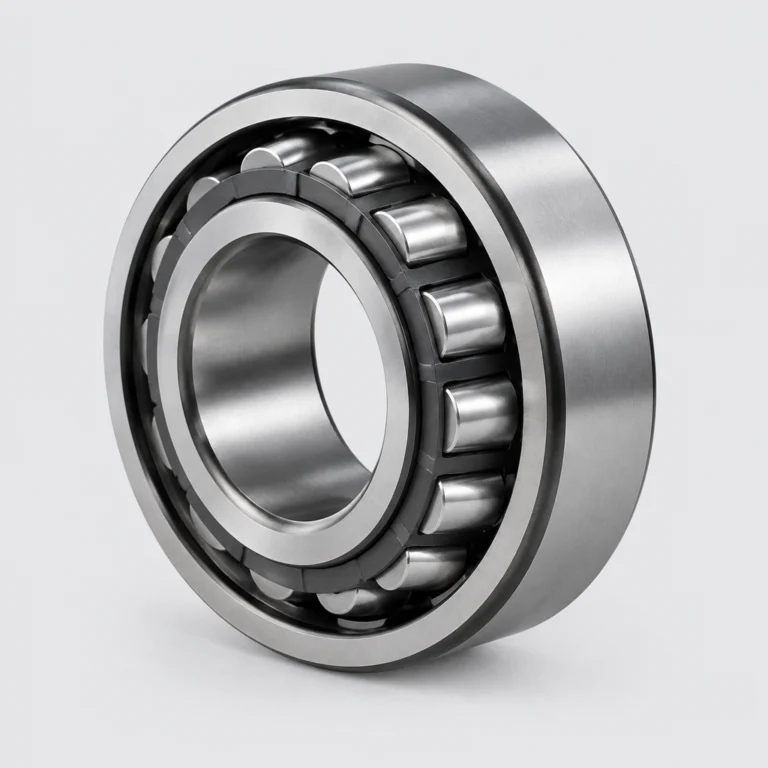
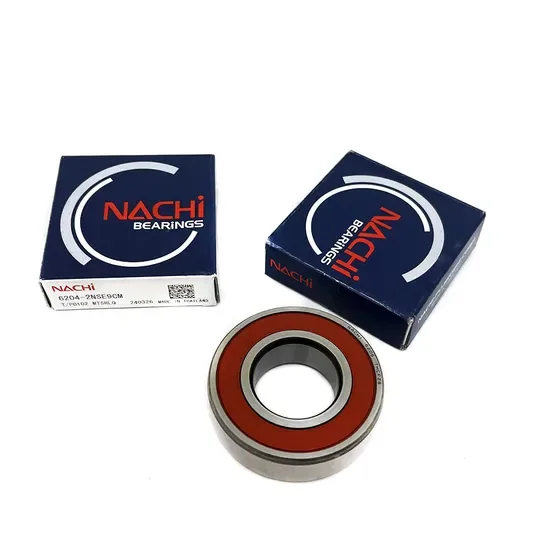
Multi-Brand Consolidated Sourcing — Procure this NACHI unit alongside SKF or FAG equivalents in a single mixed-brand shipment without juggling multiple vendors.
Technical Specifications
| Parameter | Value |
| Designation | NACHI 24072CDKE4 |
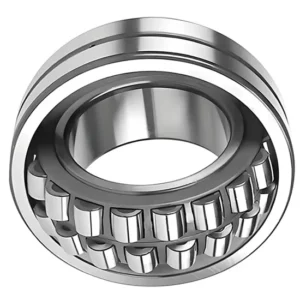
| Bearing Type | Spherical Roller Bearing |
| Bore Diameter (d) | 360 mm |
| Outside Diameter (D) | 540 mm |
| Width (B) | 180 mm |
| Bore Type | 1:12 Tapered Bore (K suffix) |
| Number of Rows | Double |
| Material | Bearing Steel |
| Load Direction | Radial |
| Lubrication | Grease or Oil |
| Origin | Japan |
Note: CD and E4 suffixes remain unverified against the latest manufacturer catalog and require specific application cross-referencing.
Application Suitability
| Industry | Typical Applications |
| Steel Manufacturing | Continuous casting machine segments and rolling mill guide rolls |
| Mining & Aggregate | Vibrating screen eccentric shafts and jaw crusher toggle plates |
| Pulp & Paper | Paper machine dryer cylinder journals and press roll bearings |
Why Standard Clearance Fails in High-Heat Steel Mill Roles for the NACHI 24072CDKE4 spherical roller bearing
Thermal expansion rapidly eliminates internal clearance when standard classes are misapplied in elevated-temperature zones.
Early in my career supplying continuous casting machines, specifying a standard clearance class instead of C4 for a similar NACHI spherical roller bearing caused thermal expansion to lock the rolling elements completely. The resulting unplanned downtime cost the mill heavily. When operating near heat sources, selecting the correct expanded clearance is non-negotiable to prevent catastrophic seizure.

Aligning Tapered Bore Geometry with Heavy-Duty Mounting
The 1:12 tapered bore design allows this NACHI 24072CDKE4 spherical roller bearing to be mounted securely on adapter sleeves or tapered shafts, providing a tight interference fit essential for heavy radial loads. Our engineering team routinely assists maintenance crews in calculating the exact drive-up distance to achieve the optimal residual internal clearance after mounting, ensuring the bearing performs reliably under severe vibrating screen or crusher conditions.
Managing Contamination and Shock Loads in Aggregate Processing
Crushers and vibrating screens subject rolling elements to intense shock loads and pervasive abrasive dust. Adequate sealing and heavy-duty cage designs are critical to maintain lubrication film thickness and prevent particulate ingress. Operators must balance relubrication intervals with the chosen grease or oil specifications to flush out contaminants without causing overheating from churning. Proper alignment during installation further mitigates uneven load distribution across the double row profile.
Decoding the K Suffix and Internal Geometry
The K suffix definitively indicates a 1:12 tapered bore, which simplifies mounting and dismounting on adapter sleeves while allowing precise clearance adjustment during installation. The double row configuration inherently accommodates shaft misalignment, a frequent occurrence in heavy machinery foundations that settle over time. Selecting the appropriate precision and clearance class from the available C0, C3, or C4 options dictates how the bearing tolerates thermal gradients and heavy radial forces. Proper internal geometry ensures the rollers maintain optimal contact with the raceway under extreme loads.
The Financial Impact of Overlooking Internal Clearance
Misjudging the required internal clearance or ignoring the tapered bore mounting parameters inevitably leads to premature fatigue or immediate operational failure. According to failure analysis frameworks like ISO 15243, inadequate clearance results in excessive friction, elevated operating temperatures, and eventual cage or roller destruction. Such unplanned downtime in a continuous steel mill or mining operation cascades into massive production losses, far exceeding the initial component cost.
Securing Genuine Traceability and Technical Precision
Sourcing genuine Japanese-manufactured bearings requires strict supply chain validation to avoid counterfeit risks in critical applications. We provide full batch traceability documentation directly linked to the manufacturer's production facilities, ensuring every unit meets original metallurgical standards. Our technical staff cross-references your specific equipment OEM requirements against the K suffix mounting dimensions to prevent installation errors. Furthermore, our flexible consolidation shipping allows you to combine this specific model with other maintenance spares in a single container, optimizing your global freight costs.
Documentation & Authenticity
- Original factory batch traceability certificates confirming Japanese manufacturing origin.
- Dimensional and running accuracy inspection reports verifying 360x540x180mm tolerances.
- Material test certificates validating bearing steel composition and heat treatment hardness.
- Authenticity verification support via official brand channels and QR code validation.
Storage, Handling & Mounting
- Store the unopened packaging in a climate-controlled environment to prevent condensation inside the tapered bore.
- Use induction heaters with precise temperature controls when mounting the 360mm bore onto adapter sleeves.
- Measure the drive-up distance meticulously to achieve the specified residual clearance for the K suffix design.
- Apply clean lint-free gloves during handling to protect the precision-ground outer ring raceway from acidic skin contact.
- Ensure the selected grease or oil lubricant is compatible with the operating temperature before initial commissioning.
Preparing Your Technical Parameters for Quotation
To ensure accurate selection and L10 life calculation, please provide the exact radial and axial load profiles, operating speeds, and ambient temperature ranges of your application. Sharing the original equipment manufacturer part numbers or specific mounting space constraints allows our engineers to verify cross-references and confirm the optimal clearance class. Detailing the environmental exposure, such as dust or moisture levels, helps us recommend the most suitable sealing and lubrication strategy.
Frequently Asked Questions
Q: How does the K suffix affect the installation process?
A: The K suffix denotes a 1:12 tapered bore, meaning the bearing must be mounted on a tapered shaft or an adapter sleeve. This design allows maintenance teams to adjust the internal radial clearance precisely by controlling the drive-up distance during installation, ensuring optimal load distribution and preventing premature failure under heavy radial forces.
Q: What is the risk of using standard clearance in high-temperature applications?
A: Standard clearance can diminish rapidly when exposed to significant thermal gradients, as the inner ring expands faster than the outer ring. This thermal expansion may eliminate the internal gap entirely, causing the rolling elements to skid, generating excessive friction, and ultimately leading to catastrophic bearing seizure and unplanned equipment downtime.
Q: How can I verify the authenticity of this specific bearing model?
A: We supply comprehensive original factory batch traceability documentation with every shipment. You can verify the authenticity by cross-referencing the batch numbers through the manufacturer's official validation channels. Our team also assists in checking the physical markings and packaging details against known genuine specifications to eliminate counterfeit risks.
Q: What lubrication strategy is recommended for vibrating screen applications?
A: Vibrating screens generate high centrifugal forces that can expel standard greases. We recommend consulting your maintenance manual for high-adhesion, lithium-complex or polyurea greases designed for heavy vibration. Proper relubrication intervals flush out abrasive dust, maintaining a protective film between the rolling elements and the raceway to prevent premature wear.