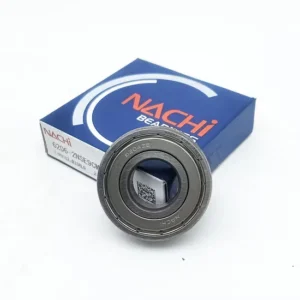
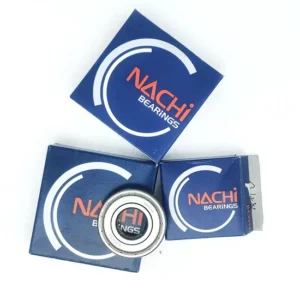
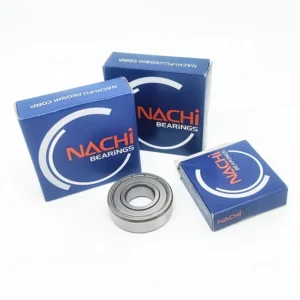
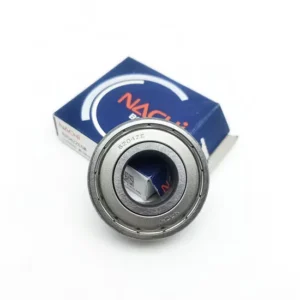
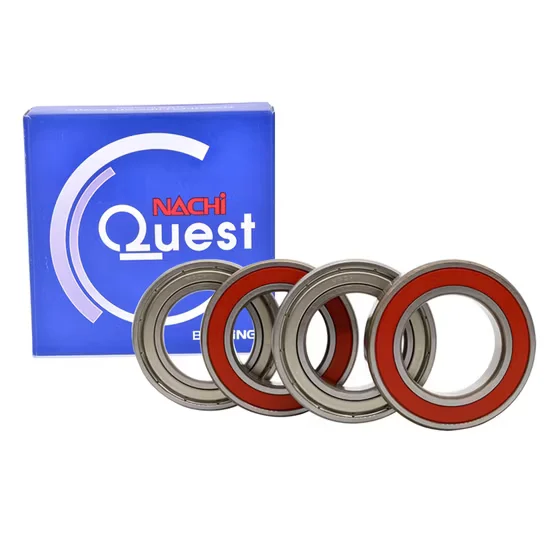
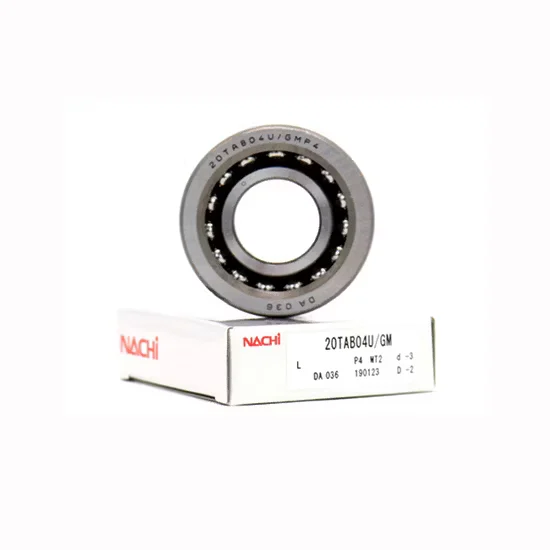
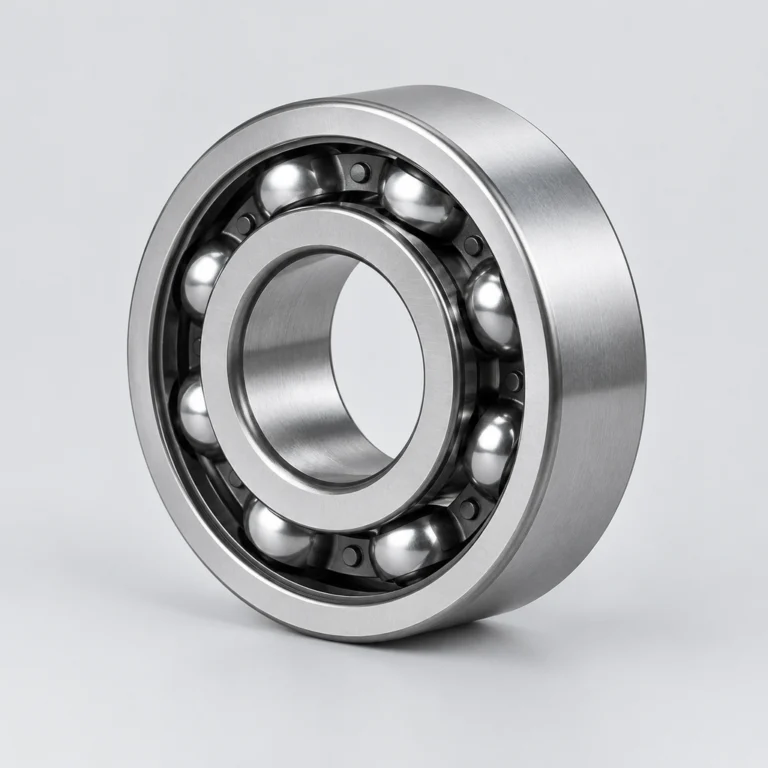
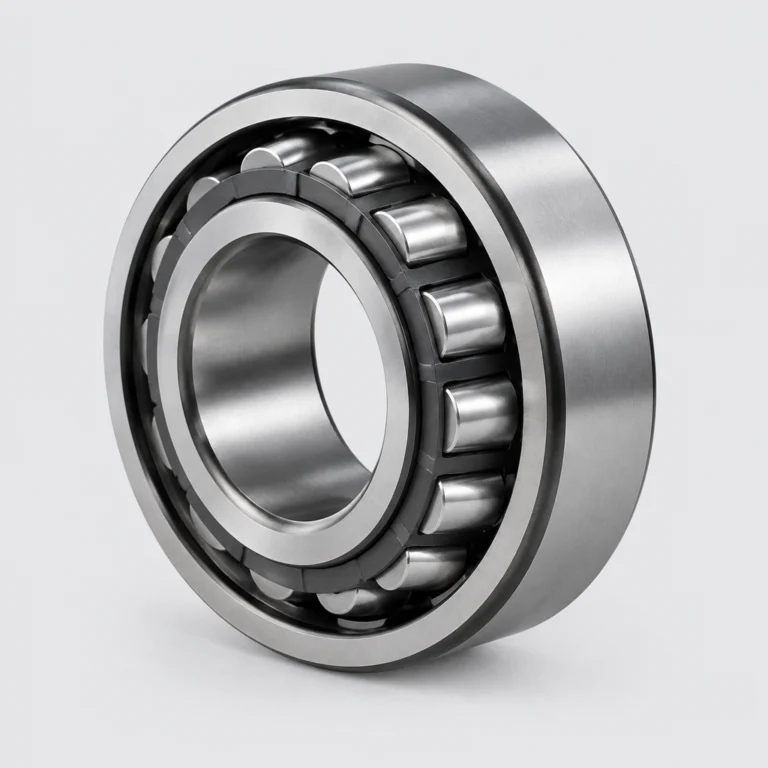
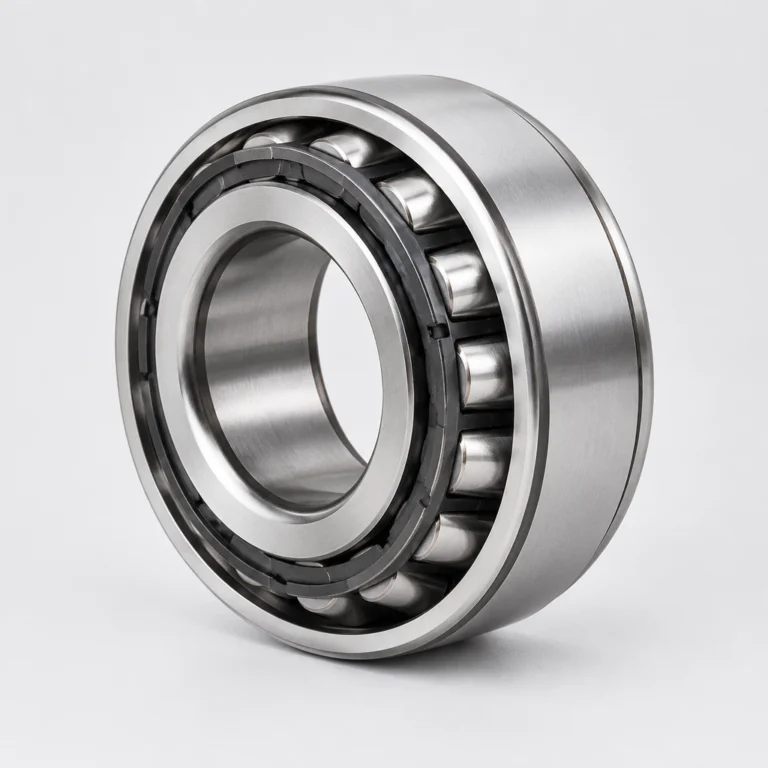
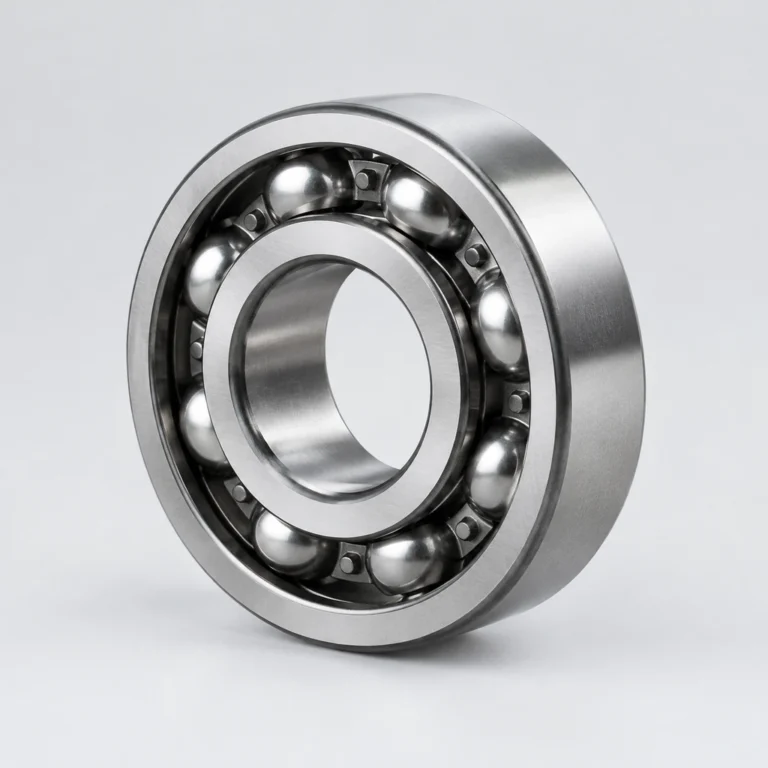
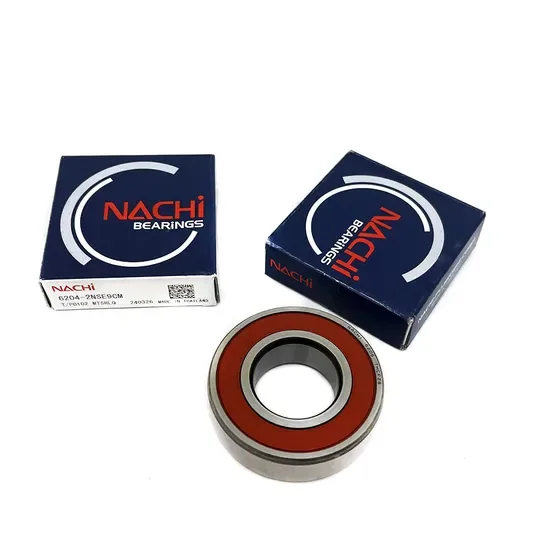
Authentic NACHI Verification — Every NACHI 6205 6206 6204 deep groove ball bearing we supply includes scannable QR codes for direct manufacturer authentication.
Technical Specifications
| Parameter | Value |
| Designation | 6205 6206 6204 |
| Bearing Type | Deep Groove Ball Bearing |
| Rows Number | Single Row |
| Seal or Shield Type | Open, ZZ, 2RS |
| Precision Class | P0, P6, P5, P4 |
| Material | Bearing Steel |
| Lubrication | Grease or Oil |
| Vibration and Noise | Z1V1, Z2V2, Z3V3, Z4V4 |
| Load Direction | Radial |
Application Suitability
| Industry | Typical Applications |
| Agricultural Machinery | Tractor PTO shafts, combine harvester sieves, planter seed metering drives |
| Automotive Parts | Alternator pulleys, water pump shafts, steering column joints |
| General Industrial | Electric motor rotors, conveyor idler rollers, gearbox input shafts |
Why Seal Suffix Errors Destroy NACHI 6205 6206 6204 Deep Groove Ball Bearing Lifespans
Matching the exact seal type to the contamination level is the single most critical factor in preventing premature agricultural and automotive bearing failures.
Sending a metal-shielded unit into a high-dust environment often leads to rapid particulate ingress and raceway scoring. I learned this the hard way during an urgent agricultural machinery deployment in Nigeria, where standard ZZ shields failed to block fine topsoil dust, causing complete seizure within months. Switching to proper rubber contact seals immediately stabilized the equipment uptime.

Aligning Seal and Precision Options with Field Realities
Selecting the right NACHI 6205 6206 6204 deep groove ball bearing requires balancing friction, speed, and environmental exposure. Our cross-brand equivalent consultation ensures that if a specific seal variant is unavailable, we source a functionally identical alternative without compromising the original equipment manufacturer's performance envelope. This flexibility prevents costly downtime during urgent maintenance windows and keeps your fleet operational.
Navigating Radial Loads and Particulate Ingress in Heavy Equipment
Agricultural and automotive environments subject radial bearings to fluctuating loads and severe particulate exposure. While open designs facilitate easy relubrication, they demand rigorous maintenance schedules to flush out contaminants. Conversely, non-contact metal shields handle higher rotational speeds but sacrifice fine dust exclusion, whereas rubber contact seals provide superior contamination defense at the cost of slightly higher friction and temperature generation. Choosing the correct variant directly dictates the maintenance interval and overall reliability of the driven shaft.
Decoding Vibration Grades and Precision Tolerances
The Z1V1 through Z4V4 vibration classifications dictate the acoustic and dynamic smoothness of the bearing during high-speed electric motor or automotive applications. Higher precision classes like P5 and P4 minimize geometric deviations, ensuring tighter running accuracy and reduced vibration amplitudes compared to standard P0 grades. Furthermore, the choice between grease and oil lubrication directly impacts the thermal dissipation capacity. Single-row deep groove architectures inherently support combined loads, though their primary design optimization remains centered on pure radial forces. Understanding these suffix variations prevents mismatched installations that trigger early fatigue and cage failure.
The Operational Toll of Mismatched Bearing Specifications
Installing a bearing with inadequate sealing or incorrect internal clearance inevitably leads to unplanned downtime and catastrophic raceway damage. When precision grades fall short of the application's rotational demands, excessive vibration accelerates cage wear and lubricant degradation. According to failure analysis frameworks outlined in ISO 281 and ISO 15243, solid contaminant ingestion is a primary driver of premature spalling and reduced operational lifespan.
Securing Genuine Components Through Rigorous Supply Chain Controls
Sourcing mixed-model packages like the 6204, 6205, and 6206 series often exposes buyers to counterfeit risks and fragmented logistics. We provide complete one-stop sourcing solutions with massive spot inventory, ensuring all units ship together in a single consolidated container. Every component includes full traceability documentation, eliminating the guesswork when verifying authenticity for critical agricultural gearboxes. Our technical selection support helps buyers cross-reference exact suffix requirements, preventing the exact seal mismatch errors I witnessed in the field. Furthermore, flexible minimum order quantities accommodate both emergency single-unit replacements and full-project bulk procurements, backed by long-term after-sales failure analysis.
Documentation & Authenticity
- Certificate of Conformity verifying genuine NACHI manufacturing origin for the 6204, 6205, and 6206 series.
- Scannable QR codes on individual boxes for direct official app authentication and anti-counterfeit checks.
- Dimensional inspection reports confirming P0 to P4 precision tolerances before container consolidation.
- Material test certificates validating the chemical composition of the bearing steel races and rolling elements.
- Batch traceability records linking each specific seal variant back to the original production run.
Storage, Handling & Mounting
- Keep 2RS rubber-sealed units in original packaging to prevent UV degradation of the contact lip elastomers.
- Store open and ZZ shielded variants in climate-controlled environments to prevent condensation-induced corrosion on the bearing steel.
- Use induction heaters for cylindrical bore installations, avoiding direct flame contact that ruins factory grease fill.
- Handle P4 and P5 precision grades with lint-free gloves to prevent skin acids from etching the raceways.
- Verify Z3V3 and Z4V4 vibration ratings on the box label before mounting in noise-sensitive electric motors.
Engineering Data Required for Accurate Technical Review
To ensure precise model selection and L10 life calculation, please share your specific radial and axial load profiles, operating speeds, and ambient temperature ranges. Providing the original equipment manufacturer part numbers allows our engineering team to perform accurate cross-reference verification. Detailing the environmental exposure, such as dust concentration or moisture levels, helps us confirm the optimal seal and clearance configuration for your application.
Frequently Asked Questions
Q: How do I verify the authenticity of the NACHI 6205 6206 6204 deep groove ball bearings?
A: Every genuine unit we supply features official QR codes on the packaging, allowing direct verification through the manufacturer's authentication app. Additionally, we provide comprehensive traceability documentation, including Certificates of Conformity and batch records, ensuring complete supply chain transparency and protecting your agricultural and automotive equipment from counterfeit risks.
Q: What are the functional differences between Open, ZZ, and 2RS seal types for this series?
A: Open designs allow for custom relubrication but require external sealing. ZZ metal shields handle higher speeds and exclude large debris but struggle with fine dust. The 2RS rubber contact seals offer superior protection against fine particulate ingress in harsh agricultural environments, though they generate slightly more friction and have lower speed limits.
Q: How should I choose the correct precision rating from P0 to P4 for my machinery?
A: Standard P0 precision suffices for general agricultural drives and basic automotive parts where extreme rotational accuracy is unnecessary. P6 and P5 grades are recommended for high-speed electric motors requiring reduced vibration. P4 precision is reserved for demanding machine tool spindles or specialized gearboxes where minimal geometric deviation is critical for operational stability.
Q: How do vibration ratings like Z1V1 through Z4V4 affect automotive and motor performance?
A: Higher vibration and noise classifications, such as Z3V3 and Z4V4, indicate tighter manufacturing tolerances and superior surface finishes on the raceways. Selecting these higher grades significantly reduces acoustic emissions and dynamic vibration in high-speed electric motors and sensitive automotive components, thereby enhancing overall equipment smoothness and extending the operational lifespan of the surrounding assemblies.
Q: Can you assist with cross-referencing these models to other international brands?
A: Yes, our technical team provides comprehensive cross-brand equivalent model consultation. If the specific NACHI designation is temporarily unavailable, we can identify functionally identical alternatives from SKF, FAG, or NSK, ensuring the replacement matches the exact load capacity, dimensional envelope, and seal configuration required for your agricultural or automotive maintenance project.