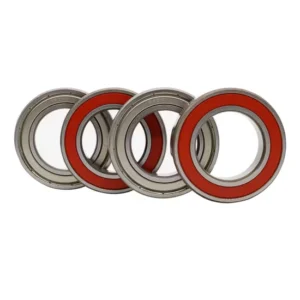
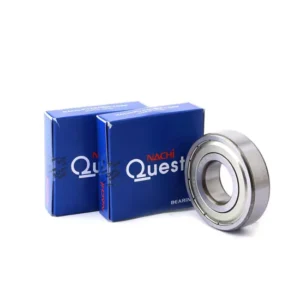
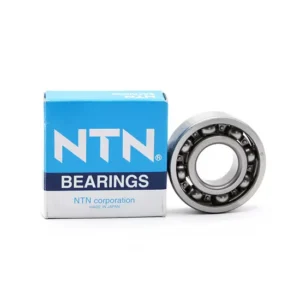
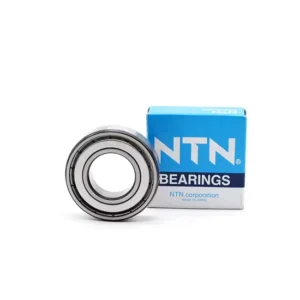
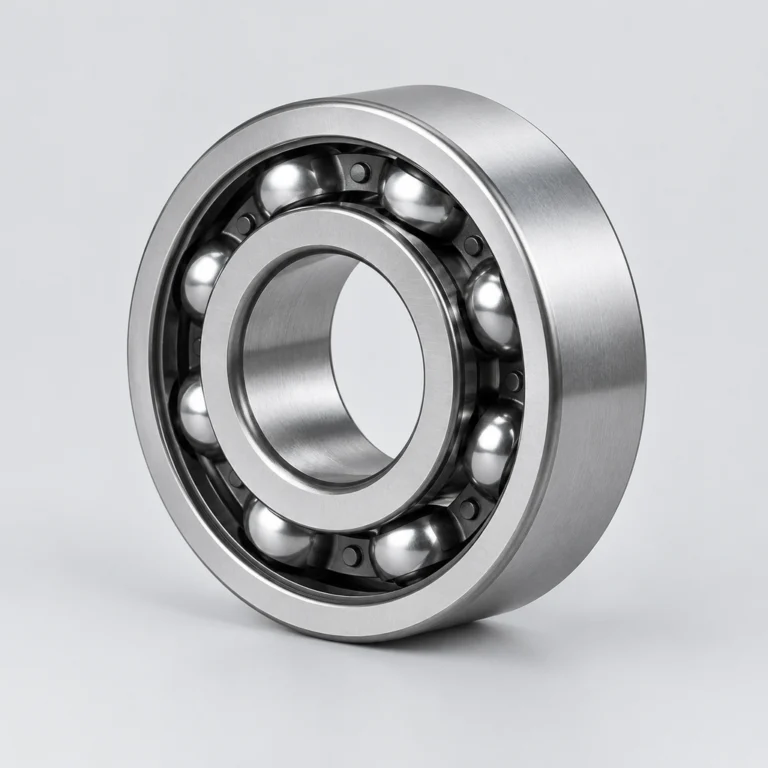
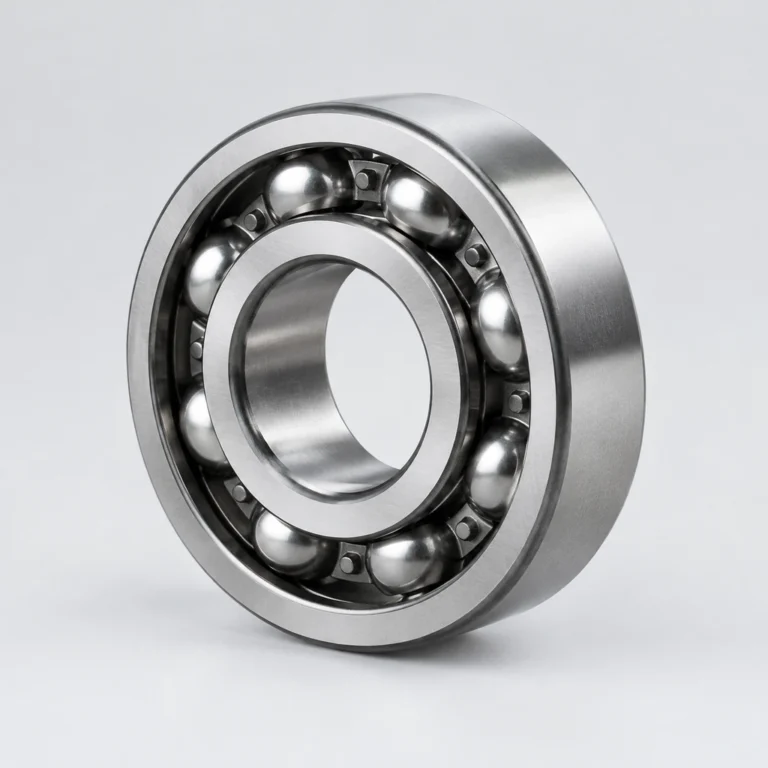
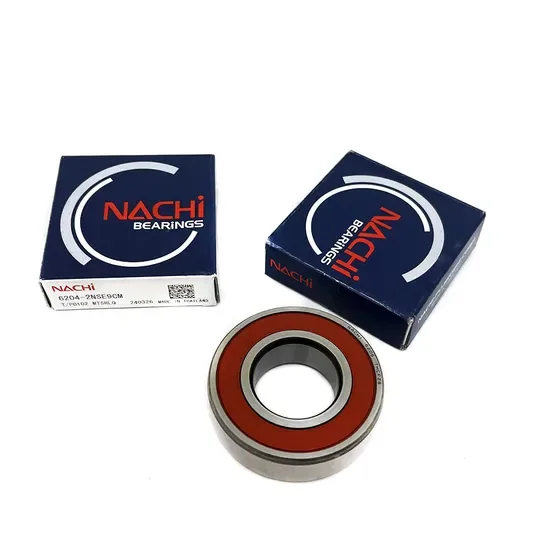
Multi-Brand Sourcing Consolidation — Procure genuine 6020-2RS deep groove ball bearings from SKF, NTN, and Timken in a single mixed shipment without juggling multiple vendors.
Technical Specifications
| Parameter | Value |
| Designation | 6020-2RS |
| Bearing Type | Deep Groove Ball Bearing |
| Bore Diameter (d) | 100 mm |
| Outside Diameter (D) | 150 mm |
| Width (B) | 24 mm |
| Seal or Shield Type | Double contact rubber seal (2RS) |
| Lubrication | Grease or Oil |
| Precision Class | P0 / P6 / P5 / P4 / P2 |
| Vibration Level | Z1V1 / Z2V2 / Z3V3 |
| Number of Rows | Single |
| Material | Bearing Steel |
| Contact Angle | 0° |
| Load Direction | Radial |
| Origin | China |
| HS Code | 8482102000 |
Application Suitability
| Industry | Typical Applications |
| Electric motors | Rotor shaft support in high-efficiency industrial motors |
| Pumps & Conveyors | Drive pulley shafts and centrifugal pump impeller mounts |
| Gearboxes | Intermediate shaft positioning in heavy-duty reduction units |
| General manufacturing | Spindle supports and automated assembly line rollers |
| After-market MRO | Direct replacement for worn OEM deep groove ball bearings |
Why Dust Ingress Destroys a 6020-2RS deep groove ball bearing Before Fatigue Does
Seal integrity outlasts steel fatigue when operating in particulate-heavy environments.
I have seen too many motor shafts seize in West African processing plants because maintenance crews swapped rubber-sealed units for metal-shielded ones to save a few dollars. The iron shields wear through rapidly under abrasive dust, allowing grit to infiltrate the raceway and cause catastrophic jamming long before the bearing steel reaches its natural fatigue limit. Selecting the correct contact seal is not just a preference; it is the primary defense against unplanned downtime. When fine silica dust mixes with the internal grease, it forms a grinding paste that rapidly destroys the raceway geometry.

Matching the 6020-2RS deep groove ball bearing to High-Contamination Environments
When specifying components for conveyors or pumps operating in unsealed facilities, the double contact rubber seal provides the necessary barrier against fine particulates. Our sourcing network ensures you receive exact OEM-equivalent sealing geometries across all requested tier-1 brands. This guarantees that the sealing lip maintains consistent radial pressure on the inner ring, keeping the factory grease intact and contaminants out. By consolidating your procurement through a single channel, you avoid the logistical friction of managing multiple vendors for different equipment lines, ensuring uniform sealing quality across your entire plant.
Navigating Radial Loads and Thermal Expansion in Drive Systems
Drive pulleys and motor shafts impose steady radial loads that demand high-purity bearing steel to resist subsurface fatigue. However, the real challenge often lies in thermal expansion during continuous operation, which can alter internal clearance if the initial tolerance is not correctly specified. Furthermore, the friction generated by contact rubber seals slightly elevates operating temperatures compared to open or shielded variants, making the selection of high-temperature grease critical. Proper installation practices must also be followed to avoid damaging the sealing lips during press-fitting. If the housing is misaligned, the resulting edge loading will quickly compromise the rubber seal's contact patch.
Decoding the 2RS Suffix and Precision Tolerances
The "2RS" designation specifically indicates double contact rubber seals on both sides, which physically touch the inner ring to create a tight barrier against moisture and dust, unlike non-contact metal shields (ZZ) that leave a microscopic gap. For applications requiring smoother operation and lower noise, such as precision electric motors, upgrading from standard P0 to P6 or P5 precision classes reduces radial runout and vibration. Additionally, selecting a C3 internal clearance instead of the standard CN group accommodates the thermal expansion of the shaft and housing, preventing the bearing from binding under heavy continuous loads. Understanding these suffix variations is essential for matching the component to the exact operational environment.
The Cascading Failures of Incorrect Seal and Clearance Selection
Choosing a metal-shielded bearing for a dusty conveyor application inevitably leads to particulate ingress, which acts as a lapping compound and rapidly destroys the raceway surface. Similarly, ignoring thermal expansion by specifying standard clearance in a high-heat motor application causes internal preload, leading to excessive friction, overheating, and eventual cage failure. These missteps result in catastrophic damage to the surrounding housing and void any manufacturer warranty, turning a minor component replacement into a major equipment rebuild. The financial impact extends far beyond the component cost, encompassing lost production hours and secondary shaft damage.
Securing Authentic Traceability for Critical MRO Replacements
Counterfeit bearings often fail to replicate the exact rubber compound used in genuine 2RS seals, causing them to harden and crack within months. We mitigate this risk by supplying fully traceable units with original batch documentation, allowing you to verify authenticity through official brand applications. Our inventory covers multiple tier-1 manufacturers, meaning you can consolidate your SKF, NTN, and Timken requirements into a single shipment. Furthermore, our technical team cross-checks the exact sealing suffix and internal clearance against your OEM specifications before dispatch, ensuring the 6020-2RS deep groove ball bearing you receive perfectly matches your equipment's demands. This rigorous verification prevents the costly installation of mismatched components.
Documentation & Authenticity
- Certificate of Conformity confirming the exact 2RS seal specification and brand origin.
- Original manufacturer batch traceability codes for QR verification via official brand apps.
- Dimensional inspection reports validating the 100x150x24 mm geometry before dispatch.
- Material test certificates verifying the high-purity bearing steel composition.
- Factory packing lists detailing the specific precision class and vibration grade.
Storage, Handling & Mounting
- Keep the 2RS sealed units in original packaging until mounting to prevent rubber lips from drying out under UV exposure.
- Use induction heaters for the 100 mm inner ring to avoid damaging the contact rubber seals during press-fitting.
- Never wash the pre-lubricated 2RS bearings with solvents, as this degrades factory grease and compromises seal integrity.
- Store in a climate-controlled environment to prevent condensation from bypassing the rubber seals and causing internal corrosion.
- Ensure mounting tools only contact the inner ring when pressing onto the shaft to prevent tearing the 2RS sealing lips.
Requesting Technical Parameters for Application Review
To ensure the selected variant meets your operational demands, please provide the specific radial and axial loads, operating speeds, and ambient temperature ranges. Sharing the exact OEM equipment model number allows our engineering team to cross-reference the required internal clearance and precision class. If your environment involves extreme particulate exposure or chemical washdowns, detailing these conditions helps us confirm whether the standard 2RS seal or a specialized alternative is necessary for optimal service life.
Frequently Asked Questions
Q: How can I verify the authenticity of the multi-brand 6020-2RS deep groove ball bearing upon delivery?
A: You can verify authenticity by scanning the QR codes or entering the batch numbers printed on the packaging into the official mobile applications provided by manufacturers like SKF, NTN, or Timken. We also supply original purchase invoices and Certificates of Conformity that trace the specific 2RS sealed units back to the authorized production facility, ensuring complete transparency for your MRO records.
Q: What is the functional difference between 2RS, ZZ, and Open seal types for this dimension?
A: The 2RS variant features double contact rubber seals that physically touch the inner ring, offering superior protection against dust and moisture ingress compared to ZZ metal shields, which leave a microscopic gap. Open bearings lack seals entirely, requiring external housing seals and regular relubrication. The 2RS design is ideal for contaminated environments where maintenance access is limited and grease retention is critical.
Q: How do I select the correct precision and vibration grade for electric motor applications?
A: Standard P0 precision and Z1V1 vibration levels are sufficient for general conveyors and gearboxes. However, for high-efficiency electric motors requiring quiet operation and minimal shaft runout, upgrading to P6 or P5 precision alongside Z3V3 vibration grades is recommended. This tighter tolerance reduces acoustic noise and prevents premature wear in high-speed rotor shaft applications.
Q: What are the cross-reference dimensions for 6220-2RS and 6320-2RS compared to this model?
A: While the 6020-2RS deep groove ball bearing measures 100x150x24 mm, the 6220-2RS cross-reference features a wider 100x180x34 mm profile for higher load capacities, and the 6320-2RS is even larger at 100x215x47 mm. Selecting the correct series depends on the available housing space and the specific radial load requirements of your machinery.
Q: What are the recommended relubrication intervals for 2RS sealed bearings in harsh environments?
A: Bearings with 2RS contact rubber seals are typically pre-lubricated for life and cannot be relubricated, as the seals prevent grease entry and lack relubrication grooves. In harsh, high-temperature environments where grease degradation accelerates, the standard practice is to monitor operating noise and temperature, replacing the entire sealed unit once performance drops, rather than attempting to force new grease past the contact lips.