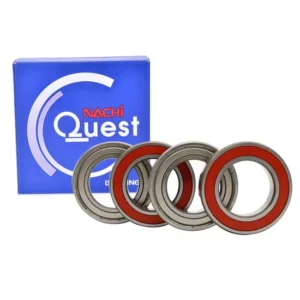
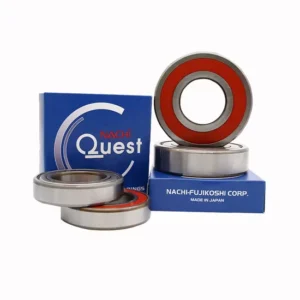
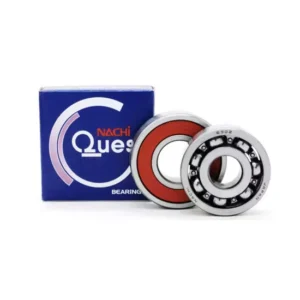
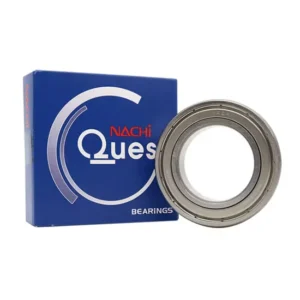
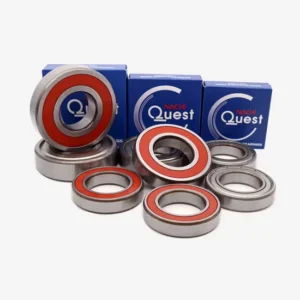
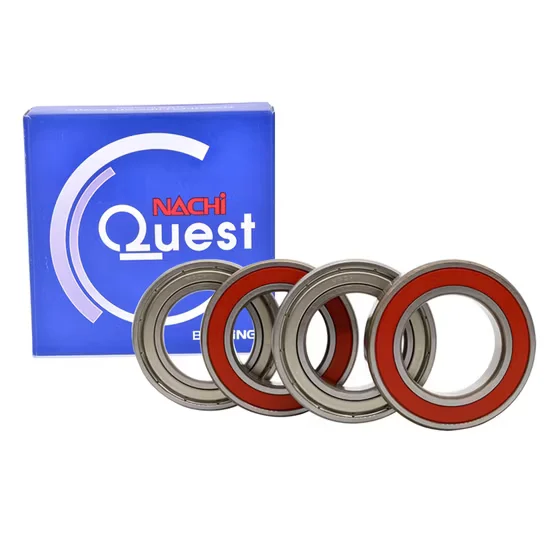
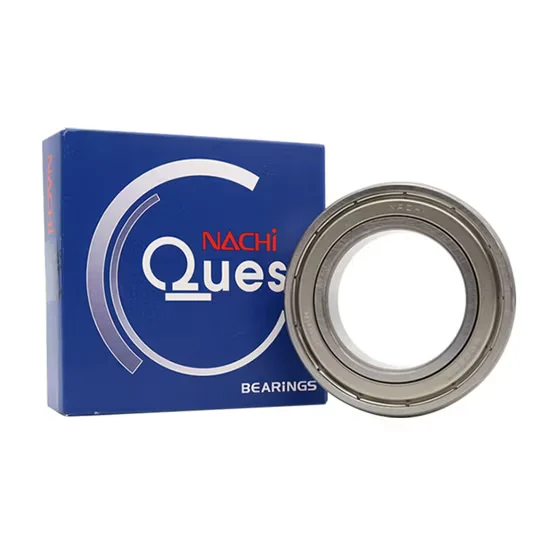
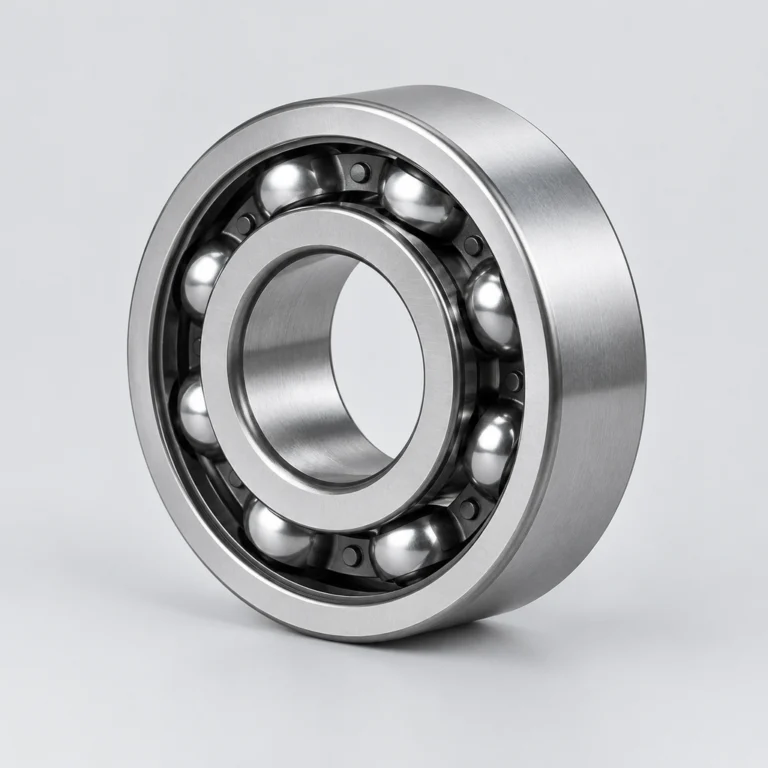
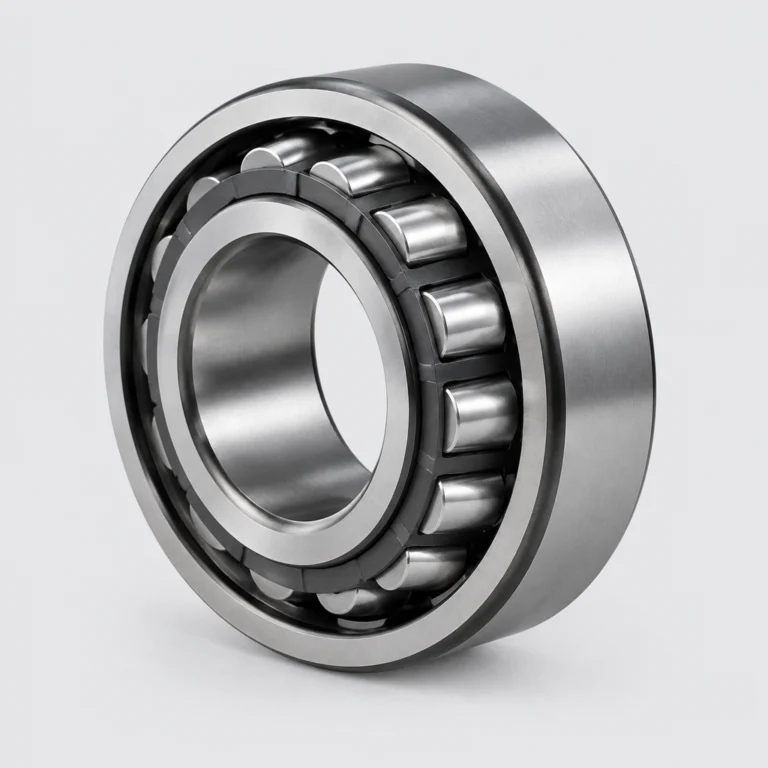
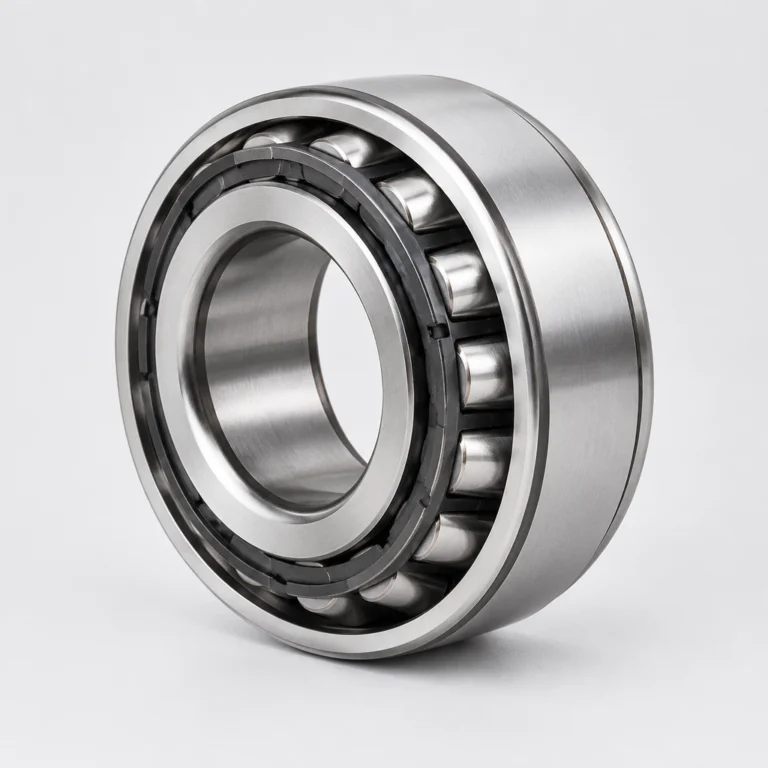
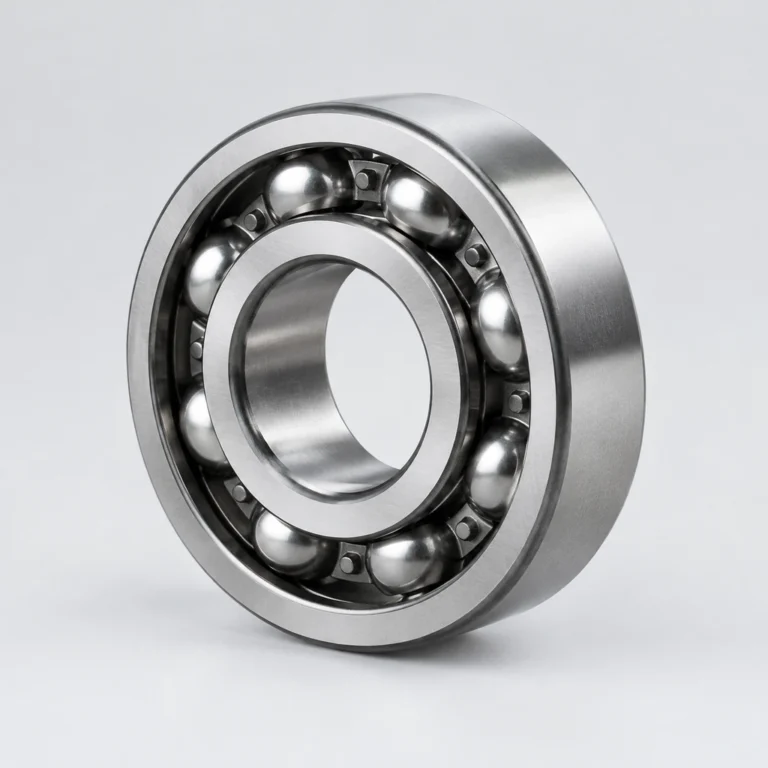
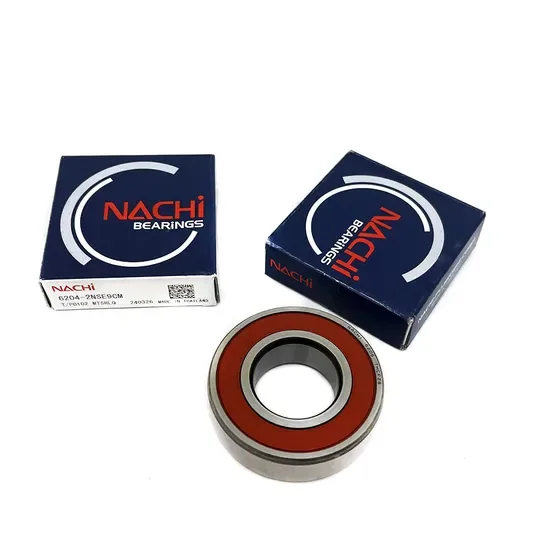
Mixed-Brand Sourcing Consolidated — Procure NACHI, SKF, and domestic equivalents for thin-section deep groove ball bearings in a single shipment without juggling multiple vendors.
Technical Specifications
| Parameter | Value |
| Designation | 6700-2RS |
| Bearing Type | Deep Groove Ball Bearing |
| Bore Diameter (d) | 10 mm |
| Outside Diameter (D) | 15 mm |
| Width (B) | 3 mm |
| Seal or Shield Type | Rubber contact seals / Metal shields / Open |
| Lubrication | Grease or Oil |
| Precision Class | P0 / P6 / P5 / P4 / P2 |
| Vibration Level | Z1V1 / Z2V2 / Z3V3 |
| Number of Rows | Single |
| Load Direction | Radial |
| Material | Bearing Steel |
| Contact Angle | 0° |
| Arrangement | Non-Aligning, Unseparated |
| Origin | China |
Note: The "2RS" suffix designation is unverified and requires manufacturer catalog confirmation for exact seal material and friction characteristics.
Application Suitability
| Industry | Typical Applications |
| Electric Motors | Compact rotor shaft supports in fractional horsepower motors |
| Pumps | Impeller shaft positioning in miniature fluid transfer pumps |
| Gearboxes | Low-torque output shaft stabilization in precision reducers |
| Household Appliances | Spindle rotation in small cooling fans and blender mechanisms |
Why Thin-Section Seals Fail in Dusty Motor Environments
When specifying a 6700-2RS deep groove ball bearing for compact electric motors, engineers often underestimate how fine particulates compromise thin-section seal integrity.
Metal shields simply cannot block microscopic dust from infiltrating the raceway.
During my early failure analysis days in Riyadh, I dismantled countless seized motors where standard shielded bearings failed catastrophically. Fine desert sand bypassed non-contact shields, mixing with grease to form an abrasive paste that locked the rotor solid. I learned the hard way that relying on contact rubber seals is non-negotiable in harsh environments to prevent premature seizure and protect the stator windings.

Matching Thin-Section Geometry to Compact Drive Systems
The ultra-thin cross-section of the 6700-2RS deep groove ball bearing makes this component ideal for space-constrained assemblies where standard deep groove models simply cannot fit. Sourcing these specific thin-wall dimensions often leads to fragmented orders and delayed projects, but our global supply chain consolidates mixed-brand packages efficiently. This ensures your urgent MRO requirements for miniature motors are consistently met with flexible MOQs, complete traceability, and rigorous quality assurance before dispatch.
Managing Radial Loads and Contamination Risks
These thin-wall components primarily handle light radial loads, making them highly sensitive to housing misalignment and shaft deflection. High rotational speeds in small motors generate localized heat, which can rapidly degrade standard grease if thermal limits are exceeded. Preventing contaminant ingress is critical; while non-contact shields offer lower friction, they fail to block moisture and fine dust, necessitating contact seals for reliable operation in unsealed enclosures.
Decoding Precision and Vibration Tolerances
Selecting the appropriate precision class directly impacts the operational smoothness and acoustic signature of miniature rotors. While P0 is sufficient for general household appliances, demanding precision gearboxes require P4 or P2 tolerances to minimize radial runout. Vibration levels also dictate acoustic performance; upgrading from standard grades to Z3V3 significantly reduces operational noise in quiet environments. The single-row, non-aligning design with a zero contact angle ensures optimal load distribution for pure radial forces, provided the housing is machined accurately.
The Hidden Costs of Incorrect Clearance and Seal Selection
Specifying standard internal clearance in an application with high thermal gradients often leads to dangerous internal preload, causing excessive friction and rapid raceway spalling. Similarly, choosing open or shielded variants for contaminated environments guarantees abrasive wear and unplanned downtime. According to ISO 281 framework principles, ignoring the environmental contamination factor drastically reduces the calculated fatigue life, resulting in catastrophic damage to surrounding motor windings and voiding equipment warranties.
Securing Authentic Thin-Section Bearings Globally
Counterfeit thin-wall bearings frequently suffer from out-of-round rings that collapse under light press fits, destroying the assembly. We verify every 6700-2RS deep groove ball bearing batch through authorized channel procurement, ensuring the 10x15x3mm dimensions strictly adhere to ISO 492 tolerances. Our technical team provides cross-brand equivalent model consultation, preventing costly downtime when specific OEM part numbers become obsolete. With massive spot inventory covering thousands of standard part numbers, we consolidate full container shipments or single-unit emergency spares with equal priority and technical support.
Documentation & Authenticity
- Original factory batch traceability linking the 10mm bore components to specific heat treatment lots.
- Dimensional inspection reports confirming P4 or P2 radial runout tolerances before dispatch.
- Material certification verifying the bearing steel metallurgical composition for thin-section rings.
- Certificate of Conformity validating the rubber contact seal material specifications.
Storage, Handling & Mounting
- Keep the 10x15x3mm thin-section rings in original VCI packaging to prevent micro-corrosion on exposed raceways.
- Use clean lint-free gloves to avoid transferring acidic skin oils onto the precision-ground 15mm outer diameter.
- Avoid press-fitting through thin-wall rings; apply mounting forces exclusively to the tightly fitted 10mm inner ring.
- Store sealed variants flat in a climate-controlled environment to prevent grease separation inside the narrow raceway.
Engineering Review and Selection Support
To ensure optimal performance and longevity, please share your specific radial loads, operational speeds, and ambient temperature ranges for accurate L10 life recalculation. If you are replacing an existing component, provide the exact OEM equipment model number so our engineers can perform a precise cross-reference verification. Detailing the environmental exposure, such as dust or moisture levels, allows us to confirm whether rubber contact seals or metal shields are the correct choice for your specific assembly.
Frequently Asked Questions
Q: How do cross-reference considerations apply to thin-section bearings like the 6700, 6800, and 6900 series?
A: Thin-section series share similar bore diameters but differ significantly in outer diameter and width. When cross-referencing a 6700-2RS deep groove ball bearing to 6800-2RS or 6900-2RS variants, engineers must verify exact housing dimensions. Substituting series without checking the 15mm outside diameter and 3mm width constraints often leads to improper fits and premature mechanical failure in compact assemblies.
Q: What are the differences in performance between open, metal shielded, and rubber sealed configurations?
A: Open bearings require external lubrication systems and suit clean gearboxes. Metal shields provide basic dust protection with minimal friction, ideal for high-speed appliances. Rubber contact seals offer superior exclusion of fine particulates and moisture, making them mandatory for electric motors in harsh environments, albeit with slightly higher frictional torque.
Q: How should I choose between P0, P6, P5, P4, and P2 precision classes for miniature motors?
A: Standard P0 or P6 classes are adequate for general-purpose cooling fans where slight vibration is acceptable. For high-speed precision gearboxes or sensitive optical equipment, P4 or P2 classes are necessary to minimize radial runout and acoustic noise. Selecting higher precision ensures smoother rotation and extends the operational lifespan of the rotor assembly.
Q: How can I verify the authenticity and traceability of multi-brand bearing packages?
A: Authenticity is confirmed by requesting original factory batch traceability documentation linking components to their production lot. We provide comprehensive material and dimensional inspection reports verifying compliance with ISO 492 standards. Checking physical markings on the thin-section rings against official catalogs ensures the product has not been counterfeited during third-party repackaging.