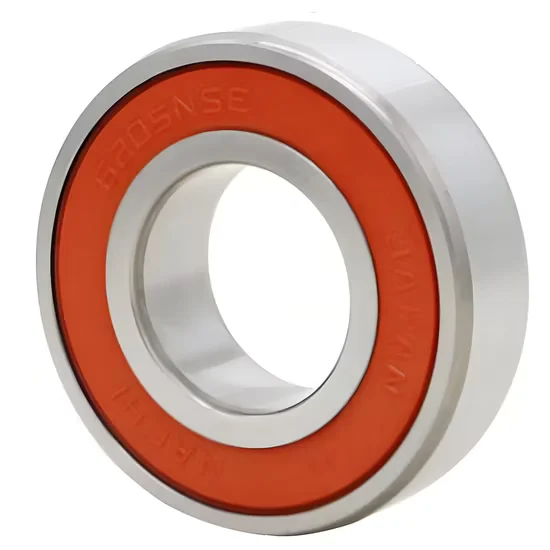
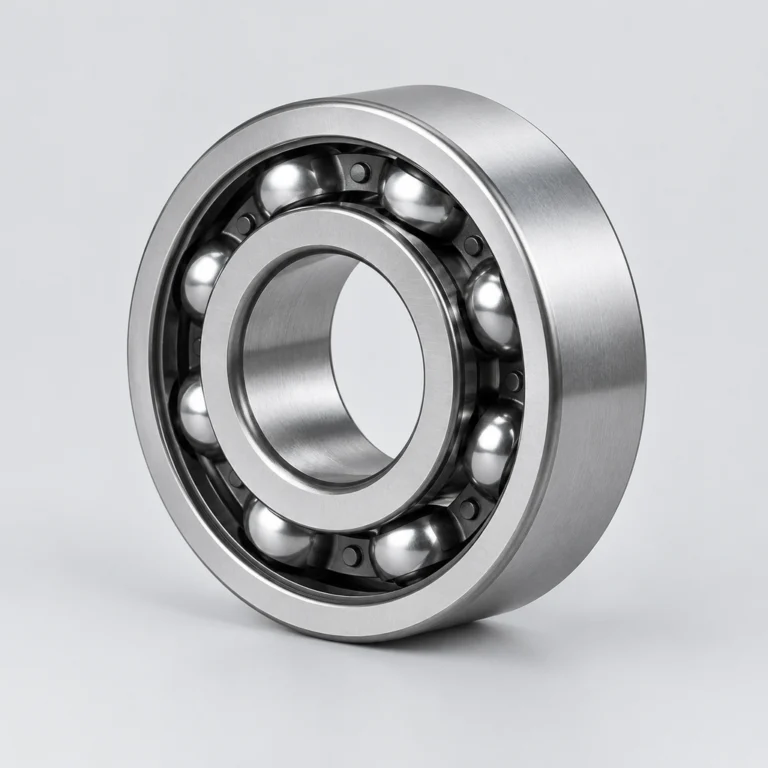
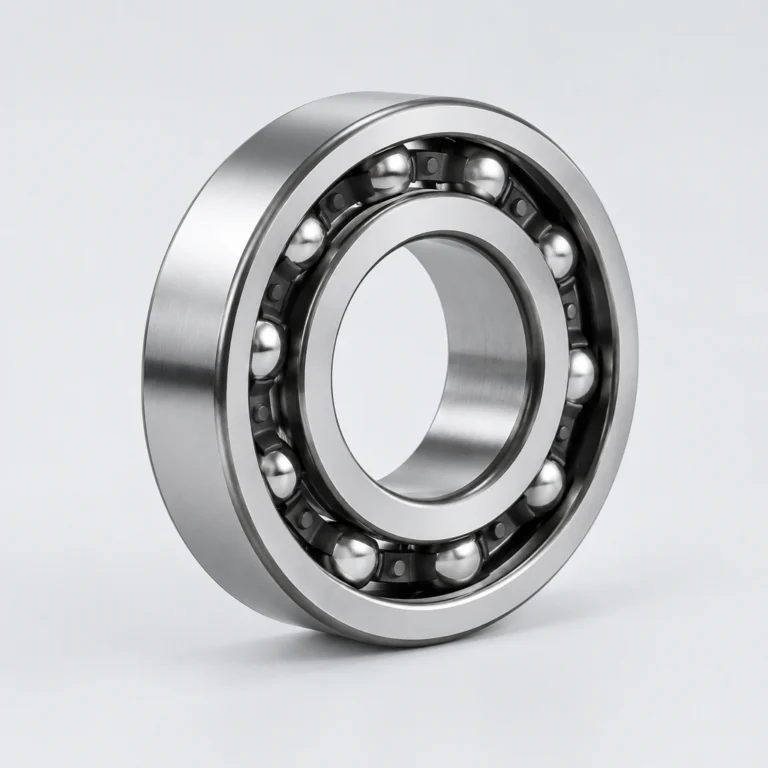
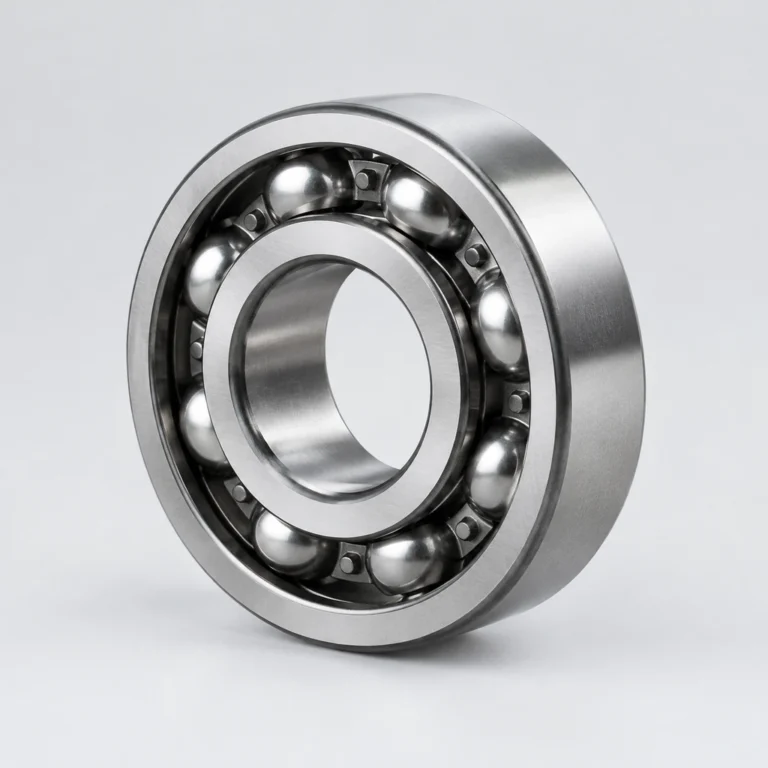
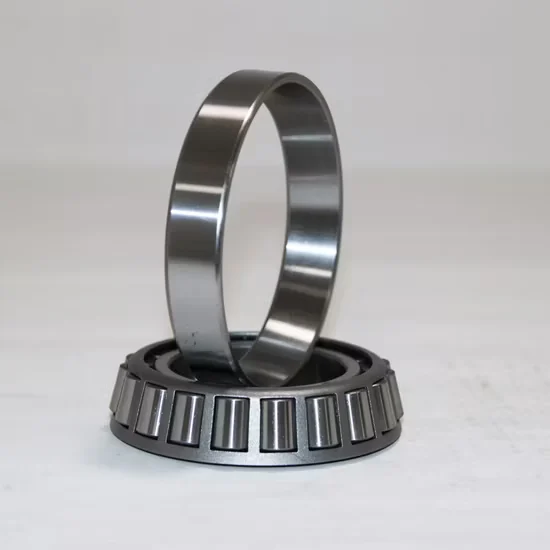
Original Batch Traceability — Every 7330B angular contact ball bearing we dispatch includes manufacturer batch codes linking directly to the production heat lot.
Technical Specifications
| Parameter | Value |
| Designation | 7330B |
| Bearing Type | Angular Contact Ball Bearing |
| Bore Diameter (d) | 150 mm |
| Outside Diameter (D) | 320 mm |
| Width (B) | 65 mm |
| Material | Bearing Steel |
| Number of Rows | Single |
| Separated | Unseparated |
| Load Direction | Radial Bearing |
| Lubrication | Grease or Oil |
| Precision Rating | P0, P6, P5, P4, P2 |
| Vibration | Z1V1, Z2V2, Z3V3 |
| Contact Angle | 40° |
| Origin | China |
Application Suitability
| Industry | Typical Applications |
| Machine Tool Manufacturing | Heavy-duty spindle assemblies requiring high axial rigidity |
| Metallurgy & Rolling Mills | Roll neck positions and guide roll mechanisms |
| Precision Equipment | High-speed pump shafts and robotics rotary joints |
Why Suffix Deviations Destroy Spindle Rigidity in 7330B Angular Contact Ball Bearing Applications
A single letter mismatch in the contact angle suffix compromises the entire axial load capacity of the assembly.
When I first transitioned from documentation to field sales for machine tool clients in Monterrey, a cross-reference oversight turned into a highly costly lesson. I shipped a C-suffix variant instead of the specified B-suffix for a main spindle rebuild. The reduced contact angle lacked the necessary axial stiffness, causing severe vibration under heavy cutting loads. That incident fundamentally reshaped how I verify every 7330B angular contact ball bearing order, ensuring the 40° contact angle perfectly matches the machinery's thrust requirements and preventing catastrophic assembly failures.

Matching the 40° Contact Angle to Heavy-Duty Thrust Loads
The 7330B angular contact ball bearing is engineered specifically for industrial applications where axial forces heavily dominate the overall load profile. By utilizing a 40° contact angle, the internal geometry shifts the load path to maximize thrust capacity without sacrificing essential radial stability. Our extensive sourcing network ensures that whether you need a single unit for emergency maintenance or a consolidated shipment for a massive rolling mill upgrade, the exact suffix specification is strictly maintained across all brands. This rigorous attention to detail guarantees that the bearing performs exactly as the original equipment manufacturer intended.
Managing Thermal Expansion and Lubrication in Continuous Operations
In continuous metallurgy or machine tool operations, thermal expansion significantly alters internal clearance and contact stress within the assembly. Selecting the appropriate precision class and vibration grade becomes absolutely critical when the spindle reaches elevated operating temperatures during heavy machining cycles. Furthermore, the choice between grease and oil lubrication must align perfectly with the cooling system's capacity to dissipate friction heat. Inadequate lubrication in these high-thrust environments rapidly accelerates raceway wear and severely compromises the operational lifespan of the entire spindle unit.
Decoding Precision Classes and Vibration Grades for Spindle Stability
The available precision ratings from P0 up to P2 dictate the strict dimensional and running accuracy of the bearing. For high-speed machine tool spindles, P4 or P2 classes are mandatory to minimize runout and maintain tight machining tolerances on complex parts. Equally important are the vibration grades, ranging from Z1V1 to Z3V3, which control the noise and dynamic oscillation during continuous rotation. A Z3V3 rating ensures the smoothest possible operation, preventing microscopic vibrations from transferring to the workpiece and ruining surface finishes. The single-row, unseparated design with bearing steel construction provides the foundational rigidity needed for these demanding setups. When paired correctly, these bearings create a highly rigid spindle block capable of withstanding heavy intermittent cutting forces.
The Cascading Impact of Incorrect Suffix Selection
Installing a bearing with an incorrect contact angle leads to premature failure modes that extend far beyond the isolated component itself. According to established failure classification frameworks, improper load distribution causes localized stress concentrations, leading to early spalling on the inner and outer raceways. This unplanned downtime halts entire production lines, resulting in severe financial losses and potential warranty voidance for the assembled equipment. Ultimately, the true cost of a mismatched suffix is measured in catastrophic damage to the spindle housing, extensive secondary repairs, and lost manufacturing revenue.
Securing Exact Suffix Match and Traceability for Critical Rebuilds
Our procurement protocol strictly verifies the B-suffix on every 7330B angular contact ball bearing to prevent the exact contact angle errors I encountered early in my career. We provide complete traceability documentation, linking each unit back to its original manufacturer batch for absolute authenticity and quality assurance. Our flexible minimum order quantities allow you to source a single emergency spare or a full container for a plant overhaul without compromising on cost efficiency. Furthermore, our technical team offers cross-brand equivalent model consultation, ensuring exact integration whether you specify SKF, NSK, or NTN alternatives. We also consolidate global shipping and provide long-term after-sales support for complex failure analysis and application guidance.
Documentation & Authenticity
- Certificate of Conformity confirming the 40° contact angle and P-class precision rating.
- Original manufacturer batch codes etched on the ring for full heat-lot traceability.
- Dimensional and running accuracy inspection reports verifying P4 or P2 tolerances before dispatch.
- Material certification validating the bearing steel composition and hardness specifications.
- Vibration grade test certificates confirming Z1V1 to Z3V3 compliance for smooth spindle operation.
Storage, Handling & Mounting
- Store the unseparated single-row units in their original anti-corrosion packaging to protect the precision-ground raceways from humidity.
- Maintain a stable storage temperature to prevent thermal distortion of the 150 mm bore and 320 mm outer ring.
- Use clean, lint-free gloves when handling P2 precision variants to avoid transferring skin oils to the bearing steel surfaces.
- For oil-lubricated spindle applications, ensure the mounting environment is free from metallic dust that could contaminate the lubricant film.
- Verify the exact B-suffix marking on the outer ring before pressing the bearing onto the shaft to avoid installing a mismatched contact angle variant.
Engineering Review for Spindle and Rolling Mill Applications
To ensure optimal performance and accurate L10 life calculation, please share your specific radial and axial load profiles, operating speeds, and thermal conditions. If you are replacing an existing setup, providing the original equipment manufacturer part number allows our engineering team to perform a precise cross-reference verification. Detailing the installation space constraints and preferred lubrication method will help us recommend the most suitable precision and vibration grade for your specific machinery. This collaborative technical review ensures that the selected bearing configuration delivers maximum reliability and extended service intervals in your unique operating environment.
Frequently Asked Questions
Q: How does the 40° contact angle of the B-suffix affect axial load capacity compared to other variants?
A: The B-suffix indicates a 40° contact angle, which significantly increases the axial load capacity compared to 15° or 25° variants. This geometry directs more force through the thrust axis, making it ideal for heavy-duty machine tool spindles and rolling mill applications where axial rigidity is the primary requirement for maintaining machining accuracy under severe cutting loads.
Q: What is the practical difference between P4 and P2 precision ratings for this angular contact bearing?
A: P2 represents the highest standard precision class, offering tighter dimensional and running accuracy tolerances than P4. For high-speed precision equipment, P2 minimizes spindle runout and vibration, ensuring superior surface finish on machined parts. P4 is typically sufficient for general heavy-duty applications where extreme rotational accuracy is less critical but high load capacity remains essential.
Q: How can I verify the authenticity and traceability of premium brand bearings before installation?
A: Authenticity is verified by checking the original manufacturer batch codes etched directly onto the bearing rings and cross-referencing them with the provided Certificate of Conformity. We also supply official documentation linking the specific heat lot to its material and dimensional inspection reports, ensuring complete traceability from the factory floor to your maintenance workshop.
Q: What are the cross-reference equivalents for this model across different premium brands?
A: While the 7330B designation is widely standardized, specific internal design variations exist across brands like SKF, NSK, and NTN. We provide comprehensive cross-reference consultation to match the exact load ratings, cage designs, and precision classes of your original specification. Sharing your current equipment parameters allows us to identify the most accurate equivalent model for your application.
Q: How should I select the correct lubrication for continuous rolling mill operations?
A: For rolling mill applications, the choice between grease and oil depends on the cooling system and operating speed. Oil lubrication is preferred for high-speed setups requiring active heat dissipation, while grease is suitable for sealed or slower-turning roll neck positions. We recommend analyzing the thermal load and contamination risk to determine the optimal lubrication strategy.