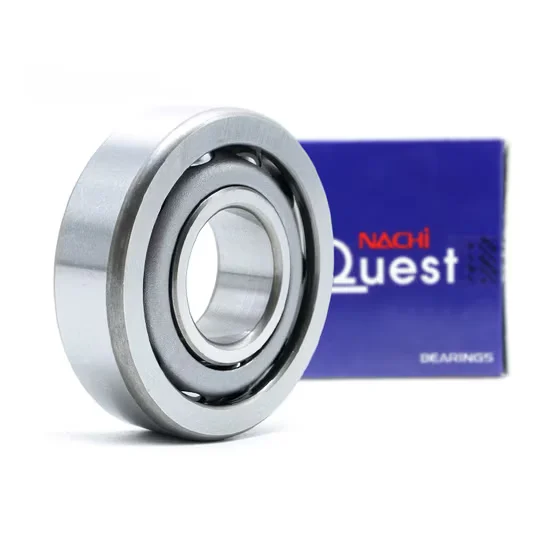
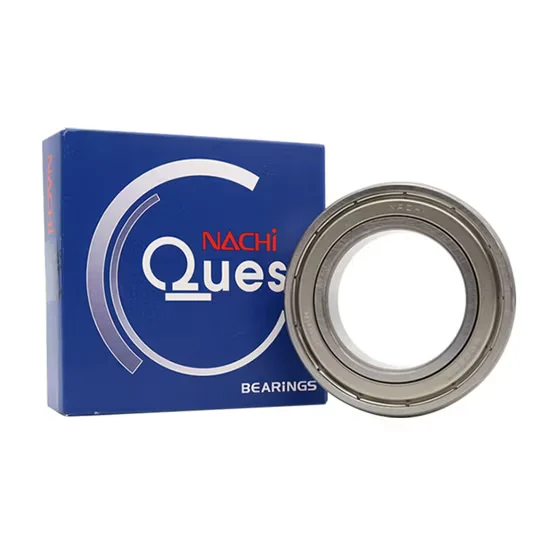
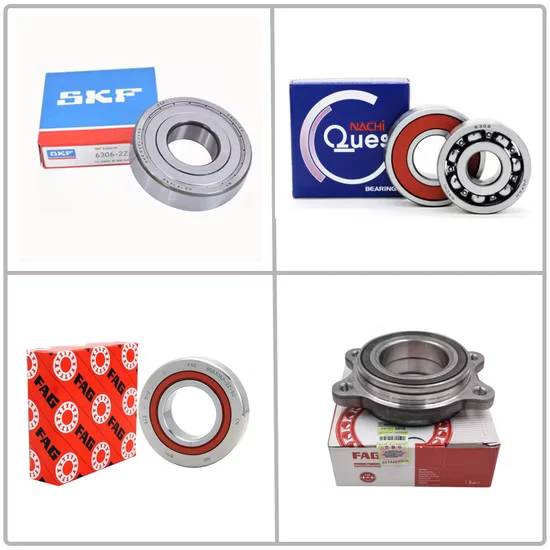
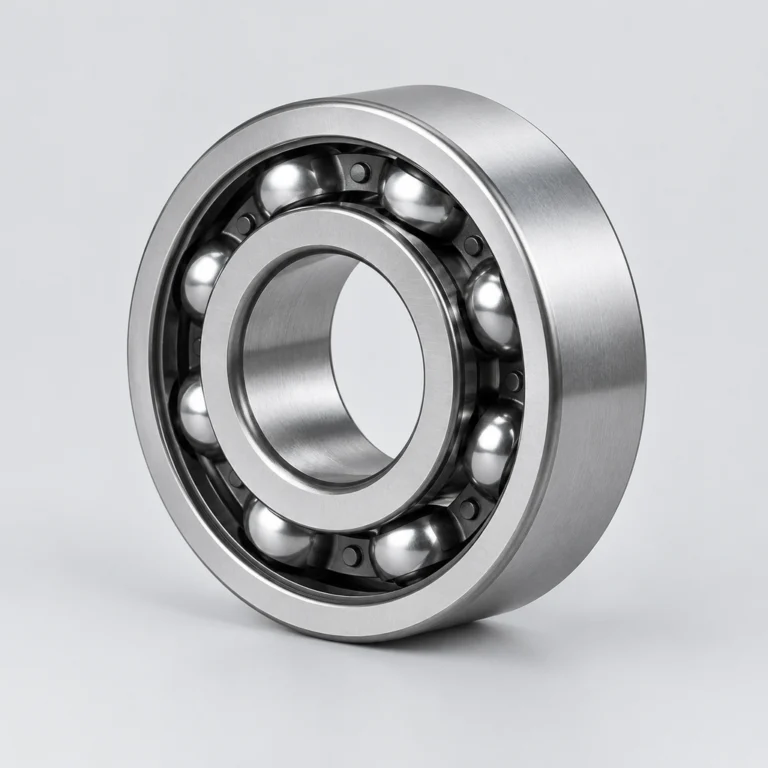
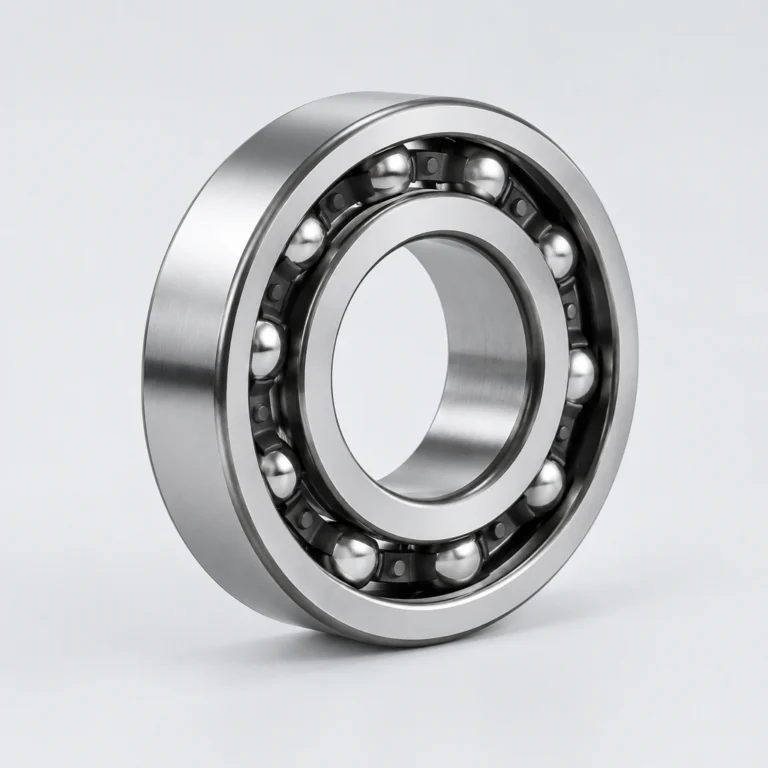
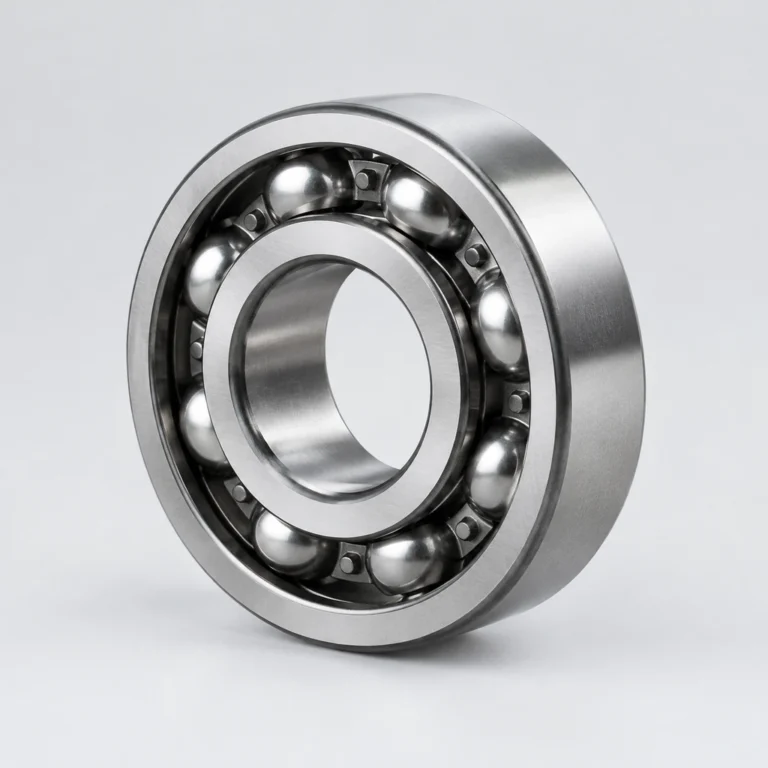
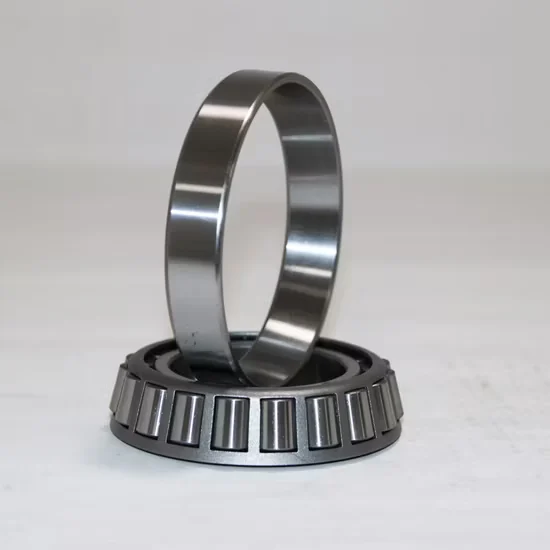
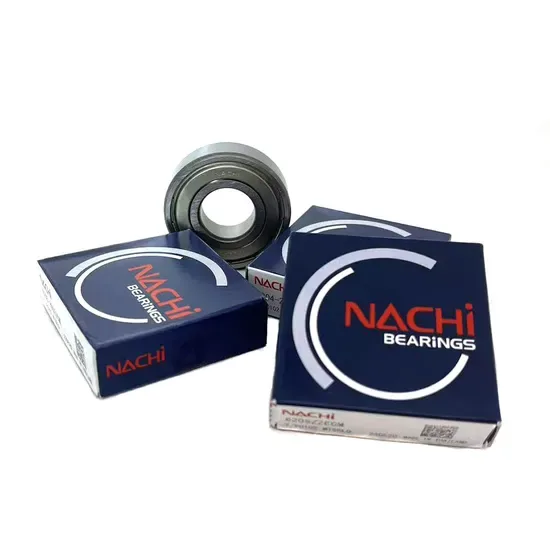
Scan-to-Verify Authenticity — Every QJ218M shipment includes original batch QR codes for instant verification via official brand applications.
Technical Specifications
| Parameter | Value |
| Designation | QJ218M |
| Bearing Type | Four-Point Contact Ball Bearing |
| Bore Diameter (d) | 90 mm |
| Outside Diameter (D) | 160 mm |
| Width (B) | 30 mm |
| Cage Material | Machined Brass |
| Contact Angle | 15°, 30°, 40° options |
| Precision Class | P0, P6, P5, P4, P2 |
| Vibration | Z1V1, Z2V2, Z3V3 |
| Material | Bearing Steel |
| Lubrication | Grease or Oil |
| Origin | China |
Application Suitability
| Industry | Typical Applications |
| Rolling Mill & Metallurgy | Work roll necks and continuous caster guide rollers |
| Mining & Heavy Equipment | Vibrating screen exciter mechanisms and crusher main shafts |
| Automobile | Steering column intermediate shafts and transmission assemblies |
Why Standard Cages Shatter in High-Vibration Metallurgy Plants
Stamped steel cages fail catastrophically under continuous shock loads, making the machined brass cage of the NACHI Timken QJ218M four-point contact ball bearing non-negotiable for heavy-duty survival.
I have seen the aftermath in Ethiopian mining sites when maintenance crews substitute brass cages with stamped steel to cut costs. The vibration tears the thin metal apart within days, scattering debris through the gearbox. Relying on genuine traceability prevents these catastrophic unplanned shutdowns.

Matching the NACHI Timken QJ218M Four-Point Contact Ball Bearing to Extreme Loads
This specific configuration handles complex combined loads where space is constrained. By consolidating global supply chains, we ensure that mixed-brand project orders arrive with the exact cage and clearance specifications required for rolling mill gearboxes. Sourcing the NACHI Timken QJ218M four-point contact ball bearing through verified channels eliminates the guesswork in critical MRO replacements.
Managing Shock Loads and Thermal Expansion in Continuous Operations
Heavy machinery subjects components to severe radial forces intertwined with bidirectional axial thrusts. When temperatures fluctuate wildly in metallurgy plants, internal clearance must accommodate thermal expansion without binding the rolling elements. Proper lubrication selection between grease and oil becomes critical to flush out microscopic metallic debris. Furthermore, the unseparated single-row design demands precise mounting to maintain the intended contact angle under dynamic deflection.
Decoding the M Suffix and Precision Tolerances
The "M" suffix denotes a machined brass cage, which provides superior structural integrity and damping characteristics compared to stamped alternatives. This cage design maintains rolling element spacing even when subjected to intense vibration and sudden shock loads. Available precision classes range from standard P0 up to P2, allowing engineers to match the exact rotational accuracy needed for high-speed spindles. Additionally, the flexibility in contact angles—spanning 15, 30, and 40 degrees—enables fine-tuning the axial load capacity versus radial load limits. Vibration grades up to Z3V3 ensure quiet, smooth operation in sensitive automotive or precision machine tool applications.
The Cascading Financial Impact of Improper Substitution
Swapping a specified brass-caged unit for a cheaper stamped-steel variant often leads to premature cage fracture. Once the cage disintegrates, the rolling elements skew and score the raceways, resulting in catastrophic damage to the entire shaft assembly. This triggers extended unplanned downtime and voids equipment warranties. Adhering to ISO 281 life calculation frameworks requires using the exact original specifications to guarantee the predicted fatigue life.
Securing Traceable Multi-Brand Consolidation for Critical Spares
Our global sourcing network guarantees that every NACHI or Timken unit ships with complete batch traceability documentation. We specialize in cross-brand equivalent model consultation, ensuring that if a specific brand is unavailable, the substitute matches the exact cage material and precision class. Our massive spot inventory covers thousands of standard part numbers, enabling flexible MOQ from single emergency spares to full container loads. We provide rigorous dimensional inspection reports before dispatch, preventing costly installation surprises at the mine site. Our technical support team assists with failure analysis to refine future procurement strategies.
Documentation & Authenticity
- Original batch traceability certificates linking the QJ218M to its specific manufacturing heat number.
- Official brand QR codes provided for instant anti-counterfeiting verification upon receipt.
- Dimensional inspection reports confirming P-class tolerances before international dispatch.
- Material certificates validating the bearing steel composition and machined brass cage integrity.
- Certificate of Conformity detailing the exact vibration grade and contact angle specifications.
Storage, Handling & Mounting
- Store the QJ218M in its original sealed packaging to protect the machined brass cage from ambient humidity and corrosion.
- Maintain consistent storage temperatures to prevent condensation inside the single-row unseparated assembly.
- Use clean, lint-free gloves when handling the bearing to avoid transferring acidic skin oils to the bearing steel rings.
- Apply induction heating for mounting, ensuring the temperature does not exceed the thermal limit of the brass cage material.
- Verify the designated contact angle alignment during installation to prevent premature edge loading on the raceways.
Engineering Review for Optimal Selection
To ensure the selected configuration perfectly matches your operational demands, please share your specific radial and axial load profiles alongside operating speeds and ambient temperatures. Providing the original OEM equipment number allows our engineering team to perform precise cross-reference checks against QJ219M and QJ220M variants. We will then conduct a comprehensive L10 life calculation and recommend the optimal clearance class and lubrication strategy for your application.
Frequently Asked Questions
Q: How do I verify the authenticity of multi-brand orders containing the QJ218M?
A: Every shipment includes original batch traceability documentation and official QR codes. You can scan these codes using the manufacturer's official mobile applications to instantly verify the production facility, heat number, and exact specifications, ensuring complete peace of mind for critical MRO replacements.
Q: What are the critical alignment checks when cross-referencing to QJ219M or QJ220M?
A: When substituting adjacent sizes, you must verify that the internal clearance, machined brass cage design, and precision class perfectly align with the original equipment requirements. Even minor discrepancies in contact angle or dimensional tolerances can cause severe binding or excessive play under heavy operational loads.
Q: How do ISO precision classes translate to specific operational tolerances for this bearing?
A: Higher precision classes like P4 or P2 dictate much tighter dimensional and running accuracy limits compared to standard P0. This translates to reduced vibration, lower operating temperatures, and extended fatigue life in high-speed applications, ensuring the machined brass cage operates smoothly without destructive harmonic resonance.
Q: What are the selection boundaries between four-point contact and standard angular contact bearings?
A: Four-point contact designs excel at handling bidirectional axial loads combined with radial forces in a single row, saving axial space. Standard angular contact bearings typically require paired arrangements to manage thrust in both directions, making the four-point variant ideal for compact gearboxes and rotating shafts.
Q: How should I choose the right contact angle for combined load applications?
A: A steeper contact angle increases the axial load-carrying capacity but reduces the radial load limit and maximum permissible speed. Engineers must evaluate the exact ratio of axial to radial forces in the machinery to select the optimal angle, ensuring the bearing operates within its safe dynamic load boundaries.