
NACHI Bearing Technical Guide Buying Guide
Genuine NACHI Bearings for Fans Wholesale Supplier
Source genuine NACHI bearings for fans with strict traceability to prevent costly motor failures from counterfeit cages. Verify authenticity using mill certificates and select correct C3 clearance for high-temperature stability. Secure reliable wholesale supply through transparent global traders offering flexible MOQ and mixed-brand consolidation.
- Published
- By author
- nachioem · Specialized NACHI bearing supplier
Cheap fan bearings do not save money; they destroy motors.
Sourcing genuine NACHI bearings for fans requires strict traceability verification and correct specification matching to prevent premature failure in high-temperature motor operations. Authenticity is confirmed through original mill certificates, customs declarations, and batch-matching reports, while technical reliability depends on selecting the appropriate radial clearance and cage material for specific thermal loads.
I still remember the smell of burnt insulation in a workshop in Dongguan. It was a humid afternoon, and a batch of industrial fans destined for the Middle East had returned with complaints of severe vibration and eventual seizure after only a few months of operation. The local maintenance team blamed the motor design. I blamed the supply chain. When we dissected the failed units, the culprit was not the steel quality of the rings, but the cage. It had fractured under heat stress. These were not genuine components. They were refurbished parts passed off as new, lacking the thermal stability required for continuous high-speed rotation. That incident changed how I view every bearing that leaves our warehouse. It taught me that in the world of rotating equipment, the lowest upfront price often carries the highest hidden cost.
The market is flooded with options, but few suppliers offer the transparency needed to avoid these pitfalls. Understanding how to verify authenticity and select the right technical specifications is critical for any buyer looking to secure genuine NACHI bearings for fans without compromising on reliability or budget.
Why Do Fan Motors Fail Prematurely with Fake NACHI Bearings?
Counterfeit cages cannot withstand high temperatures, leading to rapid motor burnout.
Many buyers assume that if the outer ring and balls look correct, the bearing is genuine. This is a dangerous misconception. The most vulnerable component in a high-speed fan application is often the cage, or retainer. In authentic genuine NACHI bearings for fans, the cage material is selected based on rigorous testing for thermal expansion and mechanical strength. Counterfeiters often use inferior plastics or recycled materials that degrade quickly when exposed to the heat generated by friction and ambient operating conditions.
In one case involving a large HVAC manufacturer in Southeast Asia, mixed batches of bearings caused inconsistent performance across their production line. Some units ran smoothly, while others exhibited early noise and failure. Upon investigation, it was found that non-genuine bearings had been introduced into the supply chain. These fake bearings lacked the precise internal geometry and proper lubrication channels of the original parts. The result was increased friction, higher operating temperatures, and ultimately, cage fracture. The cost of replacing the motors and dealing with production downtime far exceeded the initial savings from buying cheaper components.
| Feature | Genuine NACHI Specification | Counterfeit/Refurbished Risk |
|---|---|---|
| Cage Material | High-grade polyamide or steel, heat-stabilized | Inferior plastic, prone to brittleness and deformation |
| Lubrication | Factory-filled with specified grease, consistent volume | Inconsistent fill, wrong grease type, or dry running |
| Surface Finish | Micron-level precision, smooth raceways | Rough surfaces, visible tool marks, increased friction |
| Traceability | Full documentation, batch codes, mill certificates | No documentation, missing or forged labels |
The difference lies in the manufacturing process. Authentic bearings undergo strict quality control, ensuring that every component meets international standards. Counterfeit products bypass these checks, leading to unpredictable performance. For buyers, this means that verifying the source is not just about brand loyalty; it is about operational safety and cost management. Sourcing genuine NACHI bearings for fans from a trusted supplier ensures that each unit has been produced under controlled conditions, reducing the risk of unexpected failures.
How to Verify Authenticity and Traceability in Wholesale?
Demand original mill certificates, customs declarations, and batch-matching reports.
Verifying the authenticity of bearings in a wholesale environment requires more than just checking the packaging. Counterfeiters have become sophisticated, often replicating boxes and labels with high accuracy. The true proof of genuineness lies in the documentation trail. A reliable supplier will provide original mill certificates that detail the production batch, material composition, and quality inspection results. These documents are difficult to forge because they link directly to the manufacturer’s records.
Customs declarations are another critical piece of evidence. They show the legal import path of the goods, confirming that they entered the country through official channels. Batch-matching reports allow buyers to cross-reference the serial numbers on the bearings with the shipping documents. This level of traceability is essential for maintaining quality control and protecting against liability in case of equipment failure.
A buyer from the Middle East once shared his experience with a suspicious shipment. The packaging looked perfect, but the bearings inside had slight variations in weight and finish. He requested the full documentation package, including the mill certificate and customs papers. The supplier could not provide consistent data, and the batch numbers did not match. The shipment was rejected, saving the buyer from potential disaster. This highlights the importance of due diligence. Never accept a shipment without complete and verifiable documentation.
When sourcing genuine NACHI bearings for fans, ask your supplier for these documents upfront. A transparent supplier will have no issue providing them. If they hesitate or offer excuses, it is a red flag. Trust is built on transparency, and in the bearing industry, documentation is the foundation of trust. Ensuring that every bearing can be traced back to its origin gives you the confidence to install them in critical applications without fear of premature failure.
Which NACHI Fan Bearing Specs Fit Your Motor?
Compare standard vs C3 clearance and steel vs polyamide cages for specific thermal loads.
Selecting the right bearing specification is as important as verifying its authenticity. Fan motors operate under varying thermal conditions, and the bearing must be able to accommodate thermal expansion without seizing. Radial clearance is a key parameter here. Standard clearance bearings may work in cool environments, but for high-temperature applications, C3 or C4 clearance is often required. This extra space allows the inner ring to expand without creating excessive preload on the balls, which can lead to overheating and failure.
Cage material is another critical factor. Polyamide cages are lightweight and offer good damping properties, making them suitable for many fan applications. However, in extremely high-temperature environments, steel cages may be more appropriate due to their superior thermal stability. The choice depends on the specific operating conditions of the motor. Using the wrong cage material can lead to degradation and failure, even if the bearing itself is genuine.
| Application Condition | Recommended Clearance | Preferred Cage Material | Reason |
|---|---|---|---|
| Standard Ambient Temperature | Standard (CN) | Polyamide | Cost-effective, good damping |
| Elevated Temperature | C3 | Polyamide (Heat-stabilized) | Accommodates thermal expansion |
| High Temperature / Heavy Load | C3 or C4 | Steel | Superior thermal stability and strength |
| High Speed / Low Noise | C3 | Polyamide | Reduced weight, lower centrifugal force |
Understanding these specifications helps in making informed purchasing decisions. It is not enough to simply order a part number; you must ensure that the technical parameters match your application requirements. A knowledgeable supplier can provide guidance on selecting the right clearance and cage material based on your operating conditions. This technical support is invaluable in preventing mismatches that could lead to equipment failure. When you source genuine NACHI bearings for fans, ensure that the specifications align with your motor’s design limits to maximize service life and reliability.
How to Balance Cost and Reliability in Bulk Sourcing?
Use global traders for mixed-brand consolidation and flexible MOQ without sacrificing genuineness.
Buying directly from official brand channels often comes with high minimum order quantities and rigid pricing structures. For many distributors and OEMs, this is not practical. Global traders offer a viable alternative by providing access to genuine products with more flexible terms. They can consolidate orders from multiple brands, allowing buyers to mix and match products to optimize costs and inventory levels. This approach reduces shipping costs and simplifies logistics, especially for buyers who need a variety of bearing types and sizes.
The key is to choose a trader who prioritizes authenticity. Not all traders are created equal. Some may cut corners to offer lower prices, risking the introduction of counterfeit goods. A reputable trader will have established relationships with authorized distributors and manufacturers, ensuring that all products are genuine. They will also provide the necessary documentation to prove authenticity, as discussed earlier.
In Africa, an MRO provider faced an urgent need for replacement bearings for mining ventilation fans. Official channels could not meet the tight deadline. A global trader with spot inventory was able to deliver the required genuine NACHI bearings for fans within days. The trader provided full traceability documentation, giving the buyer confidence in the product’s authenticity. This example shows how flexible sourcing strategies can solve urgent problems without compromising on quality.
Balancing cost and reliability requires a strategic approach. By working with trusted global traders, buyers can access genuine products at competitive prices while maintaining the flexibility needed for their business operations. This model supports both large-scale project orders and small-batch emergency replacements, ensuring that equipment stays running and downtime is minimized. Sourcing genuine NACHI bearings for fans through such channels offers a balanced solution for buyers who value both economy and dependability.
Conclusion
Authenticity and specification matching are non-negotiable for fan motor reliability.
Sourcing genuine NACHI bearings for fans is not just a procurement task; it is a critical step in ensuring the longevity and efficiency of industrial equipment. By demanding strict traceability, understanding technical specifications, and choosing reliable supply partners, buyers can avoid the costly pitfalls of counterfeit products. The goal is to achieve a balance between cost-effectiveness and operational safety, ensuring that every bearing installed performs as expected under real-world conditions.
Applications covered in this article
Products in this article
NACHI bearings mentioned above
These are the NACHI bearing types discussed in this guide. Open a product page to check its designation and send the exact suffix with your quantity.
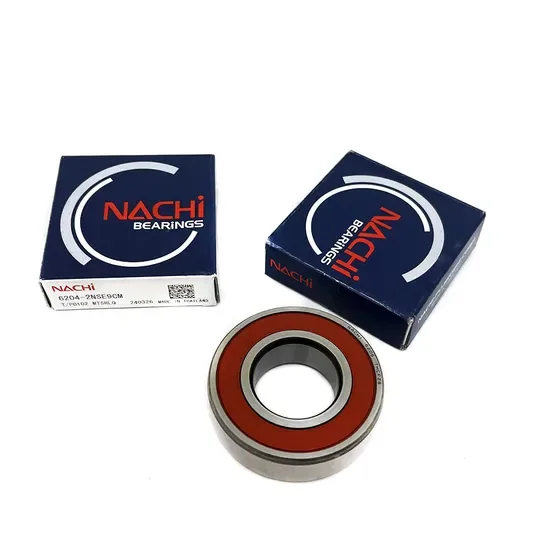
Deep Groove Ball Bearings
Genuine NACHI 608zz 6202 6201 Deep Groove Ball Bearing for Marine Equipment
View product Deep Groove Ball Bearings
Genuine NACHI P6 Deep Groove Ball Bearings 62208 62210 63002 63004 63006
View product
Deep Groove Ball Bearings
Genuine NACHI Deep Groove Ball Bearings 6215 6216 6217 6218 6219 for Juicer
View product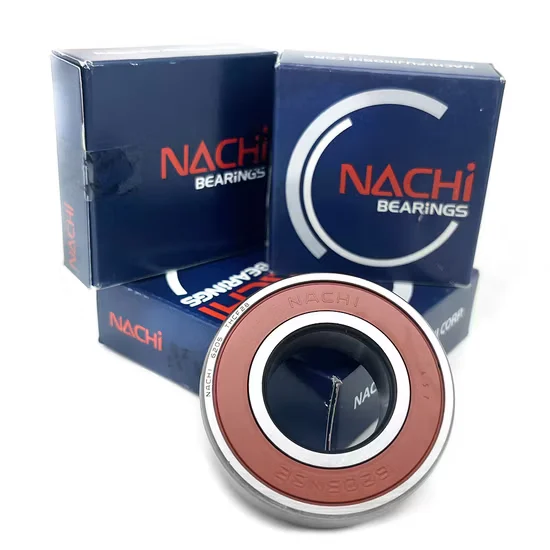
Deep Groove Ball Bearings
Genuine NACHI Deep Groove Ball Bearing 6408 6409 6410 6411 6412 for Conveyor
View productModel check
Not sure which NACHI designation fits? We help with substitution, cross-reference and selection.
Send the old bearing number, the worn marking you can still read, or the application and shaft size. nachioem matches it to the correct NACHI model, including clearance, cage and seal options, before you order.
- Substitution for discontinued models
- Cross-reference to NACHI numbers
- Selection for spindles, pumps and reducers
Keep reading
Related NACHI bearing technical articles
More practical guides on NACHI suffixes, replacement and selection for machine tools, automotive, construction machinery, pumps and gear reducers.
Oct 7, 2026 · Buying Guide · 7 min read
NACHI Bearings Quote: Genuine Wholesale Supplier for Bulk & MRO Orders
Request a NACHI bearings quote with full suffix accuracy to prevent costly customs delays and ensure genuine product traceability. Secure competitive wholesale pricing through…
Read the article Oct 7, 2026 · Buying Guide · 7 min read
Discontinued NACHI Numbers: Replacements from Wholesale Supplier
Replacing discontinued NACHI bearings requires more than matching dimensions to prevent premature field failures. Recalculate internal clearance and verify cage material compatibility to ensure…
Read the article Oct 7, 2026 · Buying Guide · 8 min read
Buy Genuine NACHI Bearings: Wholesale Supplier for Bulk Orders
Secure genuine NACHI bearings by mastering neutral checks and traceability verification to avoid catastrophic equipment failures. Learn to identify counterfeit units through hardness testing,…
Read the article
Request a quote
Send your NACHI model list. We quote fast.
List the NACHI model numbers with full suffixes and the quantity for each. nachioem replies online as quickly as possible with pricing for distributors, repair shops and end users worldwide.
- info@nachioem.com
- WhatsApp +1 (702) 981-5880
- Online replies as quickly as possible
- Global delivery by DHL, FedEx, UPS, air or sea