
NACHI Bearing Technical Guide Buying Guide
Genuine NACHI Bearings for Machine Tools Wholesale Supplier
Sourcing genuine NACHI bearings for machine tools requires strict verification of traceability and precision grades to avoid catastrophic spindle failures. Learn to identify counterfeits through batch number checks, select correct P4 or P5 grades, and secure reliable wholesale supply with full documentation.
- Published
- By author
- nachioem · Specialized NACHI bearing supplier
Visual packaging checks cannot guarantee authenticity.
Sourcing genuine NACHI bearings for machine tools requires strict verification of traceability and precision grades to avoid catastrophic spindle failures caused by counterfeits. Only verifiable origin documents and batch-level matching ensure the integrity of high-speed spindles.
The smell of burnt oil in a Riyadh workshop is distinct. It is not just the scent of friction; it is the smell of lost profit. Years ago, I sourced a batch of bearings labeled as original equipment for a series of high-precision lathes. The packaging looked pristine. The logos were sharp. Yet, within weeks of operation, the spindles exhibited rapid thermal deformation. The machining tolerance drifted beyond acceptable limits, leading to the rejection of an entire production run. The loss was mid-six-figure, but the reputational damage lasted longer. That failure forced a complete overhaul of how I evaluate supply chains. I learned that the market is flooded with refurbished units repackaged as new, and visual inspection alone is insufficient. Today, as a supplier connecting global buyers with authentic inventory, I see the same pitfalls recurring. Buyers focus on price per unit while ignoring the cost of downtime. This guide details how to verify authenticity, select the correct precision grade, and secure a reliable supply chain for your machine tool operations.
Why Counterfeit NACHI Bearings Destroy Machine Tool Precision?
Fake bearings cause rapid thermal deformation and loss of machining accuracy.
Machine tool spindles operate under extreme conditions, requiring consistent geometric stability. Counterfeit or refurbished bearings often fail to meet the rigorous material purity standards of the original manufacturer. When a substandard bearing is installed, the internal clearance changes unpredictably under load. This leads to excessive vibration and heat generation. In high-speed applications, even a minor deviation in roundness can cause the spindle to expand unevenly.
I recall a case involving a European automation builder. They switched to a lower-cost supplier to reduce bill-of-materials costs. The bearings appeared identical to the genuine article. However, during final testing, the spindle temperature rose significantly faster than specified. The vibration analysis showed deviations that compromised surface finish quality. The root cause was traced to inferior steel quality in the counterfeit rings, which lacked the necessary fatigue resistance. The resulting scrap rate increased noticeably, erasing any initial savings from the cheaper components.
| Failure Mode | Genuine NACHI Bearing | Counterfeit/Refurbished Unit |
|---|---|---|
| Material Purity | Controlled inclusion density | Uncontrolled impurities |
| Thermal Stability | Robust under high-speed loads | Vulnerable to rapid heat buildup |
| Surface Finish | Micron-level precision | Noticeably reduced smoothness |
| Service Life | Substantially extended | Premature fatigue crack initiation |
To avoid such outcomes, buyers must understand that low prices often indicate refurbished stock rather than discounted new inventory. Refurbished bearings may have been reground or cleaned, but their internal microstructure has already undergone stress cycles. Using them in new builds invites unpredictable failure.
How to Verify Genuine NACHI Bearings Before Payment?
Cross-check batch numbers, origin certificates, and anti-counterfeit marks.
Verification must happen before the goods leave the supplier’s warehouse. Relying on the box label is a critical error. Authentic NACHI products come with documentation that traces the item back to the manufacturer’s production facilities. This includes a certificate of origin and a detailed packing list with batch numbers. These numbers must match the laser etching on the bearing itself.
A buyer from Southeast Asia once shared a near-miss experience. They received a shipment where the outer boxes looked correct, but the inner individual packaging lacked the specific holographic seals used for certain precision series. Upon requesting the batch certificates, the supplier could only provide generic invoices without specific lot references. This discrepancy signaled that the stock might be mixed or sourced from unauthorized channels. By insisting on full traceability, the buyer avoided installing potentially compromised units.
When evaluating a Genuine NACHI Bearings for Machine Tools Wholesale Supplier, ask for sample documentation before placing a bulk order. Check if the batch numbers on the certificate correspond to the physical items. Verify the font and placement of the laser markings against known genuine samples. Counterfeiters often struggle to replicate the precision of laser etching, resulting in uneven depth or misaligned characters.
Furthermore, do not accept verbal assurances of authenticity. Demand written confirmation that the stock is sourced directly from authorized distribution channels or the manufacturer. If a supplier hesitates to provide traceability documents, consider it a red flag. The cost of verifying documents is negligible compared to the cost of a spindle rebuild.
Which NACHI Series Fits Your Spindle Application?
Compare angular contact and cylindrical roller series for high-speed vs heavy-load.
Selecting the wrong series is as damaging as buying a fake. Machine tool spindles have diverse requirements based on their function. High-speed grinding spindles demand low friction and high rigidity, while heavy-duty milling spindles require robust load-carrying capacity. Understanding the difference between angular contact ball bearings and cylindrical roller bearings is essential.
Angular contact ball bearings are designed to handle combined radial and axial loads. They are the standard choice for high-speed spindles due to their ability to maintain precision at elevated RPMs. These bearings are available in various precision grades, such as P4 and P5. A P4 grade offers tighter tolerances than P5, resulting in lower vibration and higher rotational accuracy. Choosing a P5 grade for a high-precision grinding application may lead to unacceptable surface finishes, while using P4 for a general-purpose lathe might be an unnecessary expense.
Cylindrical roller bearings, on the other hand, excel in handling heavy radial loads. They are often used in the main spindle support of large milling machines or lathes where cutting forces are significant. While they may not achieve the same high-speed capabilities as angular contact bearings, their load capacity ensures stability during aggressive material removal.
| Application Type | Recommended Series | Key Characteristic | Precision Grade Consideration |
|---|---|---|---|
| High-Speed Grinding | Angular Contact Ball | Low friction, high rigidity | P4 or higher for minimal vibration |
| Heavy-Duty Milling | Cylindrical Roller | High radial load capacity | P5 sufficient for most roughing ops |
| General Purpose Lathe | Deep Groove/Angular | Balanced load handling | P5 for cost-effective precision |
| Precision Turning | Angular Contact Pair | Preloaded for stiffness | P4 for tight tolerance holding |
Mismatching the precision grade can lead to premature wear or poor performance. A Middle East machine builder once selected P5 bearings for a ultra-precision turning center. The resulting chatter marks on the workpiece required extensive rework. Switching to P4 grade bearings resolved the issue, highlighting the importance of matching the bearing specification to the machine’s intended tolerance class.
How to Secure Reliable Wholesale Supply with Full Traceability?
Partner with global suppliers offering flexible MOQ and consolidated shipping.
Securing a consistent supply of authentic components requires more than finding a low price. It demands a partner who understands the technical nuances of machine tool applications. A reliable Genuine NACHI Bearings for Machine Tools Wholesale Supplier provides more than just products; they offer technical selection support and complete traceability documentation.
Inventory availability is crucial for minimizing downtime. Suppliers with massive spot inventory can fulfill urgent maintenance requirements quickly, reducing the risk of prolonged production stops. Look for partners who stock a wide range of standard and special part numbers. This allows for consolidated shipping, which reduces logistics costs and simplifies customs clearance.
Flexibility in minimum order quantities (MOQ) is another key factor. Small workshops may need single-unit replacements, while large OEMs require container-load quantities. A versatile supplier accommodates both, ensuring that you can source exactly what you need without overstocking. This flexibility is particularly valuable for MRO clients who face unpredictable breakdown scenarios.
Technical support is equally important. When selecting bearings for new designs, access to engineering expertise can prevent costly mistakes. Suppliers who offer cross-brand equivalent model consultation help buyers find suitable alternatives when specific parts are unavailable. This service ensures that machine performance is maintained even when supply chain disruptions occur.
Building a long-term relationship with a supplier who prioritizes authenticity and technical accuracy protects your business from the risks of counterfeits. By focusing on traceability, precision grades, and reliable inventory, you ensure that your machine tools operate at peak performance. The initial effort to verify suppliers pays dividends in reduced downtime and consistent product quality.
Conclusion
Authenticity and precision are non-negotiable for machine tool reliability.
Sourcing genuine components requires diligence in verification and a deep understanding of technical specifications. By prioritizing traceable documentation and matching precision grades to application needs, buyers can avoid the high costs of counterfeit failures. Partnering with a knowledgeable Genuine NACHI Bearings for Machine Tools Wholesale Supplier ensures access to authentic inventory and expert support, safeguarding your production efficiency and reputation.
Applications covered in this article
Products in this article
NACHI bearings mentioned above
These are the NACHI bearing types discussed in this guide. Open a product page to check its designation and send the exact suffix with your quantity.
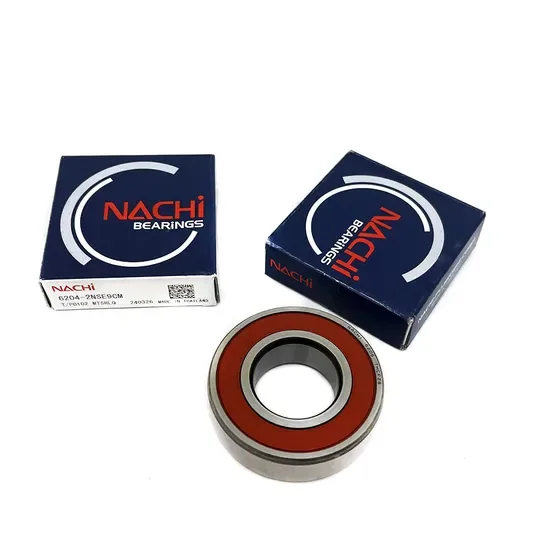
Deep Groove Ball Bearings
Genuine NACHI 608zz 6202 6201 Deep Groove Ball Bearing for Marine Equipment
View product Deep Groove Ball Bearings
Genuine NACHI P6 Deep Groove Ball Bearings 62208 62210 63002 63004 63006
View product
Deep Groove Ball Bearings
Genuine NACHI Deep Groove Ball Bearings 6215 6216 6217 6218 6219 for Juicer
View product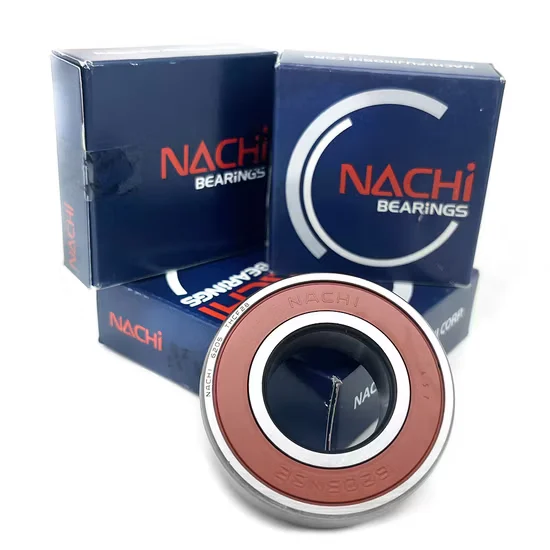
Deep Groove Ball Bearings
Genuine NACHI Deep Groove Ball Bearing 6408 6409 6410 6411 6412 for Conveyor
View productModel check
Not sure which NACHI designation fits? We help with substitution, cross-reference and selection.
Send the old bearing number, the worn marking you can still read, or the application and shaft size. nachioem matches it to the correct NACHI model, including clearance, cage and seal options, before you order.
- Substitution for discontinued models
- Cross-reference to NACHI numbers
- Selection for spindles, pumps and reducers
Keep reading
Related NACHI bearing technical articles
More practical guides on NACHI suffixes, replacement and selection for machine tools, automotive, construction machinery, pumps and gear reducers.
Oct 7, 2026 · Buying Guide · 7 min read
NACHI Bearings Quote: Genuine Wholesale Supplier for Bulk & MRO Orders
Request a NACHI bearings quote with full suffix accuracy to prevent costly customs delays and ensure genuine product traceability. Secure competitive wholesale pricing through…
Read the article Oct 7, 2026 · Buying Guide · 7 min read
Discontinued NACHI Numbers: Replacements from Wholesale Supplier
Replacing discontinued NACHI bearings requires more than matching dimensions to prevent premature field failures. Recalculate internal clearance and verify cage material compatibility to ensure…
Read the article Oct 7, 2026 · Buying Guide · 8 min read
Buy Genuine NACHI Bearings: Wholesale Supplier for Bulk Orders
Secure genuine NACHI bearings by mastering neutral checks and traceability verification to avoid catastrophic equipment failures. Learn to identify counterfeit units through hardness testing,…
Read the article
Request a quote
Send your NACHI model list. We quote fast.
List the NACHI model numbers with full suffixes and the quantity for each. nachioem replies online as quickly as possible with pricing for distributors, repair shops and end users worldwide.
- info@nachioem.com
- WhatsApp +1 (702) 981-5880
- Online replies as quickly as possible
- Global delivery by DHL, FedEx, UPS, air or sea