
NACHI Bearing Technical Guide Buying Guide
Genuine NACHI Bearings for Power Tools Wholesale Supplier
Selecting the correct NACHI bearings for power tools requires prioritizing specific seal types and internal clearances over generic brand recognition. Standard P0 precision with C3 clearance and robust contact seals outperforms higher-precision open bearings in harsh, dusty environments. Verify traceability documentation to ensure genuine product integrity for sustained high-RPM operation.
- Published
- By author
- nachioem · Specialized NACHI bearing supplier
Higher precision grades often lead to faster failure in dusty construction sites.
Selecting the correct NACHI bearings for power tools requires prioritizing specific seal types and internal clearances over generic brand recognition. For high-speed applications like angle grinders and hammer drills, standard P0 precision with C3 clearance and robust contact seals outperforms higher-precision open bearings in harsh environments. Distributors must verify traceability documentation to ensure genuine product integrity, as counterfeit units lack the thermal stability required for sustained high-RPM operation. Sourcing from a verified global supplier ensures access to mixed-brand consolidation and authentic stock that meets OEM engineering specifications.
The smell of burnt grease is distinct. It hangs heavy in the air of a repair workshop long after the machine has stopped. I recall standing in a cramped service center in Lagos, watching a technician pull apart a batch of angle grinders that had failed within weeks of deployment. The spindles were blackened, the rollers fused to the races. The customer insisted they had bought premium branded components. Upon inspection, the bearings lacked the specific suffix codes required for high-speed, high-dust environments. They were standard industrial units, not designed for the violent vibration and fine particulate ingress typical of construction sites. This incident reshaped my approach to sourcing. It is not enough to supply a famous name; one must supply the exact engineering solution for the工况.
Why Do Standard Bearings Fail in Power Tools?
Standard industrial bearings fail in power tools due to inadequate sealing and incorrect internal clearance for high-speed thermal expansion.
Power tools operate under conditions that differ drastically from stationary industrial machinery. An angle grinder can reach rotational speeds exceeding 10,000 RPM, generating significant heat through friction and load. In such environments, the bearing must accommodate thermal expansion without binding. Standard bearings with normal clearance (CN) often expand enough at high temperatures to eliminate their internal play, leading to catastrophic seizure.
Furthermore, construction sites are laden with abrasive dust. Concrete powder, silica, and metal shavings are fine enough to penetrate weak seals. Once inside, these particles act as lapping compounds, destroying the raceway surface and causing premature fatigue. Open bearings, while offering better heat dissipation in clean environments, become liabilities in dusty sites. They allow contaminants to enter freely, accelerating wear rates significantly compared to shielded or sealed variants.
| Failure Factor | Standard Industrial Bearing | Power Tool Specific Bearing |
|---|---|---|
| Internal Clearance | CN (Normal) | C3 (Increased) |
| Seal Type | Open or Light Shield | 2RS (Contact Rubber Seal) or ZZ (Metal Shield) |
| Grease Type | General Purpose | High-Speed, High-Temperature Synthetic |
| Dust Resistance | Low | High |
| Thermal Binding Risk | High at sustained RPM | Low due to expanded clearance |
A European equipment rental company once reported a spike in warranty claims for their electric hammers. The failure analysis revealed that the original equipment manufacturer had switched to a cheaper, non-contact sealed bearing to reduce cost. While the initial performance was acceptable, the lack of robust sealing allowed dust ingress during extended use in demolition work. The grease contaminated rapidly, losing its lubricating properties. Switching back to bearings with proper contact seals and C3 clearance reduced the failure rate noticeably.
How to Choose the Right NACHI Model?
Match the bearing series and suffix codes to the specific tool type and operating environment.
Selecting the right model involves more than matching the bore diameter. The series number indicates the load capacity and dimensional proportions, while the suffix codes define the sealing and clearance characteristics. For power tools, the 62xx and 63xx deep groove ball bearing series are most common. The 63xx series offers a higher load capacity due to its larger balls and wider cross-section, making it suitable for heavy-duty hammer drills and rotary hammers. The 62xx series is lighter and often used in smaller angle grinders and sanders where weight reduction is critical.
The suffix code is the key differentiator. A bearing marked with “ZZ” features metal shields on both sides. These shields provide good protection against larger particles and retain grease well, but they are not completely dust-proof. For environments with fine concrete dust, “2RS” bearings with rubber contact seals offer superior protection. However, contact seals generate more friction and heat. Therefore, they must be paired with high-quality synthetic grease capable of withstanding higher operating temperatures.
| Application | Recommended Series | Preferred Seal | Clearance | Reason |
|---|---|---|---|---|
| Angle Grinder | 62xx / 63xx | ZZ or 2RS | C3 | High speed, moderate dust |
| Hammer Drill | 63xx | 2RS | C3 | High impact, heavy dust |
| Rotary Hammer | 63xx / 64xx | 2RS | C3 | Extreme impact, severe dust |
| Polisher / Sander | 62xx | ZZ | C3 | High speed, low load |
Counter-intuitively, higher precision grades like P5 are not always better for power tools. While P5 bearings have tighter tolerances, they are more sensitive to misalignment and thermal distortion. In the rough handling typical of construction equipment, a standard P0 grade with correct C3 clearance provides more reliability. The extra space in C3 clearance allows the bearing to breathe thermally, preventing the inner race from expanding against the outer race.
A distributor in Southeast Asia struggled with returns on a line of heavy-duty grinders. He was supplying P5 precision bearings, assuming higher quality meant longer life. However, the tight tolerances left no room for thermal expansion during prolonged use. The bearings seized after short periods of continuous operation. Switching to P0 precision with C3 clearance resolved the issue, extending the service life meaningfully.
How to Verify Genuine NACHI Bearings?
Authenticity is confirmed through traceability documentation, packaging consistency, and physical inspection of marking quality.
The market is flooded with counterfeit bearings that mimic the appearance of genuine products. These fakes often use substandard steel and poor-quality grease, leading to rapid failure under load. Verifying authenticity requires a multi-layered approach. First, examine the packaging. Genuine NACHI bearings come in boxes with high-quality printing, clear batch numbers, and holographic security labels where applicable. The box should not show signs of resealing or damage.
Next, inspect the bearing itself. The markings on the shield or side face should be crisp, evenly spaced, and deeply etched or laser-marked. Counterfeit units often have faint, uneven, or poorly aligned markings. The steel surface should be smooth and free from rust or discoloration. Any sign of roughness or irregularity suggests poor manufacturing standards.
Traceability documentation is the most reliable verification method. Reputable suppliers provide certificates of origin and material test reports that link the specific batch number to the manufacturer’s production records. These documents allow buyers to verify the supply chain path. Without such documentation, the risk of receiving counterfeit goods increases significantly.
A Middle East construction firm faced a major project delay when a batch of bearings failed prematurely. Investigation revealed that the supplier could not provide valid traceability documents for the disputed batch. The bearings lacked the consistent batch coding found on genuine units. By switching to a supplier who enforced strict documentation checks, the firm eliminated the risk of counterfeit infiltration.
Where to Source Wholesale NACHI Bearings?
Reliable sourcing depends on suppliers who offer mixed-brand consolidation and enforce strict genuine product protocols.
For regional distributors and MRO buyers, sourcing efficiency is as critical as product quality. Managing multiple suppliers for different brands increases logistical complexity and cost. A professional global supplier can consolidate various bearing brands, including NACHI, SKF, FAG, and NSK, into single shipments. This mixed-container consolidation reduces shipping costs and simplifies customs clearance. It also allows buyers to maintain optimal stock levels across a broad range of part numbers without committing to large minimum order quantities for each brand.
Flexibility in MOQ is another key advantage. Emergency maintenance needs often require small batches of specific parts, while project orders may demand full container loads. A versatile supplier accommodates both scenarios, providing spot inventory for urgent replacements and bulk pricing for large projects. This flexibility ensures that downtime is minimized and procurement budgets are optimized.
Technical support is also vital. A knowledgeable supplier can assist with cross-brand equivalent model consultation, helping buyers find suitable alternatives when specific parts are unavailable. This service is particularly valuable for MRO operations where older equipment may require obsolete or hard-to-find components.
By partnering with a supplier who prioritizes genuine traceability and offers comprehensive technical support, distributors can build trust with their end-users. This trust translates into repeat business and a stronger market position. The ability to provide verified, high-performance bearings for demanding power tool applications sets a distributor apart in a competitive market.
Conclusion
Genuine NACHI bearings for power tools demand precise selection of seals and clearances to withstand high-speed, dusty conditions.
Success in this sector relies on understanding the specific engineering requirements of power tools rather than relying solely on brand reputation. Prioritizing C3 clearance and robust sealing mechanisms prevents thermal binding and dust ingress, ensuring longer service life. Verifying authenticity through traceability documentation protects against the risks of counterfeit products. Sourcing from a partner who offers mixed-brand consolidation and technical expertise streamlines supply chains and enhances operational reliability for distributors and end-users alike.
Applications covered in this article
Products in this article
NACHI bearings mentioned above
These are the NACHI bearing types discussed in this guide. Open a product page to check its designation and send the exact suffix with your quantity.
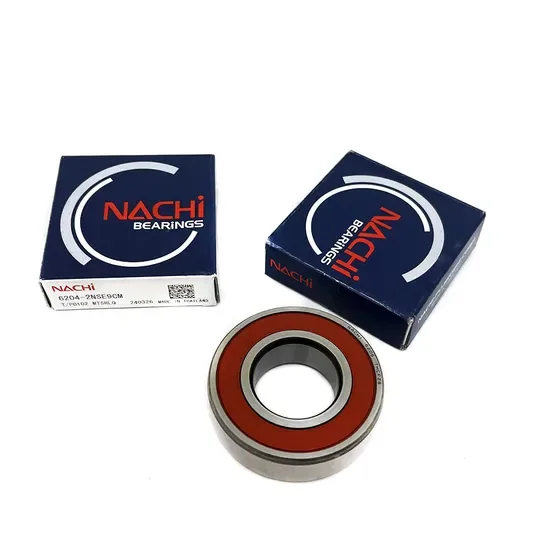
Deep Groove Ball Bearings
Genuine NACHI 608zz 6202 6201 Deep Groove Ball Bearing for Marine Equipment
View product Deep Groove Ball Bearings
Genuine NACHI P6 Deep Groove Ball Bearings 62208 62210 63002 63004 63006
View product
Deep Groove Ball Bearings
Genuine NACHI Deep Groove Ball Bearings 6215 6216 6217 6218 6219 for Juicer
View product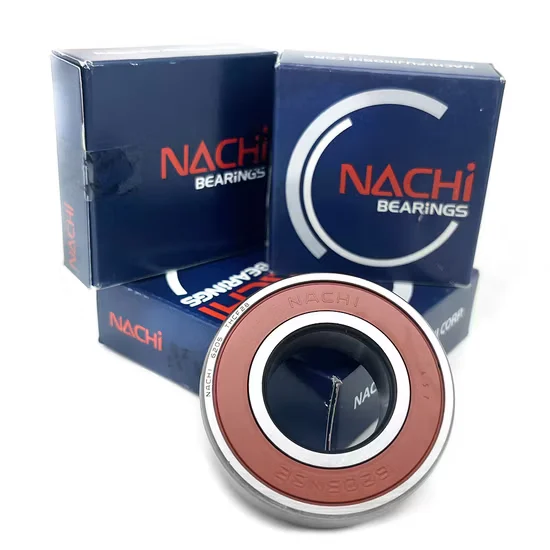
Deep Groove Ball Bearings
Genuine NACHI Deep Groove Ball Bearing 6408 6409 6410 6411 6412 for Conveyor
View productModel check
Not sure which NACHI designation fits? We help with substitution, cross-reference and selection.
Send the old bearing number, the worn marking you can still read, or the application and shaft size. nachioem matches it to the correct NACHI model, including clearance, cage and seal options, before you order.
- Substitution for discontinued models
- Cross-reference to NACHI numbers
- Selection for spindles, pumps and reducers
Keep reading
Related NACHI bearing technical articles
More practical guides on NACHI suffixes, replacement and selection for machine tools, automotive, construction machinery, pumps and gear reducers.
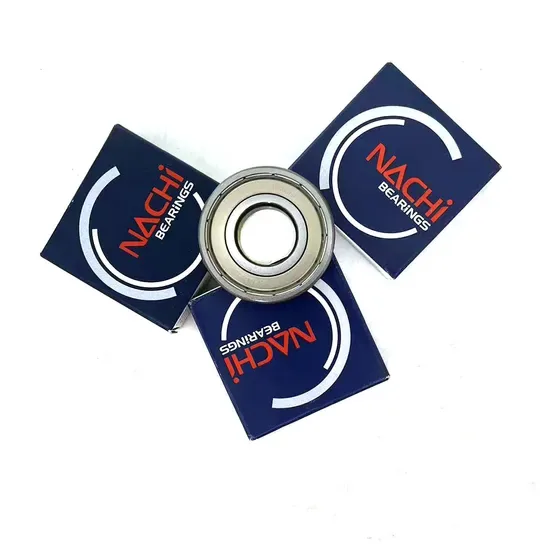
Oct 7, 2026 · Buying Guide · 7 min read
NACHI Bearings Quote: Genuine Wholesale Supplier for Bulk & MRO Orders
Request a NACHI bearings quote with full suffix accuracy to prevent costly customs delays and ensure genuine product traceability. Secure competitive wholesale pricing through…
Read the article Oct 7, 2026 · Buying Guide · 7 min read
Discontinued NACHI Numbers: Replacements from Wholesale Supplier
Replacing discontinued NACHI bearings requires more than matching dimensions to prevent premature field failures. Recalculate internal clearance and verify cage material compatibility to ensure…
Read the article Oct 7, 2026 · Buying Guide · 8 min read
Buy Genuine NACHI Bearings: Wholesale Supplier for Bulk Orders
Secure genuine NACHI bearings by mastering neutral checks and traceability verification to avoid catastrophic equipment failures. Learn to identify counterfeit units through hardness testing,…
Read the article
Request a quote
Send your NACHI model list. We quote fast.
List the NACHI model numbers with full suffixes and the quantity for each. nachioem replies online as quickly as possible with pricing for distributors, repair shops and end users worldwide.
- info@nachioem.com
- WhatsApp +1 (702) 981-5880
- Online replies as quickly as possible
- Global delivery by DHL, FedEx, UPS, air or sea