
NACHI Bearing Technical Guide Buying Guide
Genuine NACHI Bearings for Robots Wholesale Supplier
Secure genuine NACHI bearings for robots by verifying strict traceability to prevent catastrophic joint failures from counterfeits. Compare angular contact and cross roller specs for precise payload matching while demanding Certificates of Conformance. Optimize sourcing with consolidated shipping to reduce lead times and ensure operational reliability.
- Published
- By author
- nachioem · Specialized NACHI bearing supplier
Visual inspection cannot verify authenticity.
Sourcing genuine NACHI bearings for robots requires strict traceability verification and precise spec matching to prevent catastrophic joint failures. Counterfeit or refurbished units may look identical to the naked eye but lack the internal precision needed for dynamic robotic loads, leading to rapid degradation and unplanned downtime.
I still remember the sweat on my brow while staring at a robotic arm in Lagos that refused to stop jittering. The client had sourced what they believed were original parts from a local market to save on costs. Instead of smooth operation,*ks dismantling the assembly only to find that the angular contact bearings were counterfeit. The raceways were poorly finished, and the steel quality was substandard. That incident shifted my focus entirely from installation to rigorous sourcing verification. I learned that in robotics, the bearing is not just a component; it is the foundation of precision.
The market is flooded with options, but not all are created equal. When you are building or maintaining high-precision automation equipment, the risk of using unverified components is too high. This guide breaks down how to identify true quality, compare specifications effectively, and secure reliable supply chains for your robotic applications.
Why Do Robot Joints Fail Prematurely?
Counterfeit and refurbished bearings destroy precision under dynamic loads.
Robotic joints operate under complex stress conditions that differ significantly from standard industrial machinery. They face continuous oscillating loads, high acceleration forces, and strict requirements for positional repeatability. A bearing that works fine in a conveyor belt may fail catastrophically in a robot arm within days.
The primary cause of premature failure is not always wear; it is often the use of non-genuine components. In my experience, two types of fake products dominate the gray market: outright counterfeits and refurbished units sold as new.
Counterfeit bearings often use lower-grade steel that lacks the necessary cleanliness. This leads to early fatigue spalling. Refurbished bearings, on the other hand, are used units that have been cleaned and repackaged. While they might pass a visual check, their internal geometry has already been altered by previous usage. Under the heavy payload of a robotic arm, these imperfections amplify, causing vibration and heat buildup.
A European automation integrator once shared a case where a batch of mixed-source bearings caused a significant delay in a factory rollout. The issue was not immediate failure but inconsistent performance. Some joints moved smoothly, while others exhibited slight resistance. This inconsistency traced back to a mixed batch where some bearings were genuine and others were lower-tier substitutes. The result was a multi-week halt to recalibrate every single axis.
To avoid this, buyers must understand that lower unit prices often translate to higher total costs due to downtime and replacement labor. Authenticity is not just about brand loyalty; it is about operational reliability.
How to Compare NACHI Bearing Specs for Robotics?
Matrix comparing angular contact vs cross roller bearings for different payload and speed requirements.
Selecting the right bearing type is critical for robotic performance. NACHI offers various solutions, but angular contact ball bearings and cross roller bearings are the most common in robotic joints. Understanding the difference helps in making informed purchasing decisions.
Angular contact ball bearings are designed to handle combined radial and axial loads. They are ideal for high-speed applications where low friction is essential. In contrast, cross roller bearings provide higher rigidity and can support moment loads, making them suitable for heavy-payload robots that require extreme precision.
| Feature | Angular Contact Ball Bearings | Cross Roller Bearings |
|---|---|---|
| Load Capacity | Moderate radial and high axial | High radial, axial, and moment |
| Rigidity | Standard | High |
| Speed Capability | High | Moderate |
| Precision Grade | Typically P4 or P5 | Typically P4 or P5 |
| Application | High-speed joints, lightweight arms | Heavy-payload bases, rotary tables |
When sourcing genuine NACHI bearings for robots, pay attention to the tolerance class. For robotic applications, P4 or P5 precision is often required to ensure minimal runout and smooth motion. Lower precision grades may introduce play that affects the robot’s repeatability.
Another critical factor is preload. Proper preload eliminates internal clearance, increasing rigidity and reducing vibration. However, excessive preload can lead to overheating and reduced lifespan. Genuine NACHI bearings come with specific preload specifications that must be matched to the application design.
A Middle East manufacturing plant recently upgraded its assembly line robots. They switched from standard ball bearings to specialized angular contact units with optimized preload. The change resulted in noticeably smoother operation and reduced maintenance intervals. The key was matching the bearing specs to the robot’s dynamic requirements rather than just replacing like-for-like.
What Documents Prove Bearing Authenticity?
Traceability files and origin certs are mandatory, not optional.
In an era where sophisticated fakes can mimic packaging and labeling, documentation is the only reliable proof of authenticity. Visual checks are insufficient. You need a paper trail that links the bearing back to the manufacturer.
The essential documents include the Certificate of Conformance (CoC) and the Certificate of Origin. The CoC confirms that the bearing meets specific technical standards and quality controls. The Certificate of Origin verifies the country of manufacture, ensuring it comes from authorized NACHI facilities.
Without these documents, you are buying blind. A distributor who cannot provide full traceability is likely dealing in gray market or counterfeit goods.
I once encountered a supplier who offered genuine-looking bearings at a steep discount. When asked for the CoC, they provided a generic template without batch numbers or specific test results. Upon further investigation, the bearings were found to be refurbished units from an unknown source. The lack of proper documentation was a red flag that should not have been ignored.
For B2B buyers, especially those importing for resale or OEM use, having complete documentation is also crucial for customs clearance and warranty claims. Missing papers can lead to delays and additional costs.
Ensure that your supplier provides batch-specific documentation. Generic certificates that cover multiple products or time periods are not sufficient for high-stakes robotic applications. Each batch of genuine NACHI bearings for robots should have its own unique identification and corresponding paperwork.
How to Optimize Sourcing for Robot Projects?
Consolidated shipping and flexible MOQ from global suppliers reduce lead times and costs.
Sourcing bearings for robotic projects often involves managing multiple part numbers and brands. Dealing with separate suppliers for each item increases complexity, shipping costs, and lead times. A more efficient approach is to work with a global supplier who offers consolidated sourcing.
By combining orders for different bearing types and brands into a single shipment, you can significantly reduce logistics costs and simplify inventory management. This is particularly beneficial for MRO operations where urgent spare parts are needed alongside regular stock replenishment.
Flexible Minimum Order Quantities (MOQ) are another advantage. Large distributors often require high MOQs, which can tie up capital in excess inventory. A specialized supplier who understands the needs of robotic manufacturers can offer smaller quantities for specific projects while still providing competitive pricing.
Technical support is also a key factor. A knowledgeable supplier can help verify specifications and suggest alternatives if a specific part is unavailable. This level of service reduces the risk of ordering incorrect items and ensures that the bearings meet the application requirements.
For example, a South American mining company streamlined its maintenance supply chain by switching to a one-stop sourcing partner. Instead of managing five different vendors, they consolidated their bearing purchases. This change reduced their administrative workload and improved delivery reliability for critical spare parts.
When evaluating suppliers, look for those with massive spot inventory and the ability to handle mixed-brand orders. This flexibility allows you to respond quickly to changing project needs and minimize downtime.
Conclusion
Authenticity and precision are non-negotiable in robotics.
Sourcing genuine NACHI bearings for robots is about more than just buying a component; it is about securing the reliability of your entire automation system. By prioritizing traceability, understanding technical specifications, and optimizing your supply chain, you can avoid the costly pitfalls of counterfeit and substandard parts.
Focus on verified documentation and reputable suppliers who offer comprehensive support. The initial effort in selecting the right partner pays off in reduced downtime and consistent performance. Ensure every bearing in your robotic assembly contributes to precision, not uncertainty.
Products in this article
NACHI bearings mentioned above
These are the NACHI bearing types discussed in this guide. Open a product page to check its designation and send the exact suffix with your quantity.
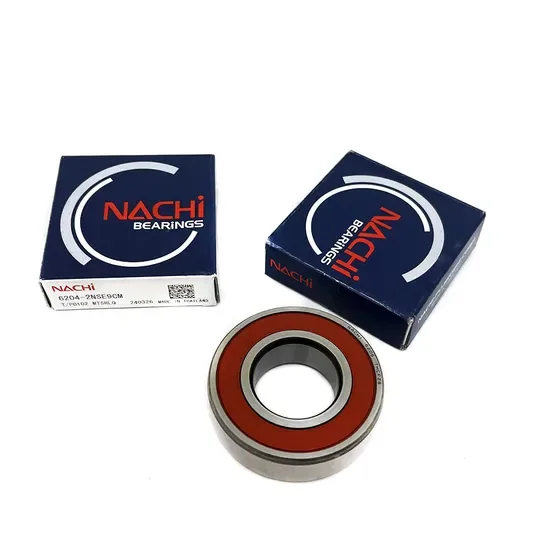
Deep Groove Ball Bearings
Genuine NACHI 608zz 6202 6201 Deep Groove Ball Bearing for Marine Equipment
View product Deep Groove Ball Bearings
Genuine NACHI P6 Deep Groove Ball Bearings 62208 62210 63002 63004 63006
View product
Deep Groove Ball Bearings
Genuine NACHI Deep Groove Ball Bearings 6215 6216 6217 6218 6219 for Juicer
View product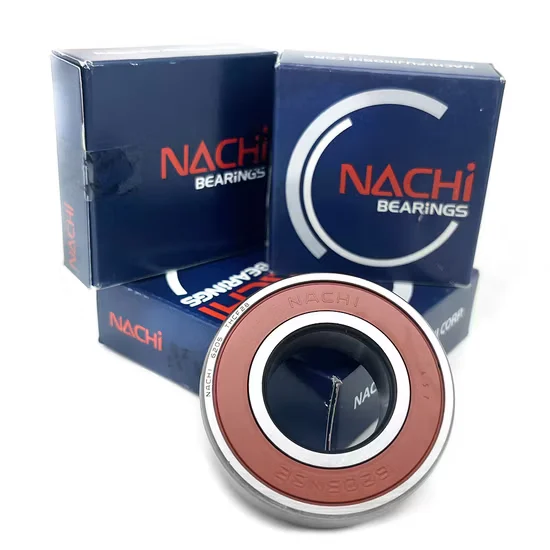
Deep Groove Ball Bearings
Genuine NACHI Deep Groove Ball Bearing 6408 6409 6410 6411 6412 for Conveyor
View productModel check
Not sure which NACHI designation fits? We help with substitution, cross-reference and selection.
Send the old bearing number, the worn marking you can still read, or the application and shaft size. nachioem matches it to the correct NACHI model, including clearance, cage and seal options, before you order.
- Substitution for discontinued models
- Cross-reference to NACHI numbers
- Selection for spindles, pumps and reducers
Keep reading
Related NACHI bearing technical articles
More practical guides on NACHI suffixes, replacement and selection for machine tools, automotive, construction machinery, pumps and gear reducers.
Oct 7, 2026 · Buying Guide · 7 min read
NACHI Bearings Quote: Genuine Wholesale Supplier for Bulk & MRO Orders
Request a NACHI bearings quote with full suffix accuracy to prevent costly customs delays and ensure genuine product traceability. Secure competitive wholesale pricing through…
Read the article Oct 7, 2026 · Buying Guide · 7 min read
Discontinued NACHI Numbers: Replacements from Wholesale Supplier
Replacing discontinued NACHI bearings requires more than matching dimensions to prevent premature field failures. Recalculate internal clearance and verify cage material compatibility to ensure…
Read the article Oct 7, 2026 · Buying Guide · 8 min read
Buy Genuine NACHI Bearings: Wholesale Supplier for Bulk Orders
Secure genuine NACHI bearings by mastering neutral checks and traceability verification to avoid catastrophic equipment failures. Learn to identify counterfeit units through hardness testing,…
Read the article
Request a quote
Send your NACHI model list. We quote fast.
List the NACHI model numbers with full suffixes and the quantity for each. nachioem replies online as quickly as possible with pricing for distributors, repair shops and end users worldwide.
- info@nachioem.com
- WhatsApp +1 (702) 981-5880
- Online replies as quickly as possible
- Global delivery by DHL, FedEx, UPS, air or sea