
NACHI Bearing Technical Guide Applications & Industries
Genuine NACHI Bearings for Ventilation Fans – Wholesale Supplier
Selecting genuine NACHI bearings for ventilation fans requires precise internal clearance and cage materials to prevent thermal seizure. Learn critical selection parameters for high-temperature operations and verify authenticity with traceable documentation to avoid costly counterfeit failures and ensure long-term industrial reliability.
- Published
- By author
- nachioem · Specialized NACHI bearing supplier
Most fan failures are not caused by load, but by thermal expansion mismanagement.
Selecting genuine NACHI bearings with precise internal clearance and appropriate cage materials is the single most critical factor for ensuring long-term reliability in high-temperature ventilation applications. Standard off-the-shelf units often fail prematurely because they lack the specific C3 or C4 clearance required to accommodate heat-induced shaft growth, leading to catastrophic seizure.
I still remember the panic in a late-night video call from a client in Southeast Asia. He ran a large-scale dust extraction system for a cement plant. The fans were screaming, then suddenly silent. When his team opened the housing, the bearing cages had disintegrated into metal powder. He had sourced what he thought were cost-effective NACHI 6308 units from a gray-market channel. They looked right, felt right, but under continuous high-speed operation and elevated temperatures, the internal geometry collapsed within months instead of lasting years. That incident shifted my entire approach to sourcing. It was not just about the brand name on the box; it was about verifying the traceability documents that confirm the specific internal specifications match the operational environment.
This reality check defines how I evaluate every batch that moves through our supply chain. For buyers managing inventory for industrial maintenance or OEM production, understanding the technical nuances behind the part number is what separates a reliable supplier from a costly liability.
Why NACHI Bearings for Industrial Ventilation Fans?
Industrial ventilation systems operate in some of the harshest environments imaginable. Unlike standard electric motors, these fans face constant axial and radial loads from airflow resistance, coupled with significant thermal fluctuations. NACHI has built a reputation in this sector because their manufacturing precision meets these specific demands.
The core advantage lies in the consistency of their steel quality and grinding precision. In high-speed fan applications, even micron-level inconsistencies in raceway roundness can generate excessive vibration and heat. This heat creates a feedback loop: more heat leads to more expansion, which increases preload, generating even more heat until the bearing fails.
I have seen distributors struggle when they mix brands without understanding these tolerances. A fan designed for NACHI’s specific internal geometry may not perform optimally if swapped with a generic equivalent that has different internal clearances or surface finishes. The noise levels rise, and the energy efficiency drops. For facility managers, this means higher electricity bills and more frequent maintenance windows.
Our role as a global full-range supplier is to ensure that when a buyer orders NACHI deep groove ball bearings for fans, they receive units that meet the exact original equipment manufacturer specifications. We do not just ship boxes; we verify that the batch consistency aligns with the rigorous standards expected in heavy industry, from mining ventilation to steel mill air handling units.
Critical Selection Parameters for High-Temp Fans
Choosing the right bearing is not just about matching the outer diameter and bore size. The internal architecture determines survival. Two parameters matter most: internal clearance and cage material.
Standard bearings typically come with normal clearance (C0). However, in ventilation fans, especially those handling hot air or operating at high speeds, the inner ring expands faster than the outer ring. If the initial clearance is too tight, this thermal expansion eliminates the running gap, causing the rolling elements to bind. This is why selecting the correct clearance class is non-negotiable.
| Parameter | Standard Application | High-Temp/High-Speed Fan Application | Risk of Incorrect Selection |
|---|---|---|---|
| Internal Clearance | C0 (Normal) | C3 or C4 (Increased) | Seizure due to thermal expansion |
| Cage Material | Standard Steel | Brass or Polyamide (PA66) | Cage fracture from heat or centrifugal force |
| Sealing Type | Rubber Contact | Non-contact or Labyrinth | Excessive friction heat generation |
| Lubricant | General Purpose | High-Temperature Synthetic | Lubricant breakdown and carbonization |
I recall a retrofit project for an air handling unit in a Middle Eastern chemical plant. The original bearings were failing every few months. Upon inspection, we found they were using standard C0 clearance bearings. We switched them to genuine NACHI units with C3 clearance. The difference was immediate. The operating temperature dropped noticeably, and the unplanned downtime ceased. The efficiency gain was not just in longevity but in the smoothness of operation.
Cage material is equally vital. Standard steel cages can be brittle under shock loads or high temperatures. Brass cages offer better strength and thermal conductivity, while polymer cages like polyamide are lightweight and resistant to fatigue. Using the wrong cage type in a high-speed fan can lead to disintegration, as seen in the earlier case study. When you source from a verified genuine NACHI bearing supplier, you get the correct combination of these elements for your specific duty cycle.
The Hidden Cost of Counterfeit Bearings in Fan Applications
The market is flooded with look-alike products. To the untrained eye, a counterfeit bearing looks identical to a genuine one. The packaging might even be replicated with impressive accuracy. However, the internal components tell a different story.
Counterfeiters often use lower-grade steel with higher inclusion counts. These microscopic impurities act as stress concentrators, initiating cracks that lead to premature spalling. In a ventilation fan, this manifests as increased noise and vibration long before total failure. By the time the fan seizes, the damage may have extended to the shaft and housing, turning a simple bearing replacement into a major repair job.
A European wind farm operator once shared a sobering experience. They had purchased a bulk lot of bearings at a price significantly below market rate. Initially, the savings looked great. But within a year, their failure rate spiked. The cost of replacing the bearings, plus the crane rental for accessing the nacelles and the lost energy production, far exceeded the initial savings. They ended up paying several times the original cost to fix the problem.
This is why traceability is not just paperwork; it is insurance. When we supply NACHI bearings, we provide complete documentation that traces the product back to the manufacturer’s production facilities. This ensures that every unit meets the stringent quality controls that NACHI is known for. For wholesalers and distributors, this means protecting your reputation. Your customers buy from you because they trust that the parts will work. One batch of fakes can destroy that trust permanently.
How to Verify Authenticity and Secure Traceability
Verifying authenticity requires more than just checking the logo. It involves a systematic review of documentation and physical characteristics. As a buyer, you need to establish a protocol for incoming inspections.
First, check the traceability documents. Genuine NACHI products come with certificates that include batch numbers and manufacturing dates. These numbers should match the markings on the bearing itself. If the supplier cannot provide these documents, or if they seem vague, it is a major red flag.
Second, examine the packaging and labeling. While fakes can replicate printing, they often fail on the finer details. Look for sharp, clear fonts and correct spelling. The packaging material should feel robust and professional. However, do not rely solely on packaging, as it can be reused or replicated.
Third, inspect the bearing physically. Genuine NACHI bearings have a distinct finish. The raceways should be smooth and free of tool marks. The rolling elements should be uniform in size and shape. Any signs of roughness or inconsistency suggest poor manufacturing quality.
Finally, consider the source. Buying from an authorized or highly reputable global full-range bearing supplier reduces risk significantly. We maintain massive spot inventory covering thousands of standard part numbers, ensuring that we can meet urgent maintenance requirements without compromising on authenticity. Our technical selection support helps you choose the right specification, preventing “no-blame” installations where the wrong part is blamed for a design flaw.
Conclusion
Reliability in ventilation systems starts with the right bearing specification.
Choosing genuine NACHI bearings with the correct clearance and cage material prevents costly failures and ensures efficient operation. Avoid the temptation of low-priced alternatives that lack traceability, as the long-term costs far outweigh the initial savings. Partner with a supplier who prioritizes authenticity and technical accuracy to protect your operations and reputation.
Applications covered in this article
Products in this article
NACHI bearings mentioned above
These are the NACHI bearing types discussed in this guide. Open a product page to check its designation and send the exact suffix with your quantity.
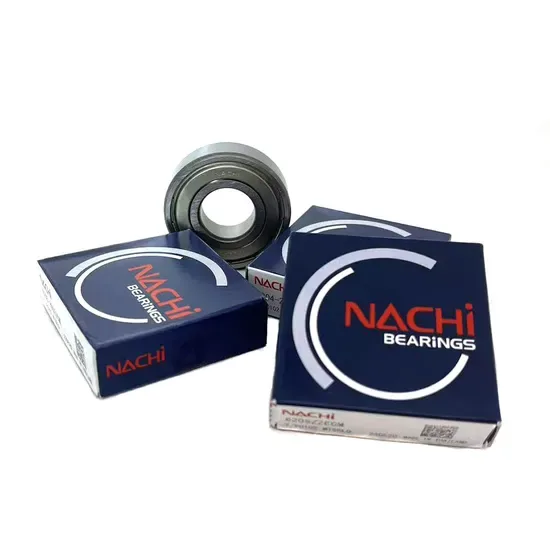
Deep Groove Ball Bearings
NACHI 608 6201 6300-6308 Deep Groove Ball Bearing for Industrial Motor
View product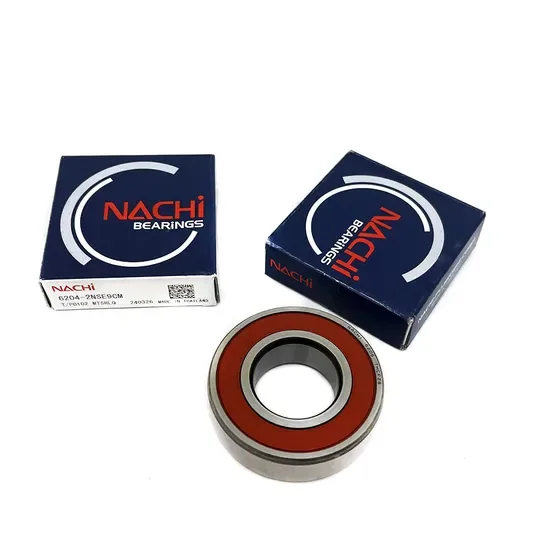
Deep Groove Ball Bearings
NACHI Deep Groove Ball Bearing 6306 6307 6215 6308 6204 6214 6309 6310 for Machinery
View product
Deep Groove Ball Bearings
NACHI Deep Groove Ball Bearing 606ZZ 627 6308 for Auto Parts
View product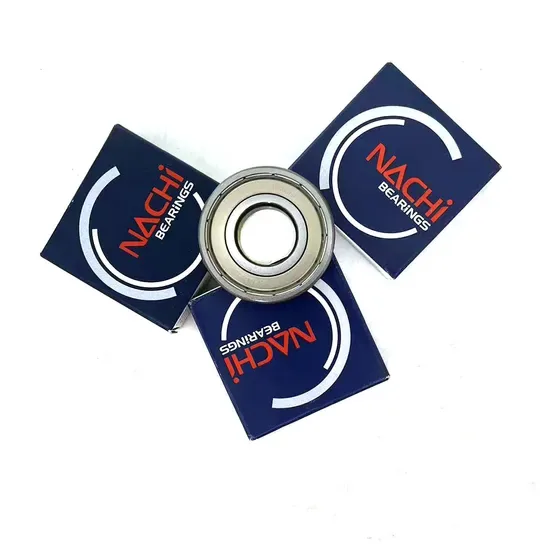
Deep Groove Ball Bearings
NACHI 6300-6308 Deep Groove Ball Bearing Original Price List
View productModel check
Not sure which NACHI designation fits? We help with substitution, cross-reference and selection.
Send the old bearing number, the worn marking you can still read, or the application and shaft size. nachioem matches it to the correct NACHI model, including clearance, cage and seal options, before you order.
- Substitution for discontinued models
- Cross-reference to NACHI numbers
- Selection for spindles, pumps and reducers
Keep reading
Related NACHI bearing technical articles
More practical guides on NACHI suffixes, replacement and selection for machine tools, automotive, construction machinery, pumps and gear reducers.
Oct 7, 2026 · Applications & Industries · 8 min read
Genuine NACHI Bearings for Hydraulic Pumps – Wholesale Supplier
Prevent thermal seizure in hydraulic pumps by selecting genuine NACHI bearings with precise C3/C4 clearance classes. Learn from real-world failure cases and verify traceability…
Read the article Oct 7, 2026 · Applications & Industries · 7 min read
NACHI Bearings for Woodworking Machines Wholesale Supplier
Prevent costly spindle seizures in high-speed woodworking machines by selecting the correct NACHI bearings with C3 or C4 clearance. Learn how to match ZZ…
Read the article Oct 7, 2026 · Applications & Industries · 8 min read
Genuine NACHI Bearings for Plastic Machines – Wholesale Supplier
Genuine NACHI bearings for plastic machines prevent catastrophic downtime caused by improper clearance in high-temperature zones. Learn to select the right series for extruders…
Read the article
Request a quote
Send your NACHI model list. We quote fast.
List the NACHI model numbers with full suffixes and the quantity for each. nachioem replies online as quickly as possible with pricing for distributors, repair shops and end users worldwide.
- info@nachioem.com
- WhatsApp +1 (702) 981-5880
- Online replies as quickly as possible
- Global delivery by DHL, FedEx, UPS, air or sea