
NACHI Bearing Technical Guide Applications & Industries
Genuine NACHI Bearings for Hydraulic Pumps – Wholesale Supplier
Prevent thermal seizure in hydraulic pumps by selecting genuine NACHI bearings with precise C3/C4 clearance classes. Learn from real-world failure cases and verify traceability documentation to avoid costly downtime caused by inferior substitutes. Secure reliable sourcing and technical support for consistent high-pressure system performance.
- Published
- By author
- nachioem · Specialized NACHI bearing supplier
Most roller bearings look identical on the shelf, but hydraulic pumps will reject anything that does not account for thermal expansion.
Genuine NACHI bearings are critical for hydraulic pump reliability because they offer precise internal clearance classes (C3/C4) designed to handle the significant heat generated under high-pressure operation. Substituting these with standard-clearance or inferior alternatives leads to rapid thermal seizure and premature spalling, causing unplanned downtime that far exceeds any initial cost savings. Selecting the correct NACHI cylindrical roller bearings for hydraulic pumps requires verifying traceability documentation and matching the bearing clearance to the specific operating temperature and load profile of the system.
I still remember the email from an Indonesian client that kept me awake for three nights. We had supplied a repair kit for their injection molding machine hydraulic pumps, mixing in some domestic alternative bearings to cut costs. The machine ran fine during the initial test, but under continuous high-temperature and high-pressure production cycles, it seized up before reaching five hundred hours of operation. The customer was furious, threatening to return the entire container. That incident taught me a hard lesson: hydraulic pump main bearings are not generic components. They demand specific internal clearance and temperature resistance that only genuine NACHI pump bearings supplier channels can reliably provide. Since then, I never compromise on the source when dealing with high-pressure fluid power systems.
Understanding why these components fail requires looking beyond the basic load ratings. The difference between a successful repair and a catastrophic failure often lies in the microscopic details of bearing clearance and material purity.
Why Hydraulic Pumps Are Picky About Bearings?
Hydraulic pumps operate in a hostile environment where pressure translates directly into heat. As the pump works, the internal temperature rises, causing the shaft and housing to expand at different rates. If the bearing internal clearance is too tight, this thermal expansion eliminates the necessary running gap, leading to metal-to-metal contact, excessive friction, and eventual seizure.
This is why standard deep-groove ball bearings often fail in high-performance hydraulic applications. Hydraulic pumps typically require cylindrical roller bearings or specialized angular contact designs that can handle heavy radial loads while accommodating thermal growth. The key parameter here is the clearance class. While standard bearings might use C2 or normal clearance, hydraulic applications frequently demand C3 or even C4 clearance to ensure survival under peak operating temperatures.
Many buyers assume that any roller bearing with the same dimensions will fit. This is a dangerous misconception. A bearing that fits physically may not function mechanically if its internal geometry does not match the thermal dynamics of the pump. Genuine NACHI bearings are manufactured with strict tolerances that ensure consistent clearance across batches, a level of consistency that non-certified sources often lack. When you source from a verified genuine NACHI pump bearings supplier, you are buying predictability. You know that every bearing in the batch will behave the same way under stress, which is crucial for maintaining equipment uptime.
The pickiness of hydraulic pumps is not just about clearance. It is also about the quality of the steel and the precision of the raceways. Impurities in the steel can lead to early fatigue failure, especially in continuous duty cycles. NACHI uses high-purity steel and advanced heat treatment processes to enhance durability. Without access to the manufacturer’s production facilities and quality control data, it is impossible to verify these attributes in counterfeit or low-quality substitutes. This is why technical selection support is vital when choosing bearings for critical hydraulic systems.
What Happens When You Use the Wrong Bearings?
The consequences of using incorrect bearings are rarely subtle. They manifest as rapid, expensive failures that disrupt operations. I have seen two common failure modes repeatedly in the field: thermal seizure and premature spalling.
Thermal seizure occurs when the bearing clearance is insufficient for the operating temperature. As the pump heats *uter ring expands against the housing. If there is no room for this expansion, the rolling elements lock up. This generates intense heat, welding the components together and destroying the pump housing. In one case, a heavy equipment operator in Southeast Asia replaced the main bearings in an excavator hydraulic pump with non-OEM parts. The machine worked for a few weeks, but during a hot summer day of continuous digging, the pump seized completely. The repair cost included not just the new pump, but also the downtime of the entire fleet.
Premature spalling is another frequent issue. This happens when the bearing material cannot withstand the cyclic loads, often due to poor steel quality or improper hardness. Small pieces of metal break off from the raceway, creating debris that circulates through the hydraulic system, damaging valves and actuators. A European wind farm operator once reported that their hydraulic pitch systems were failing prematurely. Upon inspection, we found that the bearings used were not rated for the specific load conditions and lacked the necessary surface finish. Switching to genuine NACHI bearings with verified load capacity calculations resolved the issue, extending the service life meaningfully.
| Failure Mode | Root Cause | Visual Symptom | Operational Impact |
|---|---|---|---|
| Thermal Seizure | Insufficient internal clearance (e.g., using C0 instead of C3) | Discolored, welded rolling elements and raceways | Immediate pump lock-up, potential shaft damage |
| Premature Spalling | Material fatigue, poor steel purity, or overload | Flaking or pitting on raceway surfaces | Noise, vibration, contamination of hydraulic fluid |
| Cage Failure | Incorrect lubrication or excessive speed | Broken or deformed cage structure | Loss of roller spacing, immediate bearing collapse |
These cases highlight why hydraulic pump bearing clearance selection is not a task for guesswork. It requires a clear understanding of the operating conditions and access to reliable technical data.
Using the wrong bearings does not just break the pump; it contaminates the entire hydraulic system. The cost of cleaning and flushing the system, replacing damaged valves, and losing production time dwarfs the price difference between genuine and substitute bearings. This is the hidden cost that many procurement managers overlook when focusing solely on unit price.
How to Select the Right NACHI Bearings for Your Pumps?
Selecting the right bearing involves more than just matching the part number. It requires a holistic approach that considers工况 (operating conditions), clearance, and authenticity.
First, define the operating conditions. What is the maximum operating temperature? What are the radial and axial loads? Is the load constant or variable? These factors determine the required clearance class and load rating. For most hydraulic pumps, C3 clearance is the starting point, but high-temperature applications may require C4.
Second, verify the bearing type. Hydraulic pumps often use cylindrical roller bearings for their high radial load capacity. Ensure that the selected NACHI cylindrical roller bearings for hydraulic pumps match the original design specifications. Do not substitute with deep-groove ball bearings unless explicitly approved by the pump manufacturer, as they may not handle the load or speed requirements.
Third, and most importantly, verify authenticity. The market is flooded with counterfeit bearings that look identical to the genuine product but lack the material quality and precision. To ensure you are getting genuine products, request traceability documentation. This includes material certificates, heat treatment records, and origin proof. A reliable genuine NACHI pump bearings supplier will provide these documents without hesitation.
| Selection Criteria | Requirement for Hydraulic Pumps | Verification Method |
|---|---|---|
| Internal Clearance | C3 or C4 (depending on temperature) | Check marking on bearing side face, request spec sheet |
| Material Quality | High-purity bearing steel | Request material certificate from supplier |
| Traceability | Full batch-level documentation | Verify serial numbers and origin docs |
| Load Capacity | Matches or exceeds OEM specification | Cross-reference with NACHI catalog data |
When sourcing, ask for technical support. A good supplier will help you cross-reference part numbers and confirm that the selected bearing meets the application needs. They should be able to explain why a specific clearance class is recommended for your operating environment. This level of engagement is a strong indicator of a partner who understands the technical demands of hydraulic systems.
Do not rely solely on packaging. Counterfeiters have become sophisticated in replicating boxes and labels. The only sure way to guarantee authenticity is through the supply chain. Buy from authorized distributors or suppliers with a proven track record of supplying genuine NACHI pump bearings supplier products. Check for consistency in the bearing markings, finish, and packaging quality. Any deviation should be a red flag.
Where to Source Genuine NACHI Pump Bearings Reliably?
Sourcing genuine bearings globally requires a partner who can navigate the complexities of international trade while ensuring product authenticity. Many buyers struggle with minimum order quantities (MOQs) and long lead times when dealing directly with large manufacturers or official brand channels. This is where specialized global suppliers add value.
A professional supplier can offer mixed-brand consolidation, allowing you to combine NACHI bearings with other brands like SKF, FAG, or NSK in a single shipment. This reduces shipping costs and simplifies logistics, especially for MRO operators who need a variety of spare parts.
Moreover, reliable suppliers maintain large spot inventories of standard and special part numbers. This means you can get urgent spare parts quickly, minimizing downtime. They also provide technical selection support, helping you choose the right bearing for your specific application. This service is invaluable for OEMs and equipment dealers who need to ensure batch consistency and reliability.
When evaluating a supplier, look for transparency. They should be willing to share traceability documentation and provide clear information about the origin of the products. Avoid suppliers who are vague about their sourcing channels or unwilling to provide technical data. The goal is to build a long-term partnership based on trust and technical competence.
By choosing a supplier who understands the critical nature of hydraulic pump applications, you ensure that you receive genuine NACHI bearings that meet the highest quality standards. This protects your equipment, your reputation, and your bottom line. The small premium paid for genuine products is an insurance policy against the massive costs of unexpected failure.
Conclusion
Hydraulic pumps demand precision, not compromises.
Selecting the right bearings involves understanding thermal expansion, choosing the correct clearance class, and verifying authenticity through traceable supply chains. Genuine NACHI bearings provide the reliability needed to prevent costly downtime and system contamination. Partnering with a knowledgeable supplier ensures access to genuine products and technical support, safeguarding your operations against the hidden risks of inferior substitutes.
Applications covered in this article
Products in this article
NACHI bearings mentioned above
These are the NACHI bearing types discussed in this guide. Open a product page to check its designation and send the exact suffix with your quantity.
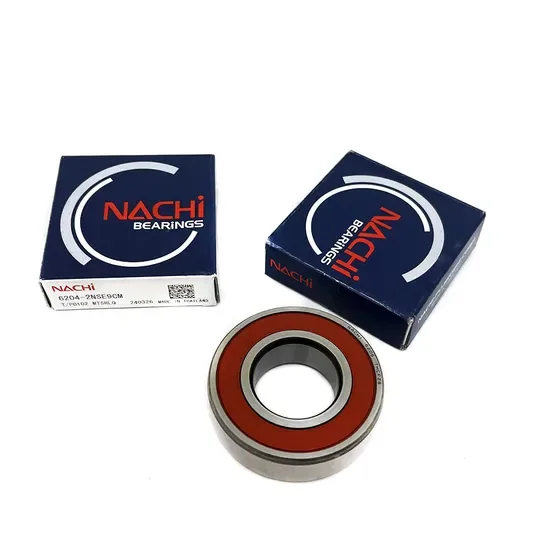
Deep Groove Ball Bearings
Genuine NACHI 608zz 6202 6201 Deep Groove Ball Bearing for Marine Equipment
View product Deep Groove Ball Bearings
Genuine NACHI P6 Deep Groove Ball Bearings 62208 62210 63002 63004 63006
View product
Deep Groove Ball Bearings
Genuine NACHI Deep Groove Ball Bearings 6215 6216 6217 6218 6219 for Juicer
View product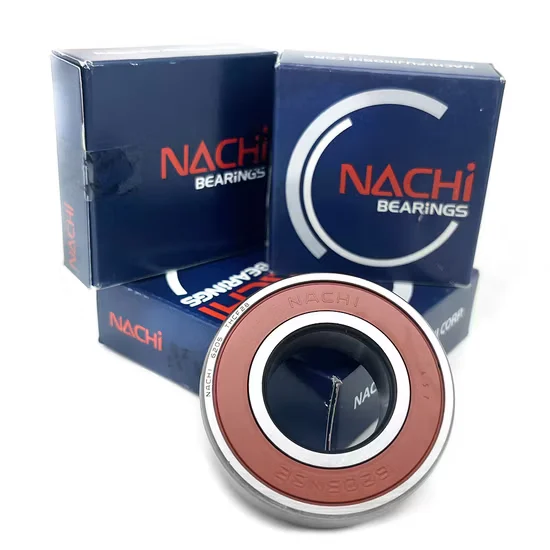
Deep Groove Ball Bearings
Genuine NACHI Deep Groove Ball Bearing 6408 6409 6410 6411 6412 for Conveyor
View productModel check
Not sure which NACHI designation fits? We help with substitution, cross-reference and selection.
Send the old bearing number, the worn marking you can still read, or the application and shaft size. nachioem matches it to the correct NACHI model, including clearance, cage and seal options, before you order.
- Substitution for discontinued models
- Cross-reference to NACHI numbers
- Selection for spindles, pumps and reducers
Keep reading
Related NACHI bearing technical articles
More practical guides on NACHI suffixes, replacement and selection for machine tools, automotive, construction machinery, pumps and gear reducers.
Oct 7, 2026 · Applications & Industries · 7 min read
NACHI Bearings for Woodworking Machines Wholesale Supplier
Prevent costly spindle seizures in high-speed woodworking machines by selecting the correct NACHI bearings with C3 or C4 clearance. Learn how to match ZZ…
Read the article Oct 7, 2026 · Applications & Industries · 8 min read
Genuine NACHI Bearings for Plastic Machines – Wholesale Supplier
Genuine NACHI bearings for plastic machines prevent catastrophic downtime caused by improper clearance in high-temperature zones. Learn to select the right series for extruders…
Read the article Oct 7, 2026 · Applications & Industries · 6 min read
Genuine NACHI Bearings for Cement Fans – Wholesale Supplier
Secure genuine NACHI bearings for cement fans to prevent costly downtime from dust ingress and thermal cycling. Learn why standard units fail under extreme…
Read the article
Request a quote
Send your NACHI model list. We quote fast.
List the NACHI model numbers with full suffixes and the quantity for each. nachioem replies online as quickly as possible with pricing for distributors, repair shops and end users worldwide.
- info@nachioem.com
- WhatsApp +1 (702) 981-5880
- Online replies as quickly as possible
- Global delivery by DHL, FedEx, UPS, air or sea