
NACHI Bearing Technical Guide Applications & Industries
NACHI Bearings for Woodworking Machines Wholesale Supplier
Prevent costly spindle seizures in high-speed woodworking machines by selecting the correct NACHI bearings with C3 or C4 clearance. Learn how to match ZZ and 2RS sealing solutions to combat wood dust ingress and thermal expansion for reliable CNC router performance.
- Published
- By author
- nachioem · Specialized NACHI bearing supplier
Standard clearance bearings are a silent killer in high-speed woodworking spindles.
Selecting the correct NACHI bearings for woodworking machines requires prioritizing C3 or C4 internal clearance and robust sealing solutions like ZZ or 2RS variants to counteract thermal expansion and wood dust ingress, rather than opting for standard clearances that lead to premature spindle seizure.
I still remember the smell of burnt grease and scorched wood that filled the workshop when a client’s CNC router failed. He had swapped out the original spindle bearings for cheaper, standard-clearance alternatives, assuming all deep-groove ball bearings were interchangeable. The machine ran hot, the wood dust acted as an abrasive paste, and within weeks, the spindle locked up completely. That incident wasn’t just a mechanical failure; it was a costly lesson in physics. In woodworking environments, the combination of high rotational speeds and pervasive particulate matter creates a unique set of stresses that generic bearing selections cannot withstand.
Understanding why these failures happen is the first step toward building more reliable machinery. The core issue lies not in the brand quality itself, but in the mismatch between the bearing’s internal geometry and the operating conditions of the wood processing equipment.
Why do woodworking spindles fail prematurely?
Thermal expansion and dust ingress are the primary drivers of early spindle failure, not just load capacity.
When a woodworking spindle operates at high RPMs, friction generates heat. Steel expands when heated. If a bearing is installed with standard internal clearance (C0 or Normal), there is insufficient room for this thermal expansion. The rolling elements begin to press harder against the raceways, increasing friction further, which generates more heat, leading to a vicious cycle known as thermal runaway. Eventually, the bearing seizes.
Simultaneously, woodworking environments are notoriously dirty. Sawdust, resin, and glue particles are fine enough to bypass inadequate seals. Once inside the bearing, these particles mix with lubricant to form an abrasive slurry that accelerates wear on the raceways and balls.
I once inspected a batch of returned edge banding machines from a European buyer. The main conveyor rollers had failed after only a few months. Upon disassembly, we found the bearings were packed with a black, gritty mixture of polyurethane glue and fine wood flour. The original open bearings had allowed contaminants to enter, while the relubrication process had inadvertently pushed more debris into the raceway. This is a classic case where the wrong sealing strategy doomed the component.
To prevent this, one must look beyond basic load ratings. The dynamic load rating tells you how much weight a bearing can handle, but it does not tell you how well it handles heat or dirt. For woodworking applications, the environmental protection and thermal management capabilities are often more critical than pure radial load capacity.
How to choose the right NACHI clearance for high-speed routers?
Match C3 or C4 internal clearance to the operating temperature and RPM to prevent thermal seizure.
Internal clearance is the space between the rolling elements and the raceways when the bearing is unloaded. In high-speed applications like CNC routers, this space is vital. As the shaft heats up, it expands. If the clearance is too tight, the bearing becomes preloaded unintentionally, leading to excessive heat generation and early failure.
For most high-speed woodworking spindles running above 10,000 RPM, standard clearance is insufficient. Instead, C3 (greater than normal) or C4 (even greater) clearances are recommended. These allow for thermal expansion without creating harmful internal preload.
| Operating Condition | Recommended Clearance | Sealing Type | Risk if Incorrect |
|---|---|---|---|
| Low Speed, Low Temp | Standard (C0) | Open or Shielded | Minimal risk |
| High Speed, Moderate Temp | C3 | ZZ (Metal Shield) | Thermal seizure if C0 used |
| Very High Speed, High Temp | C4 | Non-contact Seal | Premature fatigue if C3 used |
| Heavy Load, Vibration | Standard or C3 | 2RS (Rubber Seal) | Noise and vibration if loose |
A client in Southeast Asia was producing panel saws and experienced frequent noise complaints from end-users. We analyzed their setup and found they were using standard clearance bearings in high-vibration cutting heads. By switching to NACHI bearings with C3 clearance, we allowed for slight misalignments and thermal shifts without compromising rigidity. The noise levels dropped noticeably, and the service life extended significantly.
It is crucial to verify the specific RPM and temperature range of your application. While C4 offers more room for expansion, it can lead to increased vibration if the speed is not high enough to stabilize the rolling elements. Therefore, precise selection is key.
What sealing solutions beat wood dust and glue?
Contact seals offer superior protection against fine dust but generate more heat; non-contact shields are better for very high speeds.
Sealing is the first line of defense against the abrasive environment of a woodworking shop. There are two main types of seals used in NACHI bearings: metal shields (ZZ) and rubber contact seals (2RS). Each has its place, and choosing the wrong one can be as detrimental as choosing the wrong clearance.
Metal shields (ZZ) are non-contact. They create a narrow gap that prevents large particles from entering but allows some air circulation. This makes them ideal for very high-speed applications where heat dissipation is critical. However, they are not completely dust-proof. Fine wood dust can still penetrate over time, especially if the machine is subjected to high-pressure air cleaning, which can force particles past the shield.
Rubber contact seals (2RS) provide a physical barrier that touches the inner ring. They are highly effective at keeping out dust, moisture, and glue splashes. However, the friction from the contact generates additional heat. In extremely high-speed spindles, this heat can contribute to thermal issues if the clearance is not adjusted accordingly.
| Seal Type | Dust Protection | Heat Generation | Best Application |
|---|---|---|---|
| Open | None | Low | Clean, low-speed, frequent relubrication |
| ZZ (Metal Shield) | Moderate | Low | High-speed spindles, moderate dust |
| 2RS (Rubber Contact) | High | Moderate | Conveyor rollers, glue areas, moderate speed |
| Special Labyrinth | High | Low | Extreme dust environments, custom designs |
In an edge banding application, where glue pots are nearby, I recommend 2RS sealed bearings. The risk of glue ingress is high, and the speeds are generally moderate. A customer in Latin America switched from open bearings to 2RS sealed NACHI units in their edge banders and reported a drastic reduction in maintenance frequency. The seals kept the adhesive out, preserving the lubricant integrity.
Conversely, for a high-frequency CNC router spindle, ZZ shields might be preferred to minimize friction heat, provided that the machine housing has adequate positive pressure air filtration to keep dust away from the bearing seats.
How to verify genuine NACHI bearings for your machines?
Traceability documentation and packaging integrity are the only reliable ways to ensure authenticity in global sourcing.
The market is flooded with counterfeit bearings that look identical to genuine products but lack the metallurgical quality and precision engineering. Using fake bearings in high-speed woodworking machinery is a recipe for disaster. They may pass initial inspection but will fail prematurely under load, causing expensive downtime and potential damage to the spindle shaft.
Genuine NACHI bearings come with specific packaging features and traceability codes. The box should have clear printing, batch numbers, and origin labels. Inside, the bearings are often wrapped in anti-corrosion paper with specific branding. More importantly, reputable suppliers provide material certificates and traceability documents that link the bearing back to the manufacturer’s production facilities.
I recall a situation where a distributor in Africa received a shipment of bearings that looked perfect but failed within days. Upon investigation, we found the steel quality was inferior, lacking the necessary cleanliness for high-stress applications. The supplier could not provide any traceability docs. This highlights the importance of sourcing from partners who prioritize transparency.
When sourcing NACHI bearings for woodworking machines wholesale supplier needs, it is essential to work with partners who can provide full documentation. This includes test reports for dimensional accuracy and material composition. Without these, you are gambling with your machine’s reliability.
Counterfeiters often replicate the outer appearance but cut corners on internal processes like heat treatment and grinding precision. These flaws are not visible to the naked eye but manifest quickly under operational stress. Therefore, relying on price alone is a dangerous strategy.
Building a relationship with a supplier who understands the technical nuances of woodworking applications ensures that you get the right product every time. They can help verify specifications, check stock availability, and provide the necessary paperwork for customs and quality assurance. This level of support is invaluable for maintaining consistent production quality.
Conclusion
Correct clearance and sealing are non-negotiable for reliable woodworking machinery performance.
Selecting the right NACHI bearings involves balancing thermal management with environmental protection. By choosing appropriate clearances like C3 or C4 and matching seals to the specific dust and glue exposure of each machine zone, manufacturers can significantly extend spindle life. Authenticity verification through traceable documentation ensures that these technical specifications are met by genuine products. This approach minimizes downtime and protects the reputation of woodworking equipment brands globally.
Applications covered in this article
Products in this article
NACHI bearings mentioned above
These are the NACHI bearing types discussed in this guide. Open a product page to check its designation and send the exact suffix with your quantity.
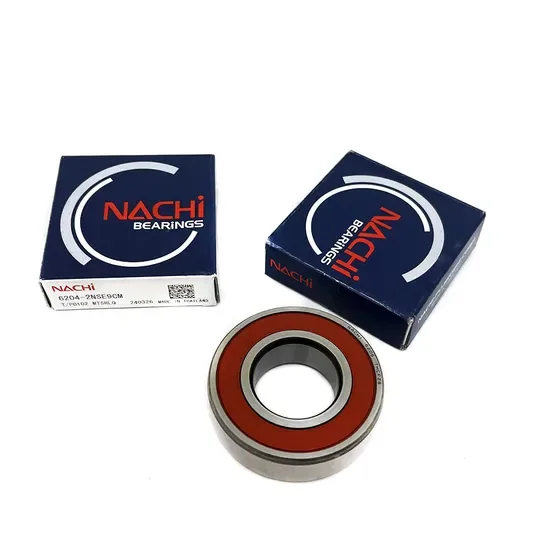
Deep Groove Ball Bearings
Genuine NACHI 608zz 6202 6201 Deep Groove Ball Bearing for Marine Equipment
View product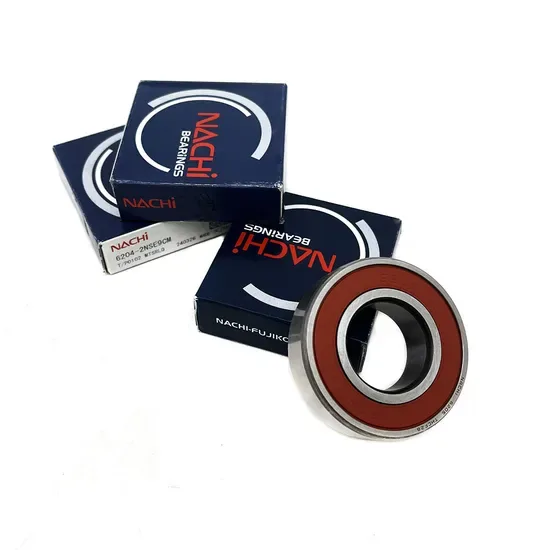
Deep Groove Ball Bearings
NACHI 608zz 16004 6201 Deep Groove Ball Bearing P6 P5 C3
View product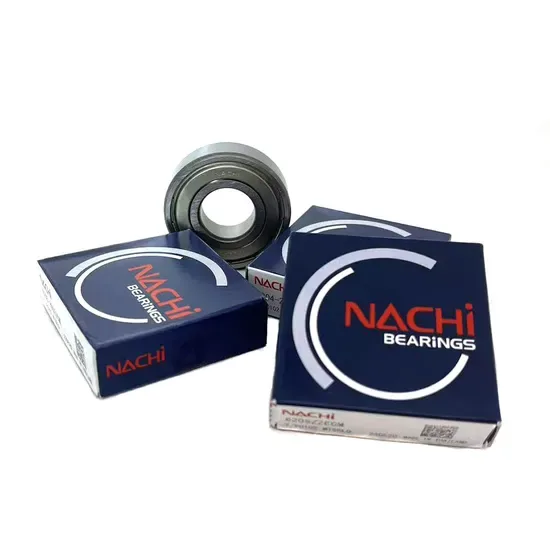
Deep Groove Ball Bearings
NACHI Deep Groove Ball Bearing 62301 608 6202 63008 63007 63006 6204 6301
View product Deep Groove Ball Bearings
Genuine NACHI P6 Deep Groove Ball Bearings 62208 62210 63002 63004 63006
View productModel check
Not sure which NACHI designation fits? We help with substitution, cross-reference and selection.
Send the old bearing number, the worn marking you can still read, or the application and shaft size. nachioem matches it to the correct NACHI model, including clearance, cage and seal options, before you order.
- Substitution for discontinued models
- Cross-reference to NACHI numbers
- Selection for spindles, pumps and reducers
Keep reading
Related NACHI bearing technical articles
More practical guides on NACHI suffixes, replacement and selection for machine tools, automotive, construction machinery, pumps and gear reducers.
Oct 7, 2026 · Applications & Industries · 8 min read
Genuine NACHI Bearings for Hydraulic Pumps – Wholesale Supplier
Prevent thermal seizure in hydraulic pumps by selecting genuine NACHI bearings with precise C3/C4 clearance classes. Learn from real-world failure cases and verify traceability…
Read the article Oct 7, 2026 · Applications & Industries · 8 min read
Genuine NACHI Bearings for Plastic Machines – Wholesale Supplier
Genuine NACHI bearings for plastic machines prevent catastrophic downtime caused by improper clearance in high-temperature zones. Learn to select the right series for extruders…
Read the article Oct 7, 2026 · Applications & Industries · 6 min read
Genuine NACHI Bearings for Cement Fans – Wholesale Supplier
Secure genuine NACHI bearings for cement fans to prevent costly downtime from dust ingress and thermal cycling. Learn why standard units fail under extreme…
Read the article
Request a quote
Send your NACHI model list. We quote fast.
List the NACHI model numbers with full suffixes and the quantity for each. nachioem replies online as quickly as possible with pricing for distributors, repair shops and end users worldwide.
- info@nachioem.com
- WhatsApp +1 (702) 981-5880
- Online replies as quickly as possible
- Global delivery by DHL, FedEx, UPS, air or sea