
NACHI Bearing Technical Guide Product & Series Guides
NACHI 30206 Tapered Roller Bearings Wholesale Supplier for Sale
Master NACHI 30206 specs by matching internal clearance and cage material to your specific thermal and shock conditions. Learn why standard dimensions are insufficient for heavy-load applications and how selecting C3 clearance or brass cages prevents catastrophic seizure and costly downtime.
- Published
- By author
- nachioem · Specialized NACHI bearing supplier
Assuming tighter clearance equals stability in heavy-load applications is a fast track to catastrophic seizure.
The core specification of a NACHI 30206 bearing is not merely its physical dimension of 30x62x17.25mm, but the precise alignment of its internal clearance and cage material with the specific thermal and shock conditions of your machinery. Selecting the correct variant requires matching the ISO standard clearance class to the operating temperature rise and load profile, rather than relying solely on static dimensional data from a catalog.
When I first started handling industrial components, I treated every bearing as a simple geometric replacement part. A client in Mexico needed replacements for a primary crusher. I shipped what the manual listed: standard clearance units. Within weeks, the bearings locked up due to thermal expansion exceeding the internal play. That failure taught me that dimensions are just the entry ticket. The real engineering happens in the microns of clearance and the grams of the cage material. For distributors and MRO managers sourcing a NACHI 30206, understanding these hidden variables is the difference between a reliable supply chain and a costly downtime event.
What Are the Core Dimensions of NACHI 30206?
The 30206 designation follows the ISO 355 standard, defining a specific boundary dimension series that ensures interchangeability across major global brands.
At first glance, the specs seem straightforward. The bore diameter is 30 mm, the outside diameter is 62 mm, and the total width is 17.25 mm. These numbers are fixed. If you are replacing a failed unit in a gearbox or a wheel hub, these dimensions must match exactly. However, the “T” in the tapered roller design implies a complex internal geometry. The contact angle and the number of rollers are optimized to handle combined radial and axial loads.
Many buyers fixate on the outer dimensions but ignore the mounting shoulder diameters. The inner ring shoulder diameter and the outer ring shoulder diameter dictate how the bearing seats in the housing. If the housing shoulders are worn or machined to non-standard tolerances, even a genuine NACHI 30206 will not seat correctly, leading to fretting corrosion and premature failure.
| Dimension Parameter | Value (mm) | Note |
|---|---|---|
| Bore Diameter (d) | 30 | Standard metric bore |
| Outside Diameter (D) | 62 | Fits standard housing bores |
| Total Width (T) | 17.25 | Includes cup and cone assembly |
| Inner Ring Width (B) | ~16 | Approximate, varies by tolerance |
| Outer Ring Width (C) | ~14.25 | Approximate, varies by tolerance |
For wholesalers, it is crucial to verify that the supplied units adhere to ISO 1132 tolerance classes. A P0 (Normal) class is sufficient for most general industrial applications, but high-speed spindles may require P6 or higher. When sourcing a NACHI 30206, always confirm the tolerance class matches the original equipment manufacturer’s requirement. Substituting a lower precision grade to save cost often results in vibration issues that damage the surrounding machinery.
How Do Load Ratings Dictate 30206 Performance?
Static load ratings are irrelevant for rotating machinery; dynamic load capacity and life calculation are the true metrics of durability.
The NACHI 30206 typically carries a basic dynamic load rating (Cr) and a basic static load rating (Cor). The dynamic rating predicts the load at which 90% of a group of identical bearings will survive one million revolutions. The static rating indicates the load that causes a permanent deformation of 0.0001 times the rolling element diameter.
In practical terms, if you are selecting a NACHI 30206 for a conveyor roller that runs continuously at low speed, the static load rating might seem important. However, for a mining crusher or a high-speed gear box, the dynamic load rating is the critical factor. The actual service life is exponentially related to the load. A small increase in operational load can drastically reduce the bearing’s lifespan.
Consider a scenario where a steel plant operator replaced a failed bearing with a unit that had the same dimensions but a lower dynamic load capacity due to inferior material quality. The new unit failed in a fraction of the time of the original. This highlights why brand authenticity matters. Genuine NACHI products use high-purity steel and advanced heat treatment processes to achieve their rated load capacities. Counterfeit or substandard equivalents may look identical but lack the metallurgical integrity to handle the specified loads.
When evaluating suppliers, ask for test certificates that verify the material composition and hardness. While you cannot easily test the load capacity in the field, knowing that the supplier provides traceable documentation adds a layer of security. For a NACHI 30206, the load capacity is not just a number on a page; it is a promise of performance under stress.
Why Does Clearance Matter for 30206 in Heavy Loads?
Standard clearance is often insufficient for high-temperature or heavy-shock applications, requiring upgraded C3 or C4 clearance classes to prevent seizure.
Clearance is the internal space between the rolling elements and the raceways. In a NACHI 30206, this clearance is critical because tapered roller bearings generate heat during operation. As the bearing heats up, the inner ring expands more than the outer ring, reducing the internal clearance. If the initial clearance is too small, the bearing can become pre-loaded, leading to excessive friction, further heating, and eventual seizure.
I recall a case involving a cement mill in the Middle East. The ambient temperature was high, and the mill operated under heavy shock loads. The maintenance team used standard clearance bearings, assuming they were suitable for the application. The bearings overheated and failed repeatedly. Switching to a NACHI 30206 with C3 clearance resolved the issue. The extra internal space allowed for thermal expansion without creating harmful pre-load.
| Clearance Class | Application Scenario | Thermal Condition |
|---|---|---|
| CN (Normal) | General industrial, moderate speeds | Normal operating temperature |
| C3 | Heavy machinery, high temperatures | Elevated operating temperature |
| C4 | Very high temperatures, severe shock | Extreme thermal expansion |
Choosing the right clearance requires understanding the operating environment. For a NACHI 30206 in a standard electric motor, CN clearance is usually adequate. For a vibrating screen or a crusher, C3 is often the safer choice. Distributors should stock both variants to meet diverse customer needs. Asking the end-user about their operating temperature and load type can help guide them to the correct selection, reducing return rates and building trust.
It is also worth noting that clearance affects noise and vibration. Tighter clearances can reduce noise in precision applications but increase the risk of overheating in heavy-duty settings. There is no one-size-fits-all solution. The expertise lies in matching the clearance to the specific duty cycle of the machine.
How to Choose the Right Cage for Your 30206?
The cage material determines the bearing’s resistance to shock and high-speed centrifugal forces, with stamped steel and machined brass offering distinct advantages.
The cage, or retainer, holds the rollers in place. In a NACHI 30206, you will typically encounter two types of cages: stamped steel and machined brass. Stamped steel cages are lightweight and cost-effective, making them suitable for general-purpose applications with moderate speeds and loads. They are robust enough for most industrial uses but can be prone to fatigue under extreme shock conditions.
Machined brass cages, on the other hand, are stronger and more resistant to wear. They are ideal for high-speed applications or environments with significant vibration and shock loads. The brass material also offers better lubrication retention properties.
A mining operator once reported frequent cage failures in their primary crushers. Upon inspection, we found that the stamped steel cages were fracturing due to the intense shock loads. Switching to a NACHI 30206 with a machined brass cage extended the service life significantly. The heavier, more durable cage could withstand the impacts without deforming.
| Cage Material | Strength | Speed Capability | Cost | Best For |
|---|---|---|---|---|
| Stamped Steel | Moderate | High | Low | General industrial, cost-sensitive |
| Machined Brass | High | Very High | Higher | Heavy shock, high speed, critical apps |
When sourcing a NACHI 30206, check the product code or description for the cage type. Some manufacturers use suffixes to indicate the cage material. If the application involves heavy冲击 or high speeds, specifying a machined brass cage is a wise investment. For standard applications, stamped steel provides a good balance of performance and value.
Understanding the role of the cage helps in making informed purchasing decisions. It is not just about the rollers and rings; the cage plays a vital role in the bearing’s overall reliability. Suppliers who can provide detailed information about cage construction add value to their customers by helping them avoid inappropriate selections.
Conclusion
Selecting the right NACHI 30206 requires looking beyond dimensions to clearance, load ratings, and cage material.
Success in heavy-industry applications depends on matching these technical specifications to the real-world operating conditions. By focusing on these critical factors, buyers can ensure reliability and longevity in their machinery.
Applications covered in this article
Products in this article
NACHI bearings mentioned above
These are the NACHI bearing types discussed in this guide. Open a product page to check its designation and send the exact suffix with your quantity.
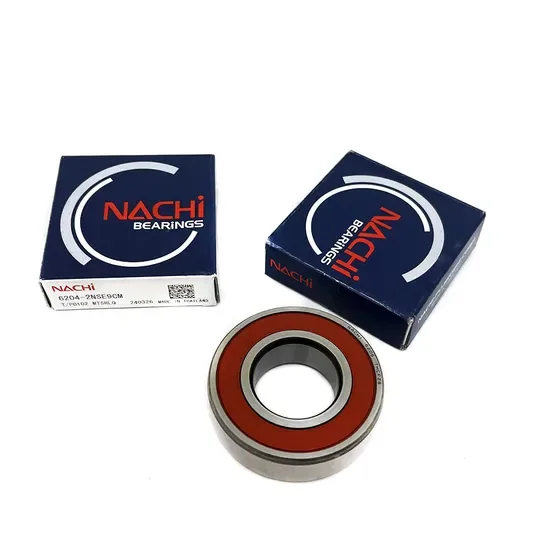
Deep Groove Ball Bearings
Genuine NACHI 608zz 6202 6201 Deep Groove Ball Bearing for Marine Equipment
View product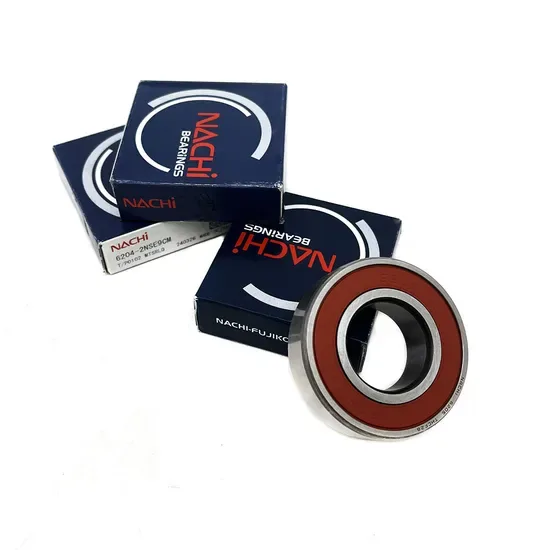
Deep Groove Ball Bearings
NACHI 608zz 16004 6201 Deep Groove Ball Bearing P6 P5 C3
View product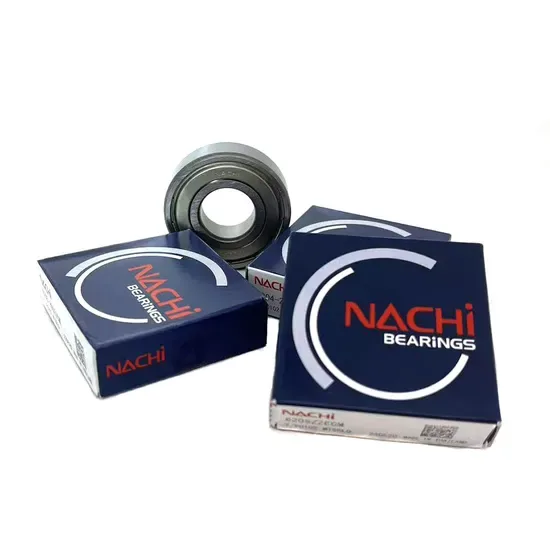
Deep Groove Ball Bearings
NACHI Deep Groove Ball Bearing 62301 608 6202 63008 63007 63006 6204 6301
View product Deep Groove Ball Bearings
Genuine NACHI P6 Deep Groove Ball Bearings 62208 62210 63002 63004 63006
View productModel check
Not sure which NACHI designation fits? We help with substitution, cross-reference and selection.
Send the old bearing number, the worn marking you can still read, or the application and shaft size. nachioem matches it to the correct NACHI model, including clearance, cage and seal options, before you order.
- Substitution for discontinued models
- Cross-reference to NACHI numbers
- Selection for spindles, pumps and reducers
Keep reading
Related NACHI bearing technical articles
More practical guides on NACHI suffixes, replacement and selection for machine tools, automotive, construction machinery, pumps and gear reducers.
Oct 8, 2026 · Product & Series Guides · 6 min read
NACHI 25TAB06 Dimensions Preload Wholesale Supplier
Master NACHI 25TAB06 dimensions preload specifications to prevent spindle seizure caused by mismatched shaft tolerances. Learn how DB and DF pairing configurations impact axial…
Read the article Oct 8, 2026 · Product & Series Guides · 8 min read
NACHI 7008CYDU/GLP4 Angular Contact Ball Bearing Wholesale Supplier
Master NACHI 7008CYDU/GLP4 specs to prevent spindle thermal seizure and ensure P4 precision. Learn how correct DU pairing configurations and preload selection directly impact…
Read the article Oct 8, 2026 · Product & Series Guides · 7 min read
NACHI 6007ZZE Bearing Wholesale Supplier for Bulk Orders
Master NACHI 6007ZZE specs to prevent installation damage and premature failure in dusty environments. Verify genuine 35x62x14mm dimensions, load ratings, and grease speed limits…
Read the article
Request a quote
Send your NACHI model list. We quote fast.
List the NACHI model numbers with full suffixes and the quantity for each. nachioem replies online as quickly as possible with pricing for distributors, repair shops and end users worldwide.
- info@nachioem.com
- WhatsApp +1 (702) 981-5880
- Online replies as quickly as possible
- Global delivery by DHL, FedEx, UPS, air or sea