
NACHI Bearing Technical Guide Product & Series Guides
NACHI 6203-2NKE Bearing Wholesale Supplier for Bulk Orders
Master NACHI 6203-2NKE specs to prevent costly line stoppages caused by mismatched non-contact seals in dusty environments. Learn why verifying internal clearance and seal type is critical for bulk procurement success. Source genuine bearings with flexible MOQs for reliable global MRO and OEM projects.
- Published
- By author
- nachioem · Specialized NACHI bearing supplier
Matching the part number is not enough; ignoring the seal type causes line stoppages.
The NACHI 6203-2NKE is a deep groove ball bearing with a 17mm bore, 40mm outer diameter, and 12mm width, featuring non-contact rubber seals on both sides. It is designed for high-speed applications with low friction requirements but offers minimal protection against heavy dust or water ingress compared to contact-sealed variants. For bulk procurement, verifying the internal clearance code and seal material compatibility with operating temperatures is critical to prevent premature failure in harsh industrial environments.
I still remember the chill that ran down my spine during a claim review in Chicago. A client had placed a substantial order for what they believed was a standard replacement bearing. The part number matched perfectly: NACHI 6203-2NKE. I processed the quote based on the SKU, assuming the technical fit was guaranteed. Months later, the invoice for the downtime arrived. The bearings were installed on conveyor idlers in a cement processing facility. The environment was thick with abrasive particulate matter. The 2NKE designation indicates a non-contact seal, which leaves a microscopic gap to reduce friction. In that dusty hell, the gap became a highway for contaminants. The lubricant washed out, the steel scored, and the entire production line seized. That loss was not just about the cost of the bearings; it was a mid-six-figure hit to their operational budget. This incident reshaped how I approach every subsequent inquiry for this specific model. It is not just a component; it is a system interface that must match the environment.
Understanding this distinction is vital for any procurement professional managing MRO inventory or OEM assembly lines. The difference between a smooth-running motor and a catastrophic jam often lies in the suffix of the part number.
What Are the Core Dimensions of NACHI 6203-2NKE?
Precise mechanical fit is the baseline, but dimensional tolerances define performance longevity.
When sourcing a NACHI 6203-2NKE, the first step is confirming the physical envelope. The bearing follows the ISO 15 dimension series for metric deep groove ball bearings. The bore diameter is 17mm, the outside diameter is 40mm, and the width is 12mm. These values are static across most manufacturers for the 6203 series, but the devil is in the tolerances.
For high-precision applications, such as spindle motors or precision gearboxes, the standard P0 tolerance class may not suffice. Buyers often overlook the internal radial clearance. The standard clearance for a 6203 size is typically Normal (C0), but high-temperature environments or interference fits may require C3 clearance. Specifying the wrong clearance can lead to preload issues, causing heat buildup and early fatigue.
| Parameter | Specification | Notes |
|---|---|---|
| Bore Diameter | 17 mm | Standard metric size |
| Outer Diameter | 40 mm | Fits standard housing bores |
| Width | 12 mm | Compact design for limited space |
| Tolerance Class | P0 (Standard) | Higher grades like P6 available on request |
| Internal Clearance | C0 (Normal) | C3 recommended for thermal expansion |
A European machinery OEM once faced batch inconsistency issues when mixing suppliers. While the dimensions measured within tolerance on calipers, the runout values varied significantly under load. This led to vibration issues in their final assembly. By standardizing on a single source with verified traceability for the NACHI 6203-2NKE, they eliminated the variable of mixed manufacturing batches. Consistency in dimensional stability is as crucial as the dimensions themselves.
How Does the 2NKE Non-Contact Seal Affect Performance?
Low friction is beneficial for speed, but it compromises contamination resistance.
The suffix “2NKE” in the NACHI part numbering system reveals the sealing technology. The “2” indicates seals on both sides. The “N” denotes a non-contact rubber seal, and “KE” often refers to the specific rubber compound and reinforcement structure used by NACHI. Unlike contact seals (such as 2RS or 2RU), which press against the inner ring to create a physical barrier, non-contact seals maintain a small clearance.
This design choice reduces rotational torque and heat generation, making the NACHI 6203-2NKE ideal for electric motors and applications requiring high rotational speeds. However, this gap is vulnerable. In environments with fine dust, moisture, or chemical sprays, the non-contact seal offers little defense. Contaminants can bypass the seal lip, entering the raceway and mixing with the grease.
Consider the case of a textile mill in Southeast Asia. They replaced shielded bearings (ZZ) with 2NKE units to reduce noise and heat. Initially, the performance improved. But during the humid monsoon season, moisture ingress occurred through the seal gap. The grease emulsified, losing its lubricating properties. The bearings failed in a fraction of their expected service life. Switching back to contact seals or adding external protective housings resolved the issue, but the downtime cost was significant.
| Seal Type | Friction Torque | Contamination Protection | Speed Limit |
|---|---|---|---|
| ZZ (Metal Shield) | Very Low | Moderate (Large particles) | High |
| 2NKE (Non-Contact) | Low | Low (Fine dust/moisture) | High |
| 2RS (Contact Rubber) | High | High (Dust/water) | Medium |
Selecting the NACHI 6203-2NKE requires a honest assessment of the operating environment. If the application is clean and speed is critical, it is an excellent choice. If dust is present, it is a liability.
Why Do 6203-2NKE Bearings Fail in Harsh Environments?
Dust ingress in non-contact seals causes lubrication breakdown and catastrophic seizure.
The primary failure mode for the NACHI 6203-2NKE in industrial settings is not fatigue, but contamination. When abrasive particles enter the bearing through the non-contact seal gap, they act as lapping compound. They wear down the raceways and balls, creating rough surfaces that generate more heat and attract more debris. This cycle accelerates rapidly.
In a mining operation in Africa, maintenance teams used 2NKE bearings on fan motors due to their availability. The air intake was not perfectly filtered. Over time, silica dust penetrated the seals. The grease turned into a gritty paste. The increased friction caused the motor windings to overheat, leading to electrical failure. The root cause was not the motor, but the incorrect bearing seal type for the environment.
Another common issue is grease compatibility. The factory-filled grease in NACHI bearings is selected for general purposes. In high-temperature or chemical-exposure scenarios, this grease can degrade. Without the robust barrier of a contact seal, the degraded grease leaks out, leaving the bearing dry. Regular regreasing is difficult with sealed bearings, making the initial selection critical.
To mitigate these risks, operators should consider upgrading to contact-sealed variants if the environment is less than ideal. Alternatively, implementing strict filtration systems for air and fluids can protect the non-contact seals. However, relying solely on the 2NKE design in dirty conditions is a gamble with poor odds.
How to Source Genuine NACHI 6203-2NKE in Bulk?
Traceability and flexible MOQs prevent counterfeit risks in global trade.
Sourcing genuine NACHI bearings requires more than finding the lowest price. The market is flooded with counterfeits that mimic the packaging and markings but use inferior steel and loose tolerances. For a NACHI 6203-2NKE wholesale supplier, verification is key. Authentic products come with batch numbers that can be traced back to the manufacturer’s production facilities.
Global distributors often face the challenge of mixed orders. A facility might need fifty units of 6203-2NKE for immediate repair and two thousand units for annual stocking. Traditional brand channels may impose high minimum order quantities or long lead times for smaller batches. A flexible supply partner can consolidate these needs, offering genuine stock from multiple brands including SKF, FAG, and NSK, alongside NACHI.
A distributor in the Middle East once struggled with lead times for urgent MRO parts. By partnering with a supplier who maintained a massive spot inventory, they reduced their downtime from weeks to days. The supplier provided full documentation, including material certificates and origin proofs, ensuring compliance with local import regulations. This level of support transforms a simple transaction into a strategic partnership.
When evaluating a supplier, look for those who offer technical consultation. If you are unsure whether the 2NKE seal is suitable for your application, a knowledgeable partner will advise on alternatives rather than just shipping the requested SKU. This proactive approach saves money and prevents the kind of failures that haunt procurement managers.
Conclusion
Correct specification prevents costly downtime.
The NACHI 6203-2NKE is a precision component designed for specific conditions. Its non-contact seal offers speed advantages but demands a clean environment. Procurement professionals must look beyond the part number to understand the operational context. Sourcing from a verified partner ensures authenticity and provides the technical support needed to make the right choice. Avoid the trap of matching only the SKU; match the solution to the reality of your machinery.
Applications covered in this article
Products in this article
NACHI bearings mentioned above
These are the NACHI bearing types discussed in this guide. Open a product page to check its designation and send the exact suffix with your quantity.
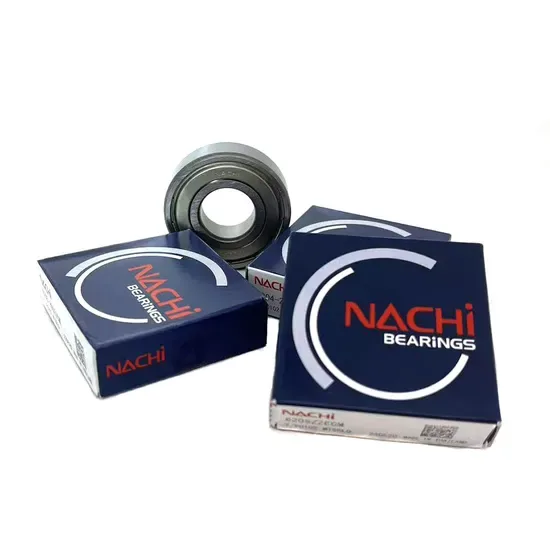
Deep Groove Ball Bearings
NACHI Deep Groove Ball Bearing 681 682 6202 683 684 685 686 6203 687 688 6205
View product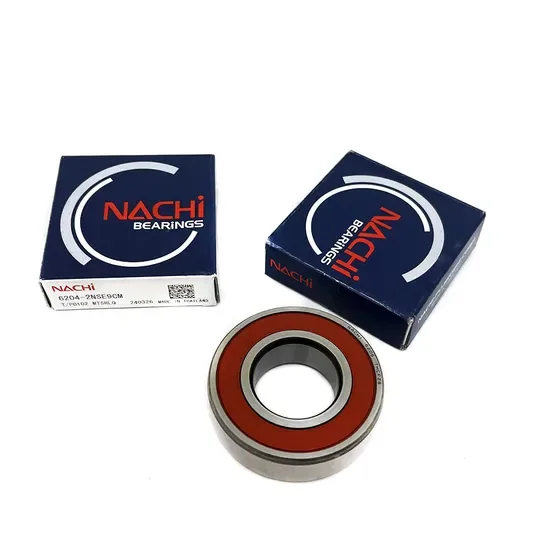
Deep Groove Ball Bearings
X&S 6817 6816 6815 6202 6203 Deep Groove Ball Bearing Original NACHI
View product Deep Groove Ball Bearings
Genuine NACHI Deep Groove Ball Bearings 6202 6301 6302 6203 6200 6820-6813 Series
View product Deep Groove Ball Bearings
NACHI Deep Groove Ball Bearing 6004 6204 6002 6205 6203 6011 6300 6310 6305 6913 6912 6911 6910 6909 6908
View productModel check
Not sure which NACHI designation fits? We help with substitution, cross-reference and selection.
Send the old bearing number, the worn marking you can still read, or the application and shaft size. nachioem matches it to the correct NACHI model, including clearance, cage and seal options, before you order.
- Substitution for discontinued models
- Cross-reference to NACHI numbers
- Selection for spindles, pumps and reducers
Keep reading
Related NACHI bearing technical articles
More practical guides on NACHI suffixes, replacement and selection for machine tools, automotive, construction machinery, pumps and gear reducers.
Oct 8, 2026 · Product & Series Guides · 6 min read
NACHI 25TAB06 Dimensions Preload Wholesale Supplier
Master NACHI 25TAB06 dimensions preload specifications to prevent spindle seizure caused by mismatched shaft tolerances. Learn how DB and DF pairing configurations impact axial…
Read the article Oct 8, 2026 · Product & Series Guides · 8 min read
NACHI 7008CYDU/GLP4 Angular Contact Ball Bearing Wholesale Supplier
Master NACHI 7008CYDU/GLP4 specs to prevent spindle thermal seizure and ensure P4 precision. Learn how correct DU pairing configurations and preload selection directly impact…
Read the article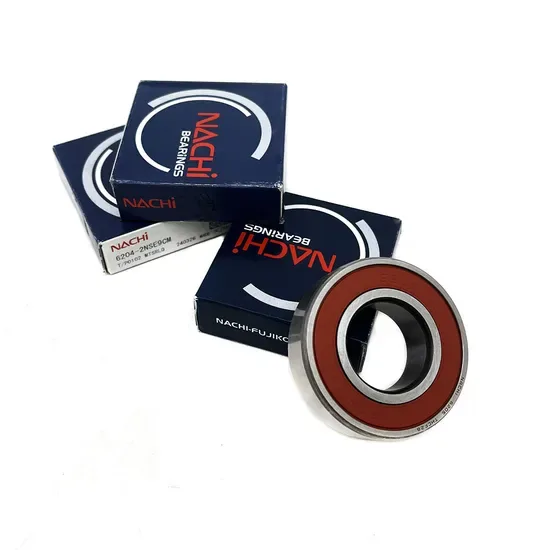
Oct 8, 2026 · Product & Series Guides · 7 min read
NACHI 6007ZZE Bearing Wholesale Supplier for Bulk Orders
Master NACHI 6007ZZE specs to prevent installation damage and premature failure in dusty environments. Verify genuine 35x62x14mm dimensions, load ratings, and grease speed limits…
Read the article
Request a quote
Send your NACHI model list. We quote fast.
List the NACHI model numbers with full suffixes and the quantity for each. nachioem replies online as quickly as possible with pricing for distributors, repair shops and end users worldwide.
- info@nachioem.com
- WhatsApp +1 (702) 981-5880
- Online replies as quickly as possible
- Global delivery by DHL, FedEx, UPS, air or sea