
NACHI Bearing Technical Guide Brands & Alternatives
NACHI Auto vs Industrial Bearings: Wholesale Supplier for Bulk Orders
Mastering NACHI auto vs industrial bearings prevents costly misapplications in heavy-duty fleets. Learn how C3/C4 clearance and specialized seals differ from standard CN specs to avoid cage fracture and downtime. Verify SKUs with our traceability protocols for accurate bulk procurement.
- Published
- By author
- nachioem · Specialized NACHI bearing supplier
Identical steel grades do not guarantee identical performance.
NACHI automotive and industrial bearings differ fundamentally in internal clearance, sealing contact pressure, and vibration resistance profiles. Misapplying an industrial-grade unit into a high-speed automotive hub or using an automotive-spec bearing in a heavy-load mining crusher leads to premature cage fracture, seal washout, and catastrophic equipment failure. Distributors must verify clearance groups (C3/C4 for auto vs CN for industrial) and seal designs before fulfilling bulk orders to avoid costly warranty disputes and downtime.
I still remember the dust choking the air in a mining fleet workshop in Lagos. A client had installed what he believed were “heavy-duty” NACHI deep groove ball bearings into the wheel hubs of his heavy trucks. The parts looked robust, carried the correct brand stamp, and fit the housing perfectly. Yet, within a short distance of operation, the keepers shattered. Mud and water had bypassed the seals, grinding the rollers into dust. The issue was not counterfeit goods; it was a specification mismatch. The industrial bearings lacked the specific clearance and sealing architecture required for the high-frequency vibrations and thermal expansion cycles of automotive applications. This experience highlights why understanding the nuance between NACHI auto vs industrial bearings is critical for any serious distributor.
For global distributors and MRO managers, distinguishing these lines is not just a technical detail; it is a commercial imperative. When you source as a NACHI auto vs industrial bearings supplier, you are managing two distinct engineering philosophies that share a brand name but serve divergent operational realities.
Why Do NACHI Auto and Industrial Bearings Look Identical but Perform Differently?
External dimensions are deceptive; internal design parameters dictate application limits.
At first glance, a NACHI deep groove ball bearing for an automotive alternator and one for a conveyor belt pulley may share the same bore, outer diameter, and width. However, the internal geometry is optimized for entirely different stress profiles. Automotive applications involve high rotational speeds, rapid temperature fluctuations, and exposure to road contaminants. Industrial applications often prioritize static load capacity, slower speeds, and consistent operating environments.
The core difference lies in the tolerance stack-up and material treatment. Automotive bearings are engineered to handle the dynamic loads of rotating wheels and transmissions, where centrifugal force plays a significant role. Industrial bearings are designed for steady-state operations where misalignment or heavy radial loads are more common than high-speed spin.
A European wind farm operator once faced repeated gearbox failures because they substituted standard industrial bearings with automotive-spec units during an emergency repair. The automotive bearings, designed for higher speed but lower static load capacity, could not withstand the constant torque and slight misalignments inherent in the wind turbine structure. The result was accelerated fatigue and unplanned downtime. This case underscores that “premium” does not mean “universal.”
When acting as a NACHI auto vs industrial bearings supplier, it is essential to recognize that the manufacturing process for each line involves different quality control checkpoints. Automotive lines undergo rigorous testing for noise and vibration at high RPMs, while industrial lines focus on load rating verification and dimensional stability under heavy pressure. Ignoring these distinctions can lead to inventory that sits unused or, worse, causes field failures.
How Do Clearance and Sealing Specs Diverge Between the Two Lines?
Automotive lines require larger clearances and robust seals for high-speed and harsh environments.
Internal clearance is the most critical differentiator. In automotive applications, such as wheel hubs or transmissions, components heat up significantly during operation. Thermal expansion reduces the internal space between the rolling elements and the raceways. To compensate, automotive bearings typically utilize larger initial clearances, such as C3 or C4 groups. This ensures that even when hot, the bearing maintains enough room for the balls to roll freely without generating excessive friction or heat buildup.
In contrast, many standard industrial applications operate at lower speeds and more stable temperatures. These bearings often use normal clearance (CN). If an industrial bearing with CN clearance is installed in an automotive hub, the thermal expansion will eliminate the internal play, causing the bearing to seize or overheat rapidly. Conversely, using a high-clearance automotive bearing in a precision industrial machine tool can lead to excessive vibration and reduced accuracy due to the loose fit.
Sealing technology also diverges sharply. Automotive seals must withstand high-pressure water jets, mud, salt, and road debris while maintaining low friction at high speeds. They often feature complex labyrinth designs or specialized rubber compounds that balance protection with heat generation. Industrial seals, particularly for heavy machinery, may prioritize protection against coarse particulates or chemical exposure, sometimes sacrificing high-speed capability for robustness.
| Feature | Automotive Specification | Industrial Specification |
|---|---|---|
| Internal Clearance | Typically C3 or C4 to accommodate thermal expansion | Often CN (Normal) for stability |
| Seal Design | Low-friction, high-speed capable, water-resistant | Robust, particulate-resistant, varying speed limits |
| Vibration Tolerance | Optimized for high-frequency, low-amplitude vibration | Optimized for low-frequency, high-load stability |
| Lubrication | Specialized greases for wide temperature ranges | Standard or application-specific industrial greases |
A Middle East construction firm experienced a spike in maintenance costs after mixing up shipments of NACHI bearings for their excavator swing circles and truck fleets. The industrial bearings used in the trucks failed due to overheating, while the automotive bearings in the excavators wore out prematurely due to inadequate protection against dust ingress. Proper segregation of these specs is vital for any NACHI auto vs industrial bearings supplier.
What Happens When Industrial Bearings Are Misapplied in Automotive Hubs?
High-frequency vibrations and thermal expansion cause rapid cage fracture and lubricant loss.
The consequences of misapplication are severe and immediate. When an industrial bearing is forced into an automotive wheel hub, the lack of sufficient internal clearance becomes a critical failure point. As the vehicle moves, friction generates heat. Without the extra space provided by C3/C4 clearances, the rolling elements expand against the raceways. This creates a feedback loop of increasing friction and temperature, leading to grease breakdown.
Once the lubricant degrades, metal-to-metal contact occurs. The high-frequency vibrations from the road surface, which automotive bearings are specifically tuned to dampen, instead accelerate fatigue in the ill-suited industrial component. The cage, often made from materials optimized for different stress profiles, cannot withstand the combined thermal and vibrational loads. It fractures, releasing the rolling elements and causing total hub failure.
This scenario is not theoretical. In a case involving a South American logistics fleet, the use of industrial-grade deep groove ball bearings in heavy truck wheel hubs resulted in multiple axle seizures within a few thousand kilometers. The failure analysis revealed cage fragmentation and seal washout, directly linked to the incorrect clearance and seal type. The downtime cost far exceeded the price difference between the correct and incorrect parts.
For distributors, this risk translates into warranty claims and reputational damage. Clients expect that a bearing sourced from a reputable NACHI auto vs industrial bearings supplier will perform according to its intended application. Misidentification erodes trust and can lead to significant financial losses for both the buyer and the seller. Understanding these failure modes helps in educating clients and preventing erroneous purchases.
How Can Distributors Verify and Segregate NACHI SKUs Accurately?
Strict traceability, part-number cross-referencing, and OEM datasheets prevent costly mis-shipments.
Preventing mix-ups requires a disciplined approach to inventory management and verification. Relying solely on visual inspection is insufficient, as the external appearance of auto and industrial bearings is often identical. The primary method for verification is strict adherence to part number cross-referencing against official OEM datasheets. Each NACHI SKU is encoded with specific information regarding its series, clearance, and seal type.
Distributors should implement a system where every bulk order is checked against the application requirements. If a client requests bearings for a heavy truck fleet, the supplier must confirm that the part numbers correspond to the automotive line with appropriate clearance groups. For industrial machinery, the verification ensures the selection matches the load and speed requirements of the equipment.
Technical consultation plays a crucial role here. A knowledgeable supplier can guide clients through the selection process, asking key questions about operating conditions, speed, load, and environment. This proactive approach not only prevents errors but also adds value to the service. By providing complete traceability documentation, suppliers ensure that every batch can be verified back to its manufacturing origin, reducing the risk of counterfeit or mislabeled goods entering the supply chain.
In our own operations, we maintain a rigorous cross-check protocol. When a large order for NACHI auto vs industrial bearings comes in, our technical team reviews the part numbers against the client’s application data. We verify that the clearance codes match the expected thermal conditions and that the seal types are suitable for the environmental exposure. This attention to detail has helped numerous clients avoid the pitfalls of misapplication, ensuring their equipment runs smoothly and their maintenance costs remain predictable.
Conclusion
Precision in specification prevents catastrophe in application.
The distinction between NACHI automotive and industrial bearings is defined by internal clearance, sealing technology, and vibration tolerance, not just external dimensions. Misapplication leads to rapid failure, increased downtime, and significant financial loss. Distributors must prioritize accurate part-number verification and technical consultation to ensure the right bearing reaches the right application. By understanding these critical differences, suppliers can protect their clients’ assets and maintain the integrity of their supply chains.
Applications covered in this article
Products in this article
NACHI bearings mentioned above
These are the NACHI bearing types discussed in this guide. Open a product page to check its designation and send the exact suffix with your quantity.
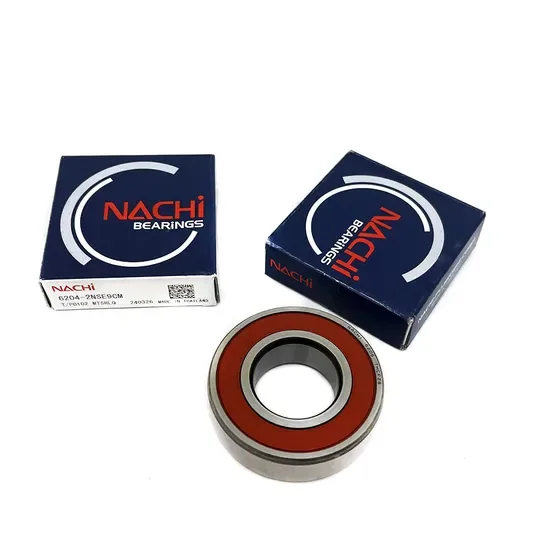
Deep Groove Ball Bearings
X&S NACHI Deep Groove Ball Bearing 6301 6212 6204 High Speed for Auto
View product Deep Groove Ball Bearings
NACHI 680 6200 6900-6908 Deep Groove Ball Bearing for Auto & Agricultural Parts
View product
Deep Groove Ball Bearings
NACHI Deep Groove Ball Bearing 606ZZ 627 6308 for Auto Parts
View product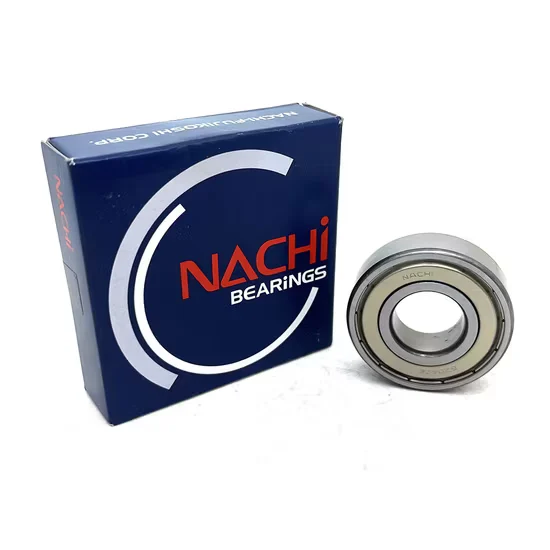
Deep Groove Ball Bearings
Genuine NACHI 628 6205-2RS1 63/28 Deep Groove Ball Bearing for Auto Parts
View productModel check
Not sure which NACHI designation fits? We help with substitution, cross-reference and selection.
Send the old bearing number, the worn marking you can still read, or the application and shaft size. nachioem matches it to the correct NACHI model, including clearance, cage and seal options, before you order.
- Substitution for discontinued models
- Cross-reference to NACHI numbers
- Selection for spindles, pumps and reducers
Keep reading
Related NACHI bearing technical articles
More practical guides on NACHI suffixes, replacement and selection for machine tools, automotive, construction machinery, pumps and gear reducers.
Oct 7, 2026 · Brands & Alternatives · 6 min read
NACHI Product Range Overview: Wholesale Supplier for Bulk Orders
NACHI product range overview guides buyers in distinguishing spherical from cylindrical roller bearings to prevent costly installation failures. Learn to select precise domestic alternatives…
Read the article
Oct 7, 2026 · Brands & Alternatives · 7 min read
NACHI Brand Tiers Explained: Wholesale Supplier Guide
NACHI brand tiers are defined by ISO tolerance classes and internal clearance codes, not marketing labels. Verify grades through part number suffixes and cage…
Read the article Oct 7, 2026 · Brands & Alternatives · 8 min read
NACHI vs Premium Spindles: Genuine Bearings Wholesale Supplier
Verify NACHI vs Premium Brands Spindle Bearings by matching P4 or P2 precision grades to actual RPMs rather than relying on brand prestige alone.…
Read the article
Request a quote
Send your NACHI model list. We quote fast.
List the NACHI model numbers with full suffixes and the quantity for each. nachioem replies online as quickly as possible with pricing for distributors, repair shops and end users worldwide.
- info@nachioem.com
- WhatsApp +1 (702) 981-5880
- Online replies as quickly as possible
- Global delivery by DHL, FedEx, UPS, air or sea