
NACHI Bearing Technical Guide Brands & Alternatives
NACHI Brand Tiers Explained: Wholesale Supplier Guide
NACHI brand tiers are defined by ISO tolerance classes and internal clearance codes, not marketing labels. Verify grades through part number suffixes and cage material inspection to avoid counterfeit claims. Match precision levels to specific machinery needs to prevent premature failure and optimize procurement costs effectively.
- Published
- By author
- nachioem · Specialized NACHI bearing supplier
Higher precision is not always better. In fact, forcing a P5 precision bearing into a standard agricultural gearbox often accelerates failure due to improper fit and excessive sensitivity to misalignment.
NACHI brand tiers are defined by dimensional tolerance classes (P0, P6, P5) and internal clearance codes (C2, C3, C4), not by marketing labels. Buyers must verify grades through part number suffixes, cage material inspection, and traceability documentation to avoid counterfeit “high-precision” claims that lead to premature machinery downtime.
Walking through the humid aisles of a warehouse in Ho Chi Minh City, I once watched a technician unpack a box of spherical roller bearings destined for a Thai sugar mill. The packaging looked pristine, the logos crisp. Yet, when we mounted them, the fit was loose, and the vibration levels spiked within weeks. The local supplier had sworn these were high-precision units. A closer look at the cage material revealed a cheaper stamped steel variant, not the machined brass specified for heavy-load applications. This mismatch between claimed tier and actual specification is a common pitfall in global sourcing. Understanding the real structure of NACHI brand tiers prevents such costly errors.
The confusion often stems from assuming that all bearings from a premium Japanese manufacturer meet the same rigorous standards. They do not. NACHI produces a wide spectrum of products, from cost-effective standard lines for general conveyors to ultra-precision spindles for machine tools. Without a clear method to distinguish these levels, distributors risk selling mismatched stock, and end-users face unexpected breakdowns.
What Are the Core NACHI Bearing Tiers?
NACHI categorizes its bearings primarily by ISO tolerance classes and application-specific design features, creating distinct tiers that serve different industrial needs.
The most fundamental distinction lies in dimensional accuracy. Standard tier bearings typically adhere to ISO Class 0 (often referred to as P0 or Normal). These are suitable for the majority of industrial applications, such as electric motors, pumps, and general agricultural machinery, where extreme rigidity is not critical.
Moving up the ladder, the Precision Tier includes P6 and P5 classes. P6 offers tighter tolerances on bore and outside diameter, reducing runout in higher-speed applications like gearboxes. P5 represents a significant jump in precision, required for machine tool spindles and high-speed fans where minimal vibration is paramount.
Beyond simple dimensions, internal construction defines another layer of tiers. For spherical roller bearings, the difference between a standard series and a heavy-duty series often involves the cage design and roller profile. Standard tiers may use stamped steel cages, while higher tiers employ machined brass or polyamide cages for better guidance and heat resistance.
| Feature | Standard Tier (P0/Normal) | Precision Tier (P6/P5) | Heavy-Duty/Special Tier |
|---|---|---|---|
| Tolerance Class | ISO Class 0 (Normal) | ISO Class 6 or 5 | Varies by application |
| Typical Cage Material | Stamped Steel | Machined Brass or Polyamide | Machined Brass / Steel |
| Primary Application | General Motors, Conveyors, Agri-machinery | Gearboxes, High-speed Fans | Crushers, Mining, Steel Mills |
| Radial Clearance | Standard (CN) | Often C3 or Custom | C3, C4, or Custom |
| Cost Implication | Cost-effective | Moderate Premium | Significant Premium |
A Southeast Asian distributor once shared how he lost an entire contract after supplying what he thought were premium NACHI spherical roller bearings for a cement plant crusher. The parts were genuine NACHI, but they were from the standard tier, not the heavy-duty tier required for the shock loads. The cages fragmented under stress. By understanding that NACHI brand tiers include specific heavy-duty designs for harsh environments, buyers can match the product to the severity of the application.
How to Verify NACHI Grades Upon Delivery?
Visual inspection of external markings is insufficient; true verification requires checking part number suffixes, cage materials, and accompanying traceability documents.
Counterfeiters often replicate the laser etching on the outer ring perfectly. However, they rarely replicate the internal geometry or the specific material grades. To verify the tier, start with the part number. NACHI uses specific suffixes to denote precision and clearance. For example, a suffix indicating “P5” confirms the precision class, while “C3” indicates radial clearance larger than normal, essential for applications with thermal expansion.
Next, inspect the cage. In higher-tier spherical roller bearings, the cage is often machined from solid brass, offering superior strength and guiding properties compared to the stamped steel found in standard tiers. If a supplier claims a bearing is a high-precision heavy-duty unit but it has a thin, stamped steel cage, it is likely a standard tier part being misrepresented.
Documentation is the final safeguard. Genuine high-tier bearings should come with batch-specific certificates or at least verifiable purchase trails. In our operations, we maintain full traceability for every batch, ensuring that the physical product matches the paperwork. This level of transparency helps buyers avoid the risk of receiving downgraded stock.
A common mistake is assuming that identical external dimensions mean identical performance. Two bearings may look the same, but one might have undergone specialized heat treatment for extended life, a feature reserved for higher tiers. Without proper verification, these differences remain hidden until failure occurs.
When sourcing NACHI brand tiers, insist on seeing the original packing and, if possible, sample inspections before full shipment. This practice filters out suppliers who mix grades or substitute lower-tier items for higher-priced orders.
Which Tier Fits Your Specific Machinery?
Selecting the correct tier depends on load severity, speed, and environmental conditions, not just brand preference.
Using a precision P5 bearing in a slow-moving conveyor pulley is a waste of budget. Conversely, using a standard P0 bearing in a high-speed spindle will lead to rapid overheating and failure. The key is to map the machine’s operating conditions to the appropriate NACHI brand tiers.
For agricultural machinery, such as combine harvesters, standard tier spherical roller bearings with C3 clearance are often sufficient. These machines operate in dirty environments where frequent replacement is part of maintenance. Investing in ultra-precision here yields little benefit. However, for the main gearbox of a wind turbine, where accessibility is low and reliability is critical, higher precision and specialized sealing tiers are mandatory.
| Application Scenario | Recommended NACHI Tier | Reason |
|---|---|---|
| General Electric Motors | Standard (P0, CN) | Low cost, adequate for standard speeds |
| Industrial Gearboxes | Precision (P6, C3) | Reduced vibration, better mesh alignment |
| Machine Tool Spindles | High Precision (P5/P4) | Minimal runout, high rotational accuracy |
| Mining Crushers | Heavy-Duty Special | Robust cage, high load capacity, shock resistance |
| Food Processing | Stainless/Special Seal | Corrosion resistance, hygiene compliance |
A European wind farm operator once reduced maintenance costs significantly by downgrading unnecessary precision bearings in auxiliary systems. They had been specifying P5 bearings for all positions, including non-critical yaw drives. By switching to standard P6 or P0 tiers where appropriate, they cut procurement costs without impacting reliability. This highlights the importance of right-sizing the tier.
Understanding these distinctions allows MRO managers to optimize inventory. Instead of stocking one “premium” type for everything, they can carry a mix of tiers tailored to their specific equipment fleet.
What Happens When You Use the Wrong Tier?
Mismatched tiers cause specific failure modes, from premature fatigue to catastrophic cage fragmentation, leading to unplanned downtime.
When a standard tier bearing is substituted for a precision tier in a high-speed application, the increased internal clearance and looser tolerances cause excessive vibration. This vibration transfers to other components, damaging seals and shafts. Over time, the erratic movement leads to fretting corrosion and early fatigue spalling.
In heavy-load scenarios, using a standard cage design instead of a heavy-duty machined cage can be disastrous. Under shock loads, stamped steel cages may deform or fracture. Once the cage fails, the rollers lose alignment, causing immediate seizure. This type of failure is often misdiagnosed as a lubrication issue, but the root cause is the incorrect tier selection.
A case from a Middle East steel mill illustrates this. They experienced repeated failures in their continuous caster rolls. The initial analysis pointed to lubrication. However, upon deeper inspection, it was found that the bearings supplied were standard tier units, not the specialized high-temperature, heavy-load tier required. The standard cages could not withstand the thermal expansion and heavy loads, leading to frequent breakdowns. Switching to the correct NACHI brand tiers resolved the issue, extending service life meaningfully.
These failures are preventable. By aligning the bearing tier with the application’s demands, operators ensure stability and longevity. It is not about buying the most expensive option, but the right one.
Conclusion
Correctly identifying and selecting NACHI brand tiers ensures machinery reliability and cost efficiency.
Buyers must look beyond the brand name to verify tolerance classes, cage materials, and application suitability. Avoiding the trap of over-specifying or under-specifying protects against both wasted budget and unexpected downtime. Trustworthy sourcing partners provide the transparency needed to make these critical distinctions.
Applications covered in this article
Products in this article
NACHI bearings mentioned above
These are the NACHI bearing types discussed in this guide. Open a product page to check its designation and send the exact suffix with your quantity.
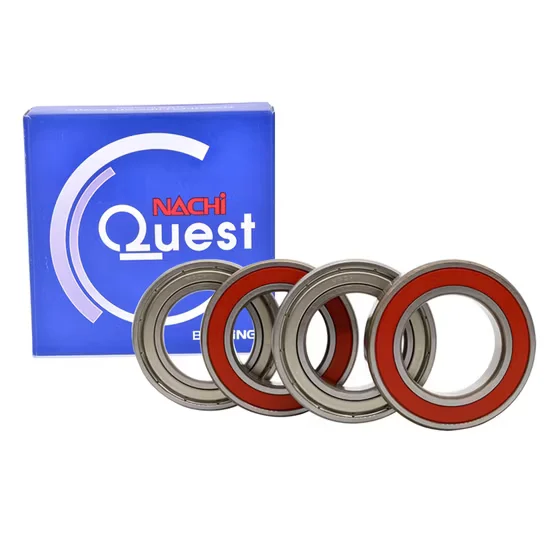
Deep Groove Ball Bearings
Genuine NACHI 6308zzecm Deep Groove Ball Bearing Japan Brand
View product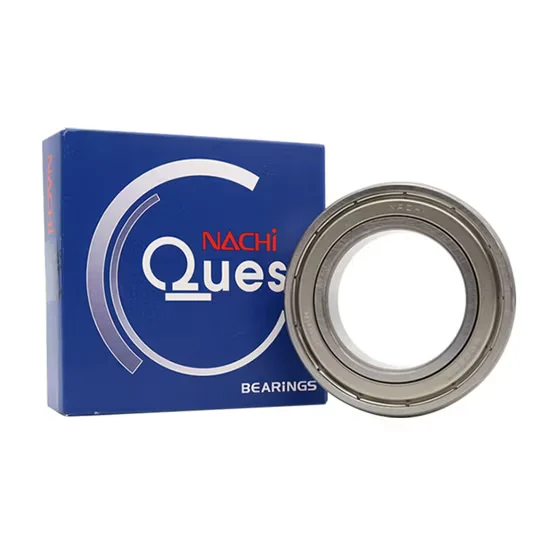
Deep Groove Ball Bearings
NACHI 6002 Deep Groove Ball Bearing 15x32x9 mm Genuine Japan Brand
View product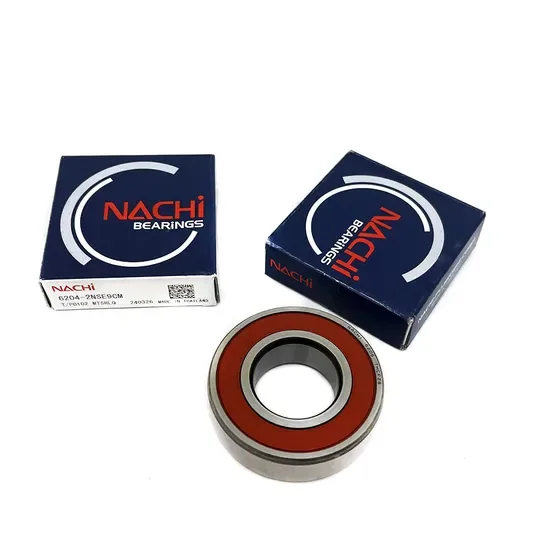
Deep Groove Ball Bearings
Genuine NACHI 608zz 6202 6201 Deep Groove Ball Bearing for Marine Equipment
View product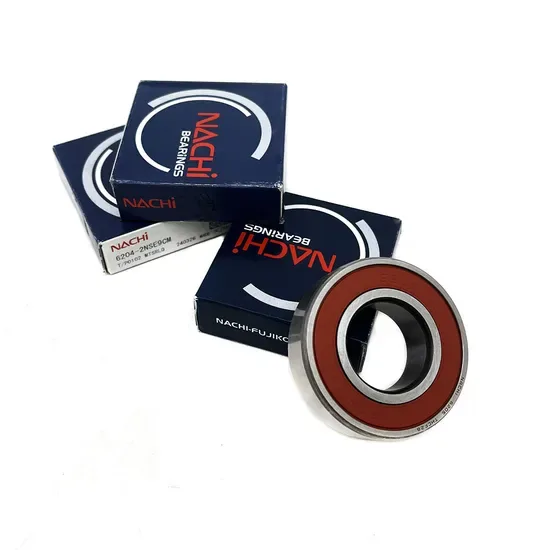
Deep Groove Ball Bearings
NACHI 608zz 16004 6201 Deep Groove Ball Bearing P6 P5 C3
View productModel check
Not sure which NACHI designation fits? We help with substitution, cross-reference and selection.
Send the old bearing number, the worn marking you can still read, or the application and shaft size. nachioem matches it to the correct NACHI model, including clearance, cage and seal options, before you order.
- Substitution for discontinued models
- Cross-reference to NACHI numbers
- Selection for spindles, pumps and reducers
Keep reading
Related NACHI bearing technical articles
More practical guides on NACHI suffixes, replacement and selection for machine tools, automotive, construction machinery, pumps and gear reducers.
Oct 7, 2026 · Brands & Alternatives · 6 min read
NACHI Product Range Overview: Wholesale Supplier for Bulk Orders
NACHI product range overview guides buyers in distinguishing spherical from cylindrical roller bearings to prevent costly installation failures. Learn to select precise domestic alternatives…
Read the article Oct 7, 2026 · Brands & Alternatives · 8 min read
NACHI Auto vs Industrial Bearings: Wholesale Supplier for Bulk Orders
Mastering NACHI auto vs industrial bearings prevents costly misapplications in heavy-duty fleets. Learn how C3/C4 clearance and specialized seals differ from standard CN specs…
Read the article Oct 7, 2026 · Brands & Alternatives · 8 min read
NACHI vs Premium Spindles: Genuine Bearings Wholesale Supplier
Verify NACHI vs Premium Brands Spindle Bearings by matching P4 or P2 precision grades to actual RPMs rather than relying on brand prestige alone.…
Read the article
Request a quote
Send your NACHI model list. We quote fast.
List the NACHI model numbers with full suffixes and the quantity for each. nachioem replies online as quickly as possible with pricing for distributors, repair shops and end users worldwide.
- info@nachioem.com
- WhatsApp +1 (702) 981-5880
- Online replies as quickly as possible
- Global delivery by DHL, FedEx, UPS, air or sea