
NACHI Bearing Technical Guide Brands & Alternatives
NACHI Product Range Overview: Wholesale Supplier for Bulk Orders
NACHI product range overview guides buyers in distinguishing spherical from cylindrical roller bearings to prevent costly installation failures. Learn to select precise domestic alternatives and consolidate mixed-brand orders for optimized MRO sourcing efficiency.
- Published
- By author
- nachioem · Specialized NACHI bearing supplier
Spherical and cylindrical roller bearings are not interchangeable substitutes.
Navigating the NACHI product range requires matching specific series to exact operating conditions and identifying precise domestic alternatives to avoid installation failures. Misidentifying the misalignment tolerance boundary between these two core categories is the primary cause of port delays and costly rework in heavy industry procurement.
I still recall the chill of the Valparaiso wind when I realized a container of bearings destined for a Chilean copper mine was sitting idle, accruing demurrage charges that quickly eclipsed the cargo value. The error was not in the brand quality but in the specification logic. The procurement team had assumed that because both spherical and cylindrical rollers handle heavy radial loads, they could be swapped based on availability. They could not. The spherical units were designed for shafts prone to deflection, while the cylindrical ones required perfect alignment. Sending the wrong type meant the maintenance crew at the mine site faced equipment that simply would not seat correctly. That incident shifted my focus from mere transaction volume to technical precision in sourcing. It taught me that understanding the NACHI product range overview is not about memorizing part numbers, but about understanding the mechanical boundaries each series respects.
For distributors and MRO buyers, the challenge lies in balancing the premium reliability of genuine NACHI components with the cost-efficiency of domestic alternatives. This balance is only achievable when the operational context is clearly defined. A wholesale supplier for bulk orders must look beyond the catalog price and assess the risk profile of the application.
What Defines the Core NACHI Product Range?
The NACHI product range overview is often misunderstood as a simple list of part numbers, but it is actually a structured ecosystem designed for specific industrial stressors. Deep groove ball bearings serve high-speed, low-load applications, while the heavier artillery—spherical and cylindrical roller bearings—dominates the mining and construction sectors. The distinction lies in how each series manages load distribution and environmental contamination.
Genuine NACHI products are engineered with rigorous quality control, particularly in their heat treatment and cage design. For heavy equipment OEMs, this consistency is critical. A batch of bearings must perform identically to the previous one to ensure the longevity of the machinery they equip. When sourcing from a wholesale supplier for bulk orders, buyers are not just purchasing steel rings; they are buying the assurance that the material purity and dimensional stability meet international standards.
However, the core range also includes specialized series for harsh environments. In mining crushers or steel mill conveyors, bearings face constant vibration and particulate ingress. NACHI addresses this with sealed variants and robust cage materials that resist deformation under shock loads. Understanding this segmentation allows buyers to avoid over-specifying for light duties or under-specifying for critical paths.
Spherical vs. Cylindrical Rollers: Where is the Boundary?
The most common and costly mistake in industrial procurement is treating spherical and cylindrical roller bearings as functional equivalents. They are not. The boundary between them is defined by misalignment tolerance. Spherical roller bearings feature two rows of rollers and a common sphered raceway in the outer ring, allowing them to accommodate angular misalignment and shaft deflections. Cylindrical roller bearings, with their straight rollers and raceways, offer higher radial load capacity but possess negligible self-aligning capability.
| Feature | Spherical Roller Bearings | Cylindrical Roller Bearings |
|---|---|---|
| Misalignment Tolerance | High (accommodates shaft deflection) | Very Low (requires precise alignment) |
| Radial Load Capacity | High | Very High |
| Axial Load Capacity | Moderate (bidirectional) | Limited (depends on design) |
| Installation Sensitivity | Forgiving | Critical |
| Typical Application | Mining crushers, vibrating screens | Gearboxes, electric motors, spindles |
A European wind farm operator once faced extended downtime because cylindrical bearings were installed in a main shaft position that experienced slight structural flexing. The rigid nature of the cylindrical rollers led to edge loading and premature fatigue failure. Had spherical rollers been selected, the natural movement of the tower would have been absorbed without damaging the bearing internals.
When reviewing the NACHI product range overview, buyers must check the housing conditions. If the housing is rigid and the shaft is stiff, cylindrical rollers provide superior load density. If the structure is prone to bending or the mounting surfaces are not perfectly parallel, spherical rollers are the only viable option. Confusing these two leads to immediate field failures, regardless of the brand’s prestige.
How to Select Domestic Alternatives for NACHI Series?
Cost pressure often drives MRO buyers to seek domestic alternatives to premium Japanese brands. The assumption that domestic bearings compromise precision is outdated. Correct grade-matching achieves identical dimensional tolerances. Brands like ZWZ, HRB, and LYC have significantly upgraded their manufacturing capabilities, offering P0 and P6 precision levels that match many standard NACHI applications.
The key is not to swap brands blindly but to map the specific NACHI series to its domestic equivalent based on application criticality. For non-critical positions, such as auxiliary pumps or conveyor idlers, high-quality domestic bearings offer a substantial cost reduction without sacrificing lifespan. For critical main drives, sticking with genuine NACHI or premium global brands remains the safer choice.
| Application Criticality | Recommended Brand Tier | Rationale |
|---|---|---|
| Critical Main Drive | Genuine NACHI / SKF / FAG | Maximum reliability, traceable history |
| Heavy Load, Non-Critical | Premium Domestic (ZWZ/HRB) | Cost-effective, sufficient load capacity |
| Light Duty / Auxiliary | Standard Domestic | Lowest cost, adequate for low-stress roles |
| High Precision / Speed | Genuine NACHI / NSK | Superior noise and vibration control |
A mixed-container consolidation strategy often involves sourcing multiple NACHI series for diverse machinery lines alongside domestic alternatives for less demanding roles. This approach optimizes SKU count per container and reduces lead time for emergency spares. A wholesale supplier for bulk orders can facilitate this by providing cross-reference data that ensures the domestic alternative matches the NACHI specification in terms of bore diameter, outside diameter, and width, as well as load ratings.
Why Consolidate Mixed-Brand Orders for Global Shipping?
Global supply chains are increasingly fragmented, making single-brand sourcing inefficient for many regional distributors. Consolidating mixed-brand orders allows buyers to optimize shipping costs and manage inventory more effectively. Instead of waiting for separate shipments from different manufacturers, a consolidated container can include genuine NACHI bearings for critical applications and domestic alternatives for general maintenance.
This strategy also enhances traceability. By working with a single wholesale supplier for bulk orders, buyers receive unified documentation, including certificates of origin and quality assurance reports. This simplifies customs clearance and reduces the administrative burden of managing multiple suppliers. Furthermore, a consolidated approach allows for better negotiation power and more flexible MOQs, enabling buyers to order exact quantities rather than being forced into large minimums for each brand.
In a recent project for a Southeast Asian manufacturing hub, consolidating orders reduced the total lead time by several weeks. The buyer was able to stock up on a wide range of bearings, ensuring that maintenance teams had immediate access to both premium and economy options. This flexibility is crucial in regions where supply chain disruptions can halt production lines.
Conclusion
Precision in selection prevents failure in operation.
Understanding the NACHI product range overview is essential for avoiding costly mistakes in heavy industry procurement. By distinguishing between spherical and cylindrical roller bearings and strategically selecting domestic alternatives, buyers can optimize both performance and cost. Consolidating mixed-brand orders further enhances supply chain efficiency, ensuring that the right bearings are available at the right time. A knowledgeable wholesale supplier for bulk orders serves as a critical partner in this process, providing the technical expertise and logistical support needed to navigate the complexities of global bearing sourcing.
Applications covered in this article
Products in this article
NACHI bearings mentioned above
These are the NACHI bearing types discussed in this guide. Open a product page to check its designation and send the exact suffix with your quantity.
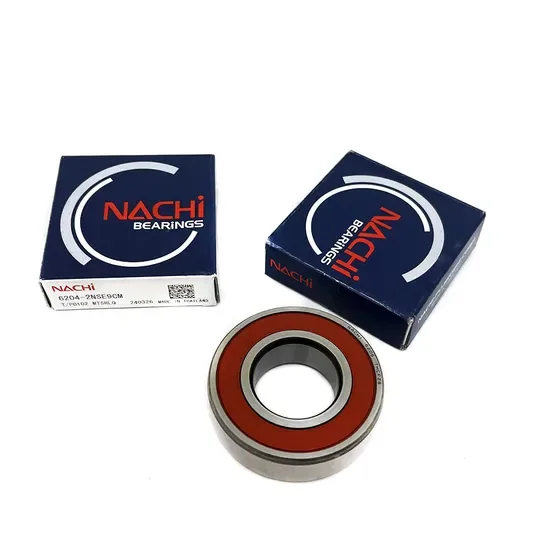
Deep Groove Ball Bearings
Genuine NACHI 608zz 6202 6201 Deep Groove Ball Bearing for Marine Equipment
View product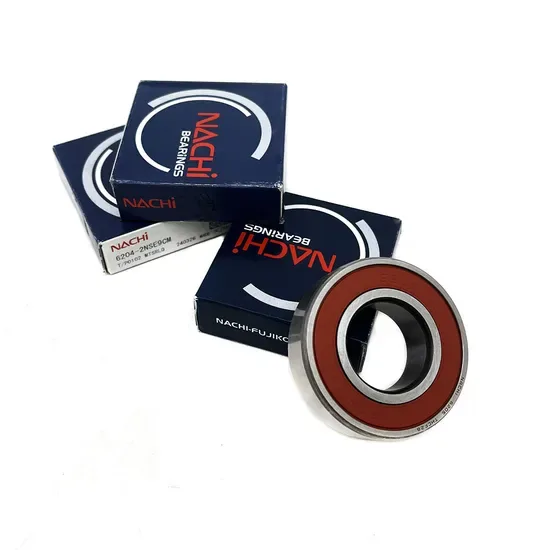
Deep Groove Ball Bearings
NACHI 608zz 16004 6201 Deep Groove Ball Bearing P6 P5 C3
View product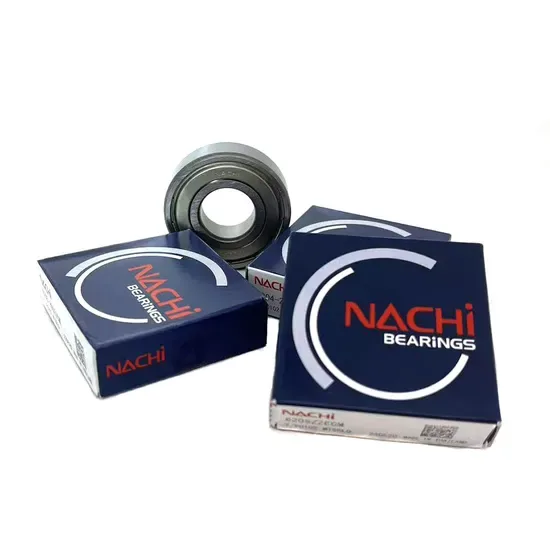
Deep Groove Ball Bearings
NACHI Deep Groove Ball Bearing 62301 608 6202 63008 63007 63006 6204 6301
View product Deep Groove Ball Bearings
Genuine NACHI P6 Deep Groove Ball Bearings 62208 62210 63002 63004 63006
View productModel check
Not sure which NACHI designation fits? We help with substitution, cross-reference and selection.
Send the old bearing number, the worn marking you can still read, or the application and shaft size. nachioem matches it to the correct NACHI model, including clearance, cage and seal options, before you order.
- Substitution for discontinued models
- Cross-reference to NACHI numbers
- Selection for spindles, pumps and reducers
Keep reading
Related NACHI bearing technical articles
More practical guides on NACHI suffixes, replacement and selection for machine tools, automotive, construction machinery, pumps and gear reducers.
Oct 7, 2026 · Brands & Alternatives · 7 min read
NACHI Brand Tiers Explained: Wholesale Supplier Guide
NACHI brand tiers are defined by ISO tolerance classes and internal clearance codes, not marketing labels. Verify grades through part number suffixes and cage…
Read the article Oct 7, 2026 · Brands & Alternatives · 8 min read
NACHI Auto vs Industrial Bearings: Wholesale Supplier for Bulk Orders
Mastering NACHI auto vs industrial bearings prevents costly misapplications in heavy-duty fleets. Learn how C3/C4 clearance and specialized seals differ from standard CN specs…
Read the article Oct 7, 2026 · Brands & Alternatives · 8 min read
NACHI vs Premium Spindles: Genuine Bearings Wholesale Supplier
Verify NACHI vs Premium Brands Spindle Bearings by matching P4 or P2 precision grades to actual RPMs rather than relying on brand prestige alone.…
Read the article
Request a quote
Send your NACHI model list. We quote fast.
List the NACHI model numbers with full suffixes and the quantity for each. nachioem replies online as quickly as possible with pricing for distributors, repair shops and end users worldwide.
- info@nachioem.com
- WhatsApp +1 (702) 981-5880
- Online replies as quickly as possible
- Global delivery by DHL, FedEx, UPS, air or sea