
NACHI Bearing Technical Guide Buying Guide
NACHI Bearings for Compressors Wholesale Supplier
Selecting NACHI bearings for compressors requires matching internal clearance and sealing to thermal environments, not just dimensions. Avoid premature seizure by choosing C3 or C4 variants over standard options. Ensure accurate customs documentation to prevent costly import delays and supply chain bottlenecks.
- Published
- By author
- nachioem · Specialized NACHI bearing supplier
Tighter clearance is not always better for compressor reliability.
Selecting the correct NACHI bearings for compressors requires matching internal clearance codes and sealing types to specific thermal gradients and particulate environments, rather than defaulting to standard deep groove ball bearings which frequently lead to premature thermal seizure in high-load industrial applications.
I still remember the humidity in the Lagos warehouse when a container of mixed bearing stock was held up for weeks. The paperwork listed generic deep groove ball bearings, but the physical cargo included specialized units for rotary screw compressors. The mismatch in Harmonized System codes triggered a manual inspection that delayed delivery to a critical maintenance window. Years later, standing in the sweltering heat of a refinery air station in West Africa, I watched a maintenance team install standard clearance bearings into a high-temperature compressor stage. Within days, the unit tripped on high vibration. The root cause was not a manufacturing defect, but a fundamental misunderstanding of how thermal expansion alters internal geometry under load. These experiences highlight why technical selection criteria matter as much as logistics precision when sourcing NACHI bearings for compressors.
Understanding these pitfalls allows distributors and MRO operators to avoid costly field failures and customs bottlenecks. The following guide breaks down the technical and logistical requirements for selecting and importing these critical components.
Why Standard Bearings Fail in Compressors?
Standard deep groove ball bearings are designed for general-purpose applications with moderate loads and stable temperatures. Compressors, however, operate in extreme conditions characterized by rapid temperature spikes and significant shaft deflection. Using a standard C0 clearance bearing in a compressor application often results in immediate failure due to thermal expansion eliminating the necessary running gap between rolling elements and raceways.
When a compressor operates, the inner ring heats up faster than the outer ring due to its direct connection to the rotating shaft and friction generation. This temperature delta causes the inner ring to expand radially. If the initial internal clearance is insufficient, this expansion preloads the bearing excessively. The resulting increase in friction generates more heat, creating a positive feedback loop that leads to grease breakdown, metal-to-metal contact, and eventual seizure.
In one instance at a large-scale petrochemical facility, a series of centrifugal compressors experienced repeated bearing failures during summer months. The maintenance team had replaced failed units with identical part numbers from a general inventory bin. However, the original equipment manufacturer specified a C3 clearance variant to accommodate the higher operating temperatures. The standard replacement lacked this thermal buffer. The failure mode was consistent: inner ring cracking and cage deformation within weeks of installation. This case underscores that part number equivalence does not guarantee functional equivalence in thermal-critical applications.
For buyers sourcing NACHI bearings for compressors, verifying the clearance code is the first step in preventing such failures. It is not enough to match the dimensional specifications; the operational environment dictates the required internal geometry.
How to Match NACHI Clearances to Compressor Types?
Selecting the appropriate internal clearance is a balancing act. Too loose, and the bearing suffers from excessive vibration and noise; too tight, and it risks thermal seizure. The choice between C0, C3, and C4 clearances depends on the compressor type, operating speed, and expected temperature rise.
| Compressor Type | Typical Thermal Load | Recommended Clearance | Sealing Requirement | Failure Risk if Mismatched |
|---|---|---|---|---|
| Reciprocating | High Shock Load | C3 | Robust Rubber Seals | Cage fracture due to vibration |
| Rotary Screw | High Continuous Heat | C3 or C4 | Low Friction Seals | Thermal seizure from expansion |
| Centrifugal | High Speed Moderate Heat | C3 | Metal Shields or Labyrinth | Premature fatigue from preload |
| Scroll | Moderate Heat | C0 or C3 | Standard Rubber Seals | Noise and reduced efficiency |
Data in this table reflects general industry practices for bearing selection in rotating machinery.
A regional distributor in Southeast Asia once faced a surge in warranty claims for rotary screw compressor replacements. Upon investigation, it was discovered that the supplied bearings had C0 clearance. While these bearings fit perfectly during installation, they failed under continuous operation at elevated temperatures. Switching to C3 clearance variants resolved the issue, extending service life noticeably. The key takeaway is that higher thermal loads require larger initial clearances to maintain optimal operating clearance once the machine reaches steady state.
It is also important to note that clearance reduction is not linear. As temperature increases, the rate of clearance loss accelerates. Therefore, for applications with unpredictable temperature spikes, opting for a C4 clearance might be safer, provided the load is not predominantly radial and low-speed, where excessive looseness could cause other issues. When sourcing NACHI bearings for compressors, always cross-reference the OEM manual with the actual operating conditions observed on-site.
What Sealing Solutions Prevent Dust Ingress?
In harsh environments such as mining sites or cement plants, dust ingress is a primary cause of bearing failure. Standard metal shields offer limited protection against fine particulates, while rubber seals provide better exclusion but introduce additional friction torque. This friction can raise operating temperatures, which circles back to the clearance issue discussed earlier.
The choice between rubber seals and metal shields should be guided by the specific contaminants present. For coarse dust and moisture, contact seals made of nitrile rubber are effective. However, in high-speed applications, the heat generated by seal friction can degrade the lubricant. In such cases, non-contact labyrinth seals or hybrid solutions may be preferable.
At a dusty air compression station in a remote mining operation, open bearings were ingesting silica dust despite regular greasing. The abrasive particles acted like grinding paste, rapidly wearing down the raceways. Replacing them with bearings equipped with robust rubber seals significantly reduced the failure rate. However, the maintenance team had to monitor temperatures closely because the added friction from the seals slightly increased the operating heat. This trade-off between contamination exclusion and thermal management is critical in compressor applications.
When evaluating NACHI bearings for compressors, consider the seal material compatibility with the lubricant and the ambient temperature. Some synthetic rubbers perform better in extreme cold or heat, ensuring that the seal remains flexible and effective over time. Ignoring this detail can lead to seal hardening and subsequent ingress, negating the benefit of the sealed design.
How to Avoid Customs Delays for Compressor Bearings?
Logistical errors can be as damaging as technical mismatches. Misclassifying bearings during import can lead to prolonged customs holds, demurrage charges, and even confiscation of goods. A common mistake is grouping compressor-specific bearings with general-purpose deep groove ball bearings under a single Harmonized System code. While they may look similar, their intended application and technical specifications often warrant different classifications in certain jurisdictions.
In Nigeria, for example, customs authorities scrutinize industrial spare parts heavily. A shipment labeled generically as “ball bearings” without specifying their use in compressors or providing detailed technical datasheets can trigger a manual review. This process can delay clearance by weeks, costing buyers significantly in storage fees and production downtime. Proper documentation, including traceability certificates and clear product descriptions, is essential for smooth clearance.
A European buyer once experienced a month-long delay because the commercial invoice lacked specific part numbers and clearance codes. The customs broker could not verify the goods’ value and specification, leading to a hold for verification. Providing a detailed packing list with individual line items for each bearing type, along with manufacturer certificates, resolved the issue. This highlights the need for precise administrative preparation alongside technical selection.
For those sourcing NACHI bearings for compressors, working with a supplier who understands these regulatory nuances is vital. Ensuring that all documents align with the physical goods and local import regulations prevents unnecessary bottlenecks. This includes verifying that the country of origin markings on the bearings match the accompanying certificates, as discrepancies here are a frequent cause of detention.
Conclusion
Precision in selection prevents failure in operation.
Choosing the right NACHI bearings for compressors involves more than matching dimensions; it requires aligning internal clearance and sealing with the specific thermal and environmental demands of the application. Avoiding standard clearance traps and ensuring accurate customs documentation protects both equipment reliability and supply chain efficiency.
Applications covered in this article
Products in this article
NACHI bearings mentioned above
These are the NACHI bearing types discussed in this guide. Open a product page to check its designation and send the exact suffix with your quantity.
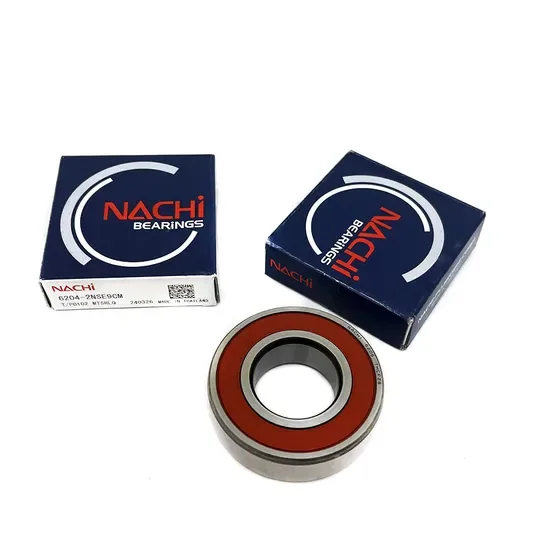
Deep Groove Ball Bearings
Genuine NACHI 608zz 6202 6201 Deep Groove Ball Bearing for Marine Equipment
View product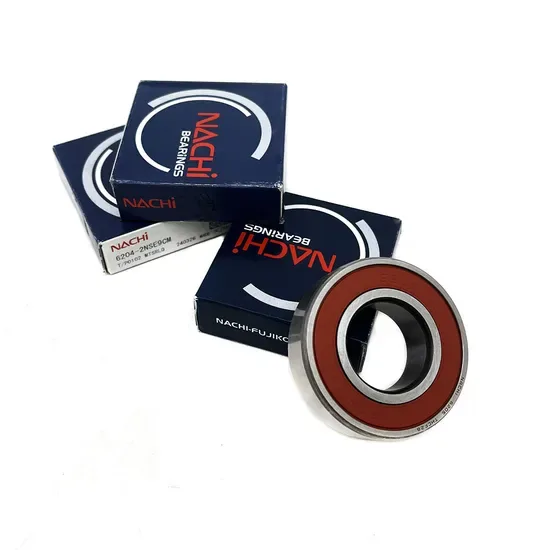
Deep Groove Ball Bearings
NACHI 608zz 16004 6201 Deep Groove Ball Bearing P6 P5 C3
View product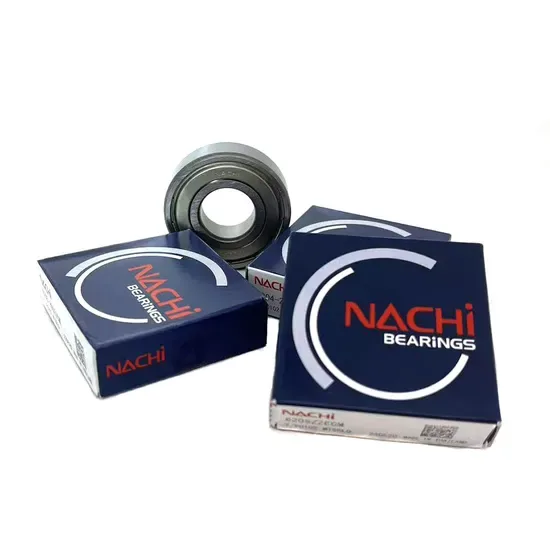
Deep Groove Ball Bearings
NACHI Deep Groove Ball Bearing 62301 608 6202 63008 63007 63006 6204 6301
View product Deep Groove Ball Bearings
Genuine NACHI P6 Deep Groove Ball Bearings 62208 62210 63002 63004 63006
View productModel check
Not sure which NACHI designation fits? We help with substitution, cross-reference and selection.
Send the old bearing number, the worn marking you can still read, or the application and shaft size. nachioem matches it to the correct NACHI model, including clearance, cage and seal options, before you order.
- Substitution for discontinued models
- Cross-reference to NACHI numbers
- Selection for spindles, pumps and reducers
Keep reading
Related NACHI bearing technical articles
More practical guides on NACHI suffixes, replacement and selection for machine tools, automotive, construction machinery, pumps and gear reducers.
Oct 7, 2026 · Buying Guide · 7 min read
NACHI Bearings Quote: Genuine Wholesale Supplier for Bulk & MRO Orders
Request a NACHI bearings quote with full suffix accuracy to prevent costly customs delays and ensure genuine product traceability. Secure competitive wholesale pricing through…
Read the article Oct 7, 2026 · Buying Guide · 7 min read
Discontinued NACHI Numbers: Replacements from Wholesale Supplier
Replacing discontinued NACHI bearings requires more than matching dimensions to prevent premature field failures. Recalculate internal clearance and verify cage material compatibility to ensure…
Read the article Oct 7, 2026 · Buying Guide · 8 min read
Buy Genuine NACHI Bearings: Wholesale Supplier for Bulk Orders
Secure genuine NACHI bearings by mastering neutral checks and traceability verification to avoid catastrophic equipment failures. Learn to identify counterfeit units through hardness testing,…
Read the article
Request a quote
Send your NACHI model list. We quote fast.
List the NACHI model numbers with full suffixes and the quantity for each. nachioem replies online as quickly as possible with pricing for distributors, repair shops and end users worldwide.
- info@nachioem.com
- WhatsApp +1 (702) 981-5880
- Online replies as quickly as possible
- Global delivery by DHL, FedEx, UPS, air or sea