
NACHI Bearing Technical Guide News & Cases
NACHI Bearings for Pump OEM: Wholesale Supplier
Secure your NACHI bearing supply for pump OEM projects by eliminating customs delays caused by document mismatches. Master strict SKU-level verification and professional mixed-container consolidation to ensure genuine parts arrive on time. Keep assembly lines moving with flawless logistics and authentic traceability.
- Published
- By author
- nachioem · Specialized NACHI bearing supplier
Most pump assembly lines stall not because of bad bearings, but because of bad paperwork.
Securing a reliable NACHI bearing supply for pump OEM projects requires more than just verifying product authenticity; it demands strict customs compliance and precise mixed-container consolidation to prevent costly port delays that halt production.
I still remember the humidity in the warehouse at Yantian Port, watching a container destined for Dubai get flagged. The cargo inside was genuine, high-quality components, but the packing list did not match the mixed SKUs declared on the bill of lading. Customs held the shipment. For the pump manufacturer waiting on those parts, every day of delay meant thousands of dollars in penalties and a silent assembly line. That incident shifted my focus from merely sourcing parts to mastering the logistics of documentation. In global trade, a mismatched invoice is as damaging as a defective seal.
This reality defines the modern supply chain for industrial components. Buyers are not just purchasing steel and grease; they are buying certainty. When you source a NACHI bearing supply for pump OEM applications, the value lies in the seamless integration of genuine products with flawless logistical execution.
Why Do Pump OEMs Face Bearing Supply Delays?
Document mismatches in mixed shipments trigger customs holds, halting production.
The assumption that bearing quality is the primary supply risk is often incorrect. While product failure is catastrophic, it is rare with premium brands. The more frequent disruptor is administrative error during international shipping. Pump manufacturers typically require a variety of bearing types—deep groove ball bearings for high-speed shafts, spherical roller bearings for misalignment compensation, and angular contact bearings for axial loads. Sourcing these from multiple suppliers creates a logistical nightmare if not consolidated properly.
When different SKUs are packed into a single Less than Container Load (LCL) or Full Container Load (FCL), the complexity of documentation increases exponentially. A single discrepancy between the physical cargo and the declared HS codes can lead to immediate inspection. During these inspections, goods sit idle. For an OEM operating on just-in-time principles, this idle time is unsustainable.
Consider a scenario where a procurement manager orders a batch of NACHI bearing supply for pump OEM use, including both standard metric sizes and specific inch-series replacements. If the supplier’s warehouse team fails to verify that each box in the container matches the line-item description on the commercial invoice, customs authorities may suspect undervaluation or misclassification. The result is not just a delay; it is a breakdown in trust between the buyer and the supplier.
The solution is not to avoid mixed shipments, which are essential for cost efficiency, but to enforce rigorous verification protocols. Every bearing type, from needle bearings to thrust bearings, must be accounted for with precision. This level of detail ensures that when the container arrives at the destination port, the clearance process is routine rather than investigative.
How to Ensure 100% Customs Compliance for Mixed Bearings?
Implement strict SKU-level verification between packing lists and customs declarations.
Achieving zero customs rejection rates requires a methodical approach to documentation. It is not enough to have the correct total weight or volume; each individual SKU must be traceable. This is particularly critical for NACHI bearing supply for pump OEM orders, where the sheer variety of part numbers can overwhelm standard checking procedures.
The process begins at the picking stage. When items are pulled from inventory, they must be cross-referenced against the proforma invoice. Any substitution, even if technically equivalent, must be documented and approved by the buyer before shipping. Unapproved substitutions are a leading cause of customs disputes.
| Verification Step | Standard Practice | Optimized Compliance Protocol |
|---|---|---|
| Packing List Accuracy | General category description (e.g., “Ball Bearings”) | Specific SKU-level detail with brand and model number |
| HS Code Classification | Single code for entire shipment | Multiple codes if required by distinct bearing types |
| Physical Inspection | Random spot checks | 100% visual verification against packing list before sealing |
| Documentation Match | Invoice and packing list created separately | Integrated generation to ensure 1-to-1 data consistency |
This table illustrates the shift from generic handling to precise compliance. By treating each bearing as a unique data point, suppliers can eliminate the ambiguity that customs officers look for. For example, distinguishing between a deep groove ball bearing and a cylindrical roller bearing is crucial because they may fall under different subheadings in the Harmonized System. Misclassifying them can lead to incorrect duty assessments and subsequent penalties.
In practice, this means that for every NACHI bearing supply for pump OEM shipment, the documentation package is as important as the cargo itself. The packing list must mirror the physical contents exactly, leaving no room for interpretation. This rigor protects the buyer from unexpected costs and ensures that the bearings reach the factory floor without administrative interference.
Optimizing LCL Consolidation for Pump OEMs
Professional consolidation balances cost savings with zero-delay delivery guarantees.
Many buyers believe that consolidating less-than-container loads increases customs risk. This is a misconception. Professional consolidation, when executed with strict document matching, actually reduces risk by centralizing control. Instead of managing dozens of small parcels from various vendors, the buyer deals with a single, verified shipment.
For pump OEMs, this is vital. A typical pump assembly might require bearings from different categories: insert bearings for housing units, tapered roller bearings for heavy radial loads, and precision special-application bearings for high-speed stages. Sourcing these individually is inefficient and expensive. Consolidation allows for economies of scale in freight while maintaining the integrity of each component.
However, consolidation requires expertise. The supplier must have the capacity to handle diverse inventory, from mainstream brands like SKF and FAG to specialized lines like NACHI and NTN. The warehouse must be organized to prevent mixing of similar-looking but functionally different parts. A mistake here is not just a logistical error; it is a technical failure that can compromise the pump’s performance.
When optimizing for NACHI bearing supply for pump OEM needs, the focus is on creating a unified shipping unit that behaves like a single-SKU shipment in terms of documentation clarity. This involves grouping items by HS code where possible and ensuring that the internal packaging protects the bearings from moisture and shock during the longer transit times associated with consolidated freight. The goal is to make the unboxing process at the destination as straightforward as the ordering process was online.
Delivering Genuine NACHI Bearings for Pump Applications
Authentic traceability combined with flawless logistics ensures uninterrupted OEM assembly.
The final piece of the puzzle is product authenticity. In the global bearing market, counterfeits are a persistent threat. For pump OEMs, using a non-genuine bearing can lead to premature failure, warranty claims, and reputational damage. Therefore, the supply chain must provide verifiable proof of origin.
Genuine NACHI bearing supply for pump OEM projects comes with complete traceability documentation. This includes material certificates, quality assurance records, and original packaging markers that confirm the product’s lineage. Suppliers must source directly from authorized channels or reputable distributors who maintain strict chain-of-custody protocols.
Beyond authenticity, the supplier must offer technical support. Pump applications vary widely, from clean water processing to harsh chemical environments. Selecting the right bearing involves understanding factors like corrosion resistance, load capacity, and speed ratings. A knowledgeable supplier can guide the buyer toward the optimal choice, whether it is a standard deep groove ball bearing or a more robust spherical roller bearing.
By combining genuine products with the logistical discipline described earlier, suppliers create a value proposition that goes beyond price. They offer reliability. For a pump manufacturer, knowing that their NACHI bearing supply for pump OEM orders will arrive on time, with correct documentation and authentic parts, allows them to focus on their core competency: building efficient, durable pumps. This holistic approach transforms the supplier from a vendor into a strategic partner.
Conclusion
Reliable supply is defined by documentation precision as much as product quality.
Successful pump OEM production depends on the seamless integration of genuine components and compliant logistics. By prioritizing strict SKU verification and professional consolidation, buyers can eliminate the hidden costs of port delays. A trusted NACHI bearing supply for pump OEM partner ensures that every bearing, from the smallest needle bearing to the largest spherical roller, arrives ready for immediate installation, keeping assembly lines moving and businesses profitable.
Applications covered in this article
Products in this article
NACHI bearings mentioned above
These are the NACHI bearing types discussed in this guide. Open a product page to check its designation and send the exact suffix with your quantity.
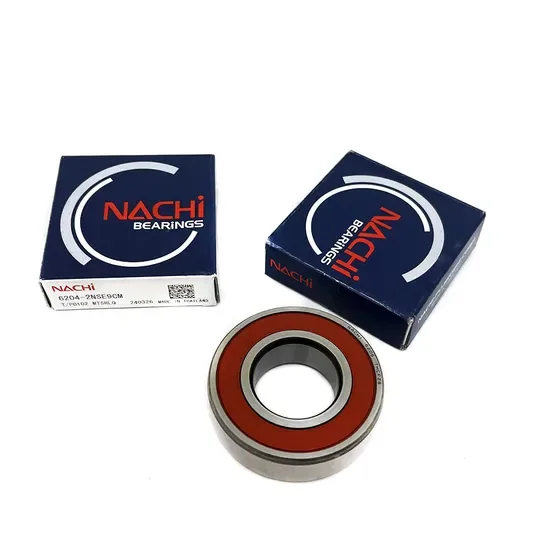
Deep Groove Ball Bearings
Genuine NACHI 608zz 6202 6201 Deep Groove Ball Bearing for Marine Equipment
View product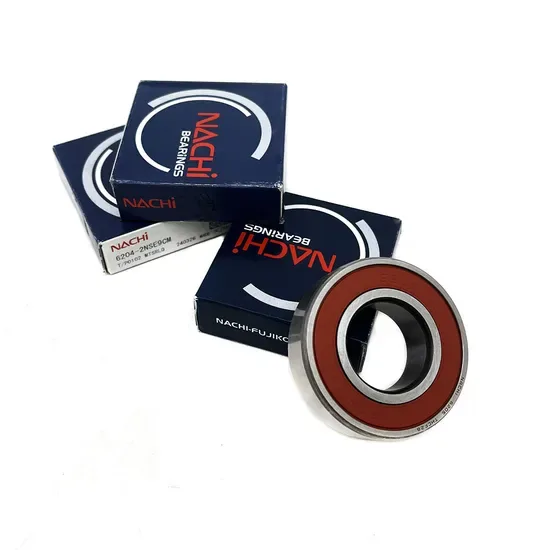
Deep Groove Ball Bearings
NACHI 608zz 16004 6201 Deep Groove Ball Bearing P6 P5 C3
View product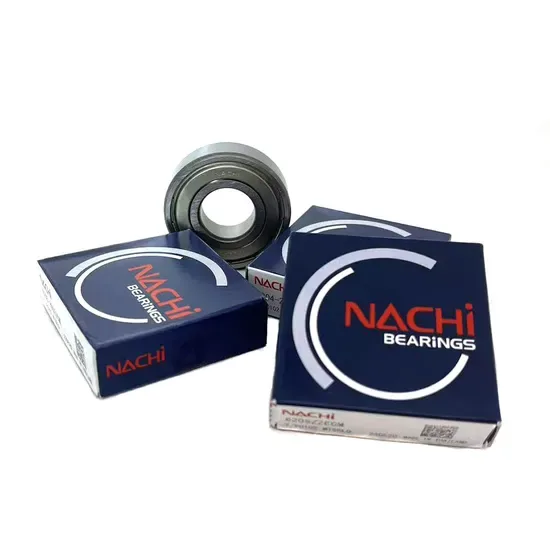
Deep Groove Ball Bearings
NACHI Deep Groove Ball Bearing 62301 608 6202 63008 63007 63006 6204 6301
View product Deep Groove Ball Bearings
Genuine NACHI P6 Deep Groove Ball Bearings 62208 62210 63002 63004 63006
View productModel check
Not sure which NACHI designation fits? We help with substitution, cross-reference and selection.
Send the old bearing number, the worn marking you can still read, or the application and shaft size. nachioem matches it to the correct NACHI model, including clearance, cage and seal options, before you order.
- Substitution for discontinued models
- Cross-reference to NACHI numbers
- Selection for spindles, pumps and reducers
Keep reading
Related NACHI bearing technical articles
More practical guides on NACHI suffixes, replacement and selection for machine tools, automotive, construction machinery, pumps and gear reducers.
Oct 8, 2026 · News & Cases · 6 min read
Genuine Bearings Wholesale Supplier: SKF, FAG, NSK, TIMKEN Bulk Orders
Navigate the Motor Industry Outlook 2026 by securing genuine SKF, FAG, NSK, and TIMKEN bearings with strict traceability documentation. Avoid costly customs seizures and…
Read the article Oct 8, 2026 · News & Cases · 7 min read
Genuine SKF FAG NSK Bearings Wholesale Supplier for Robotics Industry Growth 2026
Secure your Robotics Industry Growth 2026 strategy with genuine precision bearings that prevent catastrophic joint failures and overheating. Avoid the hidden costs of counterfeits…
Read the article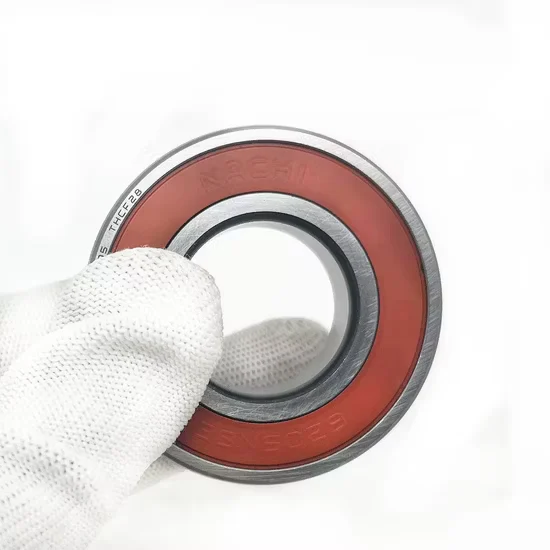
Oct 8, 2026 · News & Cases · 7 min read
NACHI-Fujikoshi News 2026: Buyer Guide for Wholesale Bearings
NACHI-Fujikoshi News 2026 reveals that strict suffix verification prevents costly downtime from incorrect clearance codes. Recent factory upgrades have altered lead times, making proactive…
Read the article
Request a quote
Send your NACHI model list. We quote fast.
List the NACHI model numbers with full suffixes and the quantity for each. nachioem replies online as quickly as possible with pricing for distributors, repair shops and end users worldwide.
- info@nachioem.com
- WhatsApp +1 (702) 981-5880
- Online replies as quickly as possible
- Global delivery by DHL, FedEx, UPS, air or sea