
NACHI Bearing Technical Guide Buying Guide
NACHI Bearings for Wind Equipment Wholesale Supplier
Secure genuine NACHI bearings for wind equipment to prevent catastrophic yaw and pitch failures in harsh offshore environments. Avoid hidden downtime costs by verifying traceability documentation and prioritizing specialized sealing technologies. Partner with a reliable wholesale supplier for batch consistency and accurate L10 life calculations.
- Published
- By author
- nachioem · Specialized NACHI bearing supplier
Standard bearings fail offshore not because of load, but because of salt.
Selecting genuine NACHI bearings for wind turbines requires verifying traceability documentation and prioritizing specialized sealing technologies designed for high-humidity, high-load environments. Authentic components prevent catastrophic yaw and pitch system failures that lead to extended downtime. A reliable NACHI bearings for wind equipment wholesale supplier ensures batch consistency and provides the technical data necessary for accurate L10 life calculations in harsh marine conditions.
I still remember the sound of a yaw drive grinding against its housing at 3 AM on a turbine off the Guangdong coast. The vibration was subtle at first, then violent. When we finally lowered the nacelle and opened the bearing assembly, the cage was shattered. The replacement part had looked identical to the original spec sheet, but it lacked the specific corrosion-resistant treatment required for that saline environment. The cost of that single counterfeit unit was negligible compared to the weeks of lost generation and the crane rental fees. That incident shifted my focus from simple procurement to rigorous verification. Now, when I evaluate supply chains, I look beyond the price tag to the metallurgical integrity and sealing architecture that define true performance in wind power applications.
Understanding why standard industrial bearings crumble in wind farms is the first step toward securing a resilient supply chain. The following sections detail how to distinguish genuine components from inferior alternatives and why sourcing from a verified NACHI bearings for wind equipment wholesale supplier is critical for operational continuity.
Why Choose NACHI Bearings for Wind Turbines?
Wind loads are dynamic, not static, requiring bearings that resist fatigue rather than just weight.
Wind turbines operate under constantly shifting stress vectors. Unlike a conveyor belt that runs in one direction, a turbine’s main shaft and yaw system face reversing loads, shock impacts from gusts, and continuous micro-vibrations. NACHI has engineered specific series to handle these unique demands, focusing on material purity and surface finish to delay the onset of subsurface fatigue cracks.
The core advantage lies in the manufacturing process. Genuine NACHI units utilize controlled nitrogen infusion and specialized heat treatments that enhance toughness without sacrificing hardness. This balance is crucial for the large-diameter bearings used in modern multi-megawatt turbines. Standard bearings often prioritize hardness alone, making them brittle under the shock loads typical of storm conditions. In contrast, NACHI designs incorporate optimized internal geometries that distribute stress more evenly across the rolling elements.
For offshore installations, the challenge is compounded by salt spray. Moisture ingress leads to rapid corrosion of the raceways, creating pits that act as stress concentrators. NACHI addresses this with advanced sealing solutions that maintain integrity even under the flexing of the tower structure. A competent NACHI bearings for wind equipment wholesale supplier will provide detailed specifications on these sealing materials, ensuring they match the environmental class of your project. Without this specificity, even a high-quality bearing will fail prematurely due to lubricant contamination.
How Do NACHI Pitch and Yaw Bearings Compare to Alternatives?
Superior sealing and load capacity define the difference between routine maintenance and emergency replacement.
Pitch and yaw systems are the most vulnerable points in a wind turbine. They move slowly but carry immense loads, often sitting stationary for long periods under high stress. This combination creates a high risk of false brinelling and fretting corrosion. When comparing NACHI solutions to generic alternatives, the differences become clear in the design details rather than just the brand name.
| Feature | Genuine NACHI Wind Series | Generic/Counterfeit Alternatives | Verification Method |
|---|---|---|---|
| Sealing Technology | Robust, multi-lip seals resistant to UV and salt | Basic rubber seals prone to hardening | Visual inspection of seal material flexibility |
| Cage Design | Reinforced steel or polymer cages for high shock | Thin stamped steel cages | Check cage thickness and rivet quality |
| Surface Finish | Micron-level precision for reduced friction | Visible machining marks | Surface roughness measurement |
| Traceability | Full batch-level documentation | Sample-level or no documentation | Request mill certificates and heat codes |
| Corrosion Resistance | Controlled surface treatment for marine use | Standard phosphate coating | Salt-spray test reports |
A European wind farm operator once reported a significant increase in maintenance frequency after switching to a cheaper alternative for their pitch bearings. The issue was not immediate failure but accelerated wear due to inadequate cage strength. The thinner cages deformed under the cyclic loads, leading to misalignment and increased friction. By returning to genuine NACHI components, sourced through a trusted NACHI bearings for wind equipment wholesale supplier, they stabilized their maintenance schedule and extended the operational lifespan of the pitch drives.
The table above highlights that the value is not just in the steel but in the engineering of the entire assembly. Generic suppliers often cut costs on the cage and sealing, which are less visible but critical for longevity. When evaluating quotes, always request detailed cross-sections and material certifications. A reputable supplier will provide these without hesitation, whereas a distributor of counterfeit goods will offer vague assurances.
What Are the Hidden Costs of Non-Genuine Wind Bearings?
Cheaper upfront costs multiply into massive downtime expenses and safety risks.
The temptation to save on bearing costs is strong, especially in competitive bidding scenarios. However, the total cost of ownership for a wind turbine is dominated by availability. A single main bearing failure can take a turbine offline for months, requiring specialized heavy-lift vessels for offshore repairs. The cost of the bearing itself is a fraction of the lost revenue and logistical expenses.
Counterfeit bearings often suffer from inconsistent material quality. Without strict quality control, impurities in the steel create weak points that lead to premature spalling. In one case, a Middle East renewable energy project faced repeated failures in their gearbox intermediate shaft bearings. Investigation revealed that the replacements were counterfeit, lacking the proper vacuum degassing process that removes hydrogen and oxygen from the steel. This resulted in reduced fatigue life and unexpected breakdowns during peak wind seasons.
Furthermore, non-genuine parts lack the precise dimensional tolerances required for modern turbine designs. Even slight deviations in bore diameter or width can cause improper fitment, leading to slippage or excessive preload. These issues generate heat and accelerate lubricant degradation, creating a cascade of failures that affect surrounding components. Sourcing from a verified NACHI bearings for wind equipment wholesale supplier eliminates this risk by ensuring every unit meets the original equipment manufacturer’s specifications.
The hidden costs also include legal and warranty liabilities. Using non-approved parts can void warranties with the turbine OEM, leaving the operator responsible for all repair costs. Additionally, safety incidents caused by component failure can lead to regulatory scrutiny and increased insurance premiums. The peace of mind that comes with verified authenticity is worth the marginal price difference.
How to Verify and Source Genuine NACHI Wind Bearings?
Traceability documentation is the only reliable proof of authenticity in a global market.
Verifying the authenticity of wind turbine bearings requires a systematic approach. Counterfeiters have become sophisticated, replicating packaging and even laser markings. Therefore, reliance on visual inspection alone is insufficient. The most effective method is to demand full traceability documentation that links the bearing back to the manufacturer’s production facilities.
Start by requesting the original certificate of conformity and the heat code traceability report. These documents should include the batch number, production date, and material certification. Cross-reference these details with the physical markings on the bearing and its packaging. A legitimate NACHI bearings for wind equipment wholesale supplier will have a direct line of communication with the brand’s regional offices to verify these codes if necessary.
Next, examine the physical characteristics of the bearing. Genuine NACHI products exhibit consistent finishing, with smooth raceways and precisely formed cages. The packaging should be robust, with clear branding and security features such as holograms or QR codes. Be wary of suppliers who offer significantly lower prices than the market average, as this is often a red flag for counterfeit goods.
Technical support is another key indicator of a reliable supplier. Authentic distributors employ engineers who can assist with selection and failure analysis. They can provide guidance on proper installation procedures, lubrication recommendations, and mounting tools. This level of support is invaluable for MRO teams looking to maximize the performance of their assets. If a supplier cannot answer technical questions about load ratings or sealing options, they are likely merely trading boxes rather than providing a solution.
Finally, consider the supplier’s inventory model. Wind farms require both planned maintenance spares and emergency replacements. A supplier with substantial spot inventory can reduce lead times significantly, minimizing the risk of extended downtime. However, ensure that this inventory is stored in controlled environments to prevent corrosion before installation. Proper storage is as critical as the manufacturing process in maintaining bearing integrity.
Conclusion
Authenticity is not a luxury; it is the foundation of wind farm reliability.
Selecting the right bearings for wind equipment involves more than matching part numbers. It requires understanding the harsh realities of offshore and onshore environments and choosing components engineered to withstand them. Genuine NACHI bearings offer the durability and precision needed to minimize unplanned downtime and maximize energy production.
Partnering with a verified NACHI bearings for wind equipment wholesale supplier ensures access to authentic products, comprehensive technical support, and reliable supply chains. By prioritizing traceability and quality over initial cost savings, operators can protect their assets and ensure long-term operational success. The cost of failure is too high to gamble on unverified sources.
Products in this article
NACHI bearings mentioned above
These are the NACHI bearing types discussed in this guide. Open a product page to check its designation and send the exact suffix with your quantity.
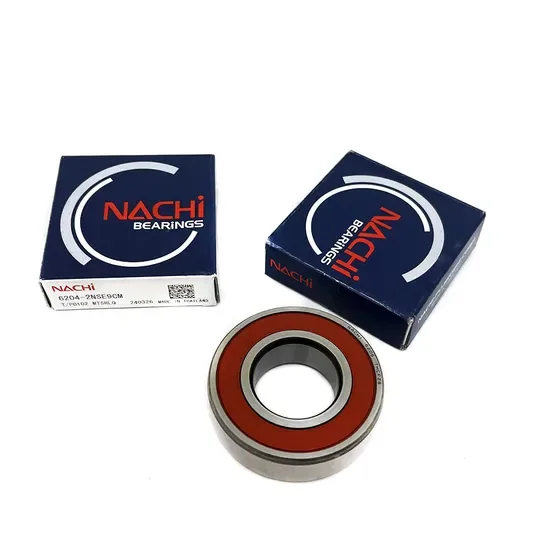
Deep Groove Ball Bearings
Genuine NACHI 608zz 6202 6201 Deep Groove Ball Bearing for Marine Equipment
View product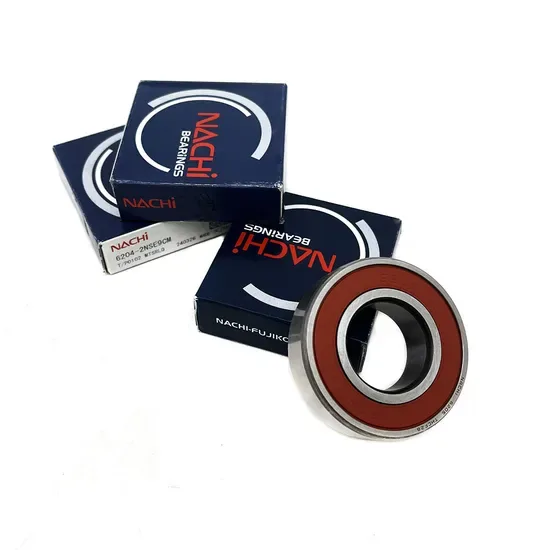
Deep Groove Ball Bearings
NACHI 608zz 16004 6201 Deep Groove Ball Bearing P6 P5 C3
View product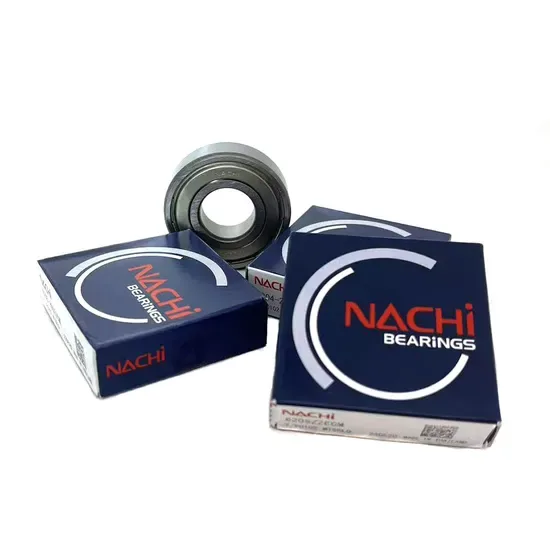
Deep Groove Ball Bearings
NACHI Deep Groove Ball Bearing 62301 608 6202 63008 63007 63006 6204 6301
View product Deep Groove Ball Bearings
Genuine NACHI P6 Deep Groove Ball Bearings 62208 62210 63002 63004 63006
View productModel check
Not sure which NACHI designation fits? We help with substitution, cross-reference and selection.
Send the old bearing number, the worn marking you can still read, or the application and shaft size. nachioem matches it to the correct NACHI model, including clearance, cage and seal options, before you order.
- Substitution for discontinued models
- Cross-reference to NACHI numbers
- Selection for spindles, pumps and reducers
Keep reading
Related NACHI bearing technical articles
More practical guides on NACHI suffixes, replacement and selection for machine tools, automotive, construction machinery, pumps and gear reducers.
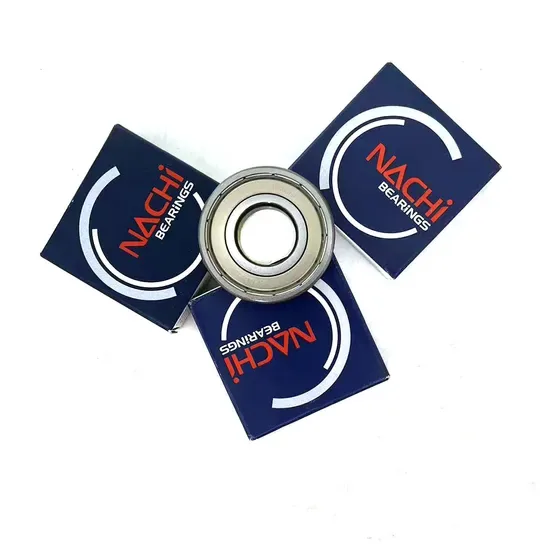
Oct 7, 2026 · Buying Guide · 7 min read
NACHI Bearings Quote: Genuine Wholesale Supplier for Bulk & MRO Orders
Request a NACHI bearings quote with full suffix accuracy to prevent costly customs delays and ensure genuine product traceability. Secure competitive wholesale pricing through…
Read the article Oct 7, 2026 · Buying Guide · 7 min read
Discontinued NACHI Numbers: Replacements from Wholesale Supplier
Replacing discontinued NACHI bearings requires more than matching dimensions to prevent premature field failures. Recalculate internal clearance and verify cage material compatibility to ensure…
Read the article Oct 7, 2026 · Buying Guide · 8 min read
Buy Genuine NACHI Bearings: Wholesale Supplier for Bulk Orders
Secure genuine NACHI bearings by mastering neutral checks and traceability verification to avoid catastrophic equipment failures. Learn to identify counterfeit units through hardness testing,…
Read the article
Request a quote
Send your NACHI model list. We quote fast.
List the NACHI model numbers with full suffixes and the quantity for each. nachioem replies online as quickly as possible with pricing for distributors, repair shops and end users worldwide.
- info@nachioem.com
- WhatsApp +1 (702) 981-5880
- Online replies as quickly as possible
- Global delivery by DHL, FedEx, UPS, air or sea