
NACHI Bearing Technical Guide Technical Resources
NACHI Precision Bearing Wholesale Supplier & Bulk Stock
Prevent premature failure by matching NACHI precision bearing internal clearance and cage materials to heavy-load conditions. Learn to calculate thermal expansion effects, select vibration-resistant machined brass cages, and verify P4 authenticity through traceable documentation for reliable mining and industrial operations.
- Published
- By author
- nachioem · Specialized NACHI bearing supplier
Tighter clearance is not always better for heavy loads.
Selecting the right NACHI precision bearing requires matching internal clearance and cage materials to specific heavy-load conditions, rather than simply copying part numbers from a previous bill of materials. This approach prevents premature failures caused by thermal expansion seizure and vibration-induced fatigue in mining and heavy industry applications.
I still recall the humidity and dust of a copper mine in Chile when I handed over a batch of replacement bearings for a ball mill main shaft. The client was under pressure to resume production, and I relied on standard inventory data, shipping what appeared to be the correct specification. Within days, the keepers failed. The issue was not the brand quality but the mismatch between the standard internal clearance and the extreme thermal expansion generated by the continuous heavy load. That incident shifted my focus from mere parts distribution to technical validation. Now, every inquiry for a NACHI precision bearing wholesale supplier & bulk stock begins with a review of the operating environment, not just the part number.
Understanding these technical nuances is critical for MRO managers and OEM engineers who need to ensure reliability in harsh environments. The following sections detail how to calculate required clearances, select appropriate cage materials, verify authenticity, and conduct root-cause analysis.
How to Calculate Required Internal Clearance for Heavy Loads?
Internal clearance must account for thermal expansion and fit tolerances, not just static load ratings.
In heavy industry, bearings operate under significant heat generation due to friction and external process temperatures. If the initial internal clearance is too tight, the rolling elements expand against the races during operation, leading to excessive preload and eventual seizure. Conversely, excessive clearance causes uneven load distribution and premature fatigue.
The calculation involves several factors:
- Temperature Differential: Estimate the temperature rise of the inner ring relative to the outer ring. In high-speed or high-load applications, the inner ring often runs hotter, causing it to expand more than the outer ring. This reduces the effective internal clearance.
- Fit Tolerances: Interference fits on the shaft or housing compress the bearing rings, further reducing internal clearance. The amount of reduction depends on the wall thickness of the rings and the magnitude of the interference.
- Load Induced Deformation: Under heavy radial loads, the contact area deforms, which can slightly affect the effective clearance, though this is secondary to thermal and fit effects.
A common mistake is selecting C3 clearance for all heavy-duty applications without verifying the actual operating temperature. For instance, in a kiln roller application where temperatures exceed typical ambient levels, a standard C3 clearance might become negative once the system reaches thermal equilibrium. In such cases, a C4 clearance or even a specialized clearance group may be required.
When sourcing from a NACHI precision bearing wholesale supplier & bulk stock, request the specific clearance group designation (e.g., C2, C3, C4) rather than assuming standard availability. Verify that the supplier can provide traceability documents confirming the measured clearance values for critical applications. This ensures that the bearings you receive match the calculated requirements for your specific machinery.
Which Cage Material Survives High-Vibration Mining Sites?
Standard stamped steel cages often fail under high vibration; machined brass or specific polymers are mandatory.
Vibration is a constant companion in mining and quarrying operations. Screens, crushers, and vibrating feeders subject bearings to continuous oscillatory forces that can cause fatigue failure in cage materials. The cage’s primary role is to maintain proper spacing between rolling elements, but under vibration, it also absorbs dynamic stresses.
Stamped steel cages, while cost-effective for general applications, lack the durability needed for high-vibration environments. They are prone to cracking at the rivet points or bending due to resonance. In contrast, machined brass cages offer superior strength and damping characteristics. Brass is softer than steel, allowing it to absorb minor impacts without fracturing, and its machining process results in a more robust structure capable of withstanding higher centrifugal forces and vibration loads.
For extremely high-temperature or chemically aggressive environments, specialized polymer cages made from PEEK or other high-performance plastics may be suitable. These materials offer low weight and good resistance to wear, but their temperature limits must be carefully checked against the application’s thermal profile.
| Cage Material | Vibration Resistance | Temperature Limit | Typical Application |
|---|---|---|---|
| Stamped Steel | Low | Standard | General industrial motors, fans |
| Machined Brass | High | Moderate to High | Mining crushers, vibrating screens |
| Polymer (PEEK) | Moderate | High (Check Grade) | Chemical pumps, high-temp fans |
A case in point involved a vibrating screen operator in West Africa who experienced repeated bearing failures every few months. Upon inspection, the stamped steel cages showed signs of fatigue cracking near the guide ribs. Switching to bearings with machined brass cages extended the service life significantly, reducing unplanned downtime.
When evaluating a NACHI precision bearing wholesale supplier & bulk stock, inquire about the cage material options available for specific series. Not all suppliers stock the full range of cage variants, so confirming availability of machined brass cages for your critical vibrating equipment is essential before placing bulk orders.
What Documents Verify Genuine NACHI Precision Grades?
Demand traceability documentation and specific P4/P4S suffix verification to ensure authenticity.
The market for precision bearings is rife with counterfeits that mimic packaging but fail to meet dimensional and rotational accuracy standards. For applications requiring high precision, such as machine tool spindles or high-speed gearboxes, using genuine NACHI bearings with verified precision grades is non-negotiable.
Genuine NACHI precision bearings are marked with specific suffixes indicating their accuracy class. For example, P4 denotes ISO Class 4 precision, while P4S indicates a special precision grade often used in demanding applications. These suffixes are not just marketing labels; they correspond to strict tolerances for bore diameter, outside diameter, width, and runout.
To verify authenticity, request the following documents from your supplier:
- Certificate of Origin: Confirms the manufacturing source.
- Inspection Certificate: Provides actual measurement data for key dimensions, confirming compliance with the stated precision class.
- Material Certification: Verifies the steel grade and heat treatment process used.
A European wind farm operator once faced issues with noisy gearbox bearings that were supposed to be P4 precision. Laboratory analysis revealed that the bearings had runout values consistent with standard P0 class bearings, indicating they were either mislabeled or counterfeit. This led to costly replacements and extended downtime.
Working with a reputable NACHI precision bearing wholesale supplier & bulk stock means having access to full traceability. Ensure your supplier can provide batch-specific documentation that links the physical bearings to their production records. This level of transparency is crucial for maintaining quality control and avoiding the risks associated with substandard components.
How to Conduct Root-Cause Analysis on Premature Failures?
Inspect wear patterns on residual parts to adjust next selection, not just replace like-for-like.
When a bearing fails prematurely, simply replacing it with the same part number often leads to a repeat failure. A systematic root-cause analysis is necessary to identify the underlying issue and prevent recurrence. This process involves examining the failed bearing and its surrounding components to determine the mode of failure.
Key steps in root-cause analysis include:
- Visual Inspection: Look for signs of overheating, corrosion, or physical damage. Discoloration often indicates excessive temperature, while rust suggests moisture ingress.
- Wear Pattern Analysis: Examine the raceways and rolling elements for pitting, spalling, or brinelling. Specific patterns can indicate misalignment, overload, or inadequate lubrication.
- Lubricant Analysis: Check the condition of the grease or oil. Contamination with water, dirt, or metal particles can accelerate wear.
- Operational Review: Assess whether operating conditions have changed, such as increased load, speed, or temperature.
For example, a cement plant in Southeast Asia experienced repeated failures in their kiln support rollers. Initial replacements did not solve the problem. A detailed analysis revealed that the original bearings had insufficient internal clearance for the high operating temperatures, leading to thermal seizure. By switching to bearings with higher clearance and improved thermal stabilization, the plant achieved stable operation.
Engaging with a NACHI precision bearing wholesale supplier & bulk stock that offers technical support can enhance this process. Suppliers with field experience can help interpret failure patterns and recommend adjustments to clearance, cage material, or lubrication strategies. This collaborative approach transforms a failure event into an opportunity for improvement, ensuring long-term reliability.
Conclusion
Precision selection prevents premature failure in heavy industry.
Matching internal clearance and cage materials to specific operating conditions is essential for maximizing bearing life. Verifying authenticity through traceable documentation and conducting thorough root-cause analysis ensures continuous improvement in maintenance strategies. Partnering with a knowledgeable NACHI precision bearing wholesale supplier & bulk stock provides the technical depth and genuine products needed for reliable industrial operations.
Applications covered in this article
Products in this article
NACHI bearings mentioned above
These are the NACHI bearing types discussed in this guide. Open a product page to check its designation and send the exact suffix with your quantity.
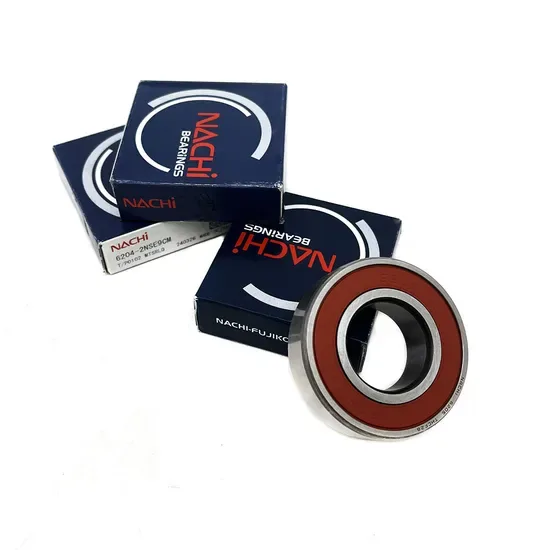
Agricultural Machinery Bearings
NACHI Super Precision Deep Groove Ball Bearing 6301 6208 686zz 6200-6206 for Agricultural Machinery
View product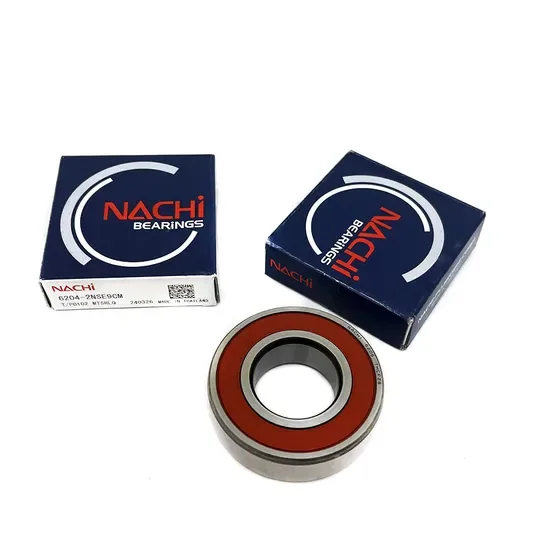
Deep Groove Ball Bearings
Genuine NACHI 608zz 6202 6201 Deep Groove Ball Bearing for Marine Equipment
View product Deep Groove Ball Bearings
NACHI 608zz 16004 6201 Deep Groove Ball Bearing P6 P5 C3
View product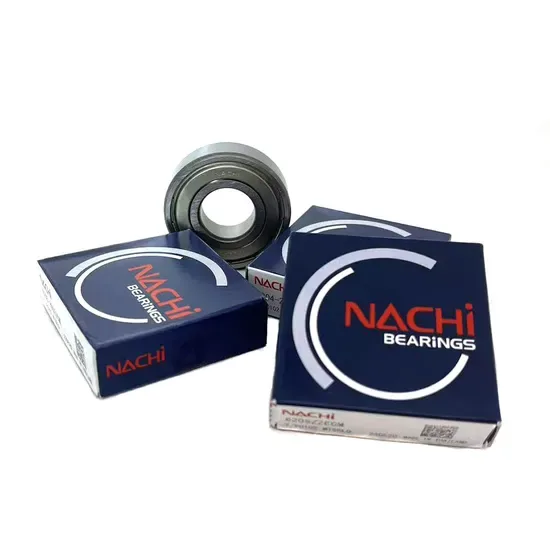
Deep Groove Ball Bearings
NACHI Deep Groove Ball Bearing 62301 608 6202 63008 63007 63006 6204 6301
View productModel check
Not sure which NACHI designation fits? We help with substitution, cross-reference and selection.
Send the old bearing number, the worn marking you can still read, or the application and shaft size. nachioem matches it to the correct NACHI model, including clearance, cage and seal options, before you order.
- Substitution for discontinued models
- Cross-reference to NACHI numbers
- Selection for spindles, pumps and reducers
Keep reading
Related NACHI bearing technical articles
More practical guides on NACHI suffixes, replacement and selection for machine tools, automotive, construction machinery, pumps and gear reducers.
Oct 8, 2026 · Technical Resources · 9 min read
NACHI Bearing Glossary: Wholesale Supplier for Bulk Orders
Master the NACHI Bearing Glossary to prevent costly spindle failures caused by misinterpreting suffix codes. Distinguish between standard DB pairing and custom Flush Ground…
Read the article
Oct 8, 2026 · Technical Resources · 7 min read
NACHI to Other Brands Interchange Table: Cross-Reference Supplier for Sale
Master the NACHI interchange table by verifying internal clearance and cage materials, not just dimensions. Matching C3 clearance and brass cages prevents thermal seizure…
Read the article Oct 8, 2026 · Technical Resources · 7 min read
NACHI Mounted Unit Dimension Table Wholesale Supplier
Stop costly downtime by mastering the NACHI Mounted Unit Dimension Table for precise installation. Verify center height, bore diameter, and mounting hole pitches to…
Read the article
Request a quote
Send your NACHI model list. We quote fast.
List the NACHI model numbers with full suffixes and the quantity for each. nachioem replies online as quickly as possible with pricing for distributors, repair shops and end users worldwide.
- info@nachioem.com
- WhatsApp +1 (702) 981-5880
- Online replies as quickly as possible
- Global delivery by DHL, FedEx, UPS, air or sea