
NACHI Bearing Technical Guide Buying Guide
NACHI Precision Bearings for Machine Tools Wholesale Supplier
Secure genuine NACHI precision bearings for machine tools with strict traceability to prevent catastrophic spindle failures from counterfeits. Match ISO 492 P4 or P2 grades to your specific RPM requirements and verify authenticity using original mill certificates. Consolidate mixed-brand orders efficiently to reduce logistics costs while ensuring operational continuity.
- Published
- By author
- nachioem · Specialized NACHI bearing supplier
Price is not the primary cost driver; unplanned downtime from counterfeit components is.
Sourcing genuine NACHI precision bearings for machine tools requires strict traceability and grade matching to prevent catastrophic spindle failures. A verified supplier provides original mill certificates, correct ISO 492 tolerance classes, and mixed-brand consolidation capabilities to ensure operational continuity.
I still hear the high-pitched whine of that spindle in Lagos. It was a CNC machining center, barely out of the commissioning phase. The local workshop manager had sourced what he believed were premium Japanese bearings to save on procurement costs. Within weeks, the vibration levels exceeded tolerance, forcing a complete line shutdown. When we dismantled the housing, the cause was immediate and visceral: the cage material was brittle, snapping under minimal load, and the internal clearance was entirely wrong for the application. It was not a manufacturing defect from the original brand; it was a sophisticated counterfeit. That incident shifted my focus from simple transaction fulfillment to rigorous channel verification. In the world of high-speed spindles, authenticity is not a luxury; it is a mechanical necessity.
The market is flooded with look-alikes. For buyers seeking a reliable NACHI precision bearings for machine tools wholesale supplier, the challenge is not finding a vendor, but finding one who understands the technical gravity of precision grades and can prove the origin of every unit shipped.
Why Genuine NACHI Bearings are Critical for Machine Tool Spindles?
Counterfeit bearings do not just fail; they destroy the host machinery. The difference between a genuine component and a fake often lies in the metallurgy and the heat treatment process, which are invisible to the naked eye until failure occurs.
In high-speed machining, the spindle operates under extreme thermal and mechanical stress. Genuine NACHI bearings utilize high-purity steel and precise heat treatment to maintain dimensional stability. Counterfeits often use inferior steel with higher inclusion counts, leading to premature fatigue and micro-cracking.
Consider the case of an Asian OEM producing high-end grinding machines. They initially struggled with inconsistent spindle performance across batches. After switching to a verified source with full traceability, they achieved consistent P4 and P2 grade performance. The result was zero unplanned downtime during their most critical production cycles. The key was not just the brand name, but the assurance that the bearing inside the box matched the specification on the drawing.
Fake bearings often have incorrect cage designs. In the Lagos incident, the cage was made from a low-grade polymer that could not withstand the operating temperature, leading to disintegration. Genuine units use engineered cages designed to guide rolling elements precisely, reducing friction and heat generation. Without this precision, the lubricant breaks down, metal-to-metal contact occurs, and the spindle seizes.
For any serious operation, the risk of using unverified stock is too high. The cost of a single spindle repair, including lost production time, dwarfs the savings from buying cheaper, unverified parts. This is why working with a NACHI precision bearings for machine tools wholesale supplier who prioritizes authenticity over margin is essential for long-term operational health.
How to Compare NACHI Precision Grades (P4 vs P2) for Your Spindle?
Selecting the right precision grade is not about choosing the highest number available; it is about matching the bearing’s capability to the spindle’s requirements. Over-specifying can lead to unnecessary cost, while under-specifying leads to premature failure.
ISO 492 defines the tolerance classes for rolling bearings. For machine tool spindles, the common grades are P4 (ABEC 7) and P2 (ABEC 9). P4 is suitable for many general-purpose high-speed applications, offering tight tolerances on bore and outside diameter. However, for ultra-high-speed spindles or those requiring extreme rigidity, P2 is often necessary. P2 bearings have even tighter tolerances and lower runout, ensuring minimal vibration at high RPMs.
| Parameter | P4 Grade (Class 4) | P2 Grade (Class 2) | Application Context |
|---|---|---|---|
| Bore Tolerance | Tight | Very Tight | High-speed general machining |
| Outside Diameter Tolerance | Tight | Very Tight | Precision grinding, milling |
| Radial Runout | Low | Extremely Low | Ultra-precision, high-RPM spindles |
| Preload Matching | Standard | Strict | Critical for rigidity and thermal stability |
A common mistake is assuming standard P4 is sufficient for all CNC applications. In reality, high-frequency spindles require the specific preload matching and geometric precision of P2 to maintain accuracy over long shifts. If the preload is incorrect, the bearing may overheat or suffer from brinelling.
I recall a European wind farm operator who faced similar issues with gearbox bearings, though at a much larger scale. They learned that matching the bearing specification to the load profile was more important than simply buying the most expensive option. In machine tools, this principle holds true. A P2 bearing in a low-speed, high-load application might not offer significant benefits over a robust P4, but in a high-speed spindle, the difference is night and day.
When consulting with a NACHI precision bearings for machine tools wholesale supplier, provide detailed spindle specifications, including maximum RPM, load direction, and required rigidity. This allows for precise technical selection rather than guesswork.
What Traceability Documents Prove Bearing Authenticity?
Documentation is the only reliable shield against counterfeits. A box with a logo means nothing without the paper trail to back it up. Genuine bearings come with a specific set of documents that verify their origin and quality.
The two most critical documents are the Certificate of Origin (COO) and the original mill certificate. The COO proves the geographic origin of the product, ensuring it was manufactured in the claimed facility. The mill certificate provides detailed data on the specific batch, including material composition and heat treatment records.
Many distributors provide only a commercial invoice, which is insufficient for verifying authenticity. A genuine supplier will provide copies of the original manufacturer’s documentation, linking the serial numbers on the bearings to the production batch.
In the Middle East, a distributor faced repeated customs rejections due to incomplete documentation for mixed-brand containers. By switching to a supplier who provided full original traceability docs for every brand in the shipment, they eliminated these delays. This level of transparency is rare but essential for high-value industrial components.
Without these documents, you are buying blind. Counterfeiters are adept at replicating packaging, but they cannot replicate the unique batch-specific data found in mill certificates. Always demand these documents before payment. If a supplier hesitates or offers vague excuses, it is a major red flag.
Working with a NACHI precision bearings for machine tools wholesale supplier who insists on providing these documents demonstrates their commitment to integrity. It also simplifies your own quality control processes, allowing you to verify each shipment against the manufacturer’s records.
How to Consolidate Mixed-Brand Bearing Orders Efficiently?
Industrial facilities rarely use a single brand. A typical machine tool may contain bearings from SKF, FAG, NSK, and NACHI. Sourcing these from multiple vendors creates logistical nightmares, increased shipping costs, and complex customs clearance.
Consolidation is the solution. By combining orders from different brands into a single shipment, buyers can reduce freight costs and simplify inventory management. However, this requires a supplier with access to multiple genuine brands and the logistical capability to handle mixed loads.
A professional global supplier can source genuine products from various premium brands, including SKF, FAG, INA, NSK, NTN, TIMKEN, KOYO, and NACHI, alongside reliable domestic lines. This one-stop approach ensures that all components meet the same high standards of authenticity and quality.
For example, a mining equipment manufacturer needed to replace bearings in a large crusher. The assembly required spherical roller bearings from one brand and tapered roller bearings from another. By sourcing both from a single consolidated supplier, they received a single container with full traceability for all items. This reduced their administrative burden and ensured that all parts arrived simultaneously, minimizing downtime.
When evaluating a NACHI precision bearings for machine tools wholesale supplier, ask about their consolidation capabilities. Can they handle mixed-brand orders? Do they provide separate traceability documents for each brand? These questions reveal their operational maturity and ability to support complex supply chains.
Conclusion
Authenticity and precision are non-negotiable in machine tool maintenance.
Sourcing genuine components requires more than just a purchase order; it demands rigorous verification of traceability documents and careful selection of precision grades. By partnering with a supplier who prioritizes transparency and technical accuracy, operators can avoid the catastrophic costs of counterfeit failures. Ensure every bearing is backed by original mill certificates and matched to your specific spindle requirements. This disciplined approach protects your machinery and your productivity.
Applications covered in this article
Products in this article
NACHI bearings mentioned above
These are the NACHI bearing types discussed in this guide. Open a product page to check its designation and send the exact suffix with your quantity.
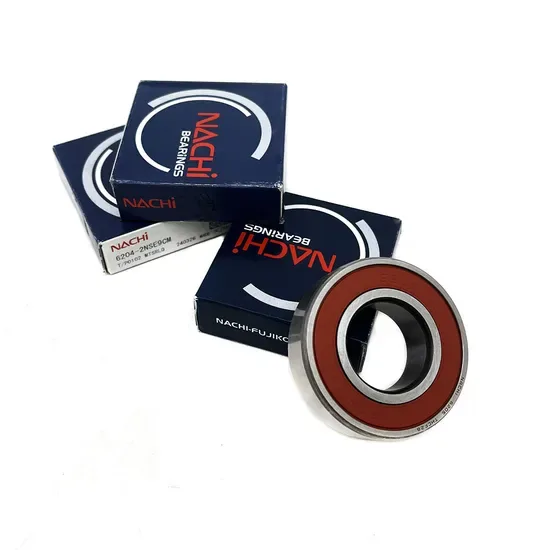
Agricultural Machinery Bearings
NACHI Super Precision Deep Groove Ball Bearing 6301 6208 686zz 6200-6206 for Agricultural Machinery
View product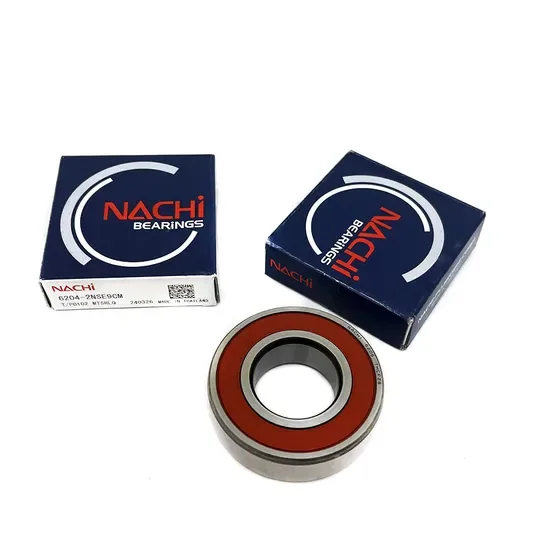
Deep Groove Ball Bearings
Genuine NACHI 608zz 6202 6201 Deep Groove Ball Bearing for Marine Equipment
View product Deep Groove Ball Bearings
NACHI 608zz 16004 6201 Deep Groove Ball Bearing P6 P5 C3
View product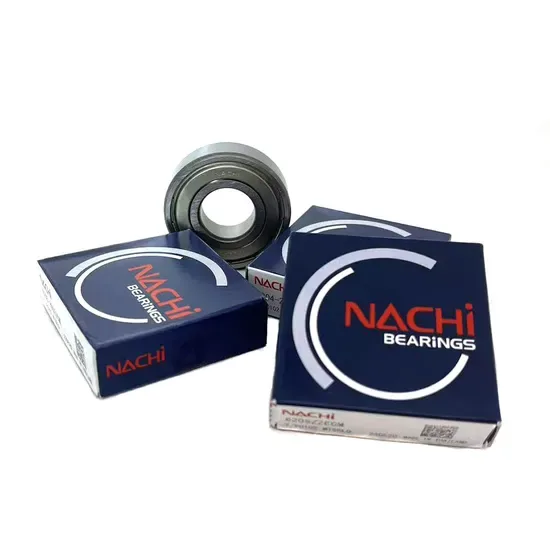
Deep Groove Ball Bearings
NACHI Deep Groove Ball Bearing 62301 608 6202 63008 63007 63006 6204 6301
View productModel check
Not sure which NACHI designation fits? We help with substitution, cross-reference and selection.
Send the old bearing number, the worn marking you can still read, or the application and shaft size. nachioem matches it to the correct NACHI model, including clearance, cage and seal options, before you order.
- Substitution for discontinued models
- Cross-reference to NACHI numbers
- Selection for spindles, pumps and reducers
Keep reading
Related NACHI bearing technical articles
More practical guides on NACHI suffixes, replacement and selection for machine tools, automotive, construction machinery, pumps and gear reducers.
Oct 7, 2026 · Buying Guide · 7 min read
NACHI Bearings Quote: Genuine Wholesale Supplier for Bulk & MRO Orders
Request a NACHI bearings quote with full suffix accuracy to prevent costly customs delays and ensure genuine product traceability. Secure competitive wholesale pricing through…
Read the article Oct 7, 2026 · Buying Guide · 7 min read
Discontinued NACHI Numbers: Replacements from Wholesale Supplier
Replacing discontinued NACHI bearings requires more than matching dimensions to prevent premature field failures. Recalculate internal clearance and verify cage material compatibility to ensure…
Read the article Oct 7, 2026 · Buying Guide · 8 min read
Buy Genuine NACHI Bearings: Wholesale Supplier for Bulk Orders
Secure genuine NACHI bearings by mastering neutral checks and traceability verification to avoid catastrophic equipment failures. Learn to identify counterfeit units through hardness testing,…
Read the article
Request a quote
Send your NACHI model list. We quote fast.
List the NACHI model numbers with full suffixes and the quantity for each. nachioem replies online as quickly as possible with pricing for distributors, repair shops and end users worldwide.
- info@nachioem.com
- WhatsApp +1 (702) 981-5880
- Online replies as quickly as possible
- Global delivery by DHL, FedEx, UPS, air or sea