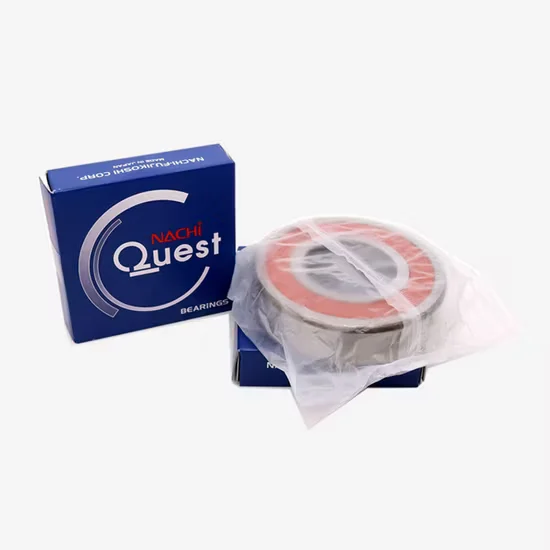
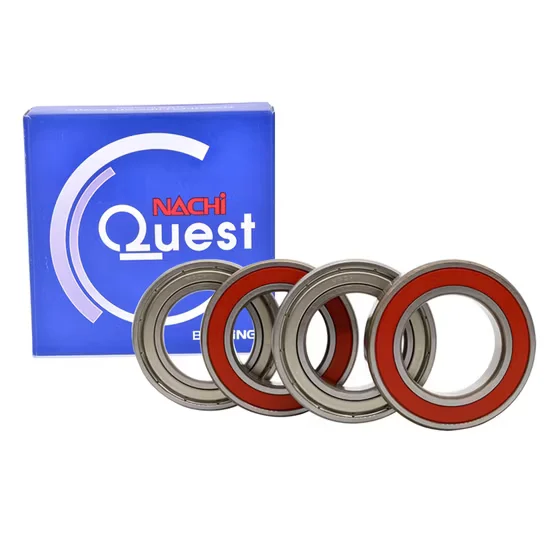
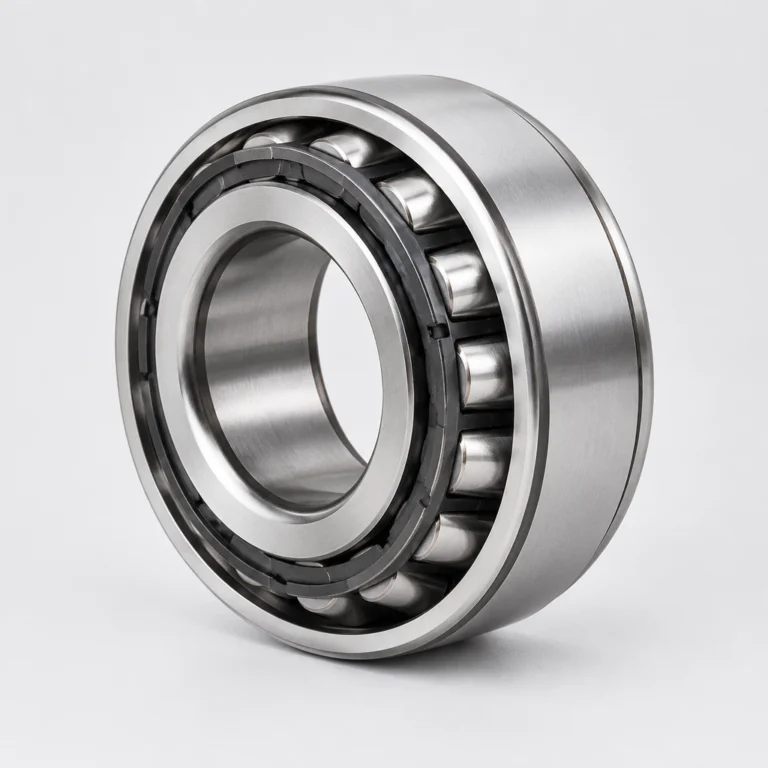
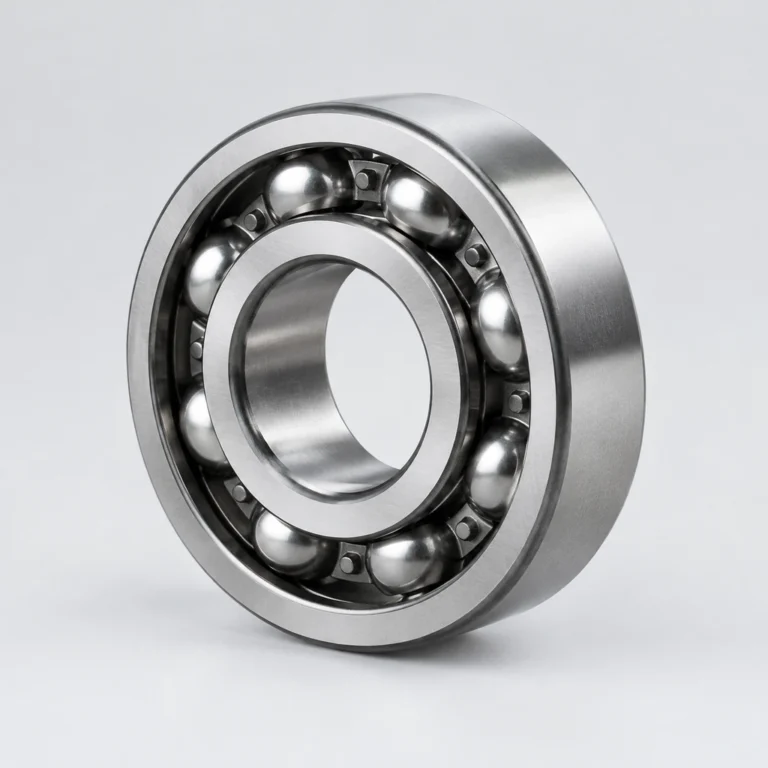
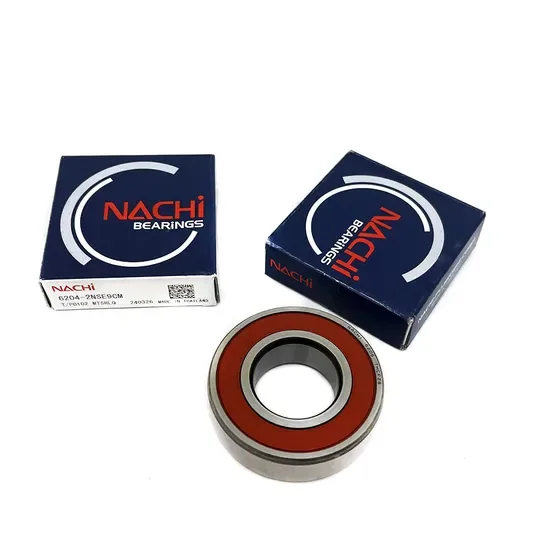
QR Traceability Verification — Scan the factory label to confirm the authentic origin of your BDL/MACHI 6204 deep groove ball bearing before installation.
Technical Specifications
| Parameter | Value |
| Designation | BDL/MACHI 6204 |
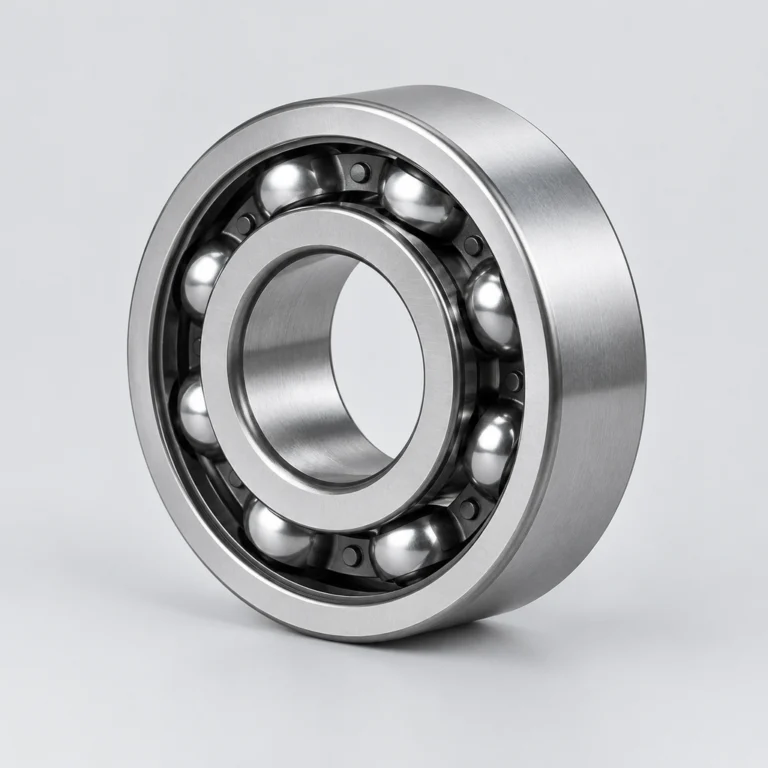
| Product Type | Deep Groove Ball Bearing |
| Bore Diameter (d) | 20 mm |
| Outside Diameter (D) | 47 mm |
| Width (B) | 14 mm |
| Seal or Shield Type | ZZ, 2RS, Open |
| Lubrication | Grease or Oil |
| Precision Class | P0, P6, P5, P4 |
| Vibration | Z1V1, Z2V2, Z3V3 |
| Material | Bearing Steel |
| Contact Angle | 0° |
| Number of Rows | Single |
| Load Direction | Radial |
Application Suitability
| Industry | Typical Applications |
| Electric Motors | Rotor shaft support, cooling fan assemblies |
| Pumps | Impeller shaft alignment, seal chamber support |
| Gearboxes | High-speed input shafts, intermediate gear stages |
| Conveyors | Drive pulley bearings, return roller idlers |
Why Dust Ingress Destroys the BDL/MACHI 6204 Deep Groove Ball Bearing in Arid Climates
Improper seal selection in dusty environments allows microscopic particles to breach the cavity, causing rapid abrasive wear and motor seizure.
Working with motor integration projects across the Middle East, I have seen countless pump motors fail prematurely because procurement teams defaulted to standard shielded variants without considering the site conditions. When fine silica dust bypasses inadequate shielding, it mixes with the grease to form a grinding paste that aggressively scores the raceways. Specifying the exact seal configuration for your BDL/MACHI 6204 deep groove ball bearing is not just a minor procurement detail; it is the primary mechanical defense against catastrophic sweep failures that destroy the entire motor stator and rotor assembly.

Matching Seal and Clearance to Motor Operating Conditions
Selecting the right BDL/MACHI 6204 deep groove ball bearing requires aligning the seal type and internal clearance with the specific thermal and contamination profile of the equipment. Our sourcing team frequently assists MRO buyers in upgrading from basic metal shields to contact rubber seals when operating in high-dust environments, ensuring the internal lubricant remains completely uncontaminated. This targeted selection prevents the premature degradation and elevated friction that often plagues generic replacement parts, ultimately extending the mean time between failures for critical drive systems.
Managing Thermal Expansion and Contamination in Pump Assemblies
Electric motors and centrifugal pumps subject these components to continuous radial loads while generating significant internal heat during high-speed rotation. If the internal clearance is too tight, thermal expansion of the shaft and housing can eliminate the operating gap, leading to excessive friction, elevated temperatures, and eventual seizure. Furthermore, in outdoor or unfiltered environments, non-contact metal shields often fail to block fine particulate matter, whereas contact seals provide superior exclusion at the cost of slightly higher friction torque. Balancing these sealing and clearance parameters is absolutely critical for maintaining optimal rotational dynamics and preventing premature fatigue.
Decoding Precision Classes and Vibration Limits
The available precision classes ranging from P0 to P4 dictate the dimensional and running accuracy of the bearing, directly influencing the vibration and noise levels in high-speed electric motors. For standard industrial gearboxes, P0 or P6 precision is typically sufficient, but precision-driven applications like servo motors demand P5 or P4 tolerances to minimize shaft runout and ensure positional accuracy. Correspondingly, the vibration grades (Z1V1 through Z3V3) reflect the dynamic uniformity of the internal geometry, where Z3V3 ensures the smoothest operation for sensitive household appliances and precision medical equipment. The choice between ZZ metal shields and 2RS rubber seals hinges on the trade-off between moisture exclusion and rotational friction. Open variants are strictly reserved for enclosed gearboxes where the housing provides primary sealing and allows for continuous oil bath lubrication, preventing the grease from drying out over extended operational cycles.
The Operational Impact of Mismatched Internal Clearances
Installing a standard clearance variant in an application with high thermal gradients often results in internal preload, accelerating fatigue and causing premature spalling on the raceways. Conversely, excessive clearance in high-speed pump shafts induces detrimental vibration, compromising the mechanical seals and leading to unplanned downtime and fluid leaks. According to failure analysis frameworks, a significant share of premature failures stems directly from these initial specification mismatches rather than inherent material defects. Such specification errors not only void equipment warranties but also trigger cascading mechanical damage to adjacent motor components, drastically increasing the total cost of ownership.
Securing Traceable and Application-Specific Inventory
Sourcing mixed-brand and mixed-size bearing packages often compromises traceability, but we provide complete origin documentation for every BDL/MACHI 6204 deep groove ball bearing dispatched from our consolidation center. Buyers frequently struggle to find specific seal and clearance combinations like 2RS C3 from local distributors; our extensive inventory covers these exact variants to prevent critical project delays. We offer comprehensive cross-reference consultation to verify dimensional equivalence against legacy setups when equipment modifications or upgrades are required in the field. Furthermore, our technical team reviews your operating parameters to confirm that the selected precision class genuinely matches the motor's RPM and load profile. This rigorous validation ensures you receive authentic components optimized for your exact maintenance scenario, eliminating the guesswork from critical MRO procurement.
Documentation & Authenticity
- Certificate of Conformity verifying the specific P4 precision grade and Z3V3 vibration limits.
- Batch traceability records linking the 20x47x14 mm dimensions to the original manufacturing heat.
- Dimensional inspection reports confirming bore and outside diameter tolerances before dispatch.
- Material certification validating the chemical composition of the bearing steel rings and rolling elements.
- Origin documentation confirming the genuine production facility for the requested seal configuration.
Storage, Handling & Mounting
- Store the 2RS sealed variants in original packaging to prevent rubber lip degradation from UV exposure.
- Use induction heaters for inner ring mounting, avoiding direct flame that damages the ZZ shields.
- Keep open-type bearings sealed until installation to protect the unprotected raceways from ambient moisture.
- Verify the C3 clearance marking on the box before pressing the bearing onto the motor shaft.
- Handle P4 precision variants with clean cotton gloves to prevent skin acids from etching the polished surfaces.
Preparing Your Technical Requirements for Selection
To ensure accurate model validation, please provide the specific radial and axial loads, operating RPM, and ambient temperature ranges of your equipment. Sharing the original OEM part numbers allows our engineering team to perform precise cross-reference checks against alternative catalogs and verify dimensional compatibility. If your application involves severe dust or moisture ingress, detailing the exact environmental exposure helps us recommend the optimal seal and clearance combination. This technical review guarantees that the supplied components will withstand your specific operational stresses without requiring premature replacement.
Frequently Asked Questions
Q: How do I choose between ZZ, 2RS, and Open seals for my electric motor application?
A: ZZ metal shields offer low friction and basic dust protection, making them suitable for clean, high-speed environments. 2RS rubber contact seals provide superior exclusion against moisture and fine particulates, which is critical for outdoor pumps or dusty conveyors. Open bearings are strictly intended for sealed gearboxes where the housing manages contamination and provides continuous oil lubrication.
Q: What are the practical differences between P0, P6, P5, and P4 precision classes?
A: P0 and P6 represent standard commercial tolerances adequate for general industrial gearboxes and basic conveyor idlers. P5 and P4 denote high-precision grades with strictly controlled dimensional and running accuracy, essential for minimizing vibration and noise in high-speed electric motors, servo drives, and precision machine tool spindles where shaft runout must be tightly constrained.
Q: How can I verify the authenticity and traceability of these bearings upon delivery?
A: Every shipment includes a Certificate of Conformity and batch traceability documentation linking the physical components to their original manufacturing heat. You can cross-check the dimensional inspection reports against the official catalog specifications for the exact envelope dimensions. Additionally, the packaging features secure labeling to confirm the genuine origin of the product before installation.
Q: How do I cross-reference equivalent models from other brands for this specific size?
A: The standardized metric envelope allows direct cross-referencing with equivalent designations from major global manufacturers. When substituting brands, it is crucial to match not only the base dimensions but also the specific suffix codes for seal type, internal clearance, and precision class to ensure identical performance and prevent premature failure in your equipment.
Q: What lubrication practices are recommended for deep groove ball bearings in high-temperature pump applications?
A: For sealed variants, the factory-filled grease is optimized for standard temperature ranges, and they cannot be relubricated. In high-temperature pump applications exceeding standard thermal limits, open or shielded bearings should be specified, allowing the maintenance team to apply specialized high-temperature synthetic lubricants at regular intervals to prevent grease degradation and subsequent raceway scoring.