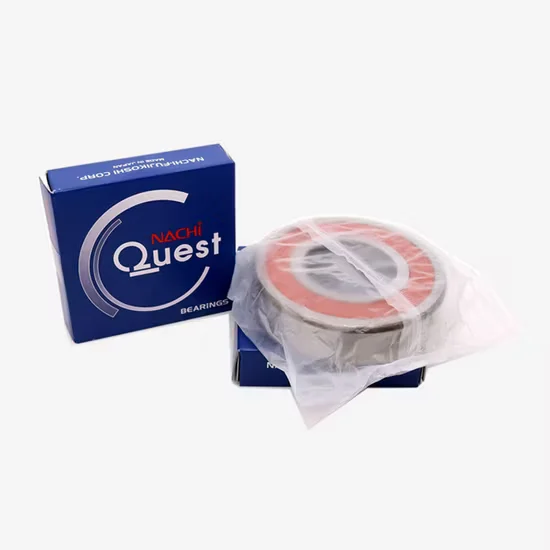
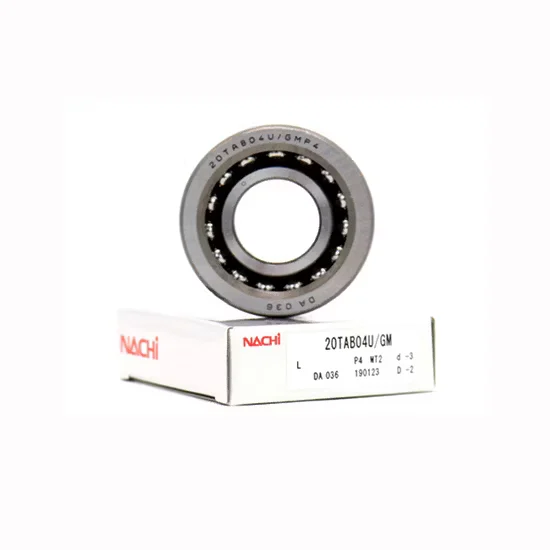
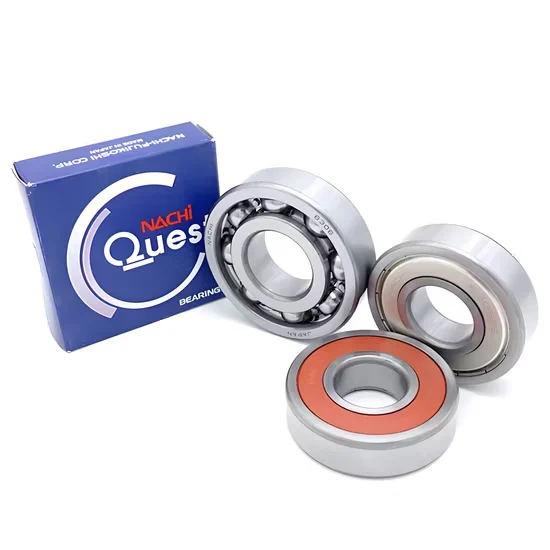
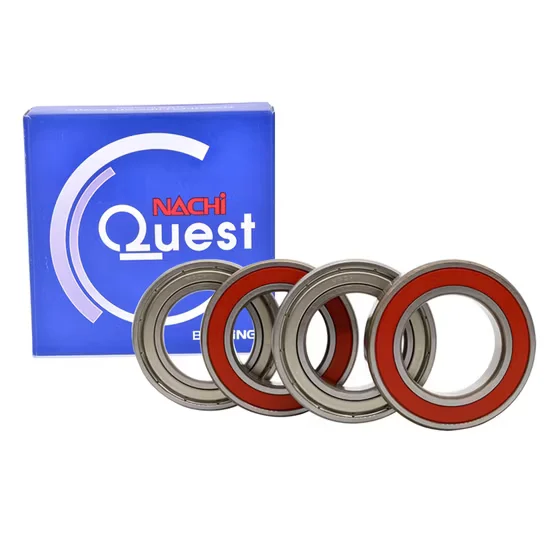
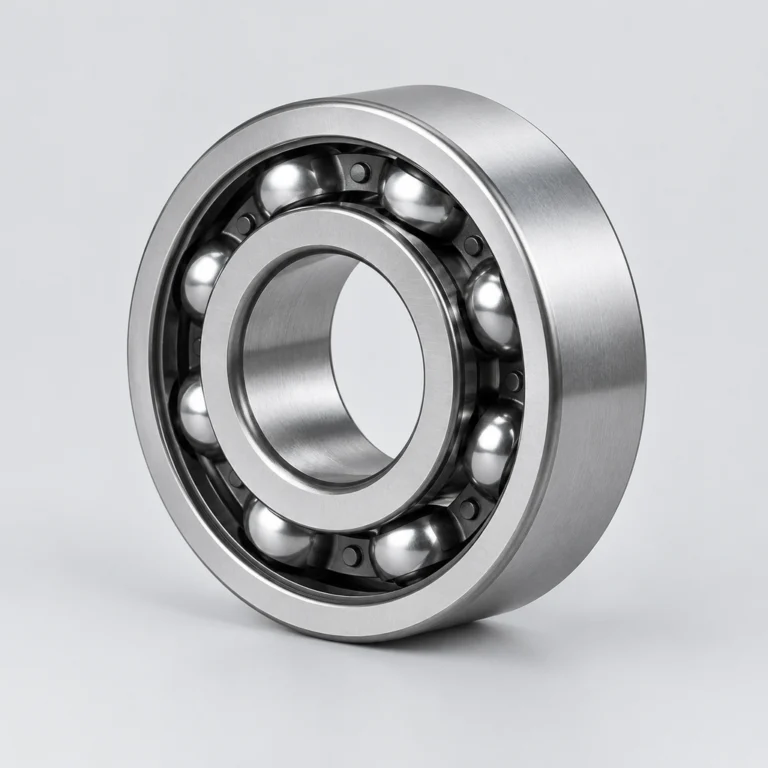
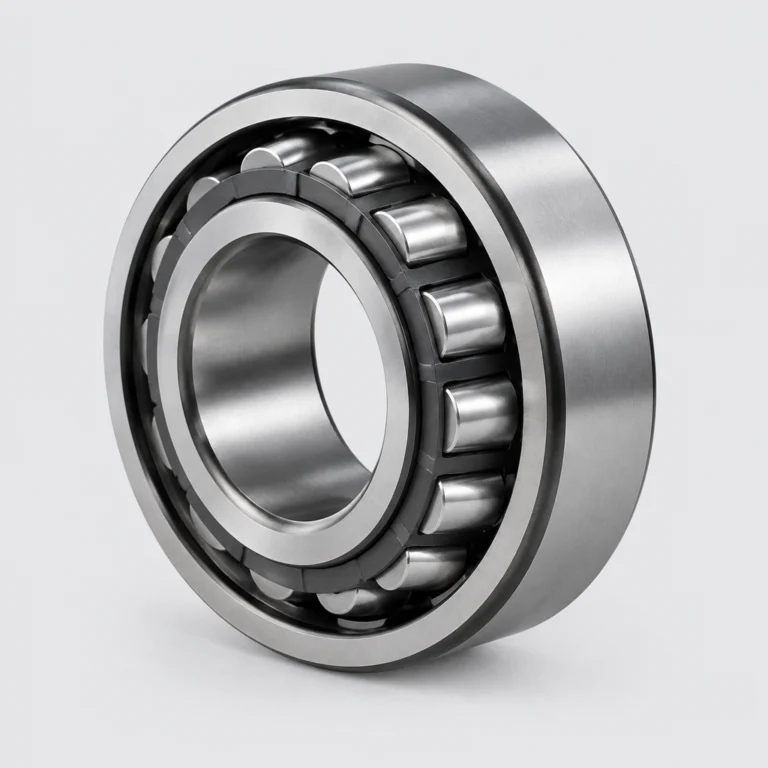
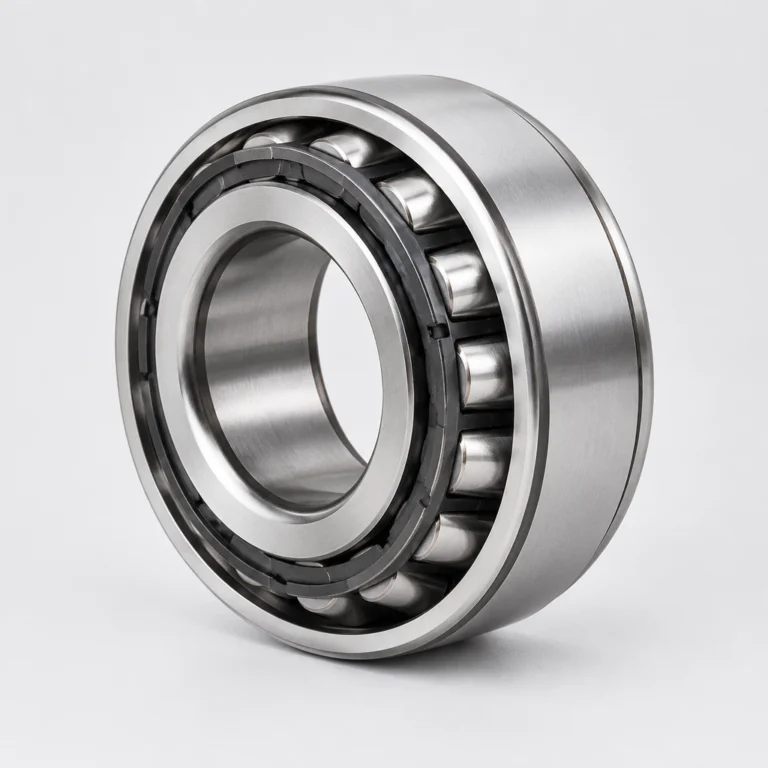
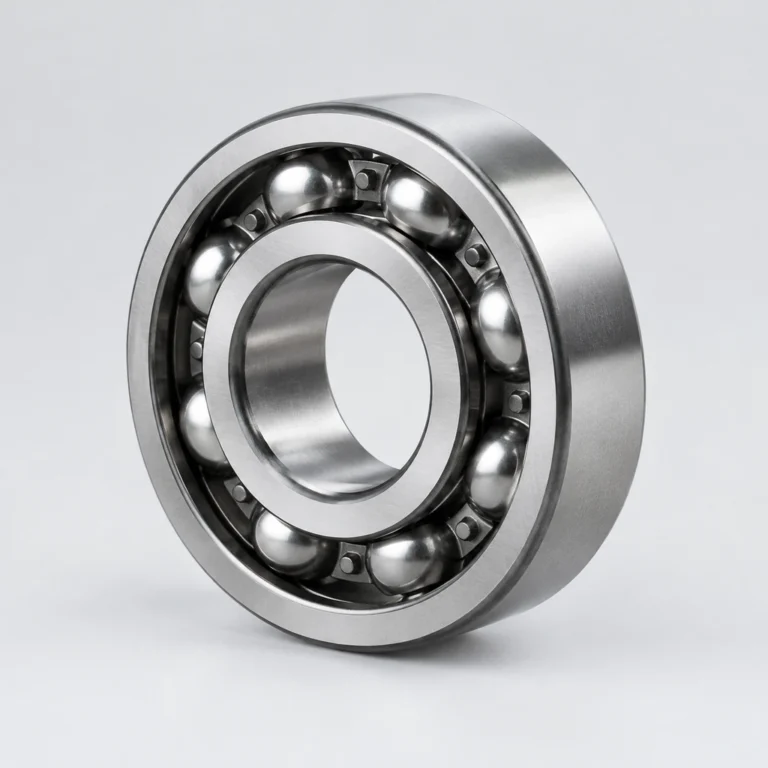
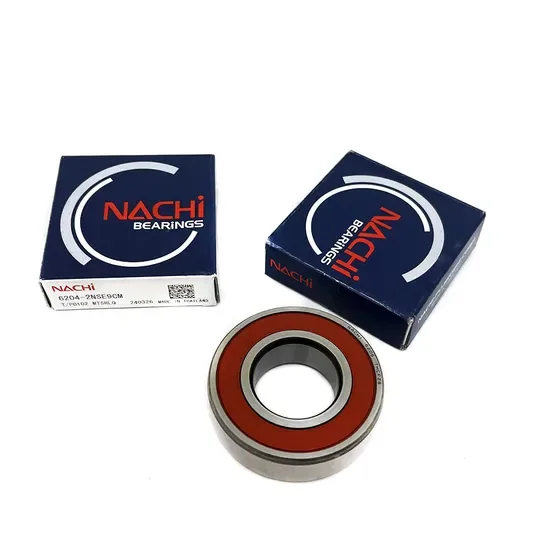
Genuine Japan origin verified — Every NACHI 6309 deep groove ball bearing we supply includes a scannable QR code linking directly to the manufacturer's official authentication database.
Technical Specifications
| Parameter | Value |
| Designation | NACHI 6309 |
| Bearing Type | Deep Groove Ball Bearing |
| Bore Diameter (d) | 45 mm |
| Outside Diameter (D) | 100 mm |
| Width (B) | 25 mm |
| Seal or Shield Type | Open (Zz and 2RS variants available) |
| Precision Class | P0, P6, P5, P4 options |
| Vibration Level | Z1V1, Z2V2, Z3V3 options |
| Material | Bearing Steel |
| Contact Angle | 0° |
| Number of Rows | Single |
| Load Direction | Radial |
| Origin | Japan |
Application Suitability
| Industry | Typical Applications |
| Electric Motors | Rotor shaft support in industrial AC/DC motors |
| Pumps | Centrifugal pump impeller shaft bearings |
| Gearboxes | High-speed input shaft radial support |
| Conveyors | Drive pulley shaft bearings in material handling |
Why Standard Clearance Fails When Installing a NACHI 6309 Deep Groove Ball Bearing
Thermal expansion inside motor housings rapidly eliminates standard internal clearance, causing the rolling elements to bind and overheat. Early in my career supplying motor components in Qingdao, I matched standard CN clearance to a high-temperature motor application without verifying the operating thermal profile. The internal heat expanded the inner ring, squeezing the clearance to zero and locking the rotor solid. The resulting catastrophic failure destroyed the stator windings, melted the insulation, and halted the entire production line for days. Always evaluate the specific thermal gradient, shaft interference fit, and housing material expansion coefficient before locking in the clearance class for electric motor applications.

Matching Radial Load Capacity to Motor Shaft Dynamics
Electric motor rotors generate continuous radial loads combined with high-speed rotation, demanding exceptional structural stability from the supporting components. The NACHI 6309 deep groove ball bearing handles these radial forces efficiently through its single-row, non-aligning geometry and optimized raceway curvature. Its 45 mm bore and 100 mm outer diameter provide a substantial cross-section for medium-duty motor shafts, distributing the load evenly across the rolling elements. We frequently consolidate these units with mixed-brand packages for large-scale motor manufacturing projects, ensuring consistent dimensional accuracy and reliable supply across the entire assembly line.
Managing Thermal Gradients and Contamination Risks in Motor Housings
Motor housings trap significant heat during continuous operation, demanding careful attention to internal clearance limits and lubrication thermal stability. Standard grease formulations degrade rapidly if the operating temperature exceeds their thermal threshold, leading to accelerated wear and increased friction. Furthermore, open-type bearings require effective external sealing solutions to prevent conductive dust, carbon brush debris, or moisture from infiltrating the raceways. Selecting the appropriate vibration grade is also critical to minimize acoustic noise and prevent resonant frequencies from compromising the structural integrity of precision appliance motors.
Decoding Precision and Vibration Grades for Quiet Motor Operation
The available precision classes ranging from P0 to P4 directly dictate the rotational accuracy and acoustic signature of the finished motor assembly. Higher precision grades minimize inner and outer ring eccentricity, which is vital for high-speed spindle motors where even microscopic runout causes severe vibration. Similarly, vibration standards classify the dynamic noise output under operational loads. A strict low-vibration rating ensures the lowest amplitude, preventing resonant frequencies from transferring to the motor casing and affecting sensitive surrounding equipment. The available material options, including high-purity bearing steel, provide the necessary hardness and fatigue resistance for sustained radial loading without spalling.
The Operational Toll of Overlooking Clearance and Vibration Specifications
Specifying an incorrect internal clearance or ignoring vibration limits leads to severe operational penalties and compromised equipment reliability. A bearing running with negative clearance due to thermal expansion will experience excessive friction, rapidly degrading the raceways and causing unplanned downtime. Conversely, using a standard vibration grade in a quiet-running appliance motor results in rejected production batches, customer complaints, and extensive warranty voidance. These hidden costs far outweigh the initial procurement savings of bypassing thorough technical verification and proper specification alignment during the sourcing phase.
Securing Traceability and Technical Alignment for Critical Motor Projects
Procuring genuine components requires more than just matching the basic part number on a purchase order. We verify the exact clearance and vibration suffix requirements against your motor's specific thermal and acoustic profiles, preventing the costly mismatch that leads to thermal seizure. Every shipment includes complete batch traceability documentation to satisfy stringent ISO quality audits and ensure full material transparency from the manufacturer's production facilities. Our massive spot inventory covers thousands of standard and special part numbers, allowing us to fulfill both emergency single-unit replacements for urgent maintenance and full-container consolidation orders without delaying your production schedule. Furthermore, our technical team provides ongoing after-sales support for failure analysis if unexpected operational issues arise.
Documentation & Authenticity
- Official QR code authentication linking directly to the Japan manufacturing database.
- Original factory batch traceability documents verifying the specific production run.
- Dimensional inspection reports confirming the strict 45x100x25 mm tolerances.
- Running accuracy certificates validating the requested P5 or P4 precision class.
- Material test reports certifying the selected metallurgical composition.
Storage, Handling & Mounting
- Store the open-type variants in original anti-corrosion packaging until installation to prevent raceway oxidation.
- Use induction heating for mounting the 45 mm bore, avoiding localized stress from mechanical pressing.
- Maintain cleanroom protocols when handling Z3V3 low-vibration units to prevent debris from altering acoustic signatures.
- Verify the internal clearance class with a feeler gauge before pressing the outer ring into the housing.
- Apply specified grease volume carefully for open bearings, as overfilling causes churning and rapid thermal buildup.
Engineering Data Required for Precise Motor Bearing Selection
To ensure the selected bearing perfectly matches your motor design and operational environment, please provide the continuous radial load, maximum operating speed, and expected thermal gradient. Sharing the specific OEM equipment number allows our engineering team to perform a comprehensive cross-reference check and verify dimensional compatibility across different international brands. If your application involves extreme environments, detailing the exposure to moisture, conductive dust, or chemical vapors helps us recommend the optimal seal variant and lubrication strategy. This thorough technical review guarantees that the final configuration delivers maximum service life, reliable performance, and optimal energy efficiency for your specific application.
Frequently Asked Questions
Q: What does the absence of a suffix on the NACHI 6309 indicate?
A: When no suffix is present, it designates an open-type bearing with standard CN internal clearance and P0 precision. This configuration requires external sealing and allows for custom relubrication. If your motor operates at elevated temperatures or requires low noise, you must specify the appropriate clearance, precision, and seal variants during the inquiry stage.
Q: How do I choose between Z1V1 and Z3V3 vibration grades?
A: The Z1V1 grade suits general industrial motors where acoustic noise is a secondary concern. The Z3V3 grade is strictly necessary for precision appliance motors or high-speed spindles where vibration transfer causes operational issues. Selecting the correct grade prevents resonant noise and extends the fatigue life of the rotating assembly.
Q: Can I cross-reference this model to other international brands?
A: Yes, this specific dimension and load profile cross-references to equivalent models from SKF, FAG, and NSK. However, you must verify that the internal clearance, precision class, and vibration limits match exactly across brands. We provide detailed cross-reference alignment documentation to ensure direct integration into your existing supply chain.
Q: What installation method is recommended for the 45 mm bore?
A: Induction heating is the preferred method for mounting this bore size onto a motor shaft. It ensures uniform thermal expansion without damaging the raceways or cage. Mechanical pressing should be avoided as it transfers force through the rolling elements, causing immediate brinelling and premature failure under high-speed rotation.