
NACHI Bearing Technical Guide Buying Guide
Buy Genuine NACHI Bearings Wholesale Supplier Bulk MOQ
Master the NACHI Bearings Buying Guide to source genuine components and avoid catastrophic failures from mixed-container counterfeits. Learn strict verification protocols, flexible low MOQ consolidation strategies, and cross-brand equivalents for mining and heavy machinery applications.
- Published
- By author
- nachioem · Specialized NACHI bearing supplier
The cheapest unit price often carries the highest hidden cost.
Sourcing authentic components requires strict traceability and flexible minimum order quantity strategies to prevent catastrophic equipment failures caused by counterfeit parts in mixed shipments. A reliable NACHI bearings buying guide must prioritize verification protocols over initial purchase savings, ensuring that every spherical roller or deep groove ball bearing meets original manufacturer specifications before it reaches your inventory.
I still remember the silence in the control room of a crushing plant after a main shaft seized. The heat was palpable, not just from the machinery but from the frustration of the operations manager. We had sourced what appeared to be standard spherical roller bearings, but because we tried to meet a high volume target by mixing batches from different origins, the internal clearance was inconsistent. One batch was C3, another was standard, and a few were outright counterfeits with poor steel quality. The result was premature fatigue and total failure under load. That incident shifted my entire approach to procurement. I stopped looking at the price tag first and started looking at the paper trail. Now, when I help clients navigate the complexities of importing Japanese precision components, I insist on verifying steel stamps and origin certificates for every single box, even if it means consolidating smaller orders into a less-than-container load. This meticulous attention to detail is the only way to ensure you are working with a genuine NACHI bearings buying guide framework rather than gambling on warehouse leftovers.
Transitioning from reactive repairs to proactive sourcing means understanding that authenticity is not a feature you can add later; it is a baseline requirement for heavy-duty applications.
What Are the Core Specifications for NACHI Heavy-Duty Bearings?
Not all bearings labeled for mining use are created equal.
When selecting components for harsh environments like mining crushers or steel mills, the difference between a standard industrial bearing and a heavy-duty specification lies in internal clearance and cage design. Many buyers assume that any spherical roller bearing will withstand high loads, but without the correct clearance class, the bearing will overheat and fail prematurely. A comprehensive NACHI bearings buying guide must highlight these technical distinctions to prevent mismatched applications.
| Specification Factor | Standard Industrial Application | Heavy-Duty Mining & Crushing |
|---|---|---|
| Internal Clearance | Standard (C0) | Expanded (C3 or C4) |
| Cage Material | Stamped Steel | Machined Brass or Polyamide |
| Sealing Type | Open or Shielded | Contact Seals with High-Temperature Grease |
| Steel Quality | Standard Carbon Steel | Vacuum Degassed Bearing Steel |
| Load Rating Focus | Dynamic Load Capacity | Static Load Capacity & Shock Resistance |
In one instance, a regional distributor in Southeast Asia stocked a large quantity of deep groove ball bearings for local textile machines. They assumed the standard clearance would suffice for all clients. However, when they supplied these same bearings to a cement plant for fan applications, the bearings failed within weeks due to thermal expansion tightening the internal fit. By cross-referencing the application requirements with the manufacturer’s technical data, we identified that a C3 clearance was mandatory. Switching to the correct specification eliminated the failure rate entirely. This experience underscores why a detailed NACHI bearings buying guide is essential for matching technical specs to real-world conditions.
Understanding these parameters allows buyers to move beyond generic part numbers and select components that truly match their operational demands.
How to Verify Genuine NACHI Bearings in Mixed Containers?
Visual inspection alone is insufficient for detecting high-quality counterfeits.
Mixed container sourcing is a common strategy for distributors who need to stock multiple brands and sizes without committing to full container loads for each SKU. However, this method increases the risk of receiving counterfeit or substandard goods if proper verification steps are not taken. A robust NACHI bearings buying guide should include a strict checklist for incoming goods to ensure every item matches the original manufacturer’s standards.
The verification process begins with the packaging. Genuine products come in boxes with specific printing quality, barcodes, and holographic labels that are difficult to replicate accurately. But the real proof lies in the component itself. Check the steel stamping on the outer ring. It should be clear, deep, and evenly spaced. Faint or uneven stamping is a red flag. Next, examine the grease. Original bearings use specific high-performance lubricants that have a distinct consistency and color. Counterfeit units often use cheap, generic grease that can break down under high temperatures.
A European wind farm operator once received a mixed shipment of bearings for turbine gearbox maintenance. Upon inspection, we noticed that the packaging for a batch of cylindrical roller bearings looked slightly off—the font weight was different. We opened several units and found that the cage material was brittle plastic instead of the specified machined brass. Had these been installed, the vibration levels would have exceeded safe limits, leading to costly downtime. By catching this discrepancy early, we avoided a potential disaster. This highlights the importance of having a trusted partner who performs these checks before shipment.
Implementing these verification steps ensures that your inventory remains free from compromised components that could damage your reputation and your clients’ equipment.
Can You Buy Genuine NACHI Bearings with Low MOQ?
High minimum order quantities are not a barrier to authentic sourcing.
Many buyers believe they must purchase full pallets or containers directly from the manufacturer to guarantee authenticity. This misconception forces small and medium-sized distributors to turn to unauthorized resellers, increasing their risk of encountering fake products. In reality, flexible consolidation services allow buyers to source genuine components in smaller quantities while maintaining full traceability. A practical NACHI bearings buying guide should emphasize that low MOQ does not mean low quality if the supply chain is managed correctly.
By consolidating orders from multiple brands and sizes into a single less-than-container load shipment, buyers can access genuine stock without the burden of excessive inventory. This approach is particularly useful for MRO operators who need urgent spare parts for diverse machinery. Instead of waiting for a full container of one specific type, they can mix NACHI spherical roller bearings with NSK deep groove ball bearings and FAG tapered roller bearings in one shipment. This not only reduces lead time but also lowers shipping costs per unit.
Consider a heavy equipment repair shop in Latin America that needed a variety of bearings for excavator maintenance. Ordering each brand separately would have resulted in high shipping fees and long wait times. By using a consolidated sourcing model, they received a mixed container with exactly the quantities they needed, all verified as genuine. This flexibility allowed them to keep their inventory lean while ensuring they had the right parts on hand for emergency repairs.
This strategy democratizes access to premium brands, allowing smaller players to compete with larger distributors who have vast storage capabilities.
Which Alternative Brands Match NACHI Performance?
Cross-brand equivalence requires careful technical mapping.
There are times when specific NACHI models may be out of stock or have extended lead times. In such cases, knowing which alternative brands offer comparable performance is crucial for maintaining operational continuity. However, simply swapping brands based on similar dimensions is risky. A thorough NACHI bearings buying guide must provide a cross-reference framework that considers load ratings, precision classes, and material specifications.
Brands like SKF, NSK, and NTN often have equivalent models that can serve as substitutes in non-critical applications. For example, a NACHI deep groove ball bearing with a C3 clearance might have a direct equivalent in the NSK lineup with similar dynamic load ratings. However, for high-precision applications like machine tool spindles, the substitution must be validated against precision grades like P4 or P5. Using a lower precision grade as a substitute can lead to increased vibration and reduced tool life.
A machine tool builder in Asia faced a shortage of specific angular contact ball bearings from their primary supplier. By consulting a cross-reference matrix, we identified an equivalent model from another premium brand that met the same precision and load requirements. The client tested the substitute in a pilot run and found no difference in performance. This allowed them to continue production without delay. Such strategic substitutions are only possible when you have deep technical knowledge of multiple product lines.
Having access to a broad portfolio of genuine brands ensures that you can always find a viable solution, even when supply chains are disrupted.
Conclusion
Authenticity and flexibility are the pillars of successful bearing procurement.
Sourcing genuine components is not just about avoiding counterfeits; it is about ensuring the reliability and longevity of the machinery you support. By focusing on traceability, understanding technical specifications, and leveraging flexible sourcing models, buyers can mitigate risks and optimize their supply chains. A well-informed approach to purchasing ensures that every bearing delivered meets the highest standards of quality and performance.
Applications covered in this article
Products in this article
NACHI bearings mentioned above
These are the NACHI bearing types discussed in this guide. Open a product page to check its designation and send the exact suffix with your quantity.

Deep Groove Ball Bearings
NACHI Deep Groove Ball Bearing 6210-6215 for Blender Genuine Wholesale
View product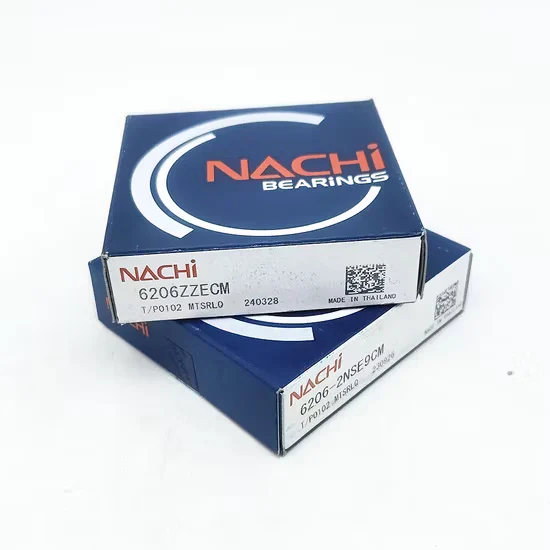
Deep Groove Ball Bearings
Genuine NACHI 602-609 Deep Groove Ball Bearings for Auto Parts Wholesale
View product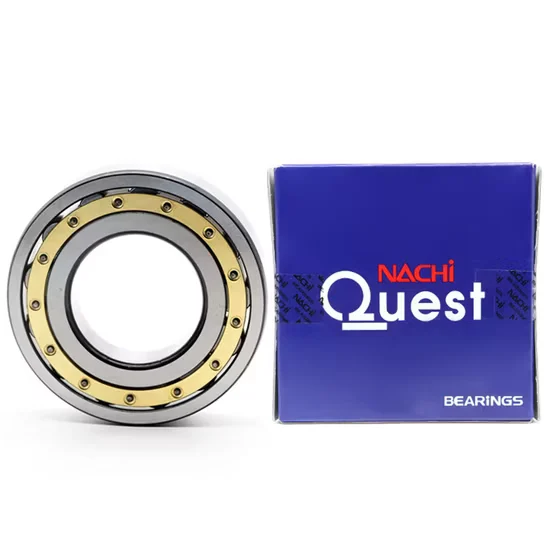
Cylindrical Roller Bearings
Genuine NACHI NU312EM NU313EM NU314EM Cylindrical Roller Bearing Wholesale
View product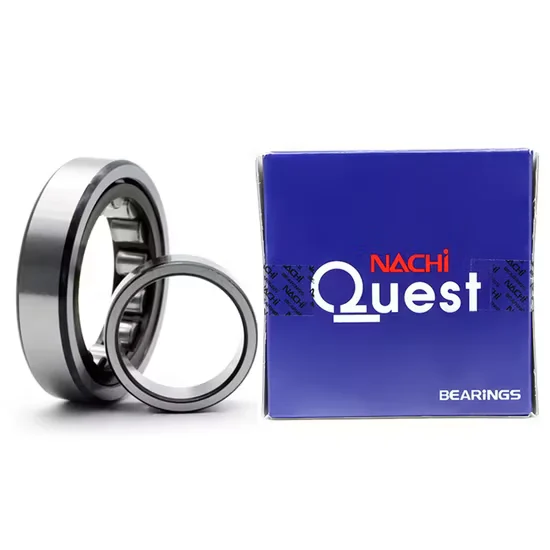
Cylindrical Roller Bearings
NACHI N410e Cylindrical Roller Bearing Genuine Wholesale Supplier
View productModel check
Not sure which NACHI designation fits? We help with substitution, cross-reference and selection.
Send the old bearing number, the worn marking you can still read, or the application and shaft size. nachioem matches it to the correct NACHI model, including clearance, cage and seal options, before you order.
- Substitution for discontinued models
- Cross-reference to NACHI numbers
- Selection for spindles, pumps and reducers
Keep reading
Related NACHI bearing technical articles
More practical guides on NACHI suffixes, replacement and selection for machine tools, automotive, construction machinery, pumps and gear reducers.
Oct 7, 2026 · Buying Guide · 7 min read
NACHI Bearings Quote: Genuine Wholesale Supplier for Bulk & MRO Orders
Request a NACHI bearings quote with full suffix accuracy to prevent costly customs delays and ensure genuine product traceability. Secure competitive wholesale pricing through…
Read the article
Oct 7, 2026 · Buying Guide · 7 min read
Discontinued NACHI Numbers: Replacements from Wholesale Supplier
Replacing discontinued NACHI bearings requires more than matching dimensions to prevent premature field failures. Recalculate internal clearance and verify cage material compatibility to ensure…
Read the article Oct 7, 2026 · Buying Guide · 8 min read
Buy Genuine NACHI Bearings: Wholesale Supplier for Bulk Orders
Secure genuine NACHI bearings by mastering neutral checks and traceability verification to avoid catastrophic equipment failures. Learn to identify counterfeit units through hardness testing,…
Read the article
Request a quote
Send your NACHI model list. We quote fast.
List the NACHI model numbers with full suffixes and the quantity for each. nachioem replies online as quickly as possible with pricing for distributors, repair shops and end users worldwide.
- info@nachioem.com
- WhatsApp +1 (702) 981-5880
- Online replies as quickly as possible
- Global delivery by DHL, FedEx, UPS, air or sea