
NACHI Bearing Technical Guide Applications & Industries
Genuine NACHI Bearings for Air Compressors Wholesale Supplier
Prevent catastrophic rotor seizures by selecting genuine NACHI bearings for air compressors designed for high-speed, heavy-load operations. Replace inadequate deep-groove ball bearings with cylindrical rollers to handle thermal expansion and radial stress. Verify supply chain traceability to avoid counterfeit failures and ensure continuous industrial reliability.
- Published
- By author
- nachioem · Specialized NACHI bearing supplier
Deep-groove ball bearings are rarely the correct choice for the main shaft of a high-speed screw compressor.
Selecting genuine NACHI bearings for air compressors requires prioritizing cylindrical roller designs for radial load capacity and verifying supply chain traceability to prevent counterfeit-induced rotor seizures. The critical failure point in compressor maintenance is not just the bearing brand, but the specific internal clearance and type matched to the thermal expansion rates of the housing under continuous heavy load.
The heat inside a petrochemical plant compressor room in Riyadh does not forgive errors. When the ambient temperature pushes near fifty degrees Celsius and dust permeates every seal, the margin for error in bearing selection vanishes. I recall standing over a disassembled compressor host where the rotor had scanned the casing, destroying the unit. The culprit was not a design flaw, but a refurbished deep-groove ball bearing disguised as new stock. That incident shifted my focus from general trading to the technical specifics of authenticity and application. In high-speed, heavy-load scenarios, the wrong bearing type or a counterfeit component does not just fail; it causes catastrophic secondary damage. This guide details how to select the right components and verify their origin, ensuring that genuine NACHI bearings for air compressors deliver the reliability required for continuous industrial operation.
Why Do Air Compressors Demand Specific NACHI Bearings?
Standard ball bearings cannot withstand the combined radial and axial loads of modern screw compressor rotors at high RPMs.
Air compressors operate in a unique mechanical environment characterized by high rotational speeds, significant radial loads from gear meshing or belt drives, and substantial thermal expansion. Using a standard deep-groove ball bearing for the main shaft support is a common misconception that leads to premature fatigue. The contact angle and load distribution in ball bearings are insufficient for the heavy radial forces generated during compression cycles.
Cylindrical roller bearings, such as those found in the genuine NACHI bearings for air compressors lineup, offer line contact rather than point contact. This geometry distributes the load over a larger surface area, significantly increasing the dynamic load rating without increasing the footprint. In environments with fluctuating temperatures, the internal clearance must be carefully selected. A C3 clearance might suffice for moderate conditions, but high-temperature applications often require C4 to accommodate thermal expansion of the shaft relative to the housing. Without this adjustment, the bearing locks up as the metal expands, leading to immediate seizure.
The distinction is not merely academic. In a recent case involving a mining operation in Central Asia, a facility switched from generic ball bearings to specified cylindrical rollers for their main drive ends. The result was a noticeable extension in service life and a reduction in vibration levels. The key was matching the bearing type to the specific load profile of the compressor stage. For distributors and MRO operators, understanding this mechanical requirement is the first step in avoiding costly returns and equipment failures. When sourcing genuine NACHI bearings for air compressors, the focus must remain on the technical specification sheet rather than just the part number.
How to Match NACHI Bearing Types to Compressor Components?
The motor end and the rotor end have fundamentally different loading requirements that dictate bearing selection.
A compressor is not a uniform load machine. The drive end, connected to the motor or gearbox, experiences different stress patterns compared to the free end of the rotor. Misapplying a single bearing type across both positions is a frequent error in aftermarket replacements. The motor end typically handles higher axial loads from coupling alignment issues or belt tension, while the rotor end manages pure radial loads from the compression process.
| Component Position | Primary Load Type | Recommended Bearing Type | Key Selection Criteria |
|---|---|---|---|
| Rotor Main Shaft | Heavy Radial | Cylindrical Roller | High dynamic load rating, precise internal clearance |
| Motor Drive End | Combined Radial/Axial | Angular Contact or Deep-Groove | Axial load capacity, speed rating |
| Fan/Cooling End | Light Radial | Deep-Groove Ball | Low noise, cost-effectiveness |
Using genuine NACHI bearings for air compressors allows for precise matching of these requirements. For the main shaft, NACHI’s cylindrical roller bearings provide the necessary rigidity. For the motor end, angular contact ball bearings can handle the thrust loads generated by misalignment. It is crucial to consult the original equipment manufacturer’s manual for the specific clearance codes.
A European wind farm operator once faced repeated failures in their auxiliary compressor units. The issue was traced to the use of deep-groove ball bearings on the rotor shaft, which could not handle the radial deflection under load. Switching to the correct cylindrical roller specification resolved the issue. This highlights the importance of technical consultation when selecting genuine NACHI bearings for air compressors. Distributors should not simply cross-reference part numbers but should verify the load ratings and application context. Providing this level of technical support adds value beyond simple transactional supply.
What Are the Hidden Costs of Counterfeit NACHI Bearings?
A cheap counterfeit bearing multiplies replacement costs through secondary damage to rotors and housings.
The market is flooded with bearings that mimic the packaging and branding of premium manufacturers. These counterfeits often use inferior steel with higher inclusion densities, leading to early spalling and fatigue. In a clean, low-load environment, a fake might last a few months. In a dusty, high-temperature compressor application, it fails in weeks. The cost of the bearing itself is negligible compared to the downtime and repair costs associated with a rotor seizure.
When a counterfeit bearing fails, it often disintegrates, sending debris into the oil system and scoring the rotor lobes. This turns a simple bearing replacement into a major overhaul requiring new rotors, seals, and extensive cleaning. The downtime for such an event can stretch into days, costing facilities tens of thousands in lost production.
Verifying the authenticity of genuine NACHI bearings for air compressors is therefore a risk management strategy. Authentic products come with traceable documentation, including material certificates and batch numbers. The packaging quality, printing precision, and surface finish of the bearing itself are also indicators. Counterfeits often have rougher finishes and inconsistent logo engraving. Sourcing from a supplier who provides full traceability ensures that the bearings meet the specified metallurgical standards.
For MRO operators, the temptation to cut costs on spare parts is strong. However, the risk profile of using unverified sources is too high. Establishing a relationship with a supplier who stocks genuine NACHI bearings for air compressors and provides verification documents protects the asset. The slight premium paid for authenticity is insurance against catastrophic failure.
How to Verify Authenticity and Source Genuine NACHI Bearings?
Traceability documentation and physical inspection are the only reliable methods to confirm bearing authenticity.
Sourcing genuine NACHI bearings for air compressors requires more than finding the lowest price. It demands a supply chain partner who prioritizes transparency. Authentic bearings are accompanied by certificates of conformity that link the product to the manufacturer’s production records. These documents should include the batch number, manufacturing date, and material specifications. Without this paper trail, the origin of the bearing is uncertain.
Physical inspection involves checking the packaging for security features, such as holographic labels or specific printing techniques used by the manufacturer. The bearing itself should have clear, laser-etched markings that are difficult to replicate. The surface finish should be smooth and uniform, without signs of reconditioning or poor machining.
A distributor in Southeast Asia recently consolidated a mixed-brand order for a large maintenance project. By working with a supplier who offered full traceability for all items, including genuine NACHI bearings for air compressors, they ensured that every component met the client’s quality standards. This approach minimized the risk of receiving counterfeit goods and streamlined the customs clearance process with proper documentation.
Flexibility in minimum order quantities and the ability to consolidate shipments are also valuable when sourcing hard-to-find parts. A reliable supplier can provide small batches for emergency repairs without compromising on authenticity. This supports MRO teams in maintaining operational continuity without holding excessive inventory. The key is to partner with a source that combines technical knowledge with logistical efficiency, ensuring that genuine NACHI bearings for air compressors are available when needed most.
Conclusion
Authenticity and correct technical selection are non-negotiable for compressor reliability.
Choosing the right bearing type prevents mechanical failure, while verifying authenticity protects against costly downtime. Sourcing genuine NACHI bearings for air compressors from a transparent, technically competent supplier ensures that maintenance budgets are spent on longevity rather than repeated repairs.
Applications covered in this article
Products in this article
NACHI bearings mentioned above
These are the NACHI bearing types discussed in this guide. Open a product page to check its designation and send the exact suffix with your quantity.
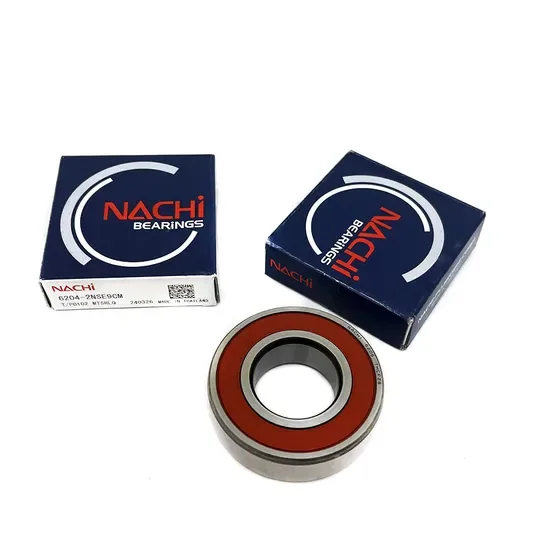
Deep Groove Ball Bearings
Genuine NACHI 608zz 6202 6201 Deep Groove Ball Bearing for Marine Equipment
View product Deep Groove Ball Bearings
Genuine NACHI P6 Deep Groove Ball Bearings 62208 62210 63002 63004 63006
View product
Deep Groove Ball Bearings
Genuine NACHI Deep Groove Ball Bearings 6215 6216 6217 6218 6219 for Juicer
View product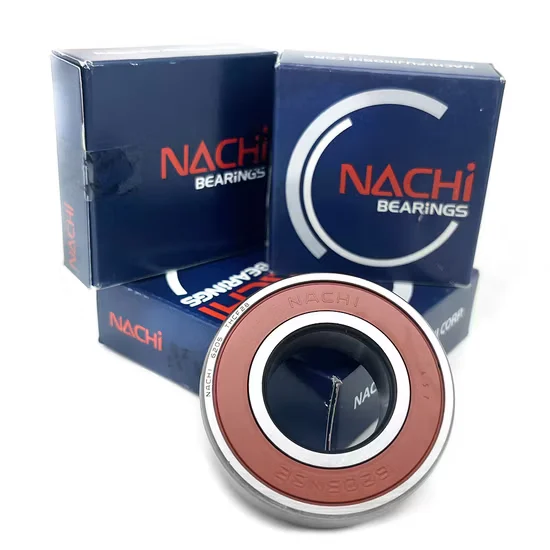
Deep Groove Ball Bearings
Genuine NACHI Deep Groove Ball Bearing 6408 6409 6410 6411 6412 for Conveyor
View productModel check
Not sure which NACHI designation fits? We help with substitution, cross-reference and selection.
Send the old bearing number, the worn marking you can still read, or the application and shaft size. nachioem matches it to the correct NACHI model, including clearance, cage and seal options, before you order.
- Substitution for discontinued models
- Cross-reference to NACHI numbers
- Selection for spindles, pumps and reducers
Keep reading
Related NACHI bearing technical articles
More practical guides on NACHI suffixes, replacement and selection for machine tools, automotive, construction machinery, pumps and gear reducers.
Oct 7, 2026 · Applications & Industries · 8 min read
Genuine NACHI Bearings for Hydraulic Pumps – Wholesale Supplier
Prevent thermal seizure in hydraulic pumps by selecting genuine NACHI bearings with precise C3/C4 clearance classes. Learn from real-world failure cases and verify traceability…
Read the article Oct 7, 2026 · Applications & Industries · 7 min read
NACHI Bearings for Woodworking Machines Wholesale Supplier
Prevent costly spindle seizures in high-speed woodworking machines by selecting the correct NACHI bearings with C3 or C4 clearance. Learn how to match ZZ…
Read the article Oct 7, 2026 · Applications & Industries · 8 min read
Genuine NACHI Bearings for Plastic Machines – Wholesale Supplier
Genuine NACHI bearings for plastic machines prevent catastrophic downtime caused by improper clearance in high-temperature zones. Learn to select the right series for extruders…
Read the article
Request a quote
Send your NACHI model list. We quote fast.
List the NACHI model numbers with full suffixes and the quantity for each. nachioem replies online as quickly as possible with pricing for distributors, repair shops and end users worldwide.
- info@nachioem.com
- WhatsApp +1 (702) 981-5880
- Online replies as quickly as possible
- Global delivery by DHL, FedEx, UPS, air or sea