
NACHI Bearing Technical Guide Applications & Industries
Genuine NACHI Bearings for Cement Fans – Wholesale Supplier
Secure genuine NACHI bearings for cement fans to prevent costly downtime from dust ingress and thermal cycling. Learn why standard units fail under extreme heat and how verified traceability ensures operational continuity. Discover sourcing strategies that prioritize technical suitability over marginal upfront cost reductions.
- Published
- By author
- nachioem · Specialized NACHI bearing supplier
Most assume bearing failure is purely load-related; the real culprit in cement plants is often micro-dust ingress and thermal cycling.
Cement fans operate under extreme heat and dust, making NACHI bearings for cement fans critical for robustness. Only genuine, traceable units can prevent catastrophic production downtime. Selecting the right spherical roller bearings involves verifying seal effectiveness against particulate matter and ensuring materials withstand continuous thermal expansion without premature fatigue.
I still remember the silence that followed the sudden stop of a preheater fan at a plant I was consulting for years ago. It was not a dramatic explosion, but a quiet, expensive seizure. I had approved a batch of budget-friendly replacements to meet a tight quarterly procurement target. The savings looked excellent on paper. Six months later, the high-temperature environment and relentless abrasive dust degraded the internal clearance. The bearing locked up. The resulting line stoppage cost several times the initial savings in penalty payouts and emergency repair logistics. That incident shifted my entire approach to sourcing. Now, when specifying NACHI bearings for cement fans, I prioritize verified origin and technical suitability over marginal upfront cost reductions.
Why Do Cement Fans Destroy Standard Bearings?
Standard industrial bearings fail rapidly in cement environments due to uncontrolled thermal degradation and particulate infiltration.
The operating conditions of cement plant fans, particularly induced draft (ID) fans and kiln exhaust fans, are hostile. Temperatures fluctuate significantly, causing repeated expansion and contraction of shafts and housings. Standard bearings often lack the internal clearance adjustments necessary to accommodate this movement, leading to preload issues and accelerated wear. Furthermore, cement dust is not just dirty; it is abrasive. When microscopic particles bypass inadequate seals, they act like lapping compound between rolling elements and raceways.
In many cases, the failure is not immediate. It begins with subtle vibration increases that go unnoticed until the damage is irreversible. The thermal cycle direction plays a crucial role. Rapid heating during startup and cooling during shutdown creates stress cycles that generic steel compositions may not withstand long-term. This is why NACHI bearings for cement fans are engineered with specific material purity standards to resist these fatigue mechanisms. Without such resilience, the dynamic load rating becomes irrelevant because the bearing fails from environmental attack rather than mechanical overload.
How Does NACHI Bearing Design Withstand Cement Plant Conditions?
Advanced sealing technologies and specialized heat-treated materials specifically counter the dual threats of heat and dust.
NACHI has developed spherical roller bearings that address the specific pain points of the cement industry. The key lies in the integration of robust labyrinth seals or specialized contact seals that maintain integrity even under shaft misalignment caused by thermal growth. These seals do not just keep dirt out; they retain lubrication within the critical contact zones.
| Feature | Standard Generic Bearing | NACHI Spherical Roller Bearing |
|---|---|---|
| Seal Effectiveness | Basic rubber lip, vulnerable to heat hardening | Enhanced labyrinth or high-temp elastomer, resistant to deformation |
| Material Purity | Standard vacuum degassed steel | Controlled inclusion density for extended fatigue life |
| Thermal Stability | Standard clearance, prone to preload in heat | Optimized internal geometry for thermal expansion tolerance |
| Dust Resistance | Vulnerable to fine particulate ingress | Robust sealing interface, noticeably reduced contamination risk |
The cage design also matters. In high-vibration environments typical of large fans, a sturdy cage prevents rolling element skewing. I have observed that units with optimized cage guidance run substantially longer before showing signs of wear pattern irregularities. When evaluating NACHI bearings for cement fans, look for these design nuances. They are not visible from the outside but define the operational lifespan. The manufacturer’s production facilities utilize precise heat treatment processes that ensure consistent hardness throughout the raceway, preventing localized spalling under heavy radial loads.
What Are the Hidden Costs of Using Non-Genuine Alternatives?
Initial savings on generic brands are quickly wiped out by catastrophic failures and severe production penalties.
It is tempting to source “equivalent” bearings from unknown manufacturers. The price difference can be significant. However, the true cost of a bearing is not its purchase price but its reliability during operation. A single unplanned downtime event in a cement plant can result in a mid-six-figure loss when accounting for lost production, emergency labor, and contractual penalties.
A European plant operator once shared their experience after switching to non-traceable alternatives for their main ID fan. The bearings failed repeatedly within short intervals. Each replacement required scaffolding, specialized tools, and hours of cooler downtime. The cumulative maintenance cost far exceeded what they would have spent on premium, genuine units. Moreover, the risk of secondary damage to the fan shaft and housing increases with each failure event.
Using non-genuine parts also introduces variability. Batch-to-batch consistency is often lacking in lower-tier products. One batch might perform adequately, while the next fails prematurely. This unpredictability makes maintenance planning impossible. Instead of scheduled replacements, teams are forced into reactive firefighting. This is why NACHI bearings for cement fans are preferred by MRO managers who value predictability. The consistency of genuine products allows for accurate lifecycle forecasting and inventory optimization.
How to Source Genuine NACHI Bearings for Critical Fan Applications?
Strict traceability, original manufacturer certification, and reliable spot inventory are non-negotiable for critical applications.
Sourcing genuine bearings requires more than just finding a supplier with a low price. It demands verification. Counterfeit bearings are prevalent in the global market, often repackaged generic units sold as premium brands. To avoid this, buyers must insist on complete traceability documentation. This includes original mill certificates and proof of authorized distribution channels.
When I source for clients, I verify the supply chain rigorously. We maintain massive spot inventory covering thousands of standard and special part numbers, ensuring that urgent MRO replacements do not face long lead times. This capability is crucial for minimizing downtime. For example, when a mine in South America faced an emergency breakdown, our ability to dispatch genuine units immediately prevented a prolonged shutdown.
Key steps for secure sourcing include:
- Requesting full traceability documents for every batch.
- Verifying the supplier’s authorization status with the brand principal.
- Inspecting packaging and marking quality for signs of tampering.
- Choosing suppliers with established global shipping consolidation and inspection services.
For NACHI bearings for cement fans, this diligence ensures that the component performing under extreme stress is exactly what the engineer specified. Flexible MOQ options allow both single-unit emergency orders and full container consolidations for stock replenishment. This flexibility supports diverse buyer needs, from small repair workshops to large industrial OEMs.
Conclusion
Reliability in cement fan operations depends on genuine, technically suited bearings.
Choosing NACHI bearings for cement fans is an investment in operational continuity. By prioritizing traceability and understanding the specific environmental challenges, plants can avoid costly failures. Secure sourcing practices ensure that every bearing installed meets the rigorous demands of the cement industry.
Applications covered in this article
Products in this article
NACHI bearings mentioned above
These are the NACHI bearing types discussed in this guide. Open a product page to check its designation and send the exact suffix with your quantity.
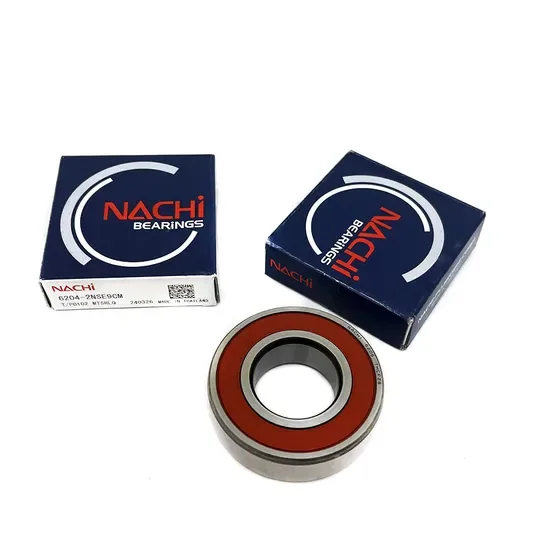
Deep Groove Ball Bearings
Genuine NACHI 608zz 6202 6201 Deep Groove Ball Bearing for Marine Equipment
View product Deep Groove Ball Bearings
Genuine NACHI P6 Deep Groove Ball Bearings 62208 62210 63002 63004 63006
View product
Deep Groove Ball Bearings
Genuine NACHI Deep Groove Ball Bearings 6215 6216 6217 6218 6219 for Juicer
View product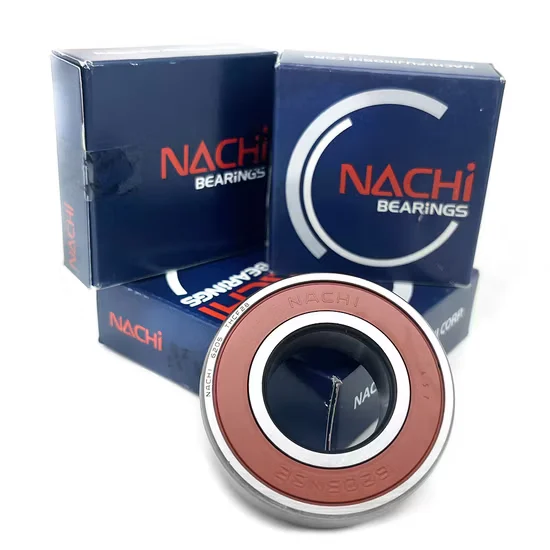
Deep Groove Ball Bearings
Genuine NACHI Deep Groove Ball Bearing 6408 6409 6410 6411 6412 for Conveyor
View productModel check
Not sure which NACHI designation fits? We help with substitution, cross-reference and selection.
Send the old bearing number, the worn marking you can still read, or the application and shaft size. nachioem matches it to the correct NACHI model, including clearance, cage and seal options, before you order.
- Substitution for discontinued models
- Cross-reference to NACHI numbers
- Selection for spindles, pumps and reducers
Keep reading
Related NACHI bearing technical articles
More practical guides on NACHI suffixes, replacement and selection for machine tools, automotive, construction machinery, pumps and gear reducers.
Oct 7, 2026 · Applications & Industries · 8 min read
Genuine NACHI Bearings for Hydraulic Pumps – Wholesale Supplier
Prevent thermal seizure in hydraulic pumps by selecting genuine NACHI bearings with precise C3/C4 clearance classes. Learn from real-world failure cases and verify traceability…
Read the article Oct 7, 2026 · Applications & Industries · 7 min read
NACHI Bearings for Woodworking Machines Wholesale Supplier
Prevent costly spindle seizures in high-speed woodworking machines by selecting the correct NACHI bearings with C3 or C4 clearance. Learn how to match ZZ…
Read the article Oct 7, 2026 · Applications & Industries · 8 min read
Genuine NACHI Bearings for Plastic Machines – Wholesale Supplier
Genuine NACHI bearings for plastic machines prevent catastrophic downtime caused by improper clearance in high-temperature zones. Learn to select the right series for extruders…
Read the article
Request a quote
Send your NACHI model list. We quote fast.
List the NACHI model numbers with full suffixes and the quantity for each. nachioem replies online as quickly as possible with pricing for distributors, repair shops and end users worldwide.
- info@nachioem.com
- WhatsApp +1 (702) 981-5880
- Online replies as quickly as possible
- Global delivery by DHL, FedEx, UPS, air or sea