
NACHI Bearing Technical Guide Installation & Maintenance
Genuine NACHI Bearings Wholesale Supplier for Industrial & MRO Use
Master Greasing NACHI Bearings by selecting the right lubricant and calculating exact fill volumes to prevent premature cage failure. Avoid costly downtime in mining and heavy industry by following strict relubrication intervals and using genuine components for optimal performance and longevity.
- Published
- By author
- nachioem · Specialized NACHI bearing supplier
More grease does not mean better protection; it is often the primary cause of premature bearing failure.
Proper greasing of NACHI bearings requires selecting the right lubricant based on operating temperature, calculating exact fill volumes to avoid churning, and strictly following relubrication intervals derived from speed and load factors. Over-greasing causes internal overheating and seal damage, while under-greasing leads to metal-to-metal contact and cage fragmentation. The correct approach balances viscosity requirements with free space calculations to ensure longevity in harsh industrial environments.
I still recall the dust-choked air of a mining crusher site where a production line halted because the spherical roller bearings failed within weeks. The maintenance team had packed the housings full of grease, assuming maximum lubrication equated to maximum safety. Instead, the excess grease churned, generating heat that degraded the lubricant and softened the polymer cage until it disintegrated. This was not a defect in the bearing design but a fundamental error in application. Understanding the mechanics of Greasing NACHI Bearings is critical for any operation relying on heavy machinery, as the difference between a successful installation and a costly breakdown often lies in the volume and type of lubricant applied.
Moving beyond simple intuition requires a technical understanding of how lubricants interact with bearing components under stress.
Why Correct Greasing Matters for NACHI Bearings?
The primary function of grease in rolling element bearings is to separate moving surfaces, prevent corrosion, and exclude contaminants. However, incorrect application directly threatens the structural integrity of the bearing cage. In high-load applications such as mining crushers or steel mill conveyors, the cage maintains the spacing of rolling elements. If the lubricant fails due to over-greasing or wrong viscosity, the resulting friction generates excessive heat.
This heat can cause the cage material to lose its mechanical properties. In one instance at a cement plant, a batch of bearings suffered catastrophic cage failure because the selected grease could not withstand the operational temperature range. The degradation led to rapid wear and eventual fragmentation, causing unplanned downtime that cost significantly more than the replacement parts. Proper Greasing NACHI Bearings protocols prevent such scenarios by ensuring the lubricant film remains stable under load.
Furthermore, grease acts as a barrier against environmental contaminants. In dusty or wet environments, the consistency of the grease determines its ability to seal the bearing interior. If the grease is too soft, it may leak out, allowing debris to enter. If it is too hard, it may not distribute evenly, leaving areas unprotected. The goal is to maintain a consistent protective layer without inducing hydraulic pressure that could damage seals or force grease into unwanted areas of the housing.
Understanding these risks highlights why a standardized approach to maintenance is essential for reliability.
How to Choose the Right Grease for NACHI Bearings?
Selecting the appropriate grease involves matching the base oil viscosity and thickener type to the specific operating conditions. The National Lubricating Grease Institute (NLGI) grade indicates the consistency of the grease, with NLGI 2 being the most common for general industrial applications. However, high-speed or high-temperature environments may require NLGI 1 or specialized synthetic bases.
| Operating Condition | Recommended Base Oil Viscosity | NLGI Grade | Thickener Type |
|---|---|---|---|
| Standard Temperature & Load | Medium | 2 | Lithium Complex |
| High Temperature | High | 1 or 2 | Polyurea or Calcium Sulfonate |
| Low Temperature | Low | 0 or 1 | Lithium Complex |
| Heavy Load/Shock | High | 2 | Lithium Complex with EP Additives |
The table above provides a general guideline, but specific applications may require adjustments. For example, in a steel mill conveyor system, ambient heat from nearby processes can raise bearing temperatures significantly. Using a standard lithium grease in this context would lead to rapid oxidation and loss of lubricity. Instead, a high-temperature synthetic grease with a higher viscosity index ensures the film strength remains adequate even as temperatures rise.
It is also crucial to consider compatibility when switching grease types. Mixing incompatible thickeners can result in a mixture that is either too soft or too hard, compromising performance. Always verify compatibility before introducing a new lubricant to an existing system. When sourcing components, using genuine Greasing NACHI Bearings solutions ensures that the internal clearance and material specifications align with the recommended lubrication parameters. Counterfeit or substandard bearings often have inconsistent internal clearances, which exacerbates lubrication issues and accelerates wear.
Correct selection forms the foundation of a reliable maintenance strategy.
What is the Proper Greasing Volume and Interval?
Determining the correct amount of grease is perhaps the most critical step in the process. A common misconception is that filling the housing completely provides better protection. In reality, excess grease causes churning, which generates heat and increases energy consumption. The general rule for initial lubrication is to fill the free space within the bearing and housing partially, typically around thirty to fifty percent, depending on the speed and design.
For relubrication, the interval depends on several factors including bearing size, speed, operating temperature, and environmental conditions. Formulas exist to calculate these intervals, but practical experience often dictates adjustments based on observed conditions. In a high-speed application, frequent small amounts of grease are preferable to large infrequent doses. This approach helps flush out old, degraded grease while maintaining an adequate supply of fresh lubricant.
- Calculate the free space in the bearing housing.
- Determine the initial fill volume based on speed and bearing type.
- Establish a relubrication interval using manufacturer guidelines or industry formulas.
- Monitor bearing temperature and vibration to adjust intervals as needed.
- Use a calibrated grease gun to ensure accurate volume delivery.
In a recent project involving a series of pumps in a water treatment facility, adhering to strict volume controls reduced bearing temperatures noticeably. The previous practice of “greasing until it purged” had led to seal failures and contamination. By switching to calculated volumes, the maintenance team extended the service life of the bearings and reduced waste. This precision is key when managing Greasing NACHI Bearings in critical infrastructure.
Consistency in application ensures predictable performance and reduces the risk of human error.
How to Identify Greasing-Related Failures?
Recognizing the signs of lubrication failure early can prevent catastrophic damage. Discolored grease, often turning dark brown or black, indicates oxidation or thermal degradation. If the grease appears dry or powdery, it suggests that the base oil has separated or evaporated, leaving the thickener behind. This condition offers little protection and requires immediate attention.
Cage wear is another telltale sign. If the cage shows signs of polishing, discoloration, or deformation, it likely suffered from inadequate lubrication or overheating due to over-greasing. In severe cases, the cage may fracture, leading to immediate bearing seizure. Analyzing the failed grease and bearing components can provide insights into the root cause. For instance, the presence of water in the grease indicates seal failure or environmental ingress, while metallic particles suggest abrasive wear.
| Failure Symptom | Likely Cause | Recommended Action |
|---|---|---|
| Dark, Oxidized Grease | Overheating/Old Grease | Clean and Relubricate with High-Temp Grease |
| Dry, Powdery Residue | Oil Separation/Evaporation | Increase Relubrication Frequency |
| Cage Polishing/Discoloration | Friction/Overheating | Check Volume and Viscosity |
| Metallic Particles in Grease | Abrasive Wear | Inspect for Contamination and Seal Integrity |
In a case involving a wind farm operator, regular grease analysis revealed early signs of water contamination. By addressing the seal issue and adjusting the grease type to one with better water resistance, the operator avoided widespread bearing failures across the fleet. This proactive approach underscores the value of monitoring and adapting maintenance practices. Ensuring the authenticity of components is vital here, as genuine Greasing NACHI Bearings come with traceability that supports accurate failure analysis and warranty claims, unlike counterfeit parts which lack such documentation.
Vigilance in monitoring lubrication condition extends the operational life of machinery.
Conclusion
Precision in lubrication prevents premature failure and ensures operational continuity.
Effective maintenance of industrial bearings relies on selecting the correct grease type, applying the appropriate volume, and adhering to calculated relubrication intervals. Avoiding the pitfalls of over-greasing and using compatible lubricants protects the bearing cage and maintains optimal performance. By integrating these practices, operators can minimize downtime and maximize the lifespan of their equipment.
Applications covered in this article
Products in this article
NACHI bearings mentioned above
These are the NACHI bearing types discussed in this guide. Open a product page to check its designation and send the exact suffix with your quantity.

Deep Groove Ball Bearings
NACHI Deep Groove Ball Bearing 6210-6215 for Blender Genuine Wholesale
View product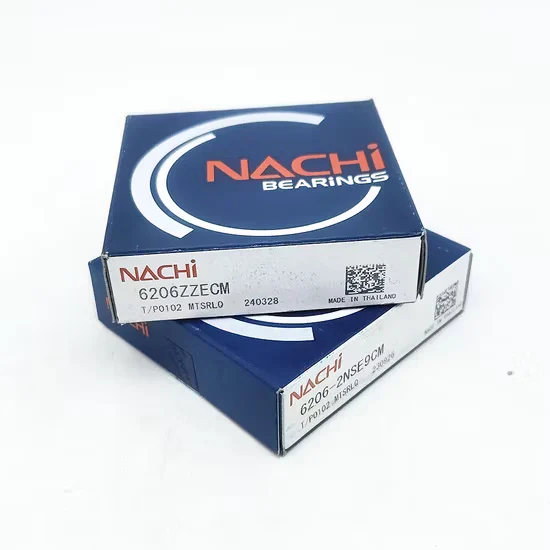
Deep Groove Ball Bearings
Genuine NACHI 602-609 Deep Groove Ball Bearings for Auto Parts Wholesale
View product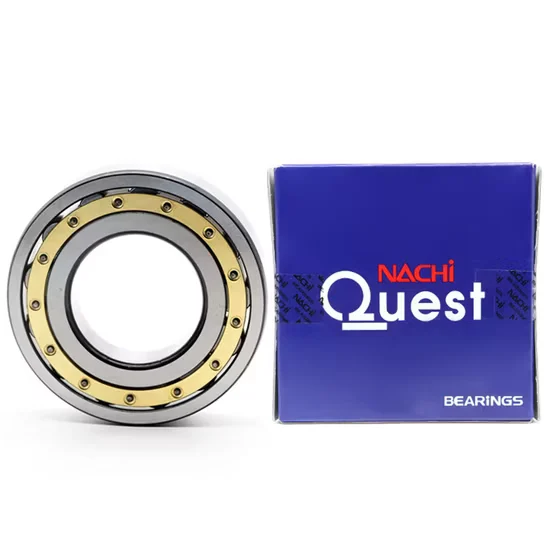
Cylindrical Roller Bearings
Genuine NACHI NU312EM NU313EM NU314EM Cylindrical Roller Bearing Wholesale
View product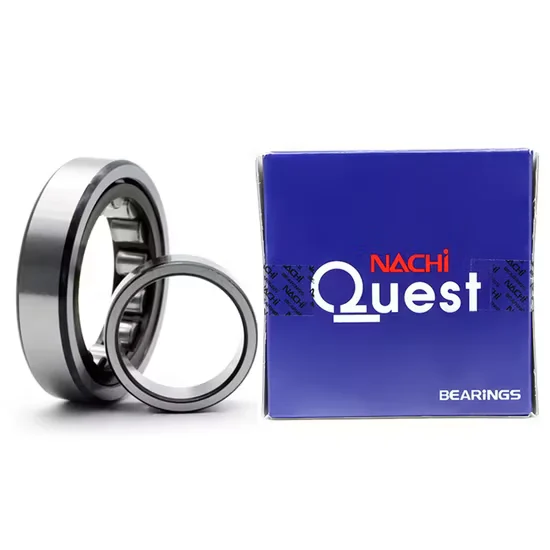
Cylindrical Roller Bearings
NACHI N410e Cylindrical Roller Bearing Genuine Wholesale Supplier
View productModel check
Not sure which NACHI designation fits? We help with substitution, cross-reference and selection.
Send the old bearing number, the worn marking you can still read, or the application and shaft size. nachioem matches it to the correct NACHI model, including clearance, cage and seal options, before you order.
- Substitution for discontinued models
- Cross-reference to NACHI numbers
- Selection for spindles, pumps and reducers
Keep reading
Related NACHI bearing technical articles
More practical guides on NACHI suffixes, replacement and selection for machine tools, automotive, construction machinery, pumps and gear reducers.
Oct 8, 2026 · Installation & Maintenance · 8 min read
NACHI Bearings Maintenance Checklist: Wholesale Supplier for Bulk MRO Orders
Implement this NACHI bearing maintenance checklist to prevent premature failures caused by incorrect lubrication and contamination in heavy industry. Learn daily inspection steps, precise…
Read the article
Oct 8, 2026 · Installation & Maintenance · 6 min read
NACHI Precision Bearing Handling: Wholesale Supplier for Bulk Orders
Master NACHI precision bearing handling to prevent installation-induced failures and costly downtime. Learn controlled induction heating limits, humidity-regulated storage protocols, and post-mounting verification steps…
Read the article Oct 8, 2026 · Installation & Maintenance · 7 min read
NACHI Bearing Shaft & Housing Fits: Wholesale Supplier for Sale
Prevent premature NACHI bearing failures caused by improper shaft and housing fits. Learn to select ISO tolerance grades, measure housing ovality, and calculate residual…
Read the article
Request a quote
Send your NACHI model list. We quote fast.
List the NACHI model numbers with full suffixes and the quantity for each. nachioem replies online as quickly as possible with pricing for distributors, repair shops and end users worldwide.
- info@nachioem.com
- WhatsApp +1 (702) 981-5880
- Online replies as quickly as possible
- Global delivery by DHL, FedEx, UPS, air or sea